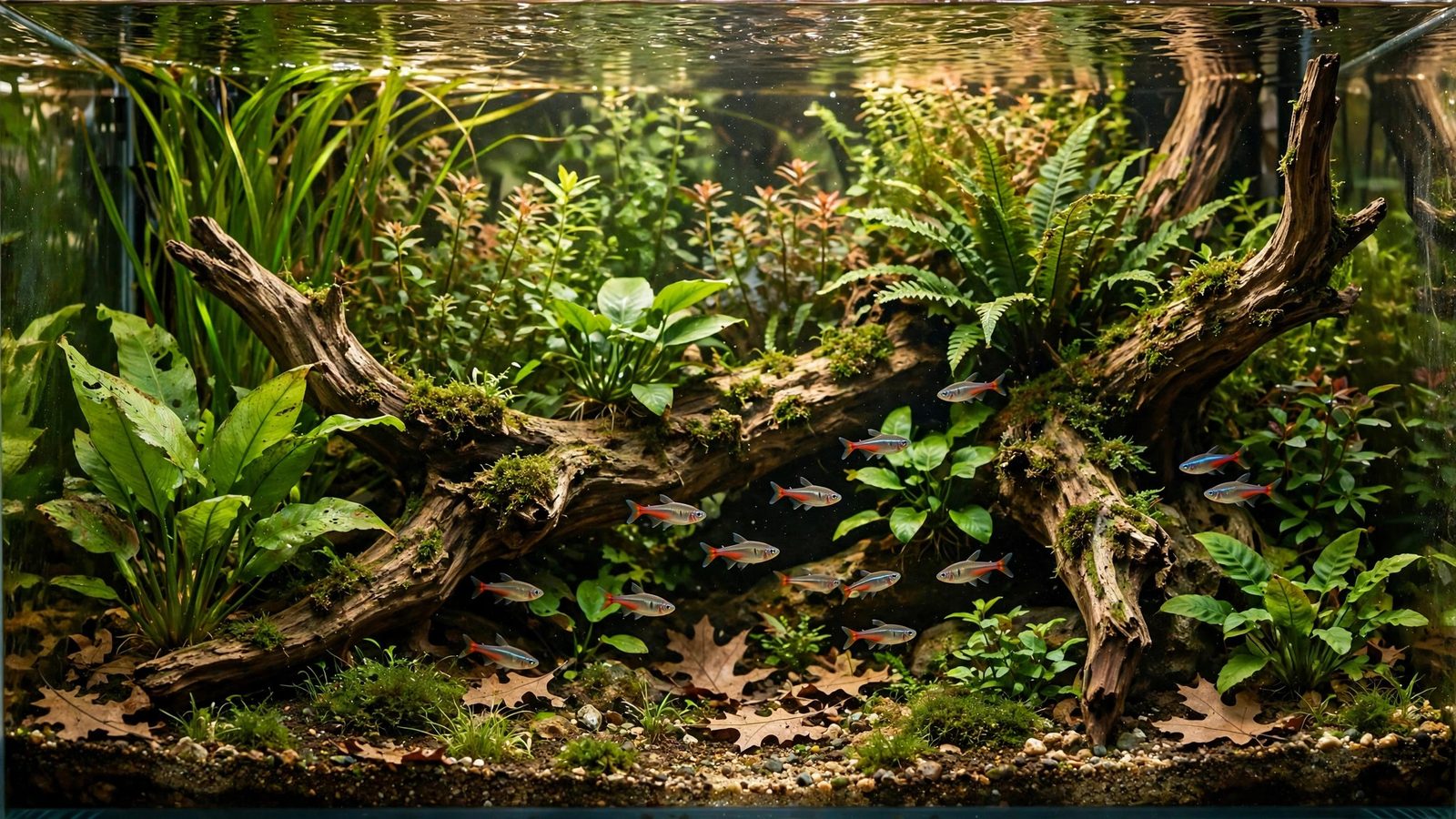
Here is the honest answer to how long do aquarium plants live: most of them never die of old age at all. Your Anubias or Java fern carries no expiration date — it carries a rhizome that can be divided, split, and started over indefinitely. What ends a planting is almost never age: it is neglect, algae, or a skipped maintenance step. Start with proven long-lived beginner plants, and the same plant lineage can grace your tank for a decade or more. This guide breaks lifespans down by plant type and shows the maintenance moves that reset the clock.
How Long Do Aquarium Plants Live? It Depends on What You Mean by "the Plant"
Your houseplant mental model does not apply underwater: an aquarium planting is a colony, and colonies can be young forever if you manage them.
Rhizome plants like Anubias and Java fern grow along a creeping stem, adding new leaves at one end. Hobbyists routinely keep a single rhizome lineage for a decade or more; every 12–18 months you cut the rhizome between leaf nodes and the "new" piece starts its count at zero.
Stem plants reach the same result differently. A Rotala stem has about 12–18 months of vigorous life — the top stays young while the base goes woody and bare. Snip the top 4–6 inches, replant it, and discard the base: you have not replaced your plant, you have renewed it. This is also why slow-growing plants can seem to live forever: fewer growth spurts means fewer interventions, so the colony looks unchanged for years.
The only honest exceptions are true annuals — plants that seed, flower, and genuinely die — and dormant bulbs like Aponogeton, which collapse back to a bulb for 4–8 weeks a year. That collapse frightens beginners into binning a healthy plant. It is not dying; it is napping, and the same rhythm guides overwintering pond plants indoors.
Lifespan Table: What to Expect From Each Plant Type
The "act by" column is the maintenance that resets the clock — skip it, and that is when the plant actually dies. For tailored picks, see our guides to beginner-friendly stem plants and bulb aquarium plants.
| Plant type | Examples | Realistic lifespan (same planting) | Reset the clock when |
|---|---|---|---|
| Rhizome / epiphyte | Anubias, Java fern, Bucephalandra | 5–10+ years | Divide every 12–18 months; never bury the rhizome |
| Stem | Rotala, Ludwigia, Bacopa | 12–18 months of prime growth | Replant tops every 3–6 months; discard woody bases |
| Rosette | Amazon swords, Cryptocoryne | 3–5 years | Separate runners/crowns every 2–3 years; refresh root tabs annually |
| Bulb (dormant types) | Aponogeton, tiger lotus (Nymphaea) | 1–3 years between rests | Allow 4–8 weeks of dormancy when foliage melts |
| Floating | Frogbit, Salvinia, duckweed | Weeks–months per individual plant | Thin weekly; the colony self-replaces |
How to Reset the Clock: Maintenance That Doubles Plant Life
Divide rhizomes. Wait until the rhizome carries 8–10 healthy leaves, then cut between two leaf nodes with a sterile blade. Tie or glue each piece to rock or driftwood — never plant it in the substrate. Two colonies from one, both starting fresh.
Replant stem tops. When the bottom 2 inches of a stem go bare and brown, its base is spent. Snip the top 4–6 inches, strip the lowest leaves, and replant the cutting. Discard the base; it has served its purpose.
Rest dormant bulbs. When an Aponogeton melts back, lift the bulb and store it in damp sand or peat in a cool, dark spot for 4–6 weeks, then replant. The University of Florida's aquatic and wetland plant resources describe seasonal rest cycles in aquatic plants generally — your tank version follows the same rhythm.
Split rosettes. Swords and Crypts send out runners or form crowded crowns. Wait until a daughter has 3–4 leaves and its own roots, then sever and plant it separately. Refresh root tabs at the same time so the mother does not stall.
What Actually Kills Aquarium Plants (It Is Rarely Age)
Algae smothering. Hair and staghorn algae coat old leaves and block light, mimicking "old age." Remove the worst leaves, rebalance light and nutrients, and new growth will prove the plant was fine.
Buried rhizomes. Anubias or Java fern planted in gravel rots from the rhizome outward — it looks like old age but was suffocation. Tie it to hardscape and the same specimen lasts years.
The wrong fish. Goldfish, silver dollars, and large cichlids graze or uproot plants faster than maintenance can compensate. Lifespan is a stocking question too — our guide to matching plants to your fish walks through fish-first plant selection.
Light decay. Fluorescent tubes and aging LEDs shift spectrum long before they stop glowing. If plants stall at the 12-month mark with no other change, suspect the light, not the plant. Even low-light plants for beginners cannot photosynthesize under the wrong spectrum forever.
Nutrient crashes. Heavy root feeders like swords exhaust their root tabs in 2–3 months. The sudden stall that follows looks like decline; a fresh tab restores growth within days.
Frequently Asked Questions
Do aquarium plants die of old age?
Almost never. Rhizome plants divide indefinitely, stem tops replant forever, and floaters reproduce constantly. True annuals are the exception, and dormant bulbs only appear dead during their rest. When a plant declines, the cause is almost always algae, buried rhizomes, failing light, or a nutrient crash — all fixable, none inevitable.
How long does Anubias or Java fern really last?
A single colony easily lasts 5–10 years or more. Divide the rhizome every 12–18 months once it carries 8–10 leaves, tie pieces to rock or driftwood, and each division starts fresh. The one fatal mistake is burying the rhizome — it rots within weeks, a death that mimics old age but is entirely preventable.
My stem plants are bare at the bottom. Are they dying?
No — this is the normal end of a stem base's 12–18-month productive life. Snip the top 4–6 inches, strip the lowest leaves, and replant the cutting; discard the bare base. Repeat every 3–6 months to keep the planting vigorous indefinitely.
My aponogeton melted back to the bulb. Is it dead?
Almost certainly not. Aponogeton naturally goes dormant for 4–8 weeks, melting foliage back to a firm bulb. Firm and neutral-smelling means alive; mushy or foul means dead. Rest a healthy bulb in damp sand in a cool, dark spot for a month, then replant — the same rhythm the RHS describes in its pond care guide.
Can I really keep the same aquarium plants for ten years?
Yes — with Anubias, Java fern, and Bucephalandra it is routine. Divide the rhizome every 12–18 months, keep it out of the substrate, and maintain stable light and nutrients. Stem and rosette plants reach the same longevity through the replanting and splitting rhythm above, but demand more of your attention.
The clock on an aquarium plant stops when you stop paying attention, not when some internal timer runs out. Learn each type's renewal rhythm — divide the rhizomes, replant the tops, rest the bulbs — and your planting will outlast your aquascape, your light fixture, and quite possibly your fish. That is the real answer to how long aquarium plants live: as long as you keep resetting the clock.