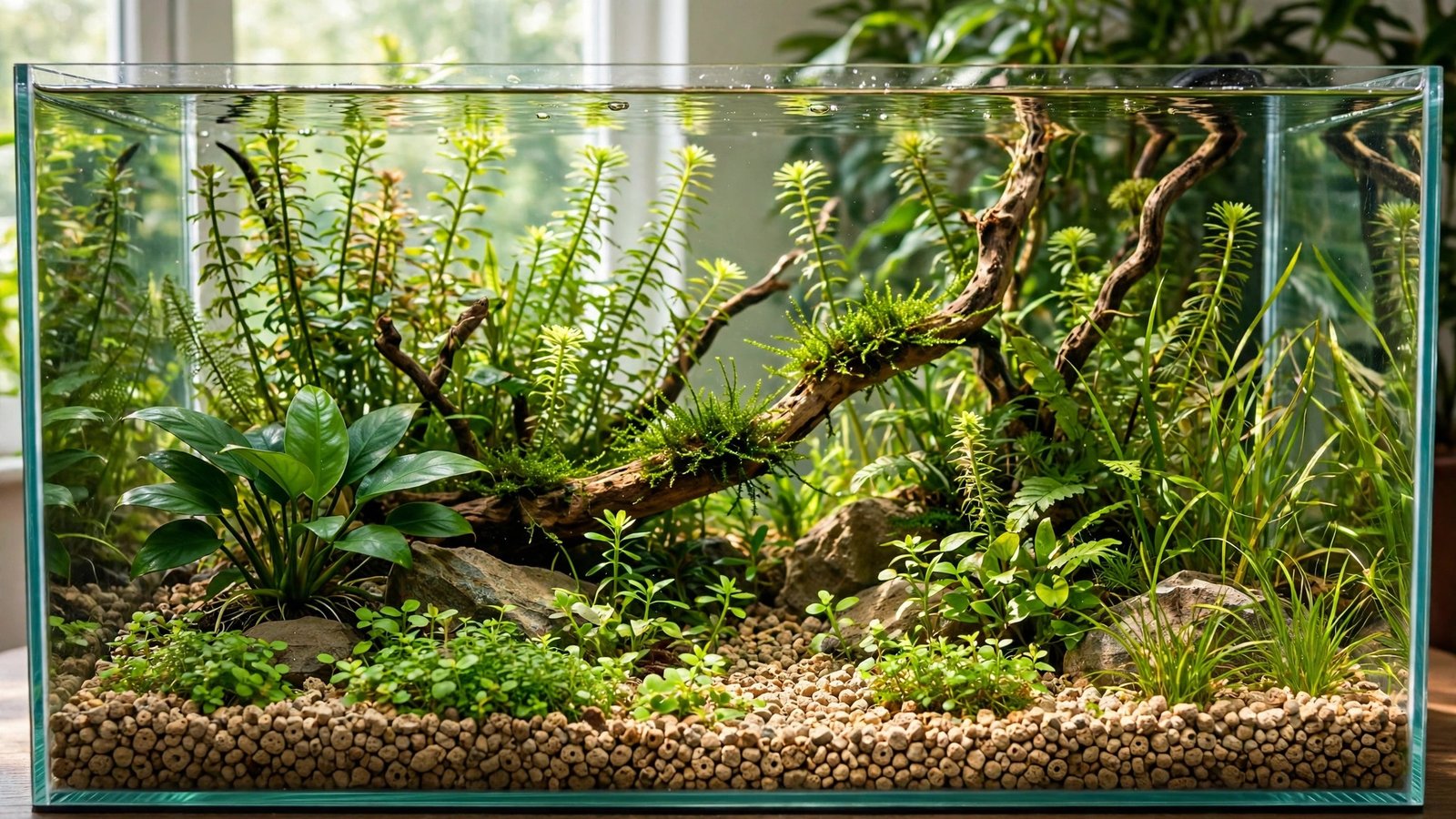
Walk into a farm supply store, buy a 50-lb bag of sports-field conditioner for the price of a large pizza, and you've got one of the highest-CEC planted substrates in the hobby. Turface — calcined montmorillonite clay sold for baseball diamonds — is the DIY substrate world's best-kept secret: extremely high cation exchange capacity, decent looks, and bulk pricing that makes aquasoil look absurd. But it's an industrial product with quirks. Here's the complete guide to using Turface in planted tanks.
What Turface Is
Turface is calcined (heat-treated) montmorillonite clay, manufactured as a soil conditioner for sports fields — it absorbs water and resists compaction under cleats. The calcining process fires the clay into hard, porous granules that hold their shape indefinitely underwater. Relevant properties for aquarists:
- Very high CEC — among the highest of any substrate, comparable to or exceeding Flourite. It grabs nutrients from root tabs and the water column and meters them to roots.
- Completely inert for NPK — like all calcined clays, it contains no plant-usable nitrogen, phosphorus, or potassium out of the bag.
- Lightweight and porous — great for root penetration and bacterial colonization, but stems uproot more easily before establishing.
- Gray to tan color — natural, inoffensive, but plain. It darkens somewhat when wet and with biofilm age.
- Permanent — fired clay doesn't break down. Ever.
Products in the family: Turface MVP (the standard, ~1–3 mm granules), Turface Pro League (larger), and Oil-Dri (a similar calcined clay sold as oil absorbent — cheaper, dustier, less consistent). Turface MVP is the one the hobby's experience is built on.
Buying the Right Product
Not every bag at the farm store is aquarium-suitable:
- Buy Turface MVP ★4.7 — the all-purpose grade with granules in the 1–3 mm range. It's stocked at irrigation/farm supply stores and some big-box garden centers.
- Avoid "Turface Quick Dry" and fine grades — too powdery; they'll cloud your tank and compact.
- Oil-Dri caution: the classic oil-absorbent is calcined clay and can work, but it's dustier, more variable bag-to-bag, and some variants contain additives. Turface MVP is worth the small premium for consistency.
- Check it's plain calcined clay — no added fertilizers, wetting agents, or fragrances. The sports-field product is plain; some garden-center "clay conditioners" aren't.
Preparation and Setup
- Rinse thoroughly. Turface is moderately dusty — 5-lb batches, churn and pour off, 6–10 rinses until runoff is mostly clear. Less dusty than Flourite, dustier than pool filter sand.
- Consider a pre-soak. Fresh Turface is bone-dry and floats initially — a 24-hour soak in a bucket (weighted down) waterlogs the granules so they stay put when you fill the tank. This step prevents the annoying "floating granule" phase.
- Pour into a dry tank, slope normally — 2–3 inches front, 3–4 back per our depth guide. The light weight means slopes slump more than with heavier substrates; keep hills modest or use terracing.
- Fill slowly. Lightweight granules crater easily under a hard water stream — pour over a plate.
- Fertilize from day one: root tabs in a grid + liquid fertilizer. Turface's CEC starts empty, like Flourite's — the first months of consistent dosing "charge" the bed. Our inert feeding system applies directly.
The Quirks: What Nobody Tells You Upfront
It can initially absorb KH
Fresh calcined clay's exchange sites load up from your water, which can temporarily depress KH (and slightly pH) in the first days to weeks. It's not true buffering — it stabilizes once the sites equilibrate — but if you run very soft water, monitor KH during the first month. In hard water you'll never notice.
Granules crush if abused
Calcined clay is hard but brittle — don't crush it under heavy rocks (place hardscape on the glass first, then pour Turface around it) and don't aggressively gravel-vacuum by jamming the siphon in. Normal maintenance is fine; grinding it isn't. Crushed granules become fine clay powder that clouds water and compacts.
It's light — planting takes technique
New stem cuttings in Turface pop up with insulting ease until roots establish. Plant deeper than usual (an extra half-inch), at an angle with tweezers, and consider planting weights or a patience-first week. Once roots lock in (2–3 weeks), it's a non-issue — but week one tests your tweezers skills.
Color: honestly, it's plain
Gray-tan Turface won't win beauty contests against black aquasoil. It looks natural and inoffensive — fine in a nature-style tank, underwhelming in a high-contrast aquascape. Options: cap the foreground with black sand for contrast, or just let plants cover it (a densely planted tank shows little substrate anyway).
Turface vs The Alternatives
| Substrate | CEC | Cost (50 lbs) | Color | Grain consistency |
|---|---|---|---|---|
| Turface MVP | Very high | Very cheap | Gray/tan | Good |
| Seachem Flourite | Very high | Expensive | Red-brown/black | Excellent |
| Eco-Complete | High | Expensive | Black | Excellent |
| Pool filter sand | Low | Very cheap | Tan | Excellent |
Turface is essentially Flourite's DIY cousin: same calcined-clay technology and CEC class, at roughly one-tenth the price, with less consistent grading and plainer color. Our Flourite guide covers the premium version. If budget is the priority and you can live with gray-tan, Turface is arguably the best value high-CEC substrate in the hobby.
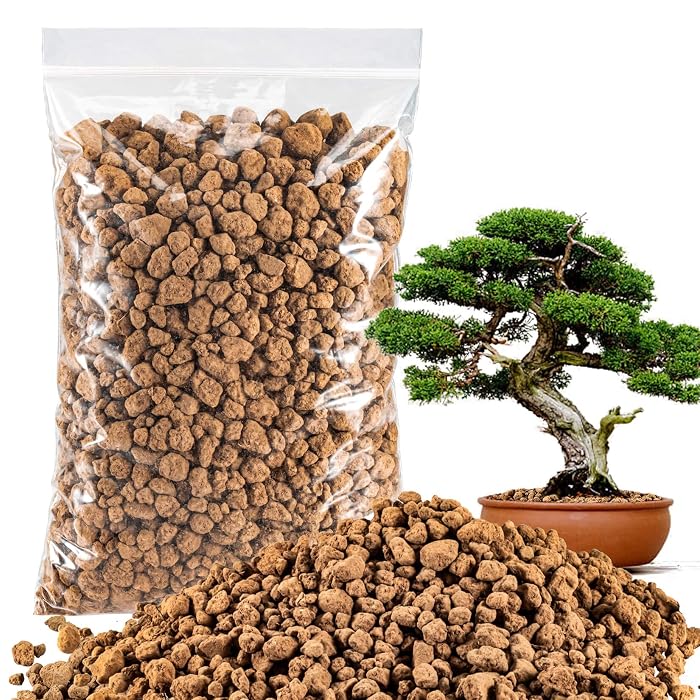
A reliable pick here is akadama.
 ★4.7
Voulosimi Horticultural Akadama Soil
Check Price on Amazon ★4.7Who Should Use Turface?
- Big tanks on a budget. Substrating a 125-gallon tank with Flourite costs a fortune; with Turface it costs lunch money. The savings scale with tank size.
- Fish rooms and breeding setups. Multiple tanks multiply substrate costs — Turface makes planted breeding tanks economical.
- Experimenters. Cheap enough to try dirted-tank hybrids, mineralized soil caps, and other projects without financial anxiety.
- Skip it if: you want premium aesthetics out of the bag (buy Flourite Black), you keep delicate bottom-dwellers as the tank's focus (smoother sand is kinder), or the farm-store hunt isn't worth your time.
Maintenance
Treat it like Flourite: gentle vacuuming (hover more than jam — the granules are lighter and more crushable than gravel), root tabs every 2–3 months, liquid fertilizer on schedule. Never let the bed dry out once established (dried-and-rewetted calcined clay can fracture). With consistent fertilization, a Turface bed hits its stride in 3–6 months and then performs indefinitely — our cleaning guide has the routine.
Turface in High-Tech vs Low-Tech Tanks
Turface's value proposition shifts with tank energy level:
- High-tech (CO2 + strong light): this is where Turface shines. Fast growth means heavy nutrient demand, and the high CEC buffers that demand beautifully — the charged clay meters nutrients to roots between doses. Pair with EI-style water-column dosing and root tabs, and growth rivals aquasoil tanks at a tenth the substrate cost. The plain color matters less because plants cover everything within months.
- Low-tech (no CO2): Turface works fine but its talents are underused — slow growth doesn't stress nutrient delivery, so even plain pool filter sand with tabs performs similarly. Buy Turface for low-tech when the price is right or you want the option to go high-tech later without rescaping.
Sourcing: The Farm-Store Run
Finding Turface is half the adventure. It lives at irrigation supply stores, farm co-ops, and sports-field maintenance suppliers — not pet stores. Call ahead and ask for "Turface MVP" by name; counter staff at farm stores know it as infield conditioner. A 50-lb bag typically costs less than a restaurant lunch and covers roughly a 55-gallon tank at 3 inches. Store the open bag dry — once wet and dried repeatedly it still works, but dry storage keeps it pristine. If no local source exists, check landscaping suppliers for "calcined clay" or "montmorillonite conditioner" — same material class, though grading varies.
Frequently Asked Questions
Is Turface safe for fish and shrimp?
Yes — it's plain fired clay with no additives, chemically inert once rinsed. Thousands of keepers run it with sensitive species including caridina shrimp. The usual industrial-product cautions apply: buy the plain MVP grade, rinse well, and skip any bag that smells of chemicals.
Will Turface break down into mud like aquasoil?
No. Calcined clay is fired ceramic — it doesn't decompose, soften, or turn to mud. Individual granules can fracture if crushed mechanically, but the bed as a whole is permanent. This is the core advantage over aquasoil's 1–3 year lifespan (see our exhaustion guide).
Can I mix Turface with aquasoil?
As separate zones (Turface foreground, aquasoil planted zones), sure. Blended together, you get the worst of both: diluted aquasoil nutrition plus Turface's plain color. Layer or zone — don't blend.
Does Turface need root tabs if I dose liquid fertilizer?
For stem plants and epiphytes, heavy liquid dosing can suffice. For heavy root feeders (swords, crypts, carpets), root tabs make a visible difference — the high CEC holds the tab nutrients right at the roots instead of letting them diffuse away. The two-channel approach is the reliable recipe.
Why is my Turface floating?
Bone-dry granules trap air. The pre-soak prevents this; if you skipped it, the floaters will waterlog and sink within a few days — just net them out and push them back into the bed. It's cosmetic and temporary, not a product defect.
The Verdict
Turface is the hobby's best-kept substrate secret precisely because it's not sold to hobbyists: top-tier CEC, permanent fired-clay durability, and bulk pricing that borders on free. Its quirks — initial KH absorption, lightweight grains, plain color — are all manageable once you know them. If you're substrating a big tank, running a fish room, or just refuse to pay premium prices for clay, Turface MVP deserves a serious look.