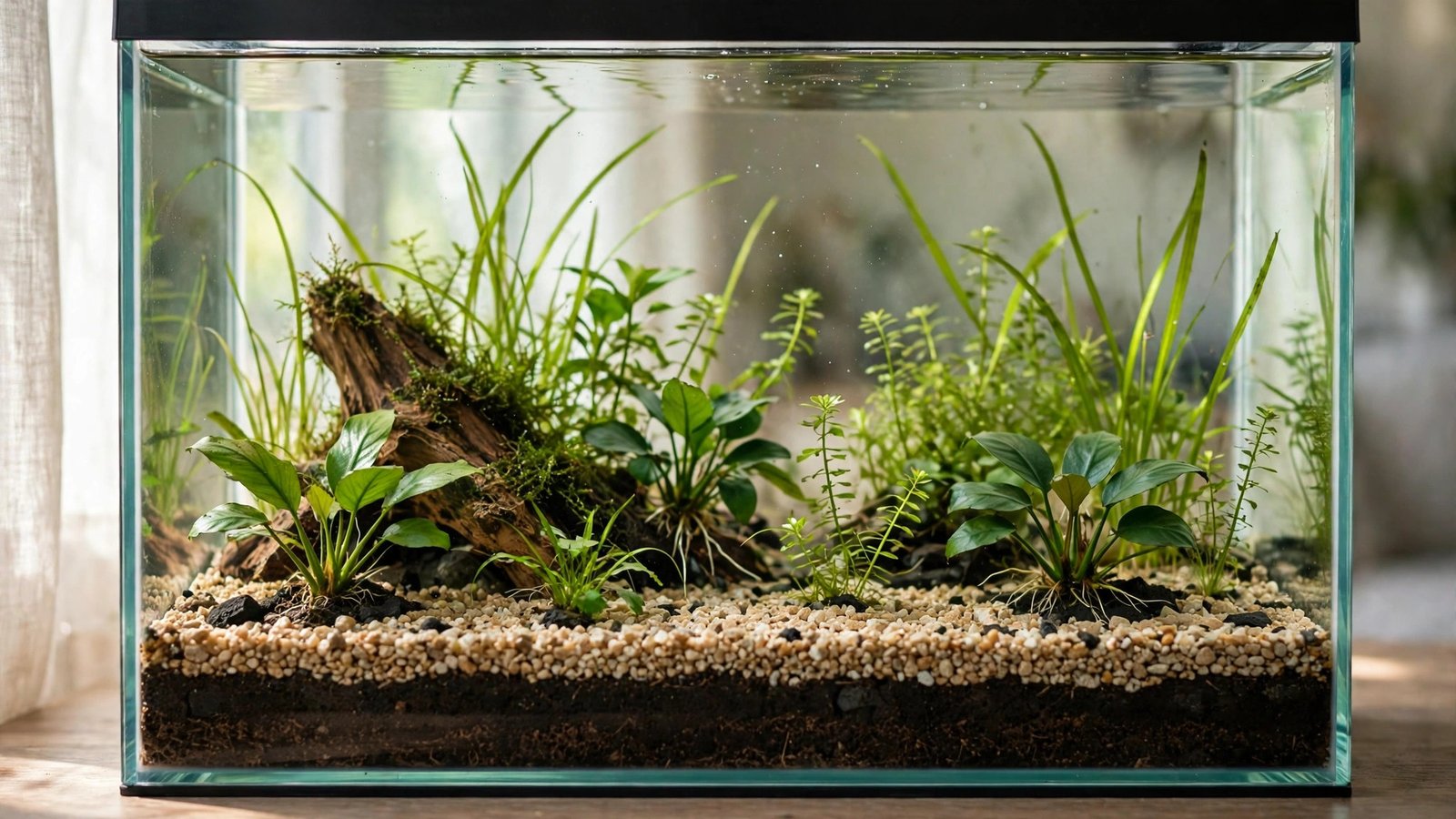
The most expensive bag in the substrate aisle is not always the right one, and Dennerle DeponitMix wins that category in plenty of shops. It sits beside bags of aquasoil, looking like a complete substrate. It is not. A Dennerle DeponitMix planted tank works only when you treat the product as what it is: a nutrient concentrate that lives under a gravel or sand cap — never on top, never mixed in. Get that right and it feeds root-heavy plants for a year or more; get it wrong and you become the next ammonia-spike story on the forums.
In short: Dennerle DeponitMix is a mineral nutrient base layer laid 1–2 cm thick beneath a 3–4 cm gravel or sand cap, feeding root-feeding plants for roughly a year before root tabs take over. The most cited hobbyist warning comes from a UKAPS "DeponitMix overdose" thread, where hobbyists reported ammonia spikes after laying it thicker than intended — a shrimp-safety concern worth respecting. Thin layer, proper cap, and it outperforms bare inert substrate at a fraction of full-aquasoil cost.
What DeponitMix Actually Is (and Is Not)
Think of planted-tank substrates as two camps: all-in-one substrates like aquasoil that do everything (buffer pH, soften water, feed roots), and inert substrates that do nothing but hold plants in place. DeponitMix sits in a third, older tradition — the nutrient base layer. It is a mineral-rich concentrate carried on quartz sand, designed to release nutrients to roots from underneath a neutral cap. The guide to the best substrate for a planted tank explains where this layered approach fits among the options.
It is a branded refinement of a very old DIY idea — the generic peat base-layer method hobbyists have used for decades — with consistent grain size and no peat mess. You are paying for convenience, not a different mechanism.
Setting Up a Dennerle DeponitMix Planted Tank: Layering That Works
The single most important number in this guide is two: never exceed 2 cm of DeponitMix. Level it with a ruler. The concentrate is potent, and burying it under the correct cap keeps that potency in the root zone instead of your water column.
| Layer | Depth | Role |
|---|---|---|
| DeponitMix base | 1–2 cm, levelled | Nutrient reservoir for roots |
| Gravel cap (2–4 mm) | 3–4 cm | Safest all-rounder: locks nutrients in, lets roots through |
| Coarse sand cap | 3–4 cm | Works, but compacts — stir gently at water changes |
Buy for the footprint, not the tank volume: a single 2.4 kg bag covers a standard 60-litre (60 × 30 cm) base at the recommended thickness. If you want a slope, build it with extra cap material toward the back — never extra DeponitMix. Thick pockets of concentrate are exactly what caused the ammonia problems discussed below. Do not cap with aquasoil either: stacking a nutrient substrate on a nutrient base layer doubles leaching risk for zero benefit. The complete guide to inert substrates covers better cap options.
DeponitMix vs JBL AquaBasis Plus: The Real Debate
Ask any forum which base-layer concentrate to buy and you will get the Dennerle-versus-JBL argument. The honest summary: both products do the same job. They are mineral nutrient layers that live under a cap and feed roots — the layering discipline above matters far more than which bag you buy. (The deep-dive on JBL's Manado substrate covers the other side of JBL's substrate lineup.)
| Dennerle DeponitMix | JBL AquaBasis Plus | |
|---|---|---|
| Availability | Strong in the UK and EU, patchier elsewhere | Widely available across Europe and online |
| Price position | Premium — you pay for the Dennerle name | Usually the cheaper of the two |
| Best argument for | Consistent grain, long track record | Same mechanism, lower cost per tank |
Choose on price and local availability. The threads that argue otherwise usually compare a well-layered JBL tank against a poorly-layered Dennerle tank, or vice versa. Neither product rescues a 4 cm base layer.
The Overdose Question: Shrimp, Ammonia, and Thick Layers
The UKAPS "DeponitMix overdose" thread is the most useful community evidence on this product, and it deserves an honest summary rather than a dismissal. Hobbyists who laid it thicker than intended — 3–4 cm instead of 1–2 — reported ammonia readings during the cycle and, in some tanks, shrimp losses. The mechanism is not mysterious: a deep, undisturbed nutrient layer leaches into the water column faster than a new tank's biology can process, and invertebrates feel it first.
The takeaway is reassuring rather than scary. Tanks built to the 1–2 cm spec, capped properly, and cycled before stocking do not produce these reports. For shrimp tanks, cycle four to six weeks with plants in, start with a small hardy colony, and watch behaviour before committing your full stock. Thin layer, full cycle, gradual stocking — the standard conservative rhythm for any nutrient-rich substrate.
Who Should (and Shouldn't) Buy It
DeponitMix earns its keep in a specific kind of tank: a low-tech or moderate-tech setup built around heavy root feeders, where you want rich rooting without paying for a full aquasoil bed. Crypt and sword gardens, vallisneria backdrops, lotus centerpieces — root-feeding plants will show the difference against bare gravel within weeks.
Skip it in three cases: if you are already buying a full aquasoil bed for a high-tech scape (the best aquasoils for planted tanks roundup does the whole job — stacking systems wastes money); shrimp-breeding tanks where you want absolute nutrient-leach minimalism; and any tank where you will constantly replant stems, since every uprooting risks breaking the seal. When growth slows after a year or two, root tabs versus aquasoil explains how to recharge the root zone without tearing the tank down.
Frequently Asked Questions
Can I use DeponitMix without a cap?
No — it is designed strictly as an underlayer and performs badly exposed. Without a 3–4 cm gravel or sand cap, the concentrate clouds the water, leaches nutrients into the water column, and fuels algae. It only behaves as advertised when sealed beneath an inert cap that roots can grow through.
Does DeponitMix lower pH like aquasoil does?
No. It is a nutrient layer, not a buffering substrate — it does not meaningfully soften water or pull pH down the way aquasoils do. Your parameters will follow your tap water and your cap material. For acidic, soft water, you need aquasoil or RO remineralization instead.
How long does DeponitMix last before I need root tabs?
Most hobbyists report strong root-feeder growth for a year or more. Amazon swords are the first to signal depletion with smaller new leaves. When that happens, push root tabs deep into the cap near the plant bases rather than tearing the substrate up.
Is DeponitMix safe for shrimp?
Yes, when layered correctly — 1–2 cm, properly capped, tank fully cycled before stocking. The shrimp losses in the UKAPS overdose thread traced back to thicker-than-spec layers leaching ammonia, not normal use. Cycle four to six weeks with plants in and start with a small hardy colony first.
DeponitMix or a full aquasoil bed — which should a beginner choose?
For a first low-tech tank, DeponitMix under gravel is the calmer, cheaper choice: no ammonia-heavy cycling phase, no pH swings, forgiving layering. Aquasoil wins for high-tech scapes needing buffering and water-column feeding. Beginners chasing demanding carpets or soft-water species should go aquasoil.
Built thin, capped well, and left alone, DeponitMix does what a base layer should: disappear into the tank's routine while the roots do the talking. For product details see the official Dennerle website, and for community experience the substrate discussions on the UKAPS forum.