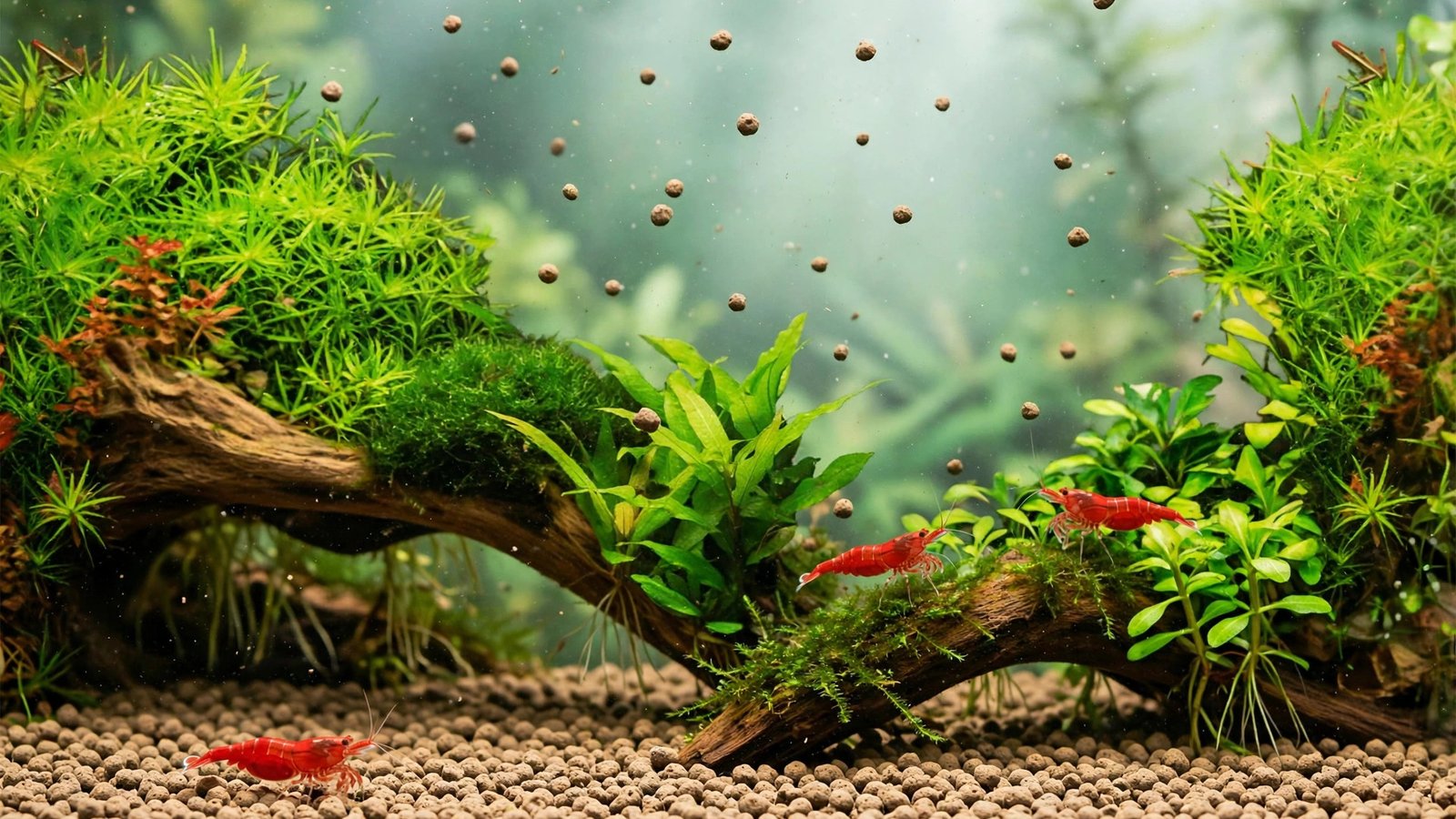
The first time you pour JBL Manado into an aquarium, half of it floats. You watch reddish-brown grains drift like tiny buoys and wonder if the bag was a mistake. It wasn't — but a JBL Manado substrate planted tank set up blind will punish the misunderstanding. Manado is fired clay whose porous grains store nutrients and hand them to roots on demand: inert, quietly useful, and quirky. This guide covers the floating grains, the pH surprises shrimp keepers report, AquaBasis Plus layering, and when to buy aquasoil instead. Still comparing? Start with our best substrate for planted tanks overview first.
What JBL Manado Actually Is (and Isn't)
Manado is natural clay burned until each grain becomes a porous little sponge. That porosity is its whole value: huge surface area for beneficial bacteria plus a nutrient buffer that soaks up excess fertilizer from the water column and releases it when roots need it. A brief lukewarm rinse before use settles the dust.
The common misconception is that Manado is a type of aquasoil. It isn't. Aquasoils like UNS Controsoil buffer pH down, strip carbonate hardness, and leach NPK for months. Manado does none of that — think of it as the clever cousin of inert substrates: water-neutral, but with a functional memory for nutrients. One distinction decides everything: you must bring your own fertilizer from day one.
JBL Manado Substrate Planted Tank Setup, Step by Step
Most Manado complaints are setup errors. Follow JBL's recommended layering and nearly all of them disappear.
- Soak first. Rinse briefly in lukewarm water, then submerge the grains in a bucket for 12–24 hours. Dry Manado traps air in its pores — that's what floats. Soaked grains stay put.
- Lay the nutrient base. Spread 2 cm of JBL AquaBasis Plus on the empty tank floor. Manado has no nutrients; this base is the engine.
- Cap with 4–6 cm of Manado. That 2-cm-base-plus-4–6-cm-cap layering comes from JBL's own setup guide. Too shallow and the base escapes; too deep and you smother it.
- Fill slowly over a plate. Pouring straight onto dry clay kicks up dust and re-floats grains. Lay a plate on the bed and pour onto it.
- Skim the floaters. A handful will bob at first. Net them off — harmless, just unsightly — and the bed settles in a day or two.
- Plant from day one. No ammonia spike, so no cycling wait. Plant heavily immediately; fast growers love the oxygenated root zone.
The pH and Shrimp Question, Answered Honestly
Manado is marketed as water-neutral, and mostly it is — it won't buffer water up or down the way aquasoil does. But planted-tank forums hold years of scattered reports from shrimp keepers who saw unexpected pH or GH drift in the first weeks of a new Manado tank, sometimes enough to stress sensitive Caridina. As a natural product, mineral content varies between batches, and fresh clay can interact with very soft water until the tank matures.
The practical line: for Crystal Red, Taiwan Bee, and other soft-water Caridina needing stable acidic parameters, Manado is the wrong substrate — you want an active aquasoil, per our best aquasoil for planted tanks guide. For Neocaridina shrimp, amanos, and hard-water fish it's safe: test pH and GH weekly for the first month. Rounded grains are gentle on corydoras barbels.
AquaBasis Plus: The Pairing That Makes Manado Work
JBL designed Manado and AquaBasis Plus as a system. AquaBasis Plus is the nutrient substrate: a mineral base loaded with the macros and micros plants need to establish, sitting under the Manado cap where it can't cloud the water. The Manado above anchors plants and ferries nutrients from the water column down to the root zone.
The pairing fixes Manado's one real weakness — no built-in fertility — while keeping its strengths: no ammonia leach, no expiry, rescape-friendly. For the first 6–12 months the base feeds heavy root feeders directly; liquid fertilizer then tops up the Manado's buffer for water-column feeders. If you'd rather feed an inert bed with tabs, compare the approaches in our root tabs vs aquasoil guide. The closest single-brand alternative is Seachem Flourite — same inert-plus-porous role, different texture and price.
Manado vs Aquasoil vs Inert Sand: The Honest Comparison
| Feature | JBL Manado | Aquasoil | Inert sand/gravel |
|---|---|---|---|
| Buffers pH down | No (water-neutral) | Yes, to ~pH 6.0–6.8 | No |
| Built-in nutrients | None | High (months of leaching) | None |
| Nutrient storage | High — porous clay | High (CEC) | Very low |
| Ammonia on setup | None | Yes — cycle required | None |
| Longevity | Indefinite | 1–3 years, then exhausts | Indefinite |
| Rescape-friendly | Excellent | Poor — crumbles, clouds | Excellent |
| Floating grains | Yes, until soaked | No | No |
| Best for | Low-tech, rescaping, hard-water tanks | High-tech, soft-water, Caridina | Fish-only, minimal setups |
Longevity: The Substrate That Never Expires
This is the argument that sells Manado, and it holds up. Aquasoils are consumables: buffering and nutrients deplete over 1–3 years, grains soften and break down, and eventually you face a full substrate replacement in an established tank — see our aquasoil exhaustion guide for that timeline. Fired clay doesn't degrade: grains stay granular for a decade or more, the pore structure keeps buffering nutrients, and the only maintenance is topping up thin spots.
The trade-off is real: you never get the lush first six months of a fresh aquasoil, because Manado starts nutritionally empty and depends on what you feed it. Over five years Manado is cheaper, calmer, and far less work. Over the first six months, aquasoil grows plants better.
Frequently Asked Questions
Why is my JBL Manado floating on the surface?
Dry Manado traps air in its porous clay, so some grains float at first. Soak it in a bucket for 12–24 hours, then fill the tank slowly over a plate. A few stray floaters are normal — net them off and the bed settles in a day or two.
Do I need AquaBasis Plus under Manado, or can I use it alone?
You need a nutrient source, since Manado contains none. AquaBasis Plus as a 2 cm base layer is the intended pairing and most forgiving for beginners. Or run Manado alone with root tabs plus liquid fertilizer — just dose from day one.
Does JBL Manado lower pH like aquasoil?
No. Manado is effectively water-neutral — it doesn't buffer pH down or strip hardness like aquasoils. Some keepers report minor early pH or GH drift in very soft water, so test weekly the first month. For soft-water Caridina, choose an active aquasoil instead.
Is JBL Manado safe for shrimp and bottom-dwelling fish?
Yes for Neocaridina cherry shrimp, amanos, corydoras, and loaches — rounded grains are gentle on barbels and nothing toxic leaches out. Only avoid it for sensitive Caridina (Crystal Red, Taiwan Bee) that need aquasoil's active buffering; test parameters weekly the first month.
How long does JBL Manado last before needing replacement?
Effectively indefinitely. Fired clay doesn't break down or exhaust its nutrient-buffering capacity the way aquasoils do over 1–3 years. Top up thin areas after years of vacuuming — the AquaBasis Plus underneath depletes, but the Manado itself never needs scheduled replacement.
Should You Buy Manado?
Buy Manado for a planted tank that's calm to run: no ammonia spike, no expiry date, no mud when you rescape. Skip it for explosive high-tech growth or soft-water shrimp. Grab AquaBasis Plus with it — Manado without a nutrient layer is a bookshelf with no books. Check bag sizes (3, 5, 10, 25 liters) on jbl.de before ordering.