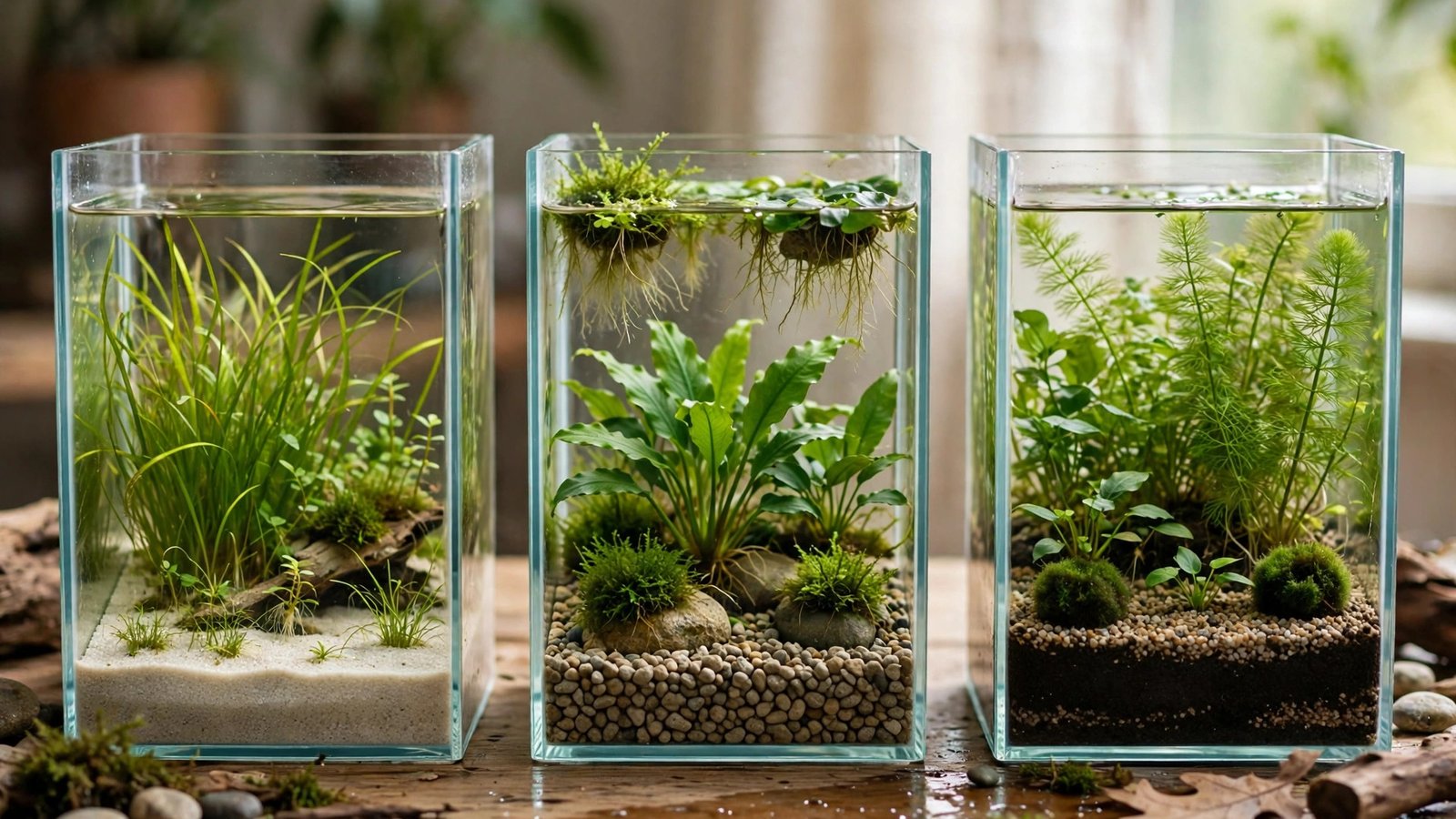
My first heavily planted tank's substrate cost more than the tank, light, and filter combined — and half of it was money burned. You don't need premium aquasoil to grow a jungle. The cheapest substrate for a heavily planted tank comes down to which budget materials actually feed plants and which just sit there. Here's every option ranked by cost per gallon, with honest math on where each wins.
If you haven't picked a direction yet, our breakdown of the best substrate for planted tanks shows how these budget picks stack up against premium options — then come back here to build the same tank for a fraction of the price.
The real budget math: cost per gallon, not per bag
Bags lie. A 20-gallon tank with a proper 2–3 inch bed needs two or three bags of aquasoil — the honest number is cost per gallon of tank capacity. On that metric, inert sands land at a small fraction of aquasoil's price.
Most heavily planted tanks want a 2–3 inch bed — deep enough to anchor stems, shallow enough to avoid anaerobic dead zones. See how deep your substrate should be, and our quantity guide for how many pounds your footprint needs. Buy for your footprint, not the bag on the shelf.
Budget substrates ranked, cheapest first
| Option | Cost tier | Nutrition | Cap needed? | Best for |
|---|---|---|---|---|
| Pool filter sand + root tabs | $ | None (inert) — tabs supply it | No | The classic budget jungle |
| Black blasting sand + root tabs | $ | None (inert) — tabs supply it | No | Dark, dramatic scapes |
| Calcined clay + root tabs | $ | High CEC, no nutrients out of the bag | No | Low-tech root feeders |
| Organic potting mix, capped (dirted) | $ | Very high for 12–24 months | Yes — 1.5–2" sand or gravel | Patient aquascapers |
| Budget aquasoils (Fluval Stratum, Controsoil) | $$ | High for 12–24 months, buffers pH down | No | Carpets, red plants, CO2 tanks |
1. Pool filter sand + root tabs: the cheapest proven combo
Pool filter sand is graded #20 silica — uniform 0.45–0.55 mm grains that let water flow through without packing into concrete. It's inert, fish-safe, and a 50-lb bag from any pool supply store is more than a 20-gallon tank needs. Rinse it until the water runs clear, lay your bed, and push root tabs into the root zones of heavy feeders like Amazon swords and cryptocorynes.
Thousands of keepers have run this combo for decades — see our pool filter sand guide for the full routine. The sand never exhausts and never needs replacing; you just refresh the tabs every 2–3 months. Nothing here beats its startup cost.
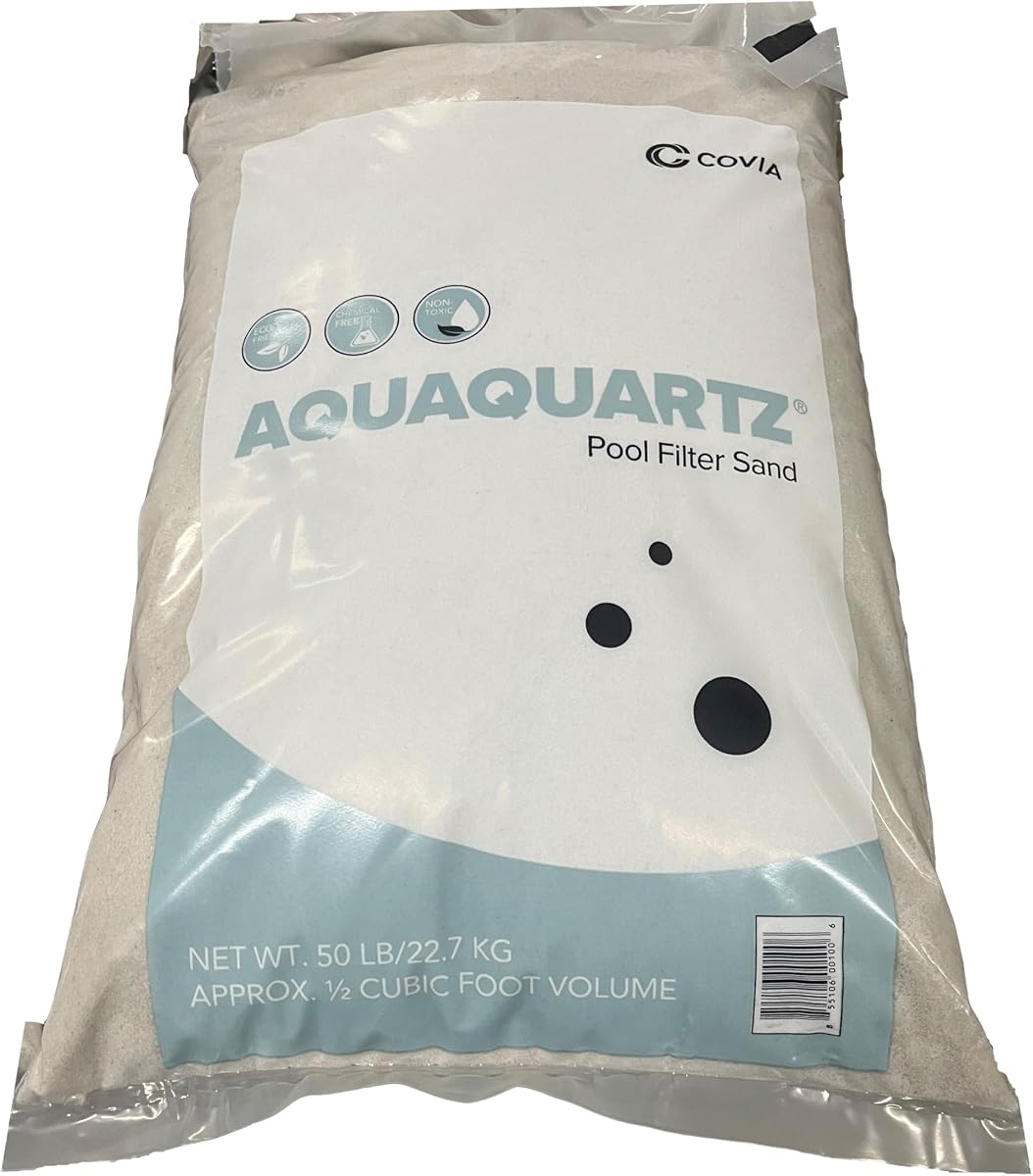
Covia AquaQuartz Pool Filter Sand
Check Price on Amazon2. Black blasting sand: the dark-scape bargain
Want the black-substrate look without black-aquasoil prices? Black blasting sand — coal slag sold as abrasive in medium 20/40 grit — costs about the same as pool filter sand and makes green foliage and red plants pop.
Treat it like pool filter sand: rinse thoroughly (it ships dusty), pair it with root tabs, and expect the same inert, never-exhausts behavior. Full details in our black blasting sand guide. One caution: keepers of delicate bottom-dwellers like corydoras sometimes prefer smoother grains, so match the substrate to your livestock too.
3. Calcined clay: the garden-aisle secret
Calcined clay — baked clay granules sold as Turface at farm stores — is the sleeper pick. Out of the bag it has zero nutrients, but it has high cation exchange capacity (CEC): it grabs dissolved nutrients from the water column, holds them in the granules, and releases them to roots over time.
Rinse the dust off, plant directly into it, and feed it with root tabs — our calcined clay guide covers the setup. Unlike exhausted aquasoil, it never breaks down into mud, so the bed runs for years with tabs as the only cost.
4. Dirted tanks: nearly free, wildly fertile — respect the ammonia
A one-inch layer of organic potting mix (no perlite, no added fertilizers) capped with 1.5–2 inches of sand or gravel is the cheapest fertile substrate that exists. For 12–24 months it feeds root feeders better than anything else here — it's actual decomposing organic matter.
The price is patience. Fresh soil leaches ammonia for 2–4 weeks — cycle the tank, test daily, and plant heavily from day one so the plants drink up the excess. Many keepers mineralize the soil first: soak, dry, repeat for 2–3 weeks to burn off the spike. Never stir the cap into the soil during replanting — you'll release a nutrient bomb and an algae bloom.
5. Budget aquasoils: when "cheap" is the smarter buy
Mid-tier aquasoils like Fluval Stratum or Controsoil cost more upfront but can be cheaper per year for demanding plants — they feed everything 12–24 months with zero maintenance and buffer pH down for soft-water species. Carpeting plants root into them far faster than into inert sand.
The full economic comparison is in our root tabs vs aquasoil breakdown, and our inert substrates guide covers when skipping bed nutrition entirely is right. Rule of thumb: swords and crypts? Sand and tabs. Carpets and red stems in a CO2 tank? A budget aquasoil pays for itself.
When cheap becomes expensive
The cheapest substrate is the one you never replace. Root tabs are a recurring cost — refresh every 2–3 months or growth stalls. Dirted tanks are nearly free to build but punishing to re-scape. And the classic money pit is mid-tier "planted tank gravel" from big-box pet stores: priced like aquasoil, inert like sand, feeding nothing — the worst of both worlds.
Frequently Asked Questions
Can pool filter sand really grow a heavily planted tank?
Yes — the sand is the anchor, not the fertilizer. Pool filter sand is inert silica that holds plants in place while root tabs supply nitrogen, phosphorus, potassium, and iron. Heavy root feeders like Amazon swords and cryptocorynes thrive in sand-plus-tabs setups, and the sand never exhausts.
How often do I need to replace root tabs in a budget substrate?
Most root tabs last 2–3 months, though heavy feeders in warm, high-light tanks exhaust them faster. Push new tabs into each heavy feeder's root zone on a calendar schedule instead of waiting for yellowing leaves — by the time deficiency shows, growth has already stalled for weeks.
Is a dirted tank actually cheaper than aquasoil?
Upfront, yes — the soil costs almost nothing versus multiple bags of aquasoil, and it feeds plants 12–24 months with no fertilizer purchases. The hidden costs are your time: mineralizing the soil, cycling through the ammonia spike, and the messy teardown when the soil exhausts. If you re-scape often, aquasoil is cheaper in practice.
Does black blasting sand hurt bottom-dwelling fish?
The medium 20/40 grit most keepers use is generally considered safe — thousands of tanks run it with corydoras and loaches without issues. Coal slag grains can have sharper edges than rounded pool filter sand, so keepers of especially delicate bottom-dwellers often choose smoother sand instead. Rinse it thoroughly either way; it ships dusty.
How much cheaper is sand than aquasoil for a 20-gallon tank?
On cost per gallon, inert sand is a small fraction of aquasoil's price — one 50-lb bag of pool filter sand, costing single-digit dollars, covers a 20-gallon bed with pounds to spare, while the same tank needs multiple liters of aquasoil at premium prices. Add two years of root tabs and sand still wins on total cost.
The bottom line
Shop by cost per gallon of tank, per year of growth — not by bag price. For most heavily planted low-tech tanks, pool filter sand with root tabs is the cheapest substrate that works: decades-proven, never needs replacing, and frees your budget for the light and plants that matter more. Even Tropica's substrate and bottom-layer guide frames the bed's job as anchoring roots and delivering nutrients — however you get there.