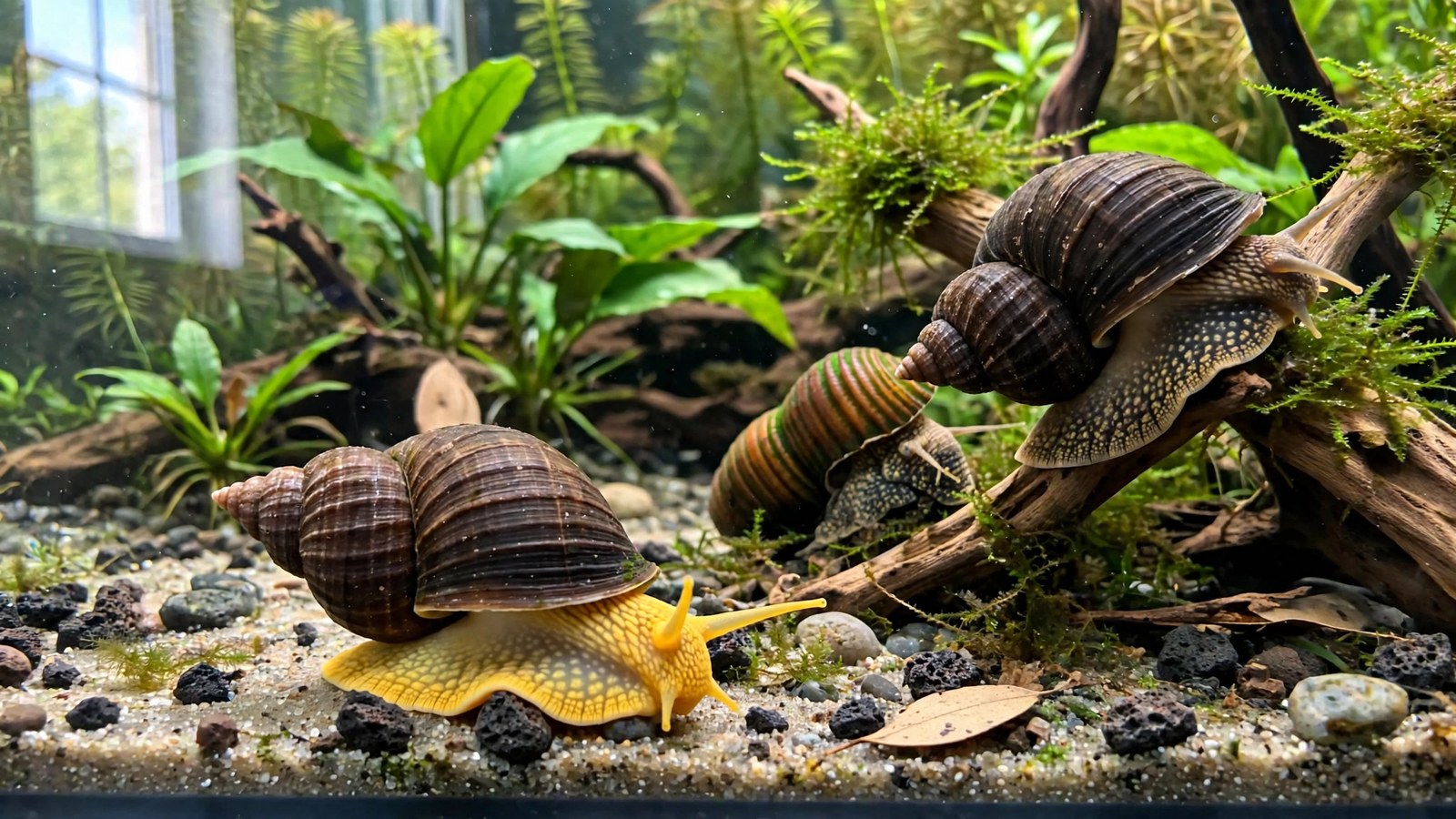
Most people who lose a rabbit snail never see it happen. They treat it like a mystery snail, drop it into soft, neutral water, and watch the shell's spire quietly pit and erode over a few months until the animal gives up. This guide covers the rabbit snail care essentials — hard, alkaline water, warm temperatures, burrowing-friendly sand, and steady calcium — so your Tylomelania stays active and grows a flawless shell for years.
What makes rabbit snail care different
Rabbit snails (Tylomelania) come from the ancient, mineral-rich lakes of Sulawesi, Indonesia — waters that are warm, hard, and permanently alkaline. Everything about their care traces back to that. Unlike the mystery and nerite snails in our planted snail tank setup guide, these snails evolved in hard water: put them in soft, acidic water and the shell's spire begins to pit and dissolve, damage that never grows back.
They are slow at everything — growing, breeding, even dying. A rabbit snail can take a year or more to reach its full 3–4 inch length, and females give birth to a single, fully developed baby at a time. So they never become a pest. Expect them to be most active at dusk and night, bulldozing slowly through the sand with their long "rabbit ear" tentacles out front.
Tank size, lid, and sand substrate
Give them a 20-gallon tank or larger — they reach 3–4 inches, and small tanks swing in temperature and pH too easily for an animal that hates sudden change. A tight-fitting lid is mandatory: they climb the glass at night and will find any gap.
The substrate is non-negotiable: fine sand. Rabbit snails burrow and plough through it while grazing; coarse gravel can chip the shell lip and damage their foot. Use pool-filter sand or aquarium-grade river sand, 1–2 inches deep. If you run a dirted tank setup, cap the soil with a full inch of sand so the snails never touch bare dirt. If this is your first setup, our first planted tank shopping list covers the essentials.
Water parameters: hard, warm, and stable
Sulawesi's lakes barely change across seasons, so stability matters as much as the numbers. Rabbit snails are also unusually sensitive to ammonia and nitrite — only add them to a fully cycled tank. Our guide to cycling a planted tank faster gets you there without risky shortcuts.
| Parameter | Target | Notes |
|---|---|---|
| Temperature | 76–84°F (24–29°C) | Below 74°F they go sluggish and stop feeding |
| pH | 7.5–8.5 | Below 7.0 the shell erodes — the #1 killer |
| GH | 6–12 °dH | Minerals for shell growth |
| KH | 4–8 °dH | Keeps pH stable between water changes |
| Ammonia / nitrite | 0 ppm | More sensitive than most fish |
| Nitrate | Under 20 ppm | 30% weekly water changes |
If your tap water is soft, buffer it: a 2-inch chunk of cuttlebone per 10 gallons (replaced every few weeks), a mesh bag of crushed coral in the filter, or a mineral supplement dosed with water changes. Acclimate new snails with a 45–60 minute drip so the pH shift hits them gradually.
Feeding: calcium is non-negotiable
Rabbit snails are peaceful omnivorous grazers. In a mature tank they rasp biofilm, soft algae, and detritus for hours — but biofilm alone cannot build a 4-inch shell, so supplement:
- Daily: one algae wafer or sinking pellet per 2–3 snails, fed after lights out when they are most active
- 2–3 times a week: blanched zucchini, spinach, or green beans (2 minutes in boiling water; remove uneaten pieces after 24 hours)
- Always available: a calcium source — cuttlebone, a calcium block, or calcium-enriched snail food — so new shell growth comes in thick
One hard rule: never use copper-based medications (many ich and parasite treatments contain copper sulfate) — copper is lethal to all snails. Check medication labels before dosing.
Breeding: slow, live, and welcome
Rabbit snails are livebearers — a pregnant female releases one fully developed baby, roughly pea-sized, every 4–8 weeks. You cannot sex them visually, so keep a group of 4–6 and let nature sort it out.
Babies arrive ready to eat and need no special care beyond what the adults get. With no egg clutch and no boom cycle, they never become a pest — one extra snail every month or two is easy to rehome. If you want to grow the babies out, dense planting and powdered food help; our breeding tank plants setup guide shows which plants give juveniles the best cover.
Tank mates and plants they won't destroy
Rabbit snails are entirely peaceful — they ignore fish, and peaceful fish ignore them. The danger runs the other way: snail-eating species will harass or kill them.
| Tank mate | Verdict | Why |
|---|---|---|
| Tetras, rasboras, guppies | Excellent | Peaceful, ignore the snail |
| Cherry shrimp, Amano shrimp | Good | Coexist fine — see our planted shrimp tank setup if you keep both |
| Otocinclus, small corydoras | Good | Share the sand, never bother snails |
| Bettas | Usually fine | Most ignore a snail too big to bully |
| Loaches, puffers | Avoid | Will nip tentacles and crack shells |
| Assassin snails | Avoid | They will hunt rabbit snails |
| Large crayfish | Avoid | Snails become dinner |
On plants, they are mostly blameless — too heavy for leaves, grazing only biofilm and decaying matter. A hungry snail in a barren tank may rasp soft plants like hornwort, so feed well and your scape stays untouched. Build your planting plan from our complete guide to freshwater aquarium plants to pick species that thrive in the same hard, alkaline water.
Warning signs to watch for
White, pitted patches on the shell spire mean the water is too soft or acidic — test pH and GH, then add cuttlebone or crushed coral. The damage is permanent but you can stop it progressing. Days of total inactivity usually means cold water or an ammonia spike: test, warm, and change water. A snail that has fallen on its back may struggle to right itself on bare glass — set it gently foot-down on the sand.
For deeper parameter background, Terrarium Station's rabbit snail care reference and the Aquarium Wiki's Tylomelania species profile both confirm the same Sulawesi water chemistry targets.
Frequently Asked Questions
How many rabbit snails should I keep together?
Start with 3–4 in a 20-gallon tank — you will see more natural behavior with company. Keep 4–6 if you want a chance at breeding, since they cannot be sexed and you need both males and females present.
Will rabbit snails eat my aquarium plants?
Generally no. They graze biofilm and algae off leaves and mostly stay on the substrate. A hungry snail in a barren tank may rasp soft plants like hornwort — feed algae wafers and blanched vegetables regularly and they leave your scape alone.
Why is my rabbit snail not moving?
They routinely rest for 24–48 hours tucked into their shells — this is normal. First checks: temperature (must be 76–84°F) and ammonia/nitrite (must be zero). Fix the water and most "dead" snails wake up.
Do rabbit snails need a male and female to breed?
Yes — they are not hermaphroditic and cannot clone themselves, which is exactly why they never overrun a tank. Since the sexes look identical, keep 4–6 snails to guarantee both sexes and expect one pea-sized baby every 4–8 weeks.
Can rabbit snails live with bettas or shrimp?
Yes, with caveats. Most bettas ignore a snail too large to bully — watch the first week. Cherry and Amano shrimp are fully compatible. Never mix them with loaches, puffers, assassin snails, or crayfish.
Bringing it home
Rabbit snails reward one simple discipline: respect where they came from. Give them warm, hard, alkaline water over fine sand, feed them like the grazing omnivores they are, and keep calcium in the tank at all times. Start with the tank itself — revisit our planted snail tank setup guide for the baseline layout, then tune the water chemistry for Sulawesi.