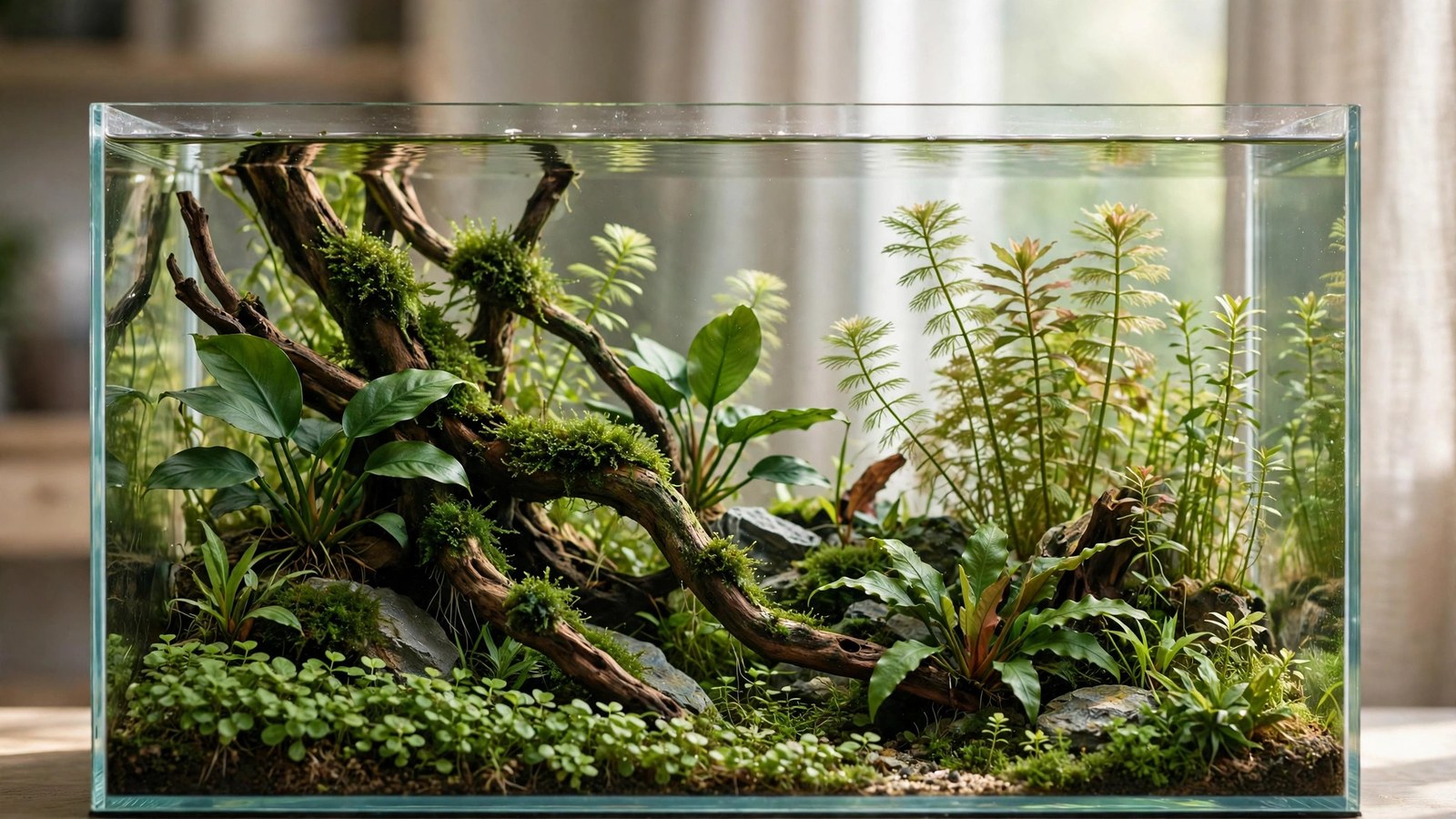
Here's a quiet rebellion against the idea that every aquarium needs fish: the fishless planted tank — an underwater garden kept for its own sake, where plants are the livestock. No feeding schedules, no compatibility charts, no 6 AM filter emergencies. Just a living aquascape that grows more beautiful the less you fuss over it. Whether as a deliberate choice or a waiting room for future stocking, the plants-only tank deserves its own guide.
Why Go Fishless?
The reasons are more practical than philosophical:
- Zero bioload stress: no ammonia spikes from overfeeding, no disease outbreaks, no compatibility disasters. The tank's chemistry is whatever you set it to.
- Maximum plant focus: every decision serves the plants — lighting, CO2, fertilization tuned without worrying about livestock sensitivity.
- The waiting room: a fishless planted tank is the ideal way to mature a system before adding sensitive livestock like shrimp or discus. Our planted shrimp tank setup and planted discus setup both demand mature tanks — this is how you build one deliberately.
- Travel-proof: a plants-only tank survives a two-week vacation with a timer and a top-off; no fish sitter needed.
- The aesthetic choice: some aquascapers simply prefer the stillness — plants, snails, and shrimp as the only movement.
The Nutrient Question: Feeding Plants Without Fish
Fish provide free fertilizer — ammonia, CO2 from respiration, and micronutrients. Without them, you replace the inputs deliberately:
- Nitrogen: dose potassium nitrate (KNO3) as part of your fertilizer regimen — fishless tanks are typically nitrogen-limited, which stalls growth and invites algae.
- Phosphorus: dose monopotassium phosphate (KH2PO4) or rely on a comprehensive fertilizer that includes it.
- CO2: without fish respiration, dissolved CO2 runs lower — injected CO2 shows even more dramatic results in fishless tanks. Or go low-tech and accept slower growth; our low-tech guide applies.
- Comprehensive fertilizer: dose per the EI or PPS-Pro method from day one — there's no livestock to protect from dosing, so you can fertilize decisively.
The irony: fishless tanks often grow plants better than stocked tanks, because you control every input precisely instead of depending on the variable output of fish.
With no fish waste, dose a balanced liquid fertilizer from the start: Seachem Flourish.
Setup: Any Size, Plant-Heavy
Tank size is free choice — nano cubes make stunning plant-only displays (our nano planted ideas), while larger tanks become true underwater gardens. The principles:
- Substrate: aquasoil 2 inches — the nutrient reservoir. Without fish waste, the soil's initial fertility matters more.
- Plant 80%+ from day one — the denser the better; plant mass is your filtration, your algae control, and your display.
- Filtration: still needed — a hang-on-back or canister for circulation, mechanical polishing, and biological stability. Plants don't replace water movement.
- Lighting: 7–8 hours on a timer, intensity matched to your plant choices.
- Hardscape: wood and stone as usual — the aquascaping rules don't change without fish.
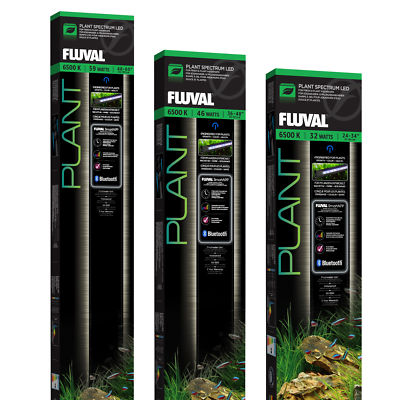
Plant-heavy setups need real light even without livestock: Fluval Plant 3.0 LED.
 ★4.3
Fluval Plant 3.0 LED Planted Aquarium Lighting, 22W
Check Price on Amazon ★4.3Best Plants for Fishless Tanks
Without livestock constraints, choose purely for the scape — including species that fish would destroy:
- Delicate stem plants: rotala wallichii, ammania, ludwigia — the fussy beauties that thrive when conditions are precisely controlled
- Carpets: HC Cuba, dwarf hairgrass, Monte Carlo — fishless tanks with CO2 grow the most perfect carpets in the hobby
- Red plants: alternanthera, rotala macrandra — color intensity peaks with precise fertilization
- Epiphytes and mosses: anubias, bucephalandra, java fern — the low-maintenance backbone
- Floating plants: red root floaters, frogbit — unrestricted surface growth; see our floating plant guide
Styles that excel fishless: iwagumi (our iwagumi guide), Dutch streets (our Dutch walkthrough) — the high-precision styles where livestock is incidental anyway.
Cycling Without Fish (and Why It's Easier)
Fishless cycling with plants is straightforward: plant heavily, dose a small ammonia source (or just let the aquasoil leach), and wait 2–4 weeks for the biofilter to establish — our plant-assisted cycling guide covers the method. Without livestock deadlines, there's no pressure — let the tank mature fully, grow the plants in, and enjoy the process.
Many fishless keepers never "finish" cycling in the traditional sense — they just maintain the planted system indefinitely, adding ammonia-free fertilizer and watching the garden grow.
The Shrimp-and-Snail Compromise
Most "fishless" tanks aren't truly lifeless — they host the invertebrate crew:
- Cherry shrimp: add movement, color, and algae-grazing without bioload concerns; breed gently. Our shrimp tank setup covers their care.
- Nerite snails: the algae crew; can't breed in freshwater, so no population explosion.
- Amano shrimp: larger algae-eaters for bigger tanks.
- Malaysian trumpet snails: substrate aerators; reproduce, but usefully.
This is the sweet spot for many keepers: all the life and motion of a planted ecosystem, none of the feeding, disease, or compatibility overhead of fish.
Maintenance: Lighter Than You'd Think
- 20–30% water change every 1–2 weeks — less waste means less urgency, but reset nutrients and remove organics on schedule.
- Fertilize consistently — the plants' only food source is you; don't forget them.
- Trim on the plants' schedule — stems every 2–3 weeks, carpets monthly.
- Top off evaporation — with RO/distilled; no fish means mineral creep shows as plant deficiencies.
- Glass and filter — as usual, just less urgently.
Advanced Variation: The Walstad Fishless Tank
The Walstad method — soil under a sand cap, no filter, no CO2 — was practically designed for fishless tanks. Without fish bioloads, a Walstad fishless bowl or tank reaches equilibrium beautifully: soil feeds the plants, plants oxygenate and filter, and the only input is light and occasional top-offs. A 5-gallon Walstad fishless cube with crypts, anubias, and floaters can run for months with almost no intervention — the closest thing to a self-sustaining ecosystem on a desk. Our Walstad method guide covers the soil-and-cap technique; going fishless just removes the bioload variable that makes Walstad tanks tricky. Start with the dirted approach in our dirted tank setup if the full Walstad philosophy appeals — fishless is the most forgiving way to learn it. And don't overlook the nano option: a 2–3 gallon Walstad fishless bowl on a windowsill (with sheer-curtain light diffusion to prevent algae) is the lowest-cost entry into the method, growing crypts and anubias for years with nothing but top-offs. Small, soil-based, fishless — the holy trinity of low-maintenance planted keeping.
Frequently Asked Questions
Will plants grow without fish waste?
Yes — better, in many cases. Fish waste is just imprecise fertilizer; deliberate dosing (nitrate, phosphate, micros, CO2) gives plants exactly what they need in exactly the right amounts. The "plants need fish" idea confuses a convenient nutrient source with a requirement. Fertilizer is fertilizer, regardless of origin.
Can I add fish later to a fishless planted tank?
Absolutely — and it's the best way to start a stocked tank. A mature, densely planted fishless system is the ideal receiving environment for sensitive livestock: stable chemistry, established biofilm, grown-in cover. Add fish gradually (a small group per week), and the system absorbs them effortlessly. This is the recommended path for shrimp and discus.
Do I still need to cycle a fishless planted tank?
Yes, but it's low-pressure. The biofilter still needs to establish for long-term stability and for the eventual livestock or just for processing the aquasoil's initial ammonia leach. Plant heavily, wait 2–4 weeks, test to confirm — then either stock or simply enjoy the garden. No fish means no deadline.
Won't a fishless tank just grow algae?
Only if it's unbalanced — same as any tank. Dense planting from day one, proper light duration, consistent fertilization, and a cleanup crew of shrimp and snails keep fishless tanks as algae-free as stocked ones. The absence of fish removes overfeeding (the top algae cause), which actually makes balance easier.
What about mosquitoes in an open-top fishless tank?
A legitimate concern for open-top tanks — mosquitoes lay in still water. Solutions: a lid or mesh top, surface agitation from the filter (mosquitoes prefer still surfaces), or a few mosquito fish / guppy fry as biological control (technically not fishless anymore, but effective). Covered tanks have no issue.
Is a fishless tank boring to watch?
Ask the aquascapers who keep them: shrimp grazing, snails working the glass, plants visibly growing and pearling under good light, the slow evolution of the scape — it's a different kind of interest, meditative rather than dramatic. Add the invertebrate crew and most keepers find it anything but boring.
The Fishless Tank Payoff
The fishless planted tank is the hobby distilled to its botanical essence — an underwater garden that asks little and gives back living art. Whether it's your deliberate choice or the maturing foundation for future livestock, the plants-only tank proves something worth remembering: the plants were never just decoration. They were the point all along. And if the fishless tank ever feels too quiet, remember it's also the perfect foundation — a mature planted system waiting for whatever livestock you choose next, with none of the new-tank risks. The fishless planted tank isn't an aquarium missing something — it's an aquarium that found its focus. Set one up, and you may find the quietest tank in your fish room becomes your favorite.
For the plant science that makes fishless tanks work, see the 2Hr Aquarist aquarium plant care guides.