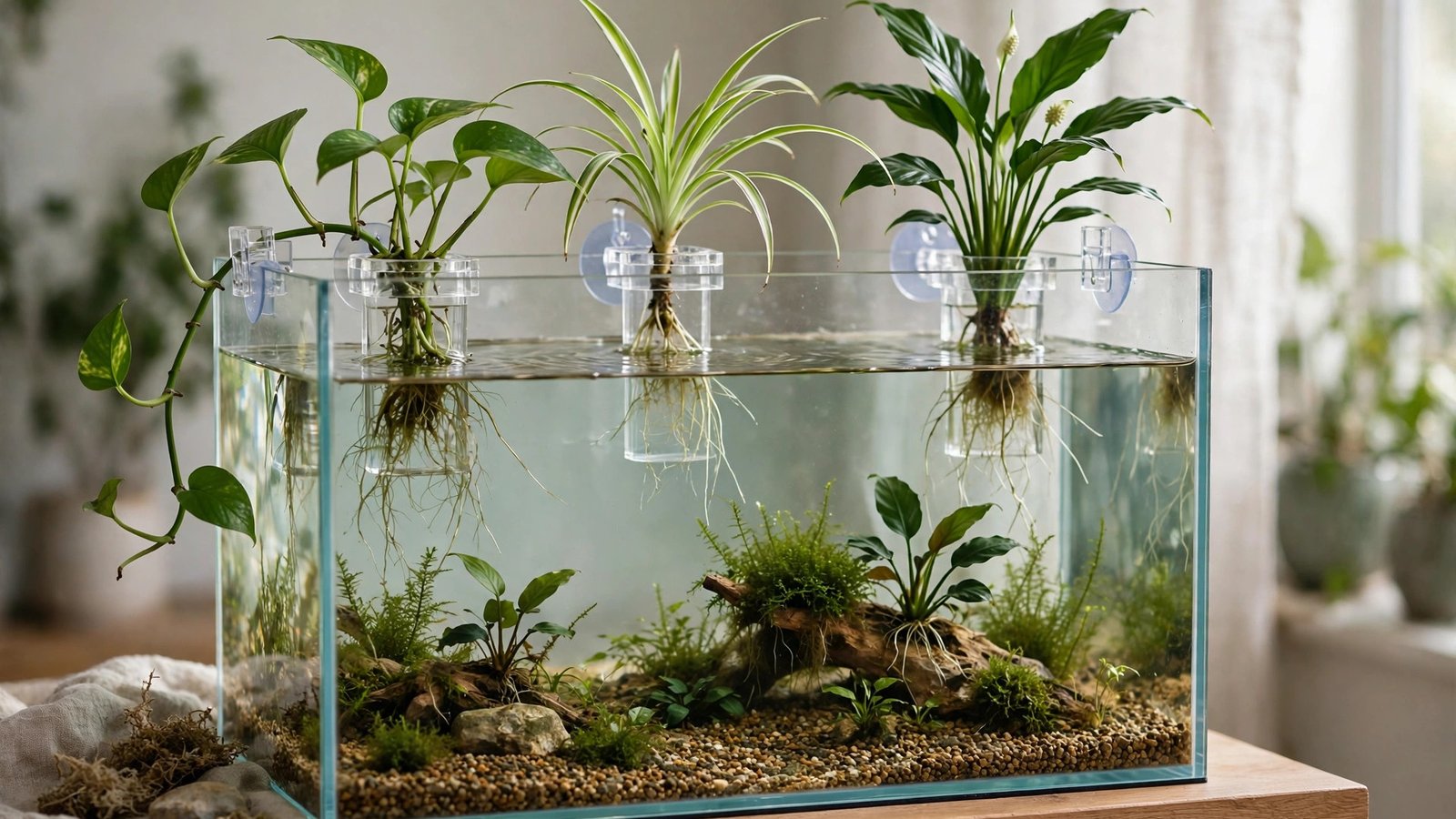
If you love the lush, vine-draped look of a riparium but don't want to tear your tank apart to build one, an aquarium plant holder is the middle ground you didn't know existed. These small rim clips, suction cups, and floating rings let you grow houseplants like pothos, monstera, and peace lily with their roots dangling into the water column — no soil, no construction project. The result is a tank that filters itself, looks like a living jungle edge, and costs less than a bottle of liquid fertilizer.
Emergent growth — roots in water, foliage above the surface — has long been the secret weapon of experienced aquarists. Holders turned it into a five-minute upgrade by letting any rimmed or rimless tank become a hybrid setup. This guide covers how holders work, which type to buy, which plants actually thrive, and how to set one up without algae blooms, rotten stems, or a tank full of dead leaves.
What an Aquarium Plant Holder Actually Does
A plant holder is simply a device that suspends a cutting or a potted plant so that only the roots touch aquarium water. Most designs fall into two broad families: holders that clamp onto the tank rim (like an adjustable hook or over-the-edge planter) and holders that stick to the glass with suction cups. Some newer designs combine both so you can reposition them anywhere in the tank.
The job of the holder is deceptively simple but surprisingly important. Stems sitting directly in water will rot if the foliage gets submerged, and loose roots get torn or pulled into filter intakes. A holder keeps the crown of the plant — where roots meet stem — at exactly the waterline, where it can breathe, and anchors the plant so it doesn't drift into your heater or filter outflow.
There's also an underrated category: floating rings and raft-style holders. These bob on the surface, self-adjust with evaporation, and need zero mounting — ideal for testing pothos cuttings before you commit to a fixed holder.
Why Grow Plants Emersed Instead of Submerged?
Underwater plants have to fight for everything: dissolved CO2, limited light, nutrients locked in substrate. Emersed plants cheat. Their leaves breathe atmospheric CO2 — roughly ten times more available than dissolved — and they catch room light on top of aquarium light. So they grow far faster than anything in your substrate — and fast growth is what makes them powerful natural filters.
A single established pothos vine can pull a surprising amount of nitrate out of the water. This is why aquarists who add emergent plants report steadier parameters and longer gaps between water changes. If you're running a low-tech planted tank, emergent growth is the cheapest possible upgrade: the roots do the filtering while the submerged plants grow more slowly underneath.
There's a cycling angle too. Fast-growing emersed roots consume ammonia and nitrate almost immediately after you add them. They won't replace a proper cycle, but they meaningfully speed it up alongside bacteria-driven methods. Our guide on how to cycle a planted tank faster explains the mechanics.
Then there's the aesthetic case, which is honestly what sells most people. A tank with roots trailing down through the water column and broad leaves spilling out over the rim looks like a slice of rainforest riverbank. Shrimp graze on the root hairs, bettas rest in the root tangles, and fry find instant cover. If you keep bettas, the combination is hard to beat — see our planted betta tank setup for a full build that pairs submerged and emersed plants.
The 4 Types of Aquarium Plant Holders
1. Over-the-rim clip and hook holders
The most popular style right now. These hook over the glass or plastic rim of the tank and dangle a small cup or mesh basket at the waterline. The 2026 generation has adjustable hooks that fit rims from a few millimeters up to thick euro-braced edges, and many include a flexible arm so you can angle the plant toward the light. Best for medium-weight plants like rooted pothos, philodendron, and peace lily.
2. Suction-cup holders
Small cups or platforms with one or two suction cups that press onto the glass just above the waterline. Their big advantage is placement freedom — mount them anywhere the light hits. Their disadvantage is gravity: suction cups lose grip over months as biofilm creeps under the seal, so a heavy monstera will eventually slide. Use them for light cuttings and check the seal during water changes.
3. Floating rings and rafts
Closed-cell foam or molded plastic rings that float on the surface, with a hole or net in the middle for the plant. Zero mounting, zero risk of falling off, and they self-adjust with evaporation. The limitation is weight and wind: they tip if the plant gets top-heavy, and a strong surface ripple from your filter can push them into a corner. They're the perfect first holder because they cost almost nothing and let you test whether your plants like your tank water before you commit.
4. Back-of-tank planter boxes
Narrow acrylic troughs that hang on the rear rim, designed for hydroponic media like clay pebbles or bare roots. These are the closest thing to a modular riparium: plant a row of peace lilies or spider plants along the back wall, hidden from the front view. They're the priciest option and the most visually rewarding. If you eventually outgrow holders, a full riparium build uses the same principles at a larger scale.
Comparison at a glance
| Type | Best for | Mounts on | Weight limit | Typical price |
|---|---|---|---|---|
| Over-the-rim clip | Pothos, philodendron, peace lily | Tank rim | Medium–heavy | $8–$20 |
| Suction-cup holder | Light cuttings, spider plants | Glass anywhere | Light | $6–$15 |
| Floating ring/raft | Testing plants, fry cover | Water surface | Light | $5–$12 |
| Planter box | Row plantings, statement display | Rear rim | Heavy | $20–$45 |
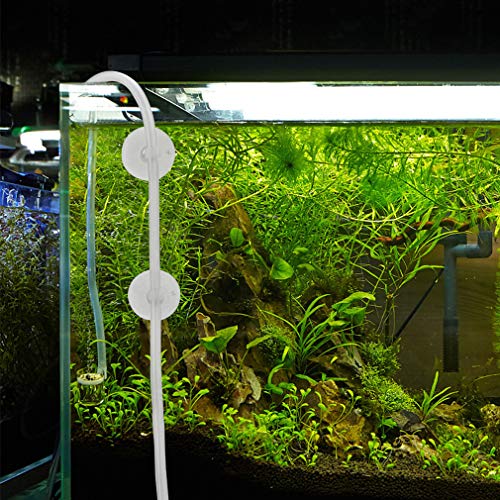
Hang-on cups are the simplest entry point: hang-on plant holder cups like Pawfly's 2-pack.
 ★4.0
Pawfly 2 Pcs Aquarium Plant Holder
Check Price on Amazon ★4.0Which Plants Actually Thrive in Holders?
Not every houseplant survives the transition to hydroponic life, but the winners are spectacularly easy. The non-negotiable requirement is that the plant can grow roots in plain water and tolerate constant moisture around its base. Plants that need dry periods between waterings (succulents, cacti, most begonias) will rot within weeks.
The reliable five
- Pothos (Epipremnum aureum): The undisputed champion. Roots from a single node cutting in days, grows in anything, tolerates low light, and is nearly impossible to kill. Golden, marble queen, and jade varieties all work.
- Peace lily (Spathiphyllum): Native to riverbanks — it was practically designed for this. Roots adapt to bare water beautifully, and the glossy leaves arch elegantly over the rim. Keep the crown just above the waterline to prevent rot.
- Heartleaf philodendron (Philodendron hederaceum): Like pothos, it roots aggressively from nodes and handles constant moisture. Slightly less vigorous than pothos but equally forgiving.
- Spider plant (Chlorophytum comosum): The baby plantlets root fast in water, and the arching striped foliage looks stunning trailing out of a tank. One of the best nitrate consumers per dollar.
- Lucky bamboo (Dracaena sanderiana): Already sold in water-filled tubes at every garden center, so the transition is seamless. Slow-growing, which is a virtue in a tank — it won't take over.
Worth trying once you're confident
Monstera deliciosa works in a rim holder or planter box once it has a rooted cutting, but the stems get heavy and the leaves huge — it's a statement plant that demands a sturdy mount. Tradescantia zebrina adds purple color but needs bright light to keep its variegation. Avoid fuzzy-leafed plants (like African violet), anything toxic that might shed into a tank with curious fish, and anything that needs soil fungi to feed.
A note on toxicity and fish safety
Many popular emersed plants — pothos and philodendron especially — contain calcium oxalate crystals that irritate mouths. This matters for cats that chew leaves, not for fish: the crystals stay in the leaf tissue and don't dissolve into the water. Thousands of aquarists grow pothos roots in tanks with shrimp, snails, and fry with zero issues. The real rule is simpler: don't let rotting leaves sit in the tank, and don't use plants recently treated with systemic pesticides.
How to Set Up Your First Holder (Step by Step)
- Choose your plant and cutting. Take a healthy pothos or philodendron stem with 2–3 nodes, or buy an established small peace lily or spider plant. For cuttings, cut just below a node with clean scissors.
- Rinse off all soil. If you're converting a potted plant, wash the roots thoroughly under lukewarm tap water until no soil remains. Soil in the tank clouds the water and rots anaerobically.
- Pick your holder type. Start with a floating ring or a rim clip — cheap, simple, and easy to reposition where it gets light without blocking your view.
- Seat the plant at the waterline. Position the cutting so the nodes (future root sites) are submerged and the crown and all foliage are above water. One submerged node is enough.
- Keep the roots in the flow, not the light. Place the holder near gentle current so nutrients reach the roots, but keep foliage out of the direct blast of your aquarium light to avoid algae on the leaves.
- Wait two to three weeks. Root nubs appear in days; real water roots in a couple of weeks. Don't fertilize specially — your tank water already contains the nitrate and phosphate the plant wants.
- Trim to direct growth. Once the roots are established, trim the submerged ends every few weeks to keep them tidy and out of filter intakes. The plant will branch above the waterline in response.
If this is your first planted tank of any kind, it's worth reading our first planted tank shopping list before you buy — a holder plus a good light and a root tab set covers most of what a beginner needs.
Maintenance: Keeping Emersed Plants Healthy Long-Term
Emergent plants are low-maintenance, not no-maintenance. The most common failure mode is the same one that kills potted houseplants: neglect during the transition. Check the waterline weekly — evaporation drops it, and stems that end up high and dry will stop rooting. Top off with dechlorinated water, and during your regular water change, give the roots a gentle swish to shake off detritus and biofilm.
Because emersed plants grow fast, they can outcompete your submerged plants for nutrients in a lean tank. If underwater plants start showing pale new growth after adding a big pothos vine, that's no coincidence — the pothos is eating first. The fix is simple: keep your regular fertilization schedule for the submerged plants. If you want to fine-tune, our planted tank water parameters guide explains the pH, GH, and nutrient ranges that keep both worlds happy.
Lighting is the other lever. In a dark corner the plant will stretch toward the tank light and may grow into it — a cheap LED desk lamp aimed at the foliage solves this for pennies. The 2Hr Aquarist planted tank lighting guide covers spectrum and intensity basics that apply above the waterline too.
One more thing: emersed plants transpire, so expect faster evaporation — stay ahead of it with a weekly top-off of dechlorinated water.
Common Mistakes (and Easy Fixes)
- Submerging the crown. The single biggest killer. Roots love water; the point where roots meet stem does not. Keep the crown at or just above the waterline.
- Using a dying cutting. If the stem is already yellow and floppy, water roots won't save it — start with firm, green material with at least one healthy node.
- Blocking the filter intake. Long root masses drift toward intakes. Trim roots that get within a few centimeters of the intake grill, or slip a pre-filter sponge over it.
- Ignoring algae on roots. Green fuzz on roots means too much light hitting submerged root mass. Move the holder out of the direct light cone, or shade the roots — they're supposed to grow in the dark, like underwater.
- Expecting instant results. The first two weeks look like nothing is happening. Underwater, the plant is building a water-root system that's invisible to you. Patience is the entire technique.
Frequently Asked Questions
Can I grow pothos in an aquarium plant holder with fish in the tank?
Yes — pothos is one of the safest and most popular choices for holders in stocked tanks. Fish, shrimp, and snails ignore the roots (or graze the biofilm on them), and the calcium oxalate in the leaves doesn't leach into the water in harmful amounts. Just keep all foliage above the waterline, trim roots away from filter intakes, and avoid plants recently treated with systemic insecticides.
Do emergent plants really reduce nitrates?
They do, and measurably so — a large pothos or peace lily can consume a significant fraction of a lightly stocked tank's daily nitrate output. But they're a supplement, not a replacement: they won't eliminate water changes, and in heavily stocked tanks their effect is modest relative to the bioload. Think of them as a buffer that smooths out spikes between changes.
Do I need CO2 or special fertilizer for plants in holders?
No CO2 — emersed leaves breathe atmospheric CO2 directly, which is far more abundant than dissolved CO2. And no special fertilizer either: your fish waste and any fertilizer you dose for submerged plants already put nitrate, phosphate, and potassium in the water, which is all the roots need. In a tank with no fish and no dosing, add a half-dose of a complete liquid fertilizer until the plants are established.
Will a plant holder work on a rimless tank?
Rimless tanks are actually ideal for suction-cup holders and floating rings, since there's no rim to fight. For clip-style holders, check the product's minimum glass thickness — most adjustable hooks grip glass from about 4mm to 12mm, which covers standard rimless builds. If your glass is thicker than the holder allows, switch to a suction-cup mount or a rear planter box designed for rimless edges.
How many plants should I start with?
Start with one holder and one to three cuttings — enough to test how your tank water and lighting treat the plant. If you're wondering about overall planting density for the rest of the tank, our guide on how many plants a new aquarium needs gives the full framework. You can always add more holders once the first plant is rooting happily.
The Cheapest Jungle Upgrade in the Hobby
A rim clip, a pothos cutting, and a little patience will transform a plain glass box into something that looks alive in a way no filter or light can. Emersed plants filter your water, shelter your fish, and turn the dead space above the tank into the most interesting part of the room — for the price of a takeout lunch. Start with one holder, learn how your water and light treat it, and don't be surprised when one becomes five. The jungle edge is addictive, and your tank will be better for it.