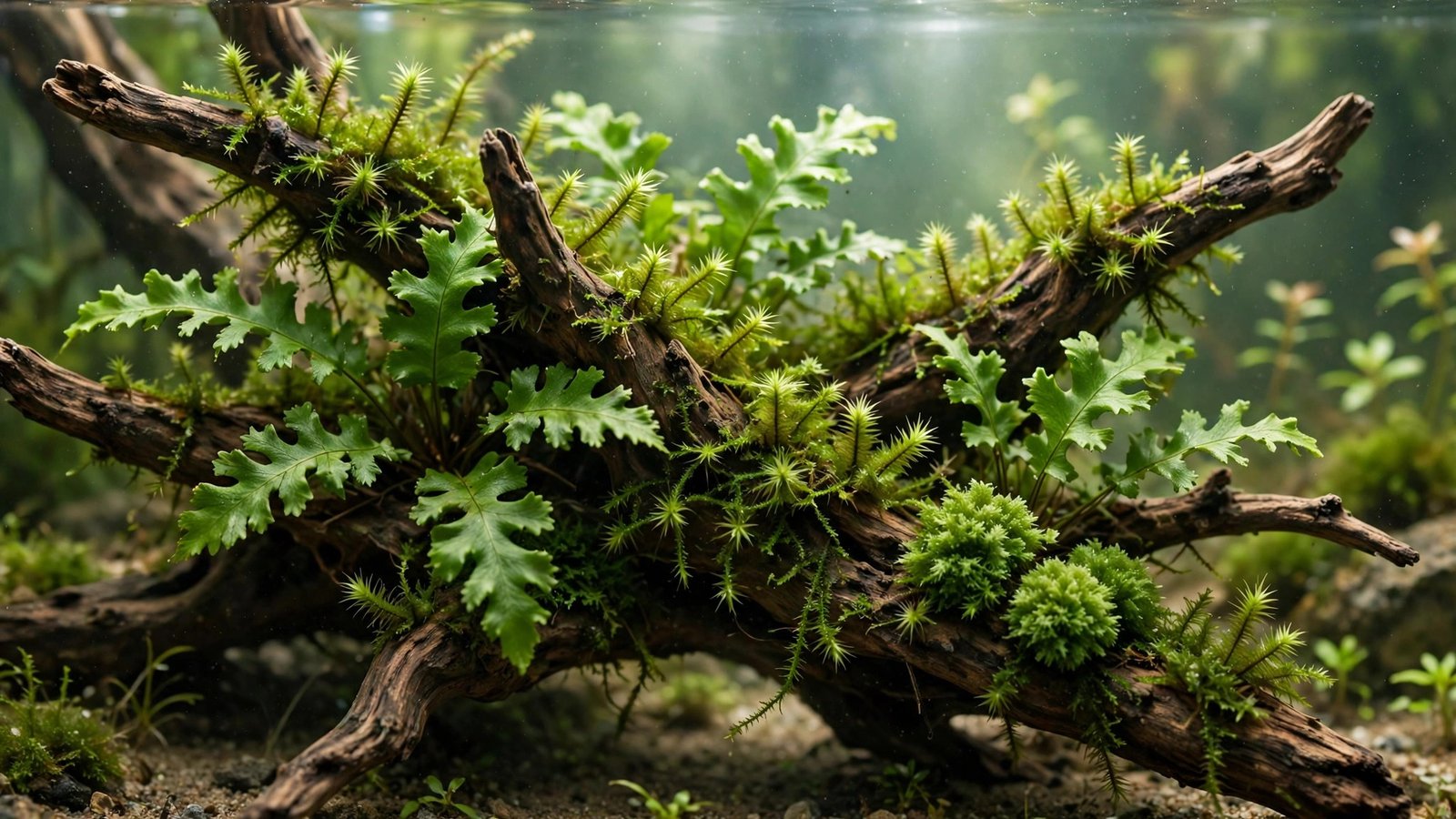
Walk into most fish shops and the tub labelled "Java moss" is quietly mislabelled — half the time it is actually spiky moss, and the difference matters. Where Java moss sends out thin, leggy strands that snag debris and tangle into everything, spiky moss builds a dense, miniature-fir-tree pad that stays put and trims clean. This guide covers spiky moss care from attachment to trimming, so you can grow the tidy, bushy carpets the species is known for.
What Makes Spiky Moss Different
Spiky moss (Taxiphyllum sp. 'Spiky') belongs to the same Hypnaceae family as the Java moss everyone knows, though the difference is obvious up close: spiky moss fronds are coarse, pointed, and stacked, growing into a dense bushy pad that genuinely resembles a miniature fir tree. Java moss, by contrast, throws thin, wiry strands that wander in every direction — pretty at first, tangled and scraggly within months. If you are weighing the two, our Java moss care guide covers the classic species in detail.
That structure is why spiky moss behaves better in a tank. The chunkier fronds trap less organic debris, resist algae creeping between the strands, and hold their shape after trimming instead of sprouting in five directions. Untrimmed pads settle around 6–8 cm tall and keep creeping outward. Growth is slow to moderate — roughly 1–2 cm of new pad per month without CO2, up to double that with it.
Spiky Moss Care Requirements
Spiky moss asks for very little, but the few parameters it cares about matter. Low to medium light is plenty — high light does not help the moss, it just invites algae onto the pad. CO2 is genuinely optional: the moss grows and survives fine without it, but a gentle 20–25 ppm stream roughly doubles the growth rate and produces a noticeably denser, darker pad.
Water chemistry is forgiving: pH 6.0–8.0, any moderate hardness, and standard planted-tank fertilisation dosed lightly — a heavy nutrient soup benefits algae more than the moss. The one non-negotiable is temperature: keep it between 18 and 25°C, and never let it sit above roughly 25.5°C (78°F) for long. Hot tanks are the single most common cause of yellowing, leggy growth in this species, and no amount of fertiliser fixes heat stress. Gentle flow helps; just avoid powerhead blasts that tear fronds.
Attachment That Actually Holds
Spiky moss has no roots, so it never gets "planted". It anchors itself to hardscape over a few weeks if you hold it in place until then, and there are two reliable ways to do it. The first is gel cyanoacrylate — ordinary aquarium-safe superglue gel. Pull the wood or stone out, pat the contact spot dry, place pea-sized dots of gel, and press the moss onto them for about 30 seconds. Dry hardscape is the whole trick; glue on wet surfaces skins over before it bonds.
The second method is dark cotton thread: wrap the moss firmly around the wood or stone. The cotton dissolves over a few weeks as the moss's rhizoids grip the surface. This works especially well for moss walls — spread a thin, even layer of moss over plastic mesh, wrap it down, and hang the panel. Foreground carpets work the same way on flat stones: lay small clumps 2–3 cm apart and let them merge into a single pad over a couple of months.
When buying spiky moss, look for fresh green portions sold as golf-ball or tissue-culture cups — a retailer care page like Buce Plant's spiky moss listing shows what a healthy portion looks like. One portion covers more than you expect once it spreads, so two are plenty for the hardscape of a 60-litre tank. Pick up a tube of gel cyanoacrylate at the same time; liquid glue runs everywhere, but the gel formula stays exactly where you place the dot, which is what makes dry-spot attachment so reliable.
Trimming Without the Mess
Untrimmed spiky moss keeps creeping outward until it smothers whatever sits below, so plan on trimming every 4–6 weeks once the pad is established. Use sharp curved shears and cut the pad back to roughly half its height; the moss responds by branching from the cut stems, which is how the pad gets denser over time. Trimming is also your propagation method: every healthy clump you cut off can be divided by hand and reattached elsewhere — one pad becomes three tanks' worth of moss within a year if you stay consistent.
Before you pick up the shears, do the two-step that separates clean trimmers from messy ones. First, switch off the filter and any powerheads — still water keeps every cutting exactly where it falls. Second, siphon up the floating cuttings the moment you finish. Left behind, cuttings decay into ammonia and lodge in filter intakes.
Spiky Moss vs Java Moss
The choice usually comes down to how much mess you are willing to manage. Our best aquarium mosses compared roundup ranks spiky and Java moss against every other common species too. Prefer sculpted, upright mosses? Compare the Christmas moss care guide, our peacock moss guide, and the flame moss care profile before you commit.
| Trait | Spiky moss | Java moss |
|---|---|---|
| Look | Coarse, pointed fronds; dense fir-tree pad | Thin, wiry strands; looser, wandering habit |
| Growth | Slow–moderate; 1–2 cm/month (double with CO2) | Moderate–fast; can outgrow its spot quickly |
| Attaching | Gel glue on dry hardscape, or cotton thread | Same methods, but loose strands need more tying |
| Trimming | Holds shape; branches denser from cut stems | Sprouts in many directions; turns scraggly |
| Best for | Tidy walls, logs, and foreground carpets | Fast cover, shrimp hides, fry tanks |
Frequently Asked Questions
Is spiky moss good for beginners?
Yes — one of the most forgiving mosses you can grow. It tolerates low–medium light, pH 6.0–8.0, and no CO2. The only two rules: keep the tank under 25.5°C (78°F) and attach it to hardscape rather than planting it. Slow growth keeps mistakes small and fixable.
Does spiky moss need CO2?
No — spiky moss thrives in low-tech tanks without CO2. A gentle 20–25 ppm is simply an accelerator: roughly double the growth and a denser, darker pad. Skip CO2 if you are patient; add it only when you want a wall or carpet filled in within months rather than a year.
Why is my spiky moss turning brown or yellow?
The two usual culprits are heat and trapped debris. Check your thermometer — sustained temps above 25.5°C (78°F) stress this moss, and no fertiliser fixes that. Then gently siphon the pad during your next water change; packed debris suffocates inner growth and browns the pad from the centre out.
Can you plant spiky moss in the substrate?
No — spiky moss has no roots and will not stay planted; buried portions rot from underneath and feed algae. Attach it to hardscape instead: press it onto dry wood or stone with pea-sized dots of gel superglue, or wrap it firmly with dark cotton thread that dissolves as the moss anchors over a few weeks.
How do you propagate spiky moss?
By simple division: cut healthy clumps with sharp shears or pull portions of the pad apart by hand, then reattach them to new hardscape with gel glue or thread. Trimming time is the natural moment — every offcut is a new start, and one pad can supply several tanks within a year.
Worth Growing?
If you want a moss that looks deliberate instead of chaotic, spiky moss is the upgrade. It asks for low–medium light, cool water, and a dab of glue — in return it gives you fir-tree pads and clean trims without the tangled sprawl. Buy one fresh portion, anchor it well, and leave it alone.