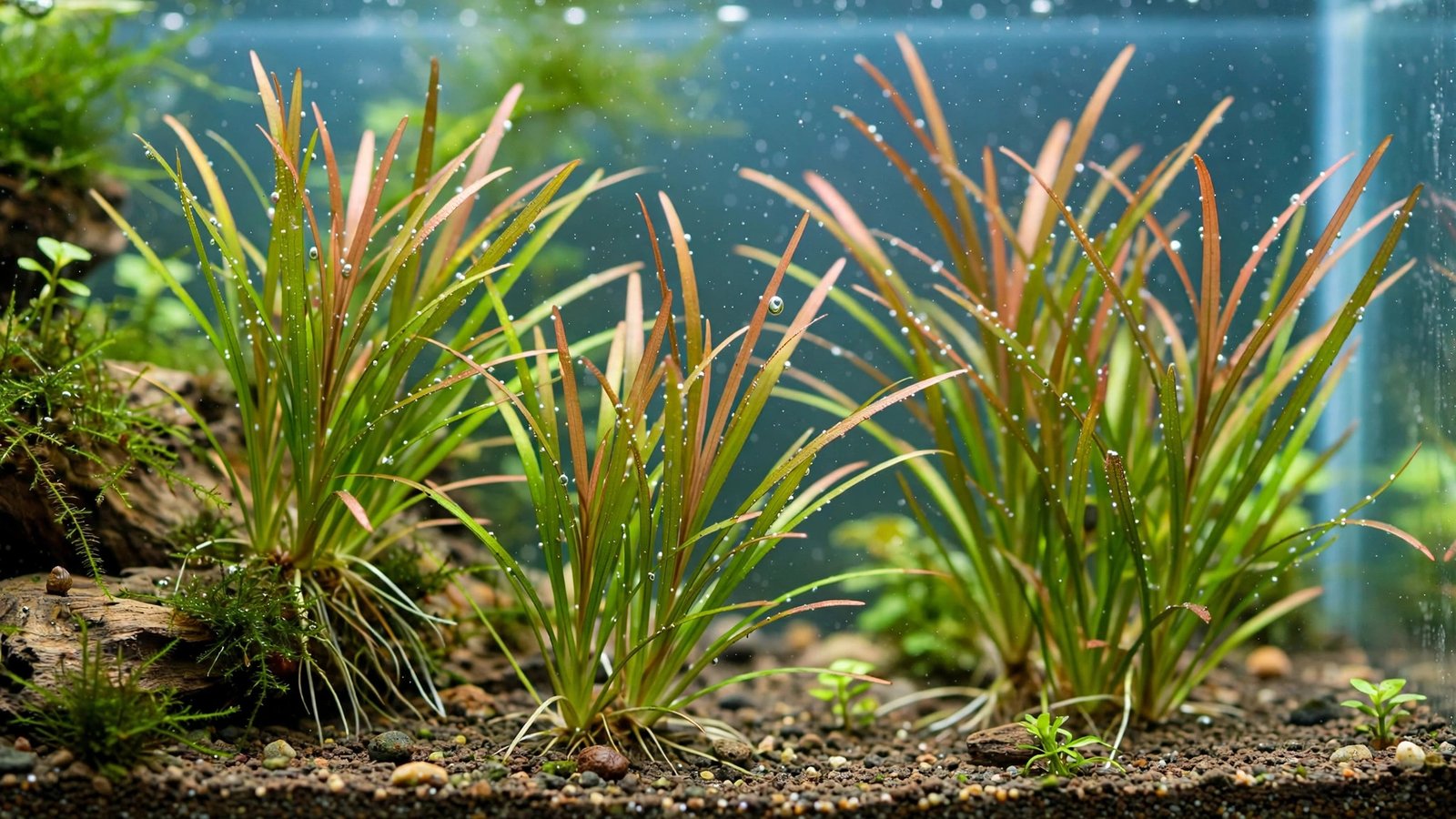
Not every grass-like plant in a fish tank is actually grass — and few prove it better than the juncus repens aquarium plant, a creeping North American rush that has quietly become one of the most interesting beginner-friendly options for nano aquariums. It looks like a tuft of fine ornamental grass, behaves like a stem plant when you propagate it, and colors up from fresh green to a warm reddish-brown when light and micronutrients line up. If you want movement, texture, and a plant that forgives rookie mistakes, this guide covers everything: care parameters, planting, propagation, and how to keep it thriving long-term.
What Is Juncus Repens?
Juncus repens is a true rush — a member of the family Juncaceae, the same plant family that includes the decorative pond rushes sold at garden centers — and it is the only Juncus species kept regularly in aquariums. In the wild it is widespread across the southeastern United States, where it grows along the margins of ponds, ditches, and lakes, equally at home with its feet underwater or completely out of it. That dual lifestyle is the key to understanding the plant: it is an amphibious grower that adapts its leaf structure to life below or above the waterline.
Underwater, it grows as a hybrid between a stem plant and a rosette: a flat-sided creeping stem runs along the substrate, and at intervals of roughly an inch, rings of narrow, pointed, grass-like leaves emerge from the nodes. Left alone, it forms a thick, bushy clump that sways gently in the current — a natural look stiff carpeting plants can't imitate.
Its colors are the fun part. Under moderate light the leaves stay a pleasant green; with unobstructed, stronger light plus good micronutrients, new growth takes on warm copper, golden, and reddish-brown tones — an accent few beginner plants offer. Because this coloration is light- and nutrient-driven, you can effectively "tune" the plant's look by changing conditions, making it a great teaching plant for newcomers.
Juncus Repens Aquarium Plant Care Requirements
The good news is that Juncus repens is genuinely undemanding. It tolerates a wide band of conditions, grows at a steady medium pace rather than exploding (or stalling), and doesn't need injected CO2 to look good. (For the breeder's own specifications, see Tropica's plant database entry for Juncus repens.) Here's the full parameter card:
| Parameter | Recommended range |
|---|---|
| Light | Medium to high (bright light unlocks warm colors) |
| CO2 | Not required; benefits moderately from CO2 (6–14 mg/L) |
| Growth rate | Medium, steady |
| Height | 10–20+ cm submerged; 7–30 cm emersed |
| Temperature | 15–30°C (59–86°F) |
| pH | 5.0–8.0 |
| GH | 1–20 dGH (very adaptable) |
| Placement | Midground to background; foreground if trimmed short |
| Propagation | Stem cuttings from nodes |
| Difficulty | Easy |
Light: The Main Dial
Light is the single most influential variable. Under medium light it grows as an attractive green grass tuft; push it into high light — unobstructed, with no broad-leaf neighbors shading it — and new leaves blush into copper and reddish-brown. But higher light demands algae discipline: the plant is somewhat susceptible to green spot algae, especially with low phosphates. Keep nutrients balanced when chasing color, and start with a 6–8 hour photoperiod in low-tech setups.
Substrate: Feed the Roots
Because it roots from creeping stems and spreads laterally, a nutrient-rich substrate gives it a real head start. Aquasoil or fine gravel with root tabs both work; avoid very coarse grain, which lets fine stems float out before they anchor, and aim for 4–6 cm of depth in the planting zone. As with dwarf sagittaria, another grass-like spreader, root-zone nutrition translates directly into denser clumps.
Water Parameters: Surprisingly Forgiving
Juncus repens handles soft acidic and harder alkaline water alike (GH 1–20 dGH, pH 5–8) across the full room-temperature tropical band. Its wild habitats swing through wet and dry seasons, so it shrugs off the minor instability that melts fussier species — a genuine advantage in nano tanks. Still, avoid sudden large swings, and keep debris out of the clump, where stagnant corners invite algae onto fine leaves.
CO2 and Fertilization: Helpful, Not Mandatory
This is a true low-tech plant: no injected CO2 required, and it grows fine in walstad-style or low-tech nanos. Added CO2 (even modest DIY levels) makes growth denser and faster, pairing well with the high light that brings out warm coloration. For fertilizer, note the color cue: coppery tones are driven by micronutrients (iron and traces) as much as by light, so a complete trace mix does more for its looks than heavy nitrates. Keep macros lean-to-moderate and never let traces bottom out.
This is a root feeder that rewards rich substrate: root tabs like Seachem Flourish Tabs.
How to Plant and Place Juncus Repens
Planting Technique
It's usually sold potted or as a tissue-culture cup. From a pot: remove pot, rockwool, and dead lower leaves, then split the clump into 4–6 portions, each with stem and roots. From tissue culture: rinse the gel off under lukewarm water and divide similarly. Using long tweezers, push each portion into the substrate at an angle so stem bases sit 1–2 cm below the surface, spacing portions 3–4 cm apart. It looks sparse on day one but fills in from the nodes within weeks. Give it a day or two undisturbed so runners anchor before livestock bulldozes around them.
Placement Ideas for Every Tank Size
In tanks of 30 liters and up, it shines in the midground-to-background transition zone, softening the line between low carpet and taller stems. In a nano — where its wild, slightly untidy habit becomes a feature — try a background clump behind stone or driftwood, or a "hedge" dividing two zones. As a foreground accent, plant it at the edges and trim short; unlike dwarf hairgrass, it doesn't form a lawn, so use it as punctuation rather than carpet. Give it a little open water around it — buried against the back glass, it loses the sway that makes it special.
Trimming, Propagation, and Routine Maintenance
Maintenance is refreshingly simple. When stems get lanky, trim them back with sharp scissors — cut stems branch from the nodes below, gradually thickening the clump. Don't discard trimmings: every cutting with a healthy node is a new plant. Press the cut end into the substrate and it roots within days. That's how one pot becomes a full background in a month or two, and why it sits comfortably alongside pearl weed, another beginner favorite that multiplies from trimmings.
Old, algae-dusted leaves won't recover, so prune them at the base rather than waiting. And resist the urge to "clean up" the creeping stems too aggressively — the horizontal runners are how the plant thickens and spreads, and ripping them up resets its progress. A light monthly tidy (removing melted or algae-coated leaves, replanting escapee cuttings) is all it needs. Compared with fussy high-maintenance stems that demand weekly topping, Juncus repens is a plant you can genuinely enjoy rather than serve.
Submerged vs Emersed: One Plant, Two Personalities
Few beginner plants reward experimentation like this one. Grown submerged, it produces the ringed, grass-like whorls most aquarists know: softer, slightly translucent leaves that ripple in the flow. Grown emersed — in a paludarium, a riparium planter, a HOB breeder box with damp substrate, or even a humid windowsill terrarium — it reverts to classic rush form: stiffer, more upright blades with a rougher texture, and if conditions are right, it can produce the small, inconspicuous rush flowers of its wild relatives.
This versatility has practical uses: grow a new tissue-culture cup emersed for two weeks to bulk up roots before planting submerged, or let a clump creep out of the water in a nano with a waterline feature and watch the two growth forms meet at the surface. For anyone curious about paludariums, it's one of the cheapest, toughest bridges between the aquatic and terrestrial halves of a build.
Common Problems and Fixes
Most Juncus repens failures come down to one of four issues, all fixable:
- Melting after planting. Tissue-culture and farm-grown stock often arrives in emersed form. Old emersed leaves melt as the plant converts to submerged growth — this is normal adaptation, not death. Leave the base in place; new submersed shoots emerge from the nodes within 1–3 weeks.
- Green spot algae on leaves. The plant's own grower notes flag this as its main weakness. It typically signals high light paired with low phosphates or slow growth. Balance the light down slightly, keep phosphates detectable, and manually remove badly spotted leaves.
- Pale, leggy growth. Stretched stems with wide spacing between leaf rings mean too little light. Move the clump to a brighter position or raise intensity gradually; leggy growth rarely tightens up, so trim and let it regrow compact.
- Stems floating out of the substrate. Fine stems in coarse gravel never anchor. Plant deeper, add a small stone collar temporarily, or switch that zone to finer substrate. Once runners develop, the plant holds itself down.
Aquascaping Pairings and Tank Mate Compatibility
Its fine texture contrasts beautifully with broad-leaf anchors like Anubias and bold midground rosettes — place it where the contrast shows, not hidden behind them. It complements dwarf hairgrass carpets by adding vertical movement where hairgrass stays flat, without bullying slow growers the way true weed-stems do.
For livestock, it's an excellent nano-tank citizen. Shrimp graze biofilm off its fine leaves; ember tetras, chili rasboras, and bettas use the clumps as sight-line breaks that reduce stress. Tissue-culture stock arrives pest- and pesticide-free. One caution: goldfish, large cichlids, and plant-eaters will shred it — this is a community-nano plant, not a cichlid-tank plant. And a naming heads-up: don't confuse it with Ludwigia repens — they share the species epithet ("repens" just means "creeping") but are entirely different plants from different families.
Frequently Asked Questions
Is Juncus repens good for beginners?
Yes — it's one of the better beginner grass-like plants. It needs no CO2, tolerates a wide range of water parameters, grows at a manageable medium pace, and propagates easily from cuttings. The main skills it teaches are light management (chasing its warm coloration) and patience during the emersed-to-submerged transition. If you can grow Java fern or anubias, you can grow Juncus repens.
Does Juncus repens need CO2?
No. It grows perfectly well in low-tech tanks without injected CO2. Adding CO2 (even modest levels) makes growth denser, faster, and more colorful — especially under high light — but the plant's official care profile lists CO2 as a medium, not high, requirement. Start without it; add it later if you want to push for the coppery-red form.
How do you propagate Juncus repens?
Like a stem plant: snip a healthy stem above a node, plant the cutting in the substrate, and wait. Roots form from the node within days. The mother stem will branch from the cut point and thicken up. You can also let the creeping horizontal stems run — they'll root themselves along the substrate and can be separated into new clumps once established.
Why is my Juncus repens turning brown or red?
That's usually good news: warm reddish-brown new growth means the plant is getting strong, unobstructed light plus adequate micronutrients — its most attractive form. If instead the browning is patchy, mushy, or on old leaves, it's likely melting (normal transition for new stock) or algae damage. Firm, colorful new tips mean thriving; soft, disintegrating old leaves mean transition — trim the bad, keep the good.
Can Juncus repens grow out of water?
Absolutely — it's amphibious by nature. It grows emersed in paludariums, riparium planters, and humid terrariums, taking on a stiffer, more upright rush form. This makes it unusually versatile: one purchase can supply both the underwater and above-water portions of a nano build, and emersed growing is a great way to bulk up new stock before planting it submerged.
Final Thoughts: A Quiet Overachiever for the Nano Tank
Juncus repens won't win the loudest-colors contest against red stems, and it won't carpet like hairgrass — and that's exactly its charm. It's a forgiving, endlessly useful texture plant that sways like real grass, adapts from submerged to emersed without complaint, and rewards better light with genuinely beautiful warm tones. For a beginner setting up a first nano tank, or an experienced aquascaper hunting for a low-maintenance movement plant, it earns its spot. Plant a portion, give it a few weeks, and watch your tank start to feel like a place rather than a display.