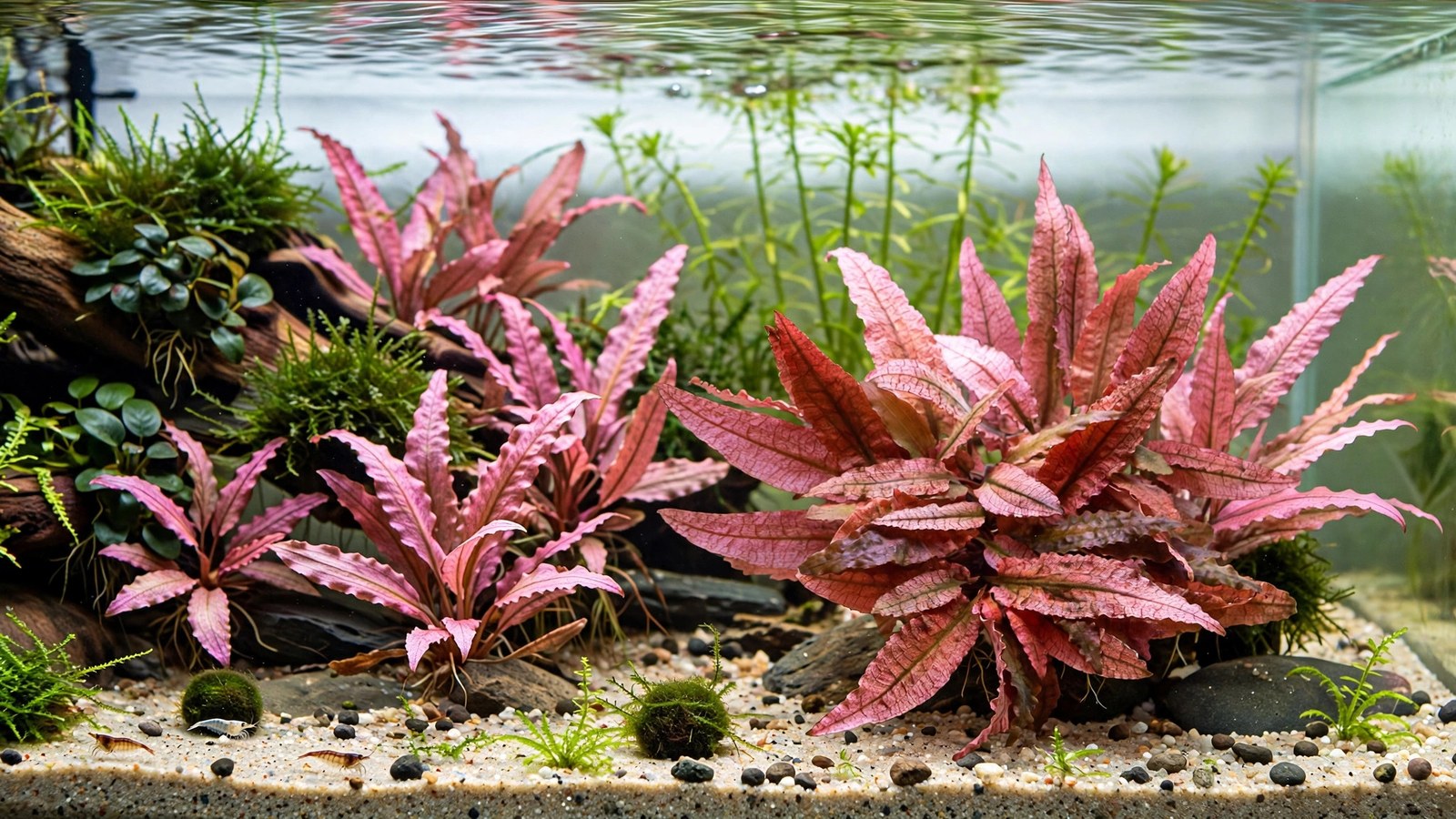
Most pink plants in the aquarium hobby are drama queens: they demand blazing light, injected CO2, and still fade to an embarrassed green the moment you look away. Cryptocoryne 'Pink Flamingo' care breaks that pattern. This tissue-culture crypt keeps its blushing, rose-veined leaves on plain medium light and grows at the relaxed pace crypts are famous for — which is why this guide walks you through the exact light levels, substrate, and first-six-week routine that turns a tiny lab-grown cup into a glowing midground cluster.
Why the Pink Flamingo Isn't Like Other Pink Plants
Pink aquarium plants usually belong to two camps: stem plants like Alternanthera reineckii that demand intense light and CO2 to stay red, or rare collector crypts that cost a fortune and sulk at the slightest change. The Pink Flamingo sits in a third, friendlier camp. It is a variegated selection derived from Cryptocoryne wendtii — the beginner-proof classic — sold exclusively as tissue culture, so every cup arrives pest-free, algae-free, and genetically identical. That lab origin explains its superpower and its one quirk. Grown in a sterile, humid cup, the plantlets arrive with small, tender leaves that have never seen aquarium water — and the transition to submerged life is the single stressful week of their lives. Once adapted, the plant inherits the wendtii line's toughness: wide pH tolerance, indifference to hard or soft water, and the crypt family's trademark slow-but-steady growth. The payoff is soft rose-and-cream marbling that glows under ordinary aquarium lighting. Set one expectation: no two leaves are identically pink. Variegation means pigment varies leaf to leaf — a healthy plant mixes blush-pink centers, cream streaks, and green edges. If every new leaf emerges plain green, light is likely too dim or iron too scarce — both fixable, as the troubleshooting section shows.Cryptocoryne 'Pink Flamingo' Care: Light at the 30–50 PAR Sweet Spot
The number that matters: 30–50 µmol PAR at the substrate — firmly medium light, roughly what a mid-range LED puts out at 60–70% on a 45 cm tall tank. Enough to hold the pink pigment, not enough to stress the plant. Light is where Pink Flamingo differs most from its pink rivals. Compare the demands side by side:| Plant | Light needed | CO2 | Growth speed | Difficulty |
|---|---|---|---|---|
| Cryptocoryne 'Pink Flamingo' | Medium (30–50 PAR) | Optional | Slow | Easy–medium |
| Alternanthera reineckii | High (60–90+ PAR) | Required | Fast | Medium–hard |
| Cryptocoryne wendtii 'Flamingo' (non-variegated) | Medium (25–45 PAR) | Optional | Slow | Easy |
Substrate and Fertilization: Feed the Roots First
Crypts are root feeders, and the Pink Flamingo is no exception: it wants nutrient-rich aquasoil 5–7 cm deep for the roots to spread. In inert sand or gravel the variegation dulls, so punch a root tab into the substrate within 3–4 cm of the crown every 8–10 weeks. Iron is the nutrient this plant cares about most: the pink coloration is tied to pigment pathways that respond directly to iron availability, so lean-iron tanks grow greener leaves. Aim for roughly 0.05–0.1 ppm chelated iron, and choose root tabs that list iron among their first ingredients. A complete liquid fertilizer at half to two-thirds the label dose, 2–3 times weekly, covers the rest: potassium, magnesium, and traces. Watch nitrates. This crypt does its best at 10–25 ppm nitrate; below 5 ppm it stalls and the pink fades, above 40 ppm you invite algae onto the slow leaves. If you run a lean-dosing tank, the root tabs matter even more — the plant pulls what the water column doesn't offer.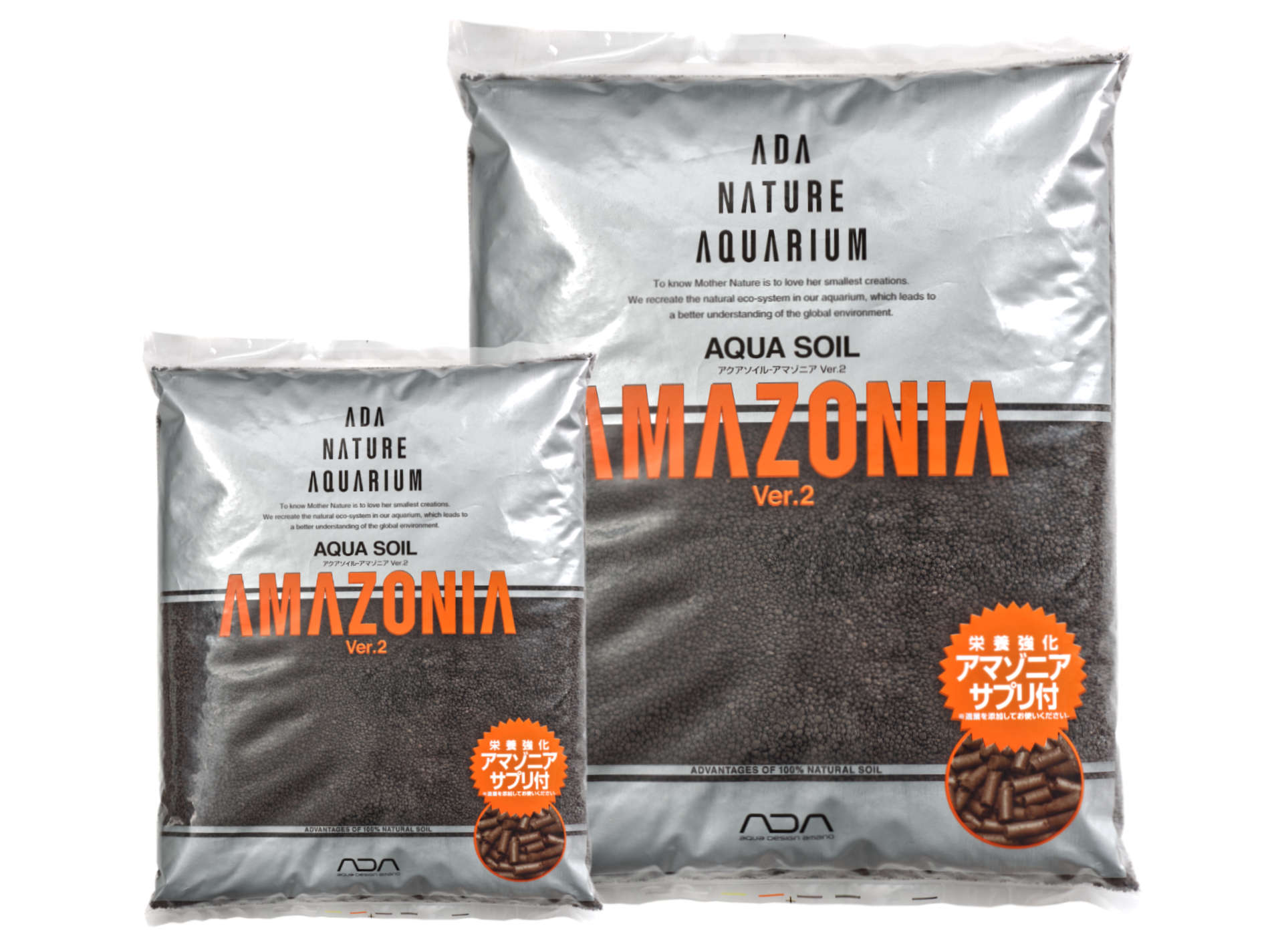 ★4.7
ADA Aqua Soil Amazonia Ver 2
Check Price on Amazon ★4.7CO2: Helpful, Not Mandatory
CO2 injection is not required to keep a Pink Flamingo alive, pink, and growing. In a low-tech tank with aquasoil, root tabs, and medium light, expect one new leaf every 10–14 days and a full cluster within 4–5 months — the crypt promise: patience rewarded. CO2 changes the timeline, not the outcome. With pressurized CO2 at 20–30 ppm (a lime-green drop checker), leaf production roughly doubles and the plant establishes in 6–8 weeks instead of 10–12. If you already inject CO2, the Pink Flamingo happily accepts the boost. If you don't, skip buying a system just for this plant — invest in better root tabs instead. Liquid carbon supplements (glutaraldehyde-based products) deserve a warning here: crypts as a family tolerate them, but overdosing can trigger melt in freshly planted tissue-culture stock. If you use one, dose conservatively during the first month and keep it well below the label's maximum.Planting and the First Six Weeks: Surviving Crypt Melt
How you plant determines whether the first month is a quiet success or a melting disaster. Follow this sequence:- Rinse the tissue-culture gel off completely under lukewarm tap water — leftover gel rots and fouls the substrate.
- Gently tease the cup's plantlets apart into 4–6 portions, keeping each with its own crown and roots. Don't plant the cup as one brick.
- Space portions 4–5 cm apart in the midground. Press each so the crown sits exactly at substrate level — buried crowns rot, floating crowns uproot.
- Plant with wet hands or long tweezers, and do all of this with the filter running but the lights off to reduce immediate stress.
Water Parameters That Keep It Happy
The Pink Flamingo inherits wendtii's famously wide tolerance, which is why it suits community tanks that other pink plants would reject. Aim for these ranges:| Parameter | Ideal range | Notes |
|---|---|---|
| Temperature | 22–28 °C (72–82 °F) | Growth stalls below 20 °C; avoid sudden swings |
| pH | 6.0–7.5 | Thrives slightly acidic, tolerates neutral |
| GH / KH | 3–12 dGH / 2–8 dKH | Adapts to hard water better than most crypts |
| Nitrate | 10–25 ppm | Below 5 ppm stalls color; above 40 invites algae |
| Iron | 0.05–0.1 ppm | Chelated iron via root tabs + liquid dosing |
| Water changes | 30% weekly | Keeps organics low; crypts hate neglect more than change |
Propagation: Let the Runners Do the Work
Once established, the Pink Flamingo propagates itself. The plant sends out horizontal runners through the substrate, and daughter plants emerge a few centimeters from the mother, each with its own crown and root system. In a well-fed tank you'll see the first runner 2–4 months after the plant settles. To propagate, wait until a daughter has 4–5 of its own leaves, then slice the connecting runner with sharp scissors and replant the daughter 4–5 cm away. You can also divide an overgrown cluster at the crown into two or three rooted pieces. One tissue-culture cup becomes an expanding colony — most aquascapers never buy a second one. Don't separate daughters too early: a plantlet with only one or two leaves has almost no root mass and may melt if disturbed.Aquascaping With the Pink Flamingo
This plant earns its keep as a midground accent — the soft pink breaks up the green wall without screaming for attention. Place clusters of 3–5 portions between hardscape elements or in front of taller background plants like Amazon swords or Crinum calamistratum, where the dark green backdrop makes the pink read even stronger. Avoid the front glass: its 7–15 cm height eventually blocks the view into the tank. Pair it thoughtfully. It sits beautifully next to deep-green Anubias nana petite on wood, where the color contrast is striking without clashing. For a red-and-pink theme, flank it with Cryptocoryne wendtii 'brown' on one side and a single bold Alternanthera reineckii on the other; the Pink Flamingo becomes the bridge between the two tones. Keep the area around it tidy. Slow growers lose the algae war against neglect, so trim encroaching stems before they shade the cluster, and remove any leaf that develops spot algae rather than letting it spread.Troubleshooting Common Problems
New leaves come out green, not pink. The two usual causes are light below 25 PAR and iron deficiency. Raise intensity 10%, refresh root tabs, and give the plant two weeks — only new leaves can show the correction, old ones won't re-pink. Total melt after months of health. Look for what changed: a CO2 tank running dry, a stuck heater, a rescape next door, or medication dosed into the tank. The crown is usually alive; trim the mush, leave the roots, and wait 3–5 weeks for regrowth. Holes in older leaves. Potassium deficiency in almost every case. Increase your complete fertilizer dose slightly and confirm nitrates aren't bottomed out. Algae dusting the leaves. Slow growth plus too much light equals algae. Cut the photoperiod by an hour — and note the counterintuitive pattern: algae-covered crypt leaves often belong to underlit plants getting just enough light to grow algae but not enough to grow themselves. No growth for two months? Check the crown isn't buried, refresh root tabs (aquasoil exhausts in 6–12 months), and verify nitrates aren't zero. Then wait — a crypt building roots underground looks dormant right up until it bursts with new leaves.Frequently Asked Questions
Is Cryptocoryne 'Pink Flamingo' hard to keep?
Not particularly — it rates easy-to-medium. It needs no CO2, tolerates a wide pH and hardness range, and grows on medium light. The only real skill it asks of you is patience: tissue-culture plantlets melt back in the first weeks and take 4–6 weeks to produce new submerged leaves. Treat it like any other crypt and it rewards you.
Can I grow Pink Flamingo without CO2?
Yes. In a low-tech tank with rich substrate, root tabs, and 30–50 PAR of light, it grows steadily — about one new leaf every 10–14 days. CO2 at 20–30 ppm cuts establishment from 10–12 weeks to 6–8, but changes nothing about final color or health. Don't buy a system for this plant alone.
Why did my Pink Flamingo melt after planting?
Crypt melt is the plant's normal adaptation response: it discards lab-grown leaves and rebuilds foliage suited to submerged life. It typically hits in weeks 1–3. Leave the crown and roots completely undisturbed, keep up normal water changes, and expect fresh pink-tinged leaves from weeks 4–6. Replanting during melt restarts the clock and makes everything worse.
How do I keep the pink color strong?
Three things drive variegation: medium light at 30–50 PAR, consistent iron (0.05–0.1 ppm via iron-rich root tabs and liquid dosing), and nitrates in the 10–25 ppm range. Avoid very dim light, which pushes leaves green, and very intense light, which bleaches pink tissue white. Only new leaves reflect changes, so judge any adjustment after two weeks.
How tall does Pink Flamingo get?
Typically 7–15 cm, making it a true midground plant. Height varies with conditions: richer substrate and moderate light keep it compact and bushy, while dim light makes it stretch taller and leggier. In a low-tech tank, expect the smaller end of the range; with CO2 and strong feeding, it reaches the taller end within a few months.
How do I propagate Cryptocoryne 'Pink Flamingo'?
Let it send out runners — an established plant produces them on its own after 2–4 months. When a daughter plant has 4–5 leaves, cut the runner with sharp scissors and replant the daughter a few centimeters away. You can also divide an overgrown crown into pieces with roots. One tissue-culture cup becomes a self-expanding colony over time.