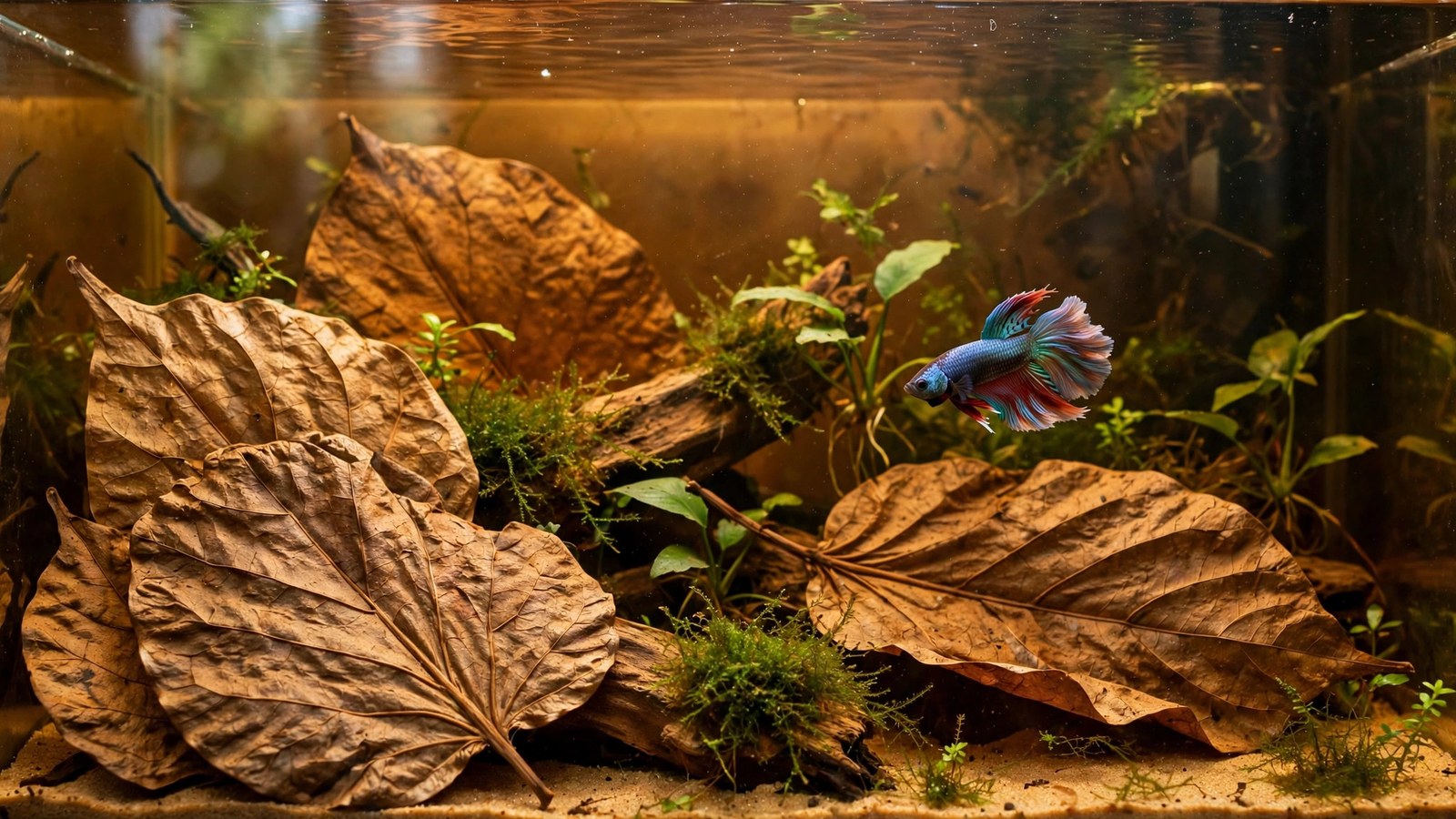
A single Indian almond leaf can drop your tank's pH by half a point, tint 20 gallons of water the color of strong tea, and turn a bare quarantine tank into a refuge where stressed shrimp actually start grazing again — all without touching a chemical bottle. If you've been curious about the Indian almond leaves aquarium routine, this guide gives you everything: exact dosage, real benefits, preparation, and the mistakes that turn a great tool into a mess.
Indian Almond Leaves Aquarium Basics: What They Do in Your Tank
When a dried catappa leaf sinks into your aquarium, it starts leaching tannins, humic acids, flavonoids, and saponins into the water. That amber tint is the visual signature of the process — the same chemistry that colors blackwater streams in the Amazon and Southeast Asia. For fish that evolved in leaf-littered waters, from bettas to wild-caught tetras, that chemistry signals home.
Hobbyists commonly report that fish in leaf-treated tanks show bolder coloration, calmer behavior, and quicker recovery after shipping stress. Shrimp keepers use the leaves as a grazing surface: as the leaf softens, a biofilm of microorganisms colonizes it, and shrimp, shrimplets, and baby snails graze that film for days. None of this requires a planted setup — catappa leaves work just as well in a bare quarantine tank as in a lush aquascape.
There's also a mild antimicrobial angle. Tannins have well-documented antibacterial and antifungal properties in laboratory studies, which is why leaf litter is a staple in betta spawning and hatchery tanks. A catappa leaf is not medicine: it won't cure fin rot or ich. Think of it as a supportive water conditioner that nudges chemistry in a favorable direction — useful alongside, never instead of, clean water and good husbandry.
Dosage: How Many Leaves Per Gallon
The community-standard starting point is one leaf per 10 gallons of water. That dose gives you visible tinting and measurable chemistry shifts without pushing soft-water tanks too far. In a 5-gallon betta tank, half to one full leaf is the sweet spot. For a 55-gallon community tank, five to six leaves spread across the surface and substrate work well.
| Tank size | Leaves (maintenance dose) | Leaves (strong tinting / breeding) |
|---|---|---|
| 5 gallons | ½ leaf | 1–2 leaves |
| 10 gallons | 1 leaf | 2–3 leaves |
| 20 gallons | 2 leaves | 4–6 leaves |
| 40 gallons | 4 leaves | 8–10 leaves |
| 75 gallons | 7–8 leaves | 12–15 leaves |
Leaf size matters: a "leaf" in these charts means a standard large catappa leaf, roughly 6–9 inches long. If your leaves are small (4–5 inches), count two as one. Always start with the maintenance dose, wait a full week, test your pH and KH, and only then decide whether you want more tint. Adding the full breeding dose on day one in very soft, low-KH water can drop pH faster than livestock appreciate — the single most common catappa mistake.
Preparing Leaves Before They Go In
Good catappa leaves arrive sun-dried, brittle, and often dusty. Preparation takes five minutes:
- Inspect. Toss any leaves with mold spots, white fuzz, or an off smell. Healthy dried leaves are brown to reddish-brown and snap cleanly.
- Rinse. Run each leaf under tap water and rub gently to remove surface dust and debris — a quick rinse is fine even with chlorinated tap water.
- Optional boil. A 5-minute boil sterilizes the leaf and makes it sink immediately. The trade-off: boiling extracts some tannins up front, so the leaf's effective lifespan shortens slightly and the initial water tint will be milder.
- Place and wait. Unboiled leaves float for 12–48 hours before waterlogging and sinking. Both floating and sunken leaves are fine — bettas often rest on floating leaves like a hammock, and shrimp graze the sunken ones.
If you're adding leaves to a newly set up tank alongside new arrivals, get your acclimation routine right first. Leaves improve the water; they don't compensate for skipped acclimation.
The Tannin Timeline: What Happens Week by Week
By days 2–3 the water yellows around the leaf, and by the end of week one you'll see an amber cast across the whole tank. Tannin release peaks during weeks 1–2, then tapers. Somewhere around weeks 3–4 the leaf has given up most of its chemistry — you'll see it becoming soft, dark, and translucent, eventually leaving just a lacy vein skeleton.
That's your replacement signal. Pull out the skeleton before it disintegrates into the substrate, where decaying matter can create anaerobic pockets. In shrimp tanks, many keepers leave one softening leaf permanently as a grazing station and rotate a second fresher one for tannins.
pH, KH, and Water Chemistry Effects
Tannins and humic acids are weak organic acids, so they nudge pH downward. In a typical soft-water aquarium you'll see a drop of roughly 0.2–0.5 pH points at standard dosage over the first week. Hard-water tanks with high carbonate hardness (KH above 6–8 dKH) will barely budge — the KH buffer absorbs the acids. This is actually one of catappa leaves' best properties: they self-limit. They're a gentle drift, not a cliff.
That said, monitor KH if you're dosing heavily. Tannic acids consume carbonate buffer gradually, and a tank starting at 2–3 dKH can end up with essentially no buffering after several weeks of strong leaf dosing — at which point pH becomes unstable. If KH tests near zero, reduce leaves or add a small amount of crushed coral to the filter to keep a floor under your buffering. Pair leaf use with your normal water change routine: weekly 25–30% changes dilute excess organics and keep the effect steady.
Bettas, Shrimp, and Breeding Tanks
Betta keepers were the early evangelists of catappa leaves, and the use case still holds. A betta in a 5-gallon with one leaf gets dimmer, warmer-tinted water, a floating leaf to rest on, and chemistry closer to the slow streams its wild ancestors came from. Many breeders spawn in leaf-treated tanks, where males build stronger bubble nests under leaf cover.
Shrimp tanks are the second classic application. Neocaridina and caridina shrimp graze leaf biofilm constantly, and shrimplets pick at softening leaves from day one. In a planted shrimp tank, leaves also feed the micro-ecosystem: the breakdown process supports infusoria and detritus worms, which become supplemental food. Keep dosing conservative in caridina tanks, since those sensitive species prefer highly stable parameters.
Quarantine tanks benefit too. A bare hospital or quarantine setup is stressful by design; one leaf gives new arrivals cover, calmer water, and a small buffer against the opportunistic infections that exploit stressed fish. Combined with a solid fertilizer schedule in your main planted display, leaves become one layer of a resilient system — not a standalone fix.
Catappa Leaves in Planted Tanks
Will leaves hurt your plants? No — and in some ways they help. Humic substances are a natural component of fertile aquatic substrates, and the slight pH reduction actually improves nutrient availability for many species. Iron and micronutrients stay soluble longer in slightly acidic water, which is one reason blackwater aquascapes can grow surprisingly lush plants.
Two things to watch. First, heavy tinting reduces light penetration. In a high-light carpeted tank, four leaves' worth of tea color can measurably dim PAR at the substrate — dose lightly or keep leaves away from the carpet. Second, rotting leaf litter in the substrate can fuel algae if neglected; the same algae cleanup habits that keep a planted tank pristine apply here — remove skeletons before they melt into the substrate.
One genuine synergy: leaves pair well with botanical-heavy aquascapes. In a Southeast Asian biotope, catappa leaves alongside seed pods and driftwood complete the look and the chemistry together. Catappa leaves also pair well with other botanicals — seed pods, bark, and alder cones; see our botanicals for planted aquariums guide for ideas.
What to Look for When Buying Catappa Leaves
Catappa leaves are a commodity product, and quality varies enormously. Here's what separates good leaves from disappointing ones:
- Size and grade. Look for large, intact leaves — 6 to 9 inches is standard for a full dose. Broken, crumbly leaves are usually the sweepings of a lower grade; they work, but you'll dose by weight rather than by count.
- Organic and pesticide-free. This is the non-negotiable. Leaves collected from roadsides or sprayed plantations can carry insecticides that wipe out shrimp and snails. Reputable sellers state explicitly that leaves are chemical-free and collected from unsprayed trees.
- Properly dried. Leaves should be brittle-dry and uniformly brown to reddish-brown. Green-tinged or pliable leaves weren't dried fully and can mold in the bag.
- Quantity and price per leaf. Leaves are sold in packs of 10 to 100+. Buying a larger pack usually drops the per-leaf cost dramatically, and since each leaf lasts 3–4 weeks, a 50-pack is a year-plus supply for a single 20-gallon tank.
- No added anything. The product should be plain dried leaves — no preservatives, no coatings, no "enhanced" blends with undisclosed additives.
Skip leaves gathered from neighborhood trees unless you're certain the tree was never sprayed and the leaves weren't collected near roads. A bag of verified pesticide-free catappa leaves costs little and removes the biggest risk in this practice.
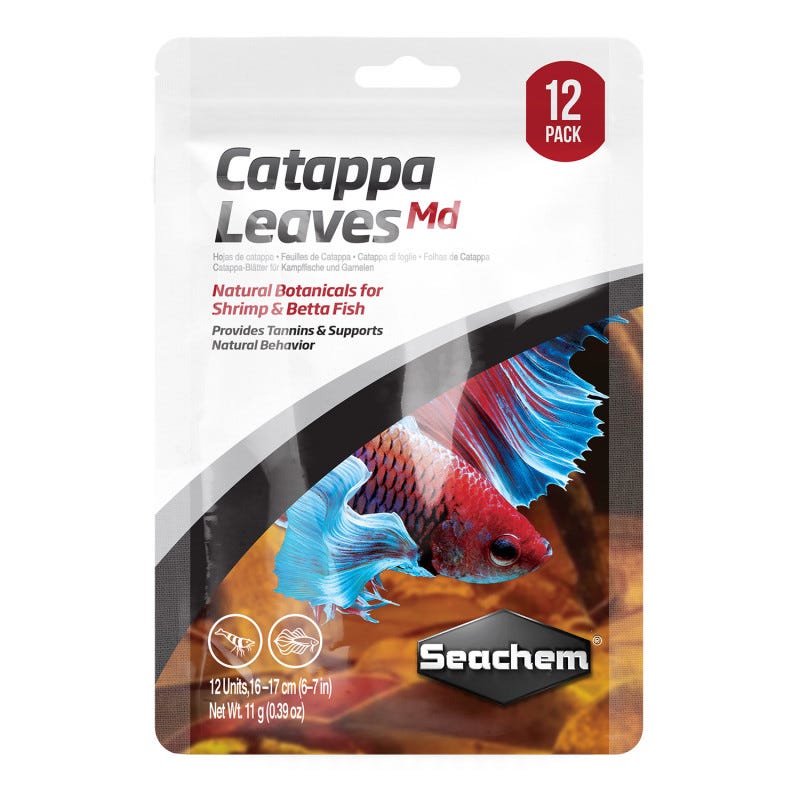 ★4.8
Seachem Catappa Leaves 12-pack
Check Price on Amazon ★4.8Making Your Own Catappa "Tea"
If you want tannin benefits without leaves sitting in the display tank, brew them. Boil 3–4 large leaves in a liter of water for 10–15 minutes, strain, let it cool, and dose the cooled concentrate — roughly 50–100 ml per 10 gallons to start. The tea gives precise control: tint a blackwater setup deeply, then top up with small weekly additions after water changes. Store leftover concentrate in the fridge for up to two weeks; discard it if it smells sour or grows film.
This method shines where floating or decaying leaves would be an eyesore — show aquascapes, photography tanks, or breeding setups where you want the chemistry but not the clutter. It also pairs well with lean dosing routines, keeping your all-in-one fertilizer dosing on its own predictable schedule.
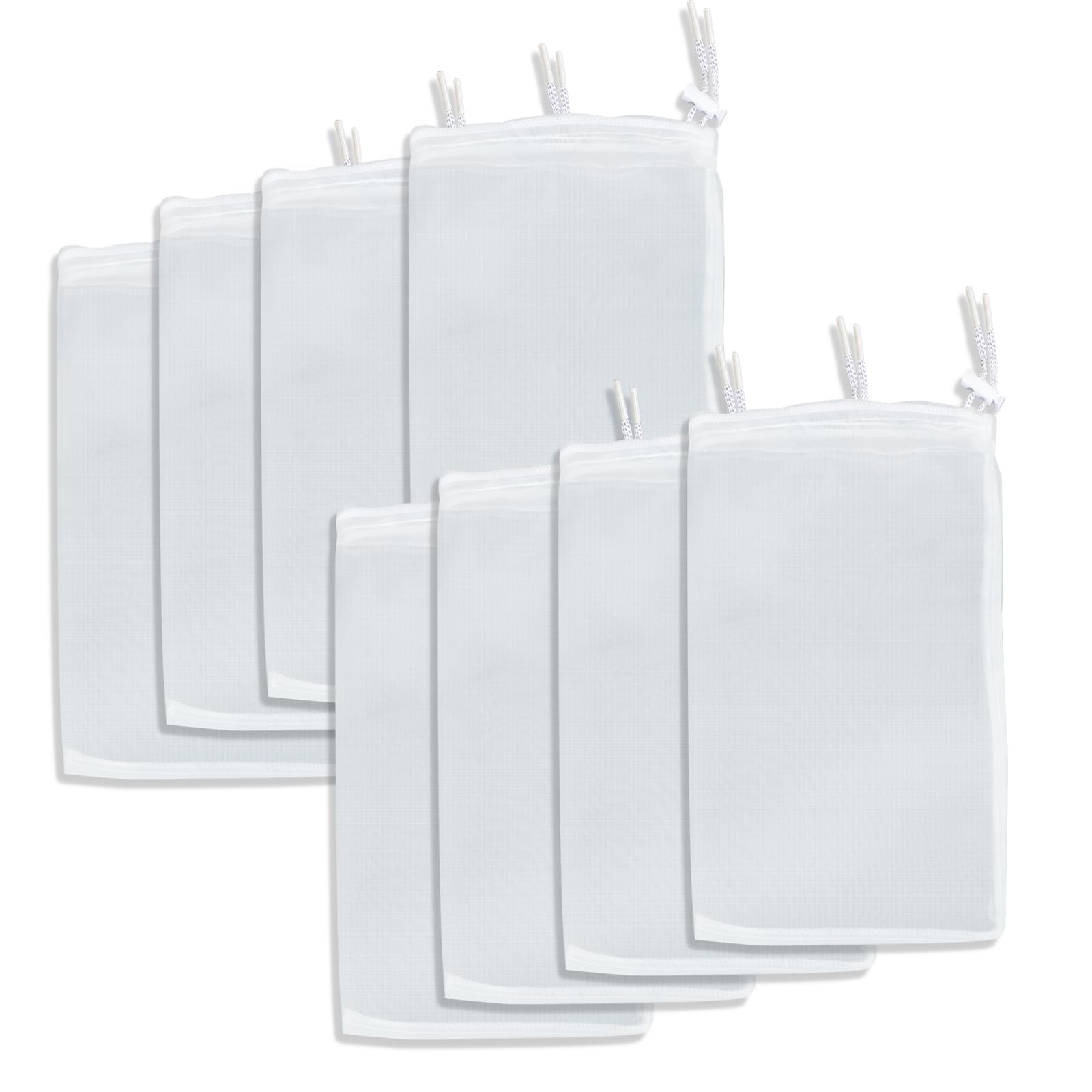 ★4.8
Pawfly Filter Media Bags
Check Price on Amazon ★4.8Frequently Asked Questions
How many Indian almond leaves should I put in my aquarium?
Start with one large leaf per 10 gallons of water. For a 5-gallon betta tank, use half to one leaf; for a 20-gallon, two leaves. Wait a full week, test pH and KH, then adjust. Breeding or blackwater setups may use double this dose, but always build up gradually in soft, low-KH water.
Do I need to boil Indian almond leaves before adding them?
Boiling is optional. A 5-minute boil sterilizes the leaf and makes it sink immediately, which is convenient, but it extracts some tannins up front and shortens the leaf's effective life slightly. Unboiled leaves float for 12–48 hours, then sink on their own. Either way, always rinse leaves first and discard any with mold or an off smell.
How long does one catappa leaf last in a tank?
Expect 3–4 weeks of useful tannin release from a large leaf, peaking in the first 1–2 weeks and tapering after that. When the leaf has softened into a translucent vein skeleton, remove it and add a fresh one. In shrimp tanks, keepers often leave one softening leaf as a permanent grazing station while rotating a fresh leaf for water chemistry.
Will Indian almond leaves lower my pH too much?
At the standard dose, expect a gentle drop of about 0.2–0.5 pH points in soft water; hard-water tanks with high KH will barely change. The risk comes from overdosing in low-KH tanks, where the carbonate buffer can be exhausted. Test KH weekly when dosing heavily and never add a large batch of leaves all at once.
Are Indian almond leaves safe for shrimp and snails?
Yes — provided the leaves are pesticide-free. Shrimp graze the biofilm that colonizes softening leaves, and shrimplets feed on them from birth; snails eat the decaying tissue itself. The critical rule is sourcing: leaves from sprayed or roadside trees can carry chemicals lethal to invertebrates. Buy leaves explicitly labeled organic or pesticide-free.
Can I use Indian almond leaves in a planted tank with CO2?
Yes, they work fine alongside CO2 injection. The slight acidity from tannins actually improves micronutrient availability for many plants. Just watch two things: heavy tinting reduces light reaching the substrate, so dose lightly in high-light carpeted tanks, and remove spent leaf skeletons before they rot into the substrate and fuel algae.
The Bottom Line
Indian almond leaves are one of the cheapest, simplest upgrades in the hobby: a natural water conditioner, a stress reducer, and a food source for your cleanup crew. Dose one per 10 gallons, buy pesticide-free, replace every 3–4 weeks, and test your water the first week. Do that and you'll get the calm, amber-tinted tank your fish were built for — no bottles required.