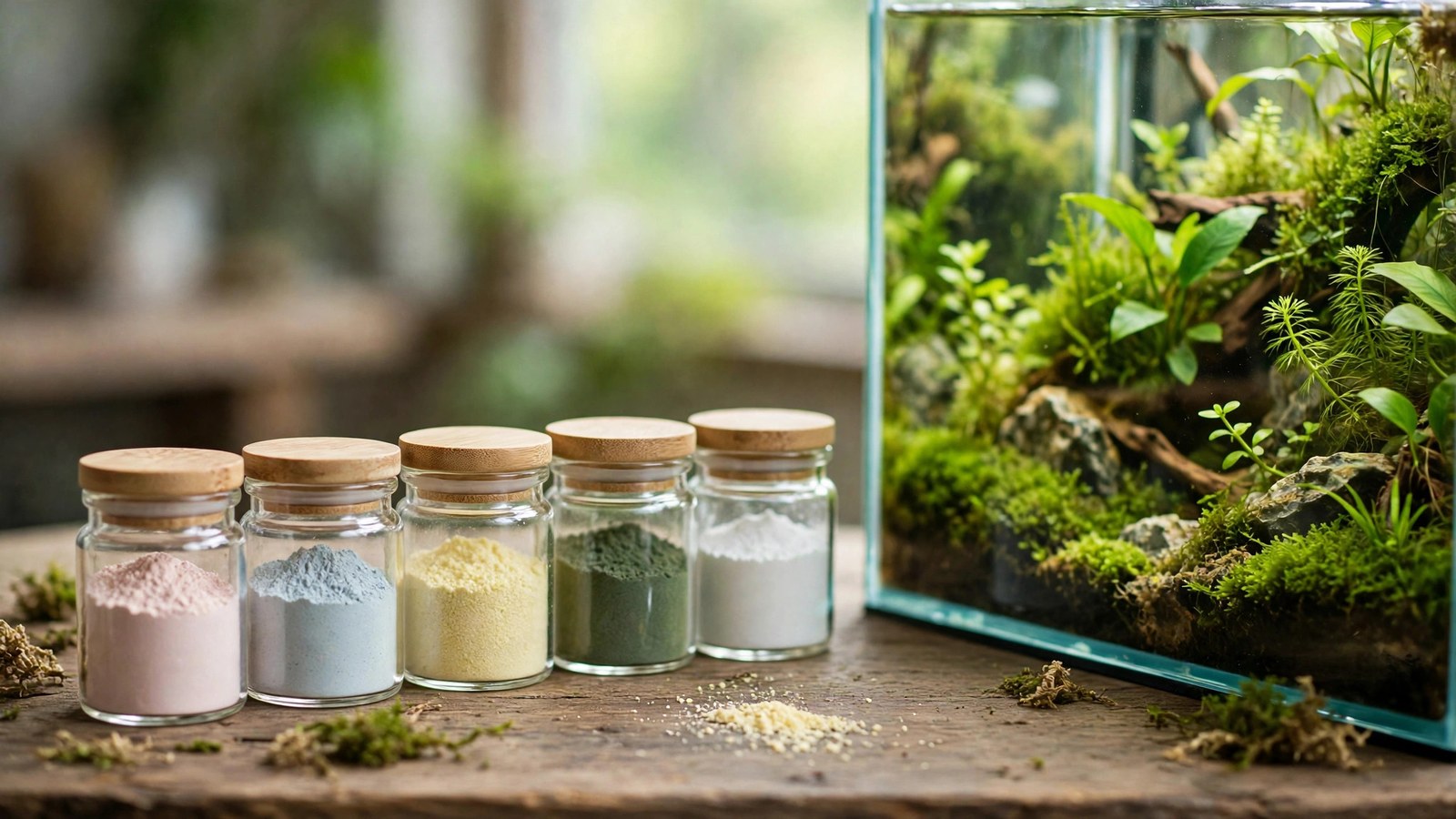
Most beginners overspend on water. A liquid fertilizer is mostly a bottle of water with a pinch of salts dissolved in it, shipped at a premium. Choosing the best dry fertilizer kit for aquarium plants flips that math: the same nutrients as concentrated powders, at a fraction of the cost per dose, with full control over every element. The catch is picking the kit built for your dosing method.
The best dry fertilizer kit for aquarium plants is a complete pre-mixed kit matched to your method: an EI kit if you dose generously with weekly 50% water changes, or a PPS-Pro kit if you prefer small daily doses. A complete kit supplies all three macros — nitrogen, phosphorus and potassium — plus a trace mix, in separately labeled bags or bottles so each element can be adjusted independently.
Choosing the best dry fertilizer kit for aquarium plants
Start with one question: how do you want to dose? If you are still deciding between formats, our guide to the best liquid fertilizers and how kits compare walks through the kit-versus-liquid decision in full. Dry kits win on cost and control; liquids win on grab-and-go convenience. If you lean dry, the method decision comes next, because it changes what a "good" kit looks like.
Also check whether you need to dose at all. Low-light, fish-heavy tanks sometimes run fine on waste alone — our breakdown of whether aquarium plants really need fertilizer helps you decide before you spend. Dry kits earn their keep once lights, CO2 or plant mass push demand past what waste supplies.
EI kits vs PPS-Pro kits: match the kit to the method
EI (Estimative Index) kits are built for abundance: macros and micros on alternating days, deliberately more than plants consume, then a large weekly water change resets the tank. Our EI dosing guide for beginners explains the schedule. Kits from makers like NilocG Aquatics are packaged around that rhythm, with generous quantities of each salt.
PPS-Pro kits take the opposite approach: small, precise daily doses matched to plant uptake, with far less reliance on big water changes. Green Leaf Aquariums built its kit line around this system, typically as two pre-portioned mixes — one macro, one micro. The PPS-Pro dosing guide covers the routine. Neither is "better" — EI forgives inexact measuring; PPS-Pro rewards consistency.
| Kit type | Dosing style | Water changes | Measuring | Best for |
|---|---|---|---|---|
| EI dry kit | Macros and micros on alternating days, in excess | ~50% weekly reset | Teaspoons or scale; precision is forgiving | High-light, CO2 tanks; busy schedules |
| PPS-Pro kit | Small equal daily doses of macro and micro solutions | Small or monthly | Dosing bottles with marked lines; accuracy matters | Stable tanks; keepers who dose daily anyway |
| All-in-one dry mix | Single combined powder on a simple schedule | Per label, usually weekly | Scoop-based; least adjustable | Beginners wanting dry-kit savings without two-part dosing |
For the deeper cost and control trade-offs between formats, see our dry vs liquid fertilizer comparison.
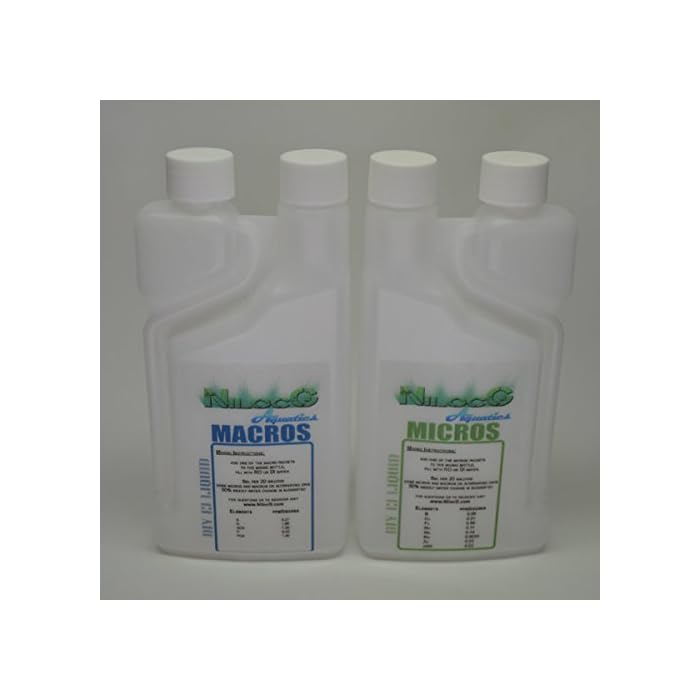
NilocG Aquatics Liquid Refill Set
Check Price on AmazonWhat a complete kit must contain
Check the listing for both halves. The macro side should include a nitrogen source (typically KNO3), a phosphate source (KH2PO4) and usually a potassium source (K2SO4). The micro side should be a CSM+B-style trace mix supplying iron and traces. A macros-only "kit" means buying traces separately within weeks — yellowing new growth is the usual reminder.
Separate packaging matters more than brand. Each salt in its own labeled bag lets you raise phosphate without touching nitrate. Pre-blended single powders are simpler but lock you into fixed ratios.
Shrimp and copper: read the trace label
Standard trace mixes contain a little copper, which healthy shrimp colonies usually tolerate at normal doses — but breeding tanks and sensitive caridina are less forgiving. If you keep shrimp, choose a kit offering a copper-free or explicitly shrimp-safe trace variant. When in doubt, dose low and watch the colony after each change.
Accuracy, cost and shelf life
Dry dosing lives or dies on measuring. A small digital scale (0.01 g resolution) is the most accurate route for EI-style dosing straight into the tank. For PPS-Pro, most keepers dissolve each mix into labeled dosing bottles and measure by the milliliter — the approach used in Green Leaf Aquariums' PPS-Pro system. Either way, label everything and keep salts away from humidity.
On cost, it is not close: you pay for nutrients, not shipped water, so cost per dose drops dramatically — and the gap widens with tank size. Work your kit into a weekly rhythm using an aquarium plant fertilizer schedule so doses and water changes stay in sync. Prefer to source and blend raw salts yourself? That is a separate project — see mixing dry fertilizers for a planted tank rather than improvising from a kit.
Frequently Asked Questions
Is a dry fertilizer kit better than liquid fertilizer?
It depends on your priorities. Dry kits cost far less per dose, store for years and let you adjust each nutrient separately, which suits medium and large tanks. Liquids are faster and simpler for small tanks or beginners who value convenience over savings. Many keepers start liquid, then switch to dry once plant mass and confidence grow.
Should I choose an EI kit or a PPS-Pro kit?
Choose EI if your tank is high-light with CO2 and you already do a large weekly water change — the method is forgiving of rough measuring. Choose PPS-Pro if you prefer small daily doses, dislike big water changes and can dose consistently. Both grow plants well; the right choice is the routine you will actually keep.
Are dry fertilizer kits safe for shrimp?
Mostly, yes — standard trace mixes contain very little copper and are widely used in shrimp tanks at normal doses. For breeding colonies or sensitive caridina shrimp, pick a kit with a copper-free or shrimp-safe trace variant, start at half dose, and observe the colony closely for the first two weeks before increasing.
How long does a dry fertilizer kit last?
The dry salts themselves keep for years when sealed and stored dry, which is a major advantage over liquids. Once dissolved into dosing bottles, use solutions within a few months and watch for mold, especially in trace mixes. Actual consumption depends on tank size and method — EI uses noticeably more than PPS-Pro.
Do I need a scale to use a dry kit?
A scale helps but is not mandatory. EI dosing tolerates measuring spoons because the weekly water change resets any excess. PPS-Pro is more precise and works best with pre-mixed bottles measured in milliliters. If you buy one tool, make it a small 0.01 g digital scale — it makes every method easier and more repeatable.
The bottom line
Pick your method first, then buy the complete kit built for it — macros and micros included, traces matched to your livestock, and salts packaged separately so you stay in control. Start low, observe for two weeks, and adjust one element at a time. Done that way, a dry kit is the cheapest, longest-lasting and most flexible way to feed a planted tank.