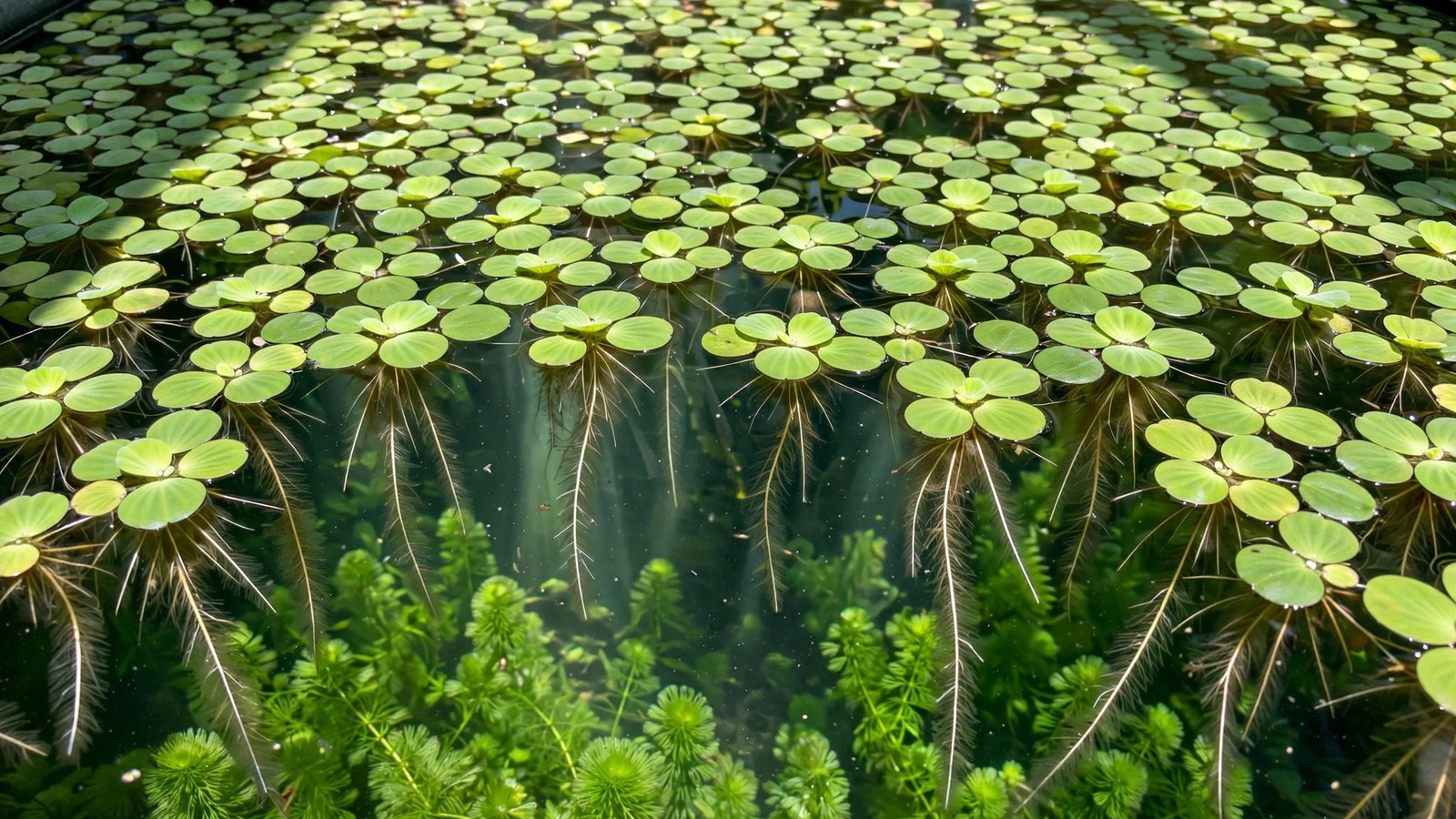
Do floating plants need a lot of light, or can they survive under the modest LED that came with your tank? Here is the counter-intuitive answer most new hobbyists never hear — floating plants are the last plants in your tank that need a powerful light. They sit centimeters from the lamp, where intensity is highest, which makes them some of the easiest plants you will ever grow. By the end of this guide, you'll know exactly which floaters thrive under a basic light and which ones genuinely want more.
Do Floating Plants Need a Lot of Light? The Short Answer
For most popular species, no. If you understand how much light aquarium plants need in general, floaters occupy the easy end of that scale: they live at the surface, centimeters below the light, where PAR is at its peak. A plain kit-tank LED running 6–8 hours a day — a setup that would leave carpeting plants pale and starved — is a buffet for duckweed, salvinia, and Amazon frogbit. More light rarely helps them grow faster; nutrients and room-air CO2 become the real limits long before photons do.
Light matters in two narrower cases: coloration and looks. Red root floaters (Phyllanthus fluitans) keep their ruby undersides only under medium–high intensity — under a dim kit light they stay alive but revert to dull green. And water sprite floated at the surface grows thicker, more dramatic roots under stronger light. But as a rule: if your light can grow an anubias, it can grow nearly every floater you will ever buy.
Why Floaters Sit in the Brightest Seat in the Tank
Light intensity drops fast through water — a plant at the substrate can receive a fraction of what a floater gets from the same lamp. Floating plants exploit this shamelessly: their leaves are at the surface, bathed in the strongest light in the tank plus room air that holds roughly 400 ppm CO2 (ten to twenty times what submerged leaves access).
This double advantage makes floaters classic "indicator plants." If your salvinia is multiplying while your stem plants stall, the problem below is almost never total light output — it's competition. The floaters are hogging both the photons and the water-column nutrients. Thriving floaters plus struggling substrate plants means checking your photoperiod duration and dosing, not your fixture.
 ★4.6
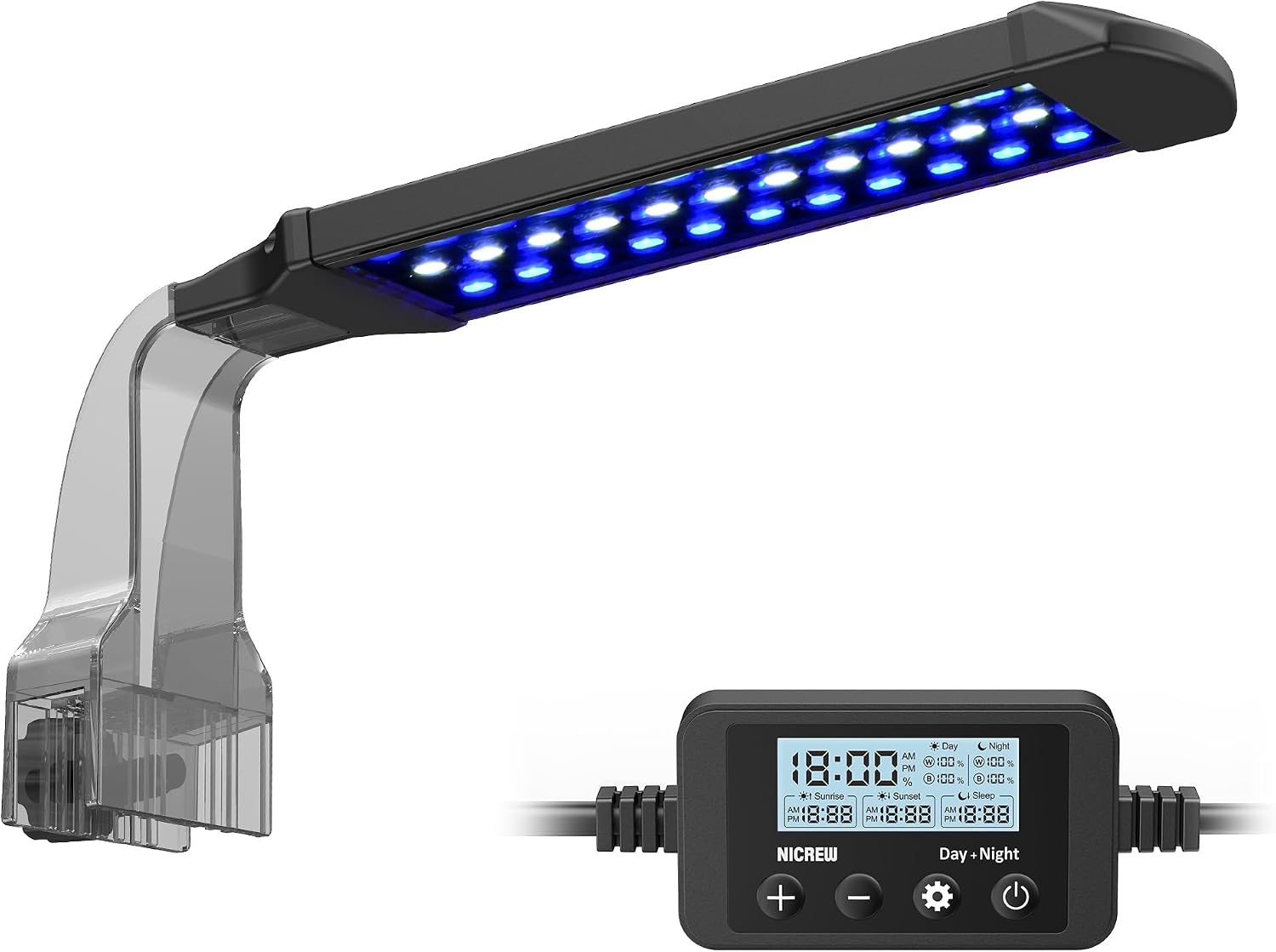
NICREW ClassicLED Plus planted aquarium light
Check Price on Amazon ★4.6Floating Plants and Light Needs, Species by Species
| Floating plant | Light needed | What happens under weak light |
|---|---|---|
| Duckweed (Lemna minor) | Low | Thrives anyway; the least fussy plant in the hobby |
| Salvinia (Salvinia minima/natans) | Low–medium | Still spreads fast; leaves stay small but healthy |
| Amazon frogbit (Limnobium laevigatum) | Low–medium | Grows; larger rosettes need a bit more intensity |
| Red root floater (Phyllanthus fluitans) | Medium–high | Survives but turns green; color needs intensity |
| Water sprite (floated) | Low–medium | Alive and growing; roots stay thin under dim light |
| Hornwort (floated) | Low | Bushy and fast; one of the best algae competitors |
Only red root floaters genuinely reward stronger lighting. For species-level care parameters, Tropica's plant care guides are the most authoritative grower reference online. If you're shopping for a light to make red floaters pop, pick a dimmable full-spectrum LED — the NICREW ClassicLED Plus is a popular budget option because you can crank it up for the floaters and dial it back for everything else. Learning to dim an aquarium light safely matters far more for algae control than raw intensity.
The Real Danger: What Floaters Do to Light Below the Surface
Here's the twist. The question isn't really whether floaters get enough light — it's whether anything under them does. A full mat of duckweed or frogbit can block 70–90% of light from reaching the plants below. Carpet plants stop spreading, stem plants stretch upward and pale, and lower leaves melt — while the floaters above look fantastic.
The fix is management, not a stronger light. Aim for 30–50% surface coverage: enough to shade shy fish and pull nitrates, open enough that light reaches the mid-water and substrate. Scoop a handful out weekly — most floaters double their biomass in under a week. Never release floating plants or trimmings into local waterways — compost them or bin them. Watch for these warning signs that your mat is too thick:
- Stem plants growing upward but losing lower leaves
- Carpet plants stalling or shrinking at the edges first
- Mulm collecting under the mat from reduced circulation
Flow, Not Light, Is the #1 Floater Killer
Ask veteran keepers what kills floating plants and dim light barely makes the list. The top culprit is surface agitation: duckweed gets pushed into corners and starves, frogbit rosettes break apart, and red root floaters melt when a hang-on-back or canister output churns the surface. Floaters evolved for still backwaters, not whirlpools.
Before blaming your light for struggling floaters, baffle the flow: raise the water level to the filter output, add a spray bar, or corral the plants in a feeding ring away from the current. A floater that looked "light-starved" often recovers within days once the surface calms. The other common culprit is condensation dripping from a lid onto frogbit leaves — keep the leaf tops dry.
A Photoperiod Your Floaters (and Everything Else) Will Like
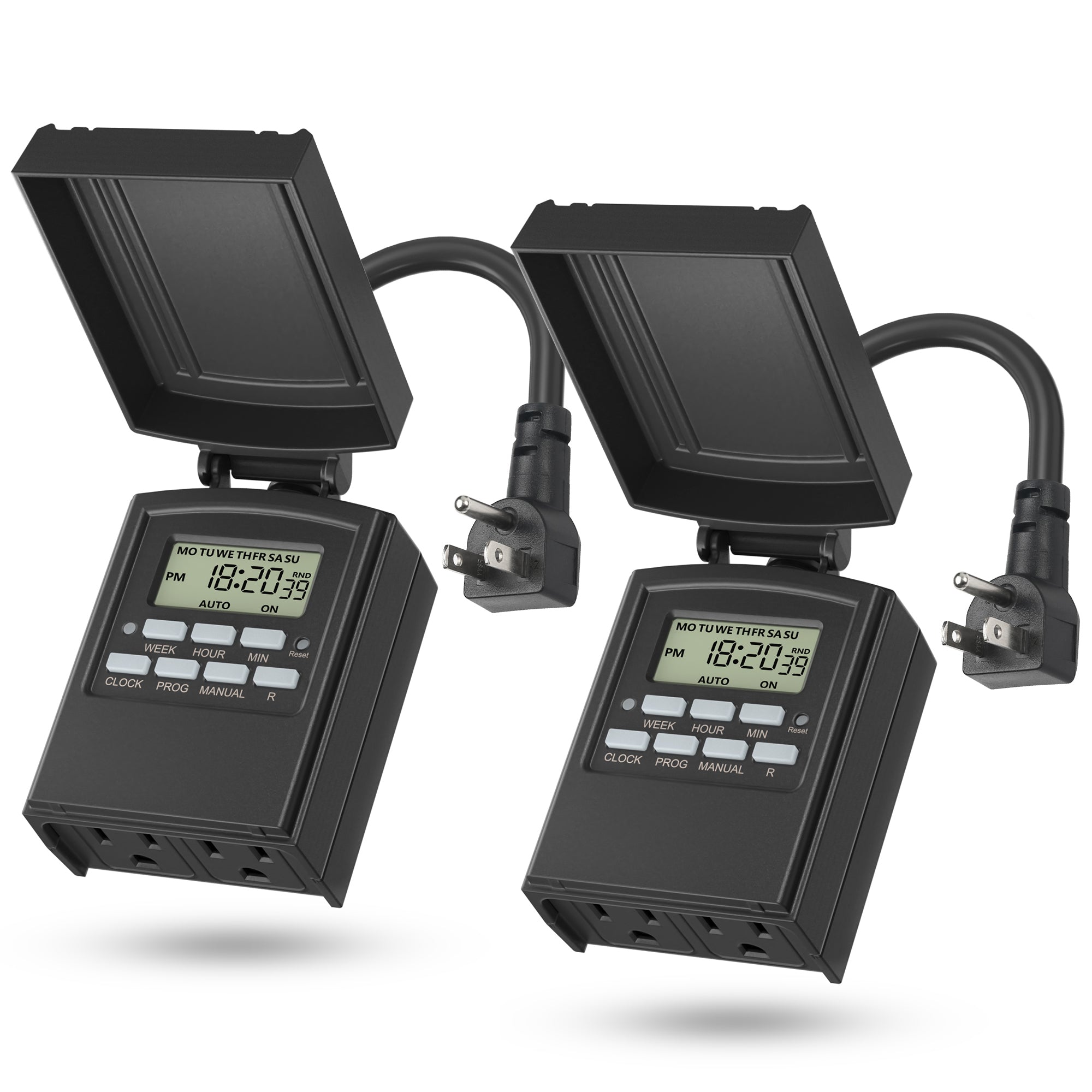
Start at 6 hours a day with a timer — a simple digital outlet timer like the BN-LINK does the job reliably — and raise it by 30 minutes every two weeks only if plants below look hungry and no algae appears. Our aquarium light timer guide walks through the setup.
 ★4.4
BN-LINK Digital Outlet Timer
Check Price on Amazon ★4.4If algae shows up on the tops of floating leaves, that's excess light or nutrients, not deficiency — back the duration down. And if you want "low," "medium," and "high" translated into real numbers instead of adjectives, the PAR rating guide for aquarium lights explains how to read manufacturer claims.
Frequently Asked Questions
Can floating plants survive with just ambient room light?
Usually not well. Ambient room light is typically under 10 PAR at the tank, while even low-light floaters prefer 20–30+ PAR at the surface. Duckweed may limp along in a bright room, but growth stalls and colors wash out. A basic aquarium LED on a 6-hour timer transforms results.
Why are my red root floaters turning green?
Green leaves mean the light is too weak to trigger the red pigments — or nitrates are high, which also suppresses red coloration. Move a small patch directly under the lamp, thin the mat, and bring nitrates below ~20 ppm. Give it two to three weeks to color back up.
Do I need a stronger light if floaters shade my other plants?
No — thin the floater mat to 30–50% surface coverage first. A brighter light mostly benefits the floaters closest to the lamp and can trigger algae on their leaves. Only reassess your light after thinning, and prefer a dimmable fixture so you can tune intensity.
How many hours of light do floating plants need per day?
Six to eight hours suits nearly all floating species. Start at six hours with a timer and increase by 30-minute steps every two weeks if growth looks hungry and no algae appears. Photoperiods beyond 10 hours rarely help floaters and usually just feed algae.
Can floating plants get too much light?
Yes. Under very intense lighting, floater leaf tops can grow algae film, edges can crisp from heat, and some species bleach. If your LED has a dimmer or adjustable height, raising it or cutting intensity is kinder to the whole tank than shortening the photoperiod alone.
So: do floating plants need a lot of light? For most of them — duckweed, salvinia, frogbit, hornwort, floated water sprite — a modest LED and a steady 6–8 hour photoperiod is plenty. Save your attention for the two things that actually make or break a floater tank: thinning the mat so the plants below get light, and calming the surface flow. To measure exactly what your fixture puts out, measuring light with a PAR meter takes the guesswork out of every light decision.