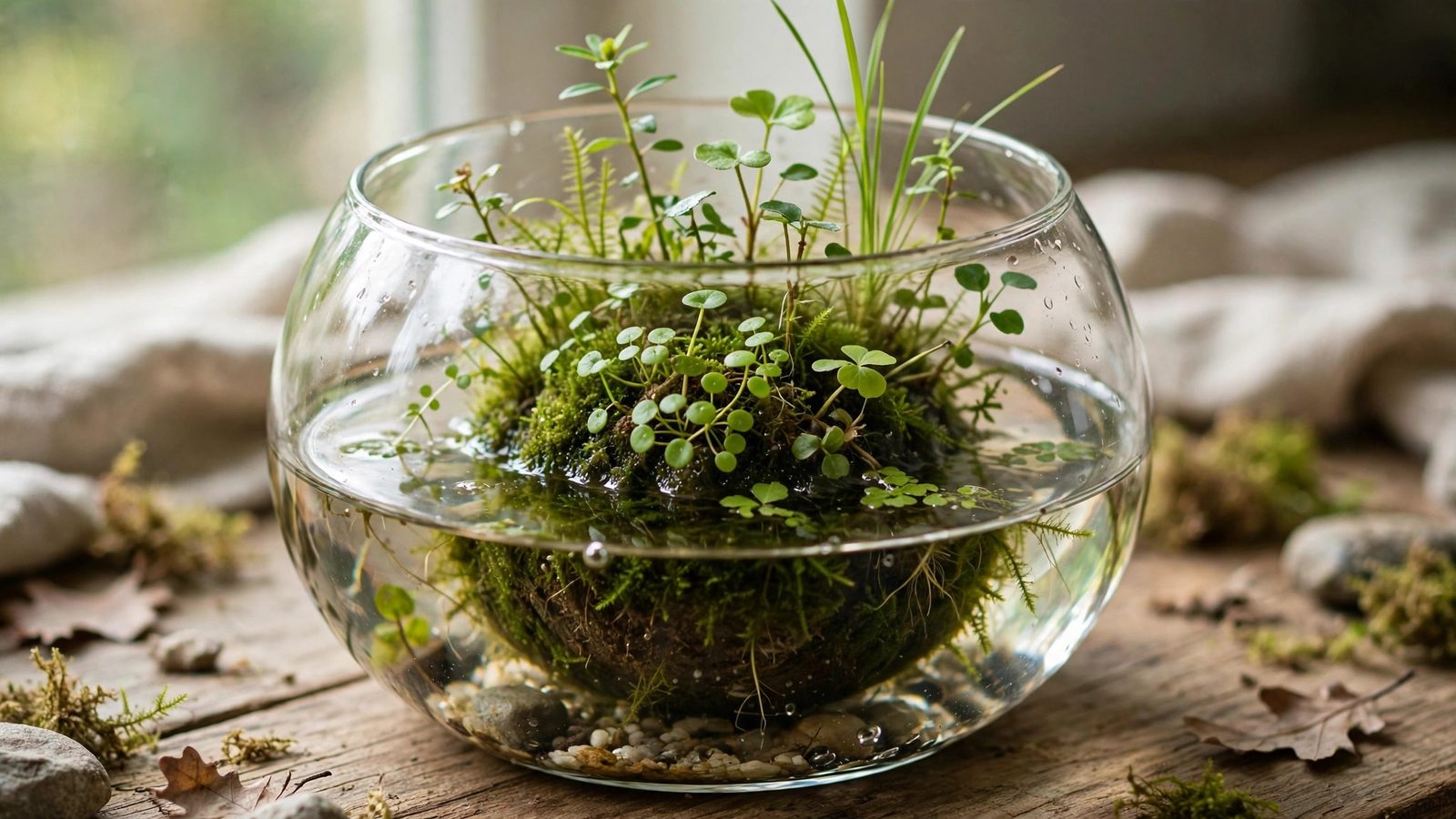
Wabi-kusa is aquascaping stripped to its essence: a ball of substrate, a handful of plants, a glass bowl — and a miniature wetland that grows wilder and more beautiful the less you fuss over it. Invented by Takashi Amano as the emersed cousin of the Nature Aquarium, wabi-kusa (literally "beautiful imperfection") lets you grow aquatic plants in their emersed form on a desk, a windowsill, or a shelf, no aquarium required. It's the cheapest, smallest, most forgiving entry point into the planted-tank world — and a legitimate art form in its own right.
What Wabi-Kusa Is (and Isn't)
A wabi-kusa is a ball of nutrient-rich substrate (traditionally ADA Aqua Soil) planted with aquatic and marsh plants, placed in a shallow glass vessel with a little water at the base. The plants grow emersed — roots in the wet substrate ball, foliage in humid air — exactly as many aquarium plants grow in nature during the dry season. There's no filter, no CO2, no water changes in the aquarium sense. You mist it, top up the water, trim occasionally, and watch a tiny ecosystem develop.
What it isn't: a terrarium (too wet, no drainage layer needed — the substrate ball is the medium), a houseplant pot (the plants are aquatic species in emersed form), or a toy that dies in a month. A well-made wabi-kusa lasts years, going through seasonal cycles of explosive growth, flowering, and rest. Amano's original wabi-kusa installations at the Sumida Aquarium ran indefinitely with basic care.
The philosophy is pure wabi-sabi: imperfection as beauty. The ball is lumpy, the planting is naturalistic rather than geometric, and the arrangement is meant to look like a clump of vegetation pulled from a riverbank — because that's literally what it mimics.
What You Need
- A glass vessel: shallow bowls, apothecary jars, or purpose-made wabi-kusa glasses. Wide and shallow beats tall and narrow — surface area for planting matters more than depth. Anything from a 4-inch bowl to a 12-inch dish works.
- Substrate: aquasoil (ADA Amazonia or equivalent) is traditional — nutrient-rich and holds a ball shape when moist. You'll need enough to form a ball roughly 1/3 the vessel's diameter.
- Ball binder (optional): a thin layer of sphagnum moss wrapped around the ball before planting helps it hold together and stay moist. Traditional method; recommended for beginners.
- Plants: 3–6 species (see list below). Tissue-culture cups are ideal — pest-free, and the small plantlets suit the scale.
- Water: dechlorinated tap or RO; just enough to cover the bottom of the vessel (5–15mm). The ball wicks moisture up.
- Light: a small LED or a bright windowsill (no direct midday sun — it cooks the bowl). 8–10 hours daily.
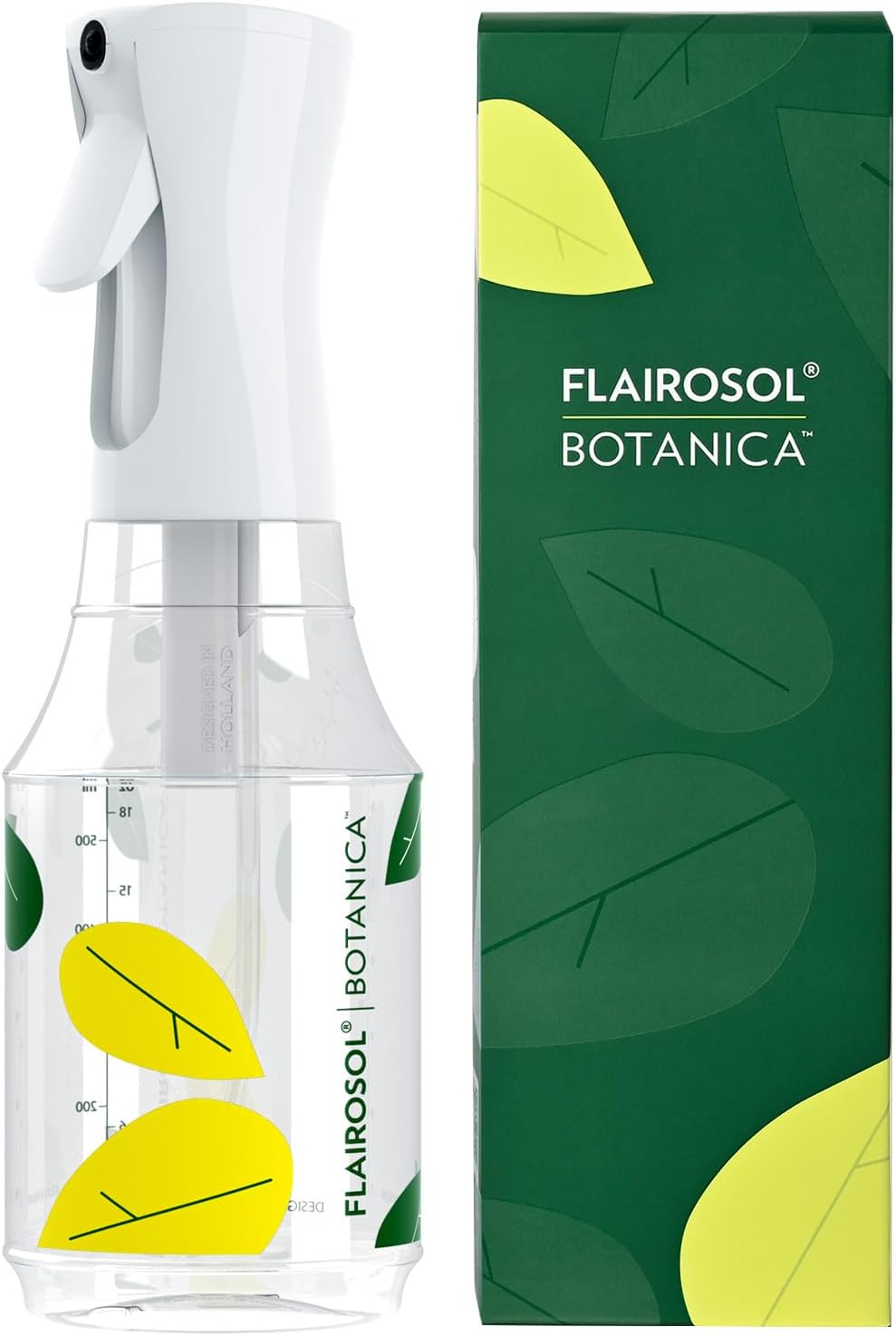
- Mister: a spray bottle. Your most-used tool.
Total startup cost: easily under $30 if you already own a bowl and a light. Compare that to a high-tech aquascape and you see why wabi-kusa is the hobby's best gateway.
A reliable pick here is Fluval Plant and Shrimp Stratum.
A reliable pick here is fine-mist plant mister.
 ★4.4
FLAIROSOL Botanica Plant Mister
Check Price on Amazon ★4.4Making the Substrate Ball: Step by Step
- Moisten the aquasoil until it's damp enough to clump — like wet sand for a sandcastle, not soup. Too dry and it crumbles; too wet and it's mud.
- Form a ball or dome roughly the size of an orange (scale to your vessel). Pack it firmly. A slightly flattened bottom helps it sit stable.
- Wrap in sphagnum moss (optional but recommended): lay damp long-fiber sphagnum in a sheet, place the ball in the center, and gather the moss around it like wrapping a dumpling. This skin holds moisture and gives roots and moss something to grip.
- Set the ball in the vessel and add water to just below the ball's "equator" — the bottom sits wet, the top stays merely damp. The wicking action keeps the whole ball moist.
- Plant immediately: poke holes with a chopstick or tweezers and insert plantlets. Plant densely — wabi-kusa should look full from day one, not sparse.
- Mist thoroughly, cover loosely with cling film for the first week (with air holes), and place in bright indirect light. The cover maintains near-100% humidity while plants establish; remove it gradually over week two.
Plant Selection: The Emersed All-Stars
The best wabi-kusa plants are aquarium species with strong emersed forms. Mix heights and textures — one tall accent, two midground fillers, one carpeting/creeping species:
- Hygrophila (difformis, corymbosa 'Compact'): the classic wabi-kusa backbone — fast, bushy, flowers readily emersed with delicate purple blooms.
- Ludwigia repens / palustris: emersed leaves turn olive-green to reddish; produces small yellow flowers. Great midground mass.
- Cryptocoryne parva / wendtii: slow, tidy rosettes for the ball's lower slopes; emersed crypts may produce their extraordinary spathe flowers.
- Anubias nana 'Petite': mount small pieces on the ball's surface or on a tiny wood accent — deep green contrast against softer foliage.
- Staurogyne repens: creeps over the ball's surface like a groundcover, rooting as it goes.
- Micranthemum 'Monte Carlo' / Hemianthus: carpet the ball's top and cascade over the edges.
- Acorus gramineus (dwarf sweet flag): grass-like vertical accent — the "reeds" of your miniature wetland.
- Mosses (java, Christmas, Riccia): press onto the ball between plants; they'll colonize every gap into a seamless green skin.
- Hydrocotyle tripartita: clover-like creeper that drapes beautifully over the ball's edge.
One accent stone or tiny driftwood piece elevates the composition enormously — a single miniature Seiryu fragment or a twig of spider wood gives the planting something to grow around. This is where our one-rock minimalist principles scale down to bowl size: one hardscape element, placed off-center, changes everything.
Daily and Weekly Care
Wabi-kusa care is minimal but consistent:
- Mist daily (twice daily in dry climates or heated rooms) — the foliage should glisten, never dry out. This is the single most important habit.
- Top up water as it evaporates — every few days. Keep the base level constant; don't flood the ball.
- Light 8–10 hours daily. A timer removes the guesswork.
- Trim every 2–4 weeks: emersed growth with unlimited atmospheric CO2 is vigorous. Pinch back Hygrophila and Ludwigia before they shade everything; thin creepers spilling too far. Our trimming maintenance principles apply at miniature scale — shape, don't hack.
- Fertilize lightly: the aquasoil feeds the ball for 6–12 months. After that, a monthly misting with heavily diluted liquid fertilizer (1/4 strength) keeps growth lush. Over-fertilizing burns emersed leaves — less is more.
- Change the base water monthly: tip out the old water and replace it — prevents stagnation and mineral buildup.
Common Problems and Fixes
- Mold on the ball (first weeks): normal. Increase airflow slightly, mist a little less, and it passes as plants establish. Springtails help if it persists.
- Melting plantlets: tissue-culture and submerged-grown plants often melt their old leaves while growing emersed replacements — the same transplant melt aquarium plants show, just in reverse. Don't discard; wait 2–3 weeks for new growth.
- Leggy, pale growth: not enough light. Move closer to the light source or increase duration — but watch for algae on the ball's wet surface, the sign you've overshot.
- Ball falling apart: usually from flooding (water level too high) or handling. Keep water below the equator, don't squeeze the ball, and let roots bind it — after two months the root mass holds everything together.
- One species taking over: Hygrophila will try. Trim the bully ruthlessly; wabi-kusa is gardening, and the gardener decides.
Beyond the Bowl: Wabi-Kusa Variations
Once you've mastered the basic ball, the form has delightful variations:
- Wabi-kusa in an aquarium: place the ball in a shallow tank with a few centimeters of water — it becomes an island scape. Shrimp graze the submerged portion; the emersed top flowers. Our island-style aquascape guide is the big-tank version of this idea.
- Hanging kokedama-style: wrap the ball in moss and string and hang it — same plants, vertical presentation.
- Seasonal displays: replant the ball 2–3 times a year with different species for spring/summer/autumn looks — a practice straight from Japanese horticulture.
- Wabi-kusa walls: multiple balls in a large shallow tray create a miniature wetland landscape — essentially a Nature Aquarium without the aquarium.
Frequently Asked Questions
How long does a wabi-kusa last?
Years, with basic care. The aquasoil's nutrients deplete after 6–12 months, but light fertilization extends its life indefinitely, and the ball becomes a self-sustaining root mass. Many hobbyists keep the same ball for 2–3 years, replanting sections seasonally. When growth finally stalls despite fertilizing, rebuild the ball with fresh soil — a 20-minute job.
Can I use regular potting soil instead of aquasoil?
You can, but aquasoil is better: it holds the ball shape, doesn't compact into anaerobic mud, and releases nutrients slowly. If using potting soil, choose organic soil with no perlite or added fertilizers, cap it with a sphagnum wrap, and expect a messier, shorter-lived ball. Mineralized topsoil is the best DIY alternative.
Do I need a lid or cover?
Only for the first 1–2 weeks while plants establish — cling film with air holes maintains the humidity that prevents transplant shock. After that, open air is fine as long as you mist daily. Permanent covers invite mold and block the airflow that keeps the planting healthy.
Why are my plants flowering? Is that normal?
Completely normal and a sign of success — many aquarium plants flower readily in emersed form (Hygrophila, Ludwigia, Cryptocoryne, Anubias) because they're getting full light and unlimited CO2. Emersed flowering is one of wabi-kusa's great pleasures; submerged aquarium plants almost never bloom. Enjoy it, and let seed heads develop if you're curious.
Can wabi-kusa grow fully submerged in a tank?
The ball can sit in an aquarium as an island feature, but the emersed-grown foliage will melt when submerged long-term — the plants must transition back to submerged form. It works as a temporary display or a transition method (grow emersed, then flood — essentially the dry start method in miniature), not as a permanent underwater arrangement.
Is wabi-kusa good for beginners?
It's the best beginner project in the planted hobby: under $30, no filter or CO2 to tune, mistakes cost a replanting rather than a crashed tank, and it teaches emersed growth, trimming, and composition. Many aquascapers started with a bowl on a desk. If the bowl thrives for three months, you're ready for a real aquascape.
The Smallest Landscape
Wabi-kusa distills everything beautiful about planted tanks — living plants, natural composition, seasonal change — into something that fits on a bookshelf and asks for five minutes a day. Build one ball, plant it densely, mist it faithfully, and in two months you'll have a flowering wetland the size of a grapefruit. It's also the perfect low-stakes laboratory: test plant combinations, practice trimming, and develop your eye for composition before committing to a full 10-gallon aquascape or larger build. The bowl teaches; the tank is just a bigger bowl.