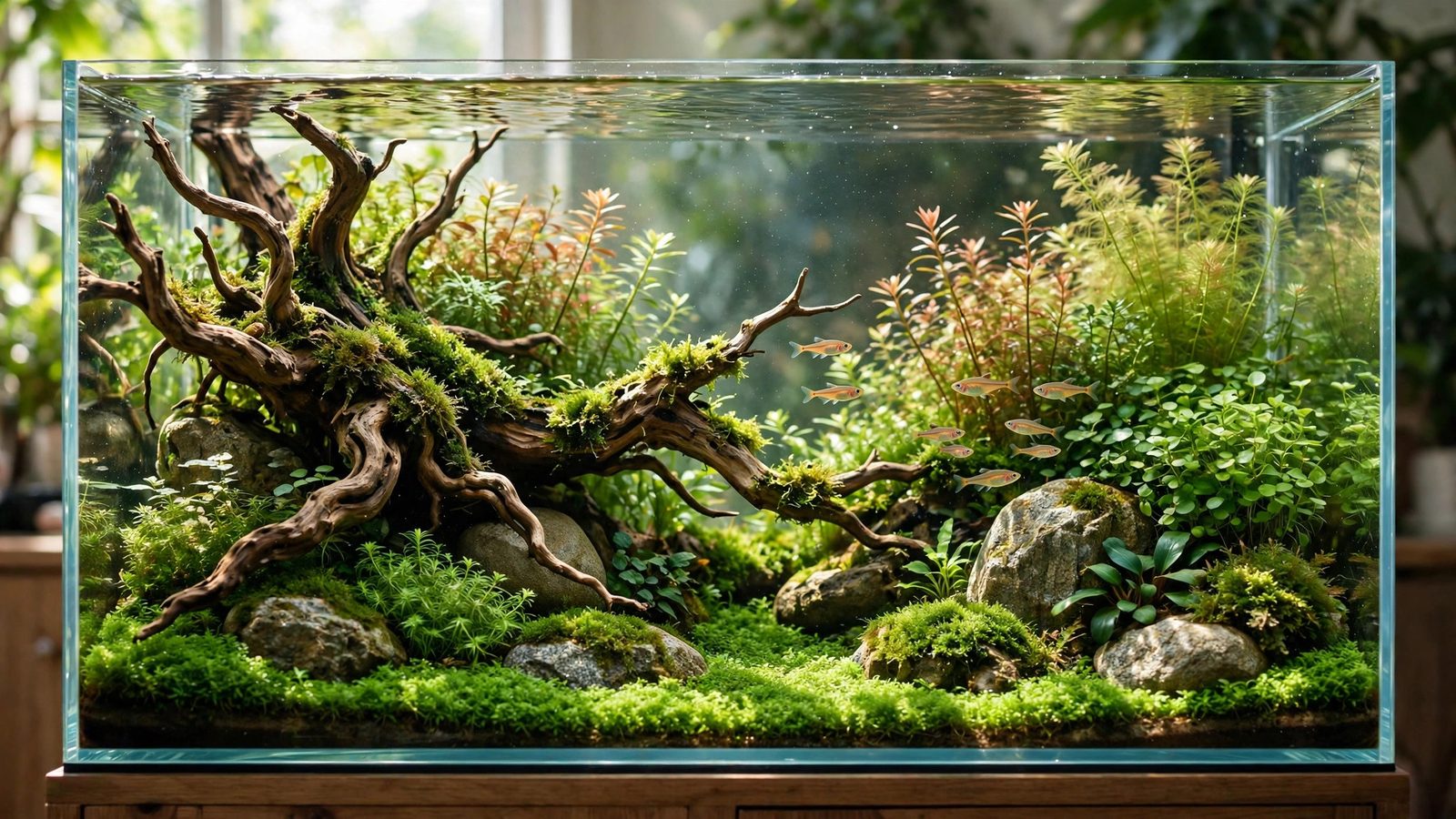
On Saturday, October 10, 2026, a single photograph of a single aquarium will decide the most prestigious title in aquascaping — and the judges will never see the tanks in person. Three hundred layouts from hobbyists around the world have made the IAPLC 2026 nominee shortlist, and for one week more, nobody outside the judging panel knows which one takes the crown. If you keep planted tanks, this is your hobby's Super Bowl, and it's about to be decided while most of us are still asleep.
What the IAPLC Is, and Why It Runs the Hobby
The International Aquatic Plants Layout Contest, run by Aqua Design Amano (ADA) of Japan, is the oldest and largest planted-aquarium design competition on the planet. Thousands of aquarists from dozens of countries enter each year; only a fraction make the TOP 300 nominee list, and just 100 earn a published world ranking. Where most contests judge tanks live in a convention hall, the IAPLC is a photograph contest. You build the layout in your own living room, photograph it at its absolute peak, and submit that one image. The judges — a panel led by ADA's own Takashi Amano's successors and invited experts — score every entry blind, from the photograph alone.
That single-photo format is exactly what makes IAPLC so influential. Because anyone with a camera and a planted tank can enter, the winners represent the best home aquascapes in the world, not the best-funded show teams. When you see the TOP 100 gallery go live on October 10, you are looking at what real hobbyists achieved in real bedrooms and offices. Every trend that later fills YouTube tutorials — certain hardscape stones, carpet species, the moody "dark start" palettes of recent years — shows up in an IAPLC gallery first.
IAPLC 2026: The Key Dates
Here is where the 2026 edition stands right now. Note the rhythm of this contest: it runs on an annual cycle that has barely changed in over a decade, so these dates also tell you how to time a run at the 2027 edition.
| Milestone | Date (2026) | What happened |
|---|---|---|
| Application period | Traditionally May, closing end of month | Entries submitted online: one layout, one photograph |
| TOP 300 nominees announced | September 2026 | Nominee list published by name and country; layouts kept secret |
| World Ranking TOP 100 reveal | Saturday, October 10, 2026, 1:00 PM JST | Livestream on ADA's official channel; layouts and final positions shown |
| Full ranking published | After the livestream | Complete results posted on the official IAPLC website |
| Contest booklet | Late autumn 2026 | Printed book with all applicants' layout photos |
Mark October 10 in your calendar now. ADA typically reveals the rankings from the bottom up — ranks 100 down through the honor prizes, bronze, silver, gold, and finally the Grand Prize — so the livestream doubles as a two-hour masterclass in what world-class layouts look like right now.
How the Contest Actually Works
The rules are brutally simple, and that simplicity is the trap. Under longstanding contest terms:
- One applicant, one layout, one photograph. You get a single shot at the title each year. No backup entries, no "I'll send the other tank too."
- Anyone, anywhere. The contest is open to hobbyists worldwide, and there is no tank-size regulation. A 10-gallon home tank has the same shot as a 200-gallon showpiece — the photo is all that matters.
- Freshwater planted layouts only. Reef tanks and paludariums are out; in open-top tanks only the underwater portion is judged.
- Unreleased, original work. Your layout must be your own and unpublished. Enter a layout whose hardscape or composition closely copies a previous top-27 finish — even your own — and you face point deductions.
- One front-on photo of the whole tank. Shoot straight on, showing the entire aquarium. Angled shots, dramatic crops, and partial views are penalized. Your photography is literally half your score.
- Underwater-plausible planting. Terrarium or marginal plants that would not genuinely survive submerged draw point deductions. The contest rewards real aquatic horticulture, not decoration.
The 2027 application window will almost certainly open in the spring, as it does every year. That gives you roughly seven months from today to plan, grow, and photograph a contender — which is exactly the timeline experienced entrants use.
How the Judging Works
A panel of judges scores each entry from its single submitted photograph, and the results are sorted into a published world ranking of the top 100. The prize tiers follow a familiar structure: one Grand Prize at the top, then gold, silver, and bronze awards, honor prizes below those, and the remaining ranked works. The Grand Prize has historically included JPY 1,000,000 — serious money for a hobby contest.
What are the judges actually looking for? The scoring centers on the aquascaping itself — composition, plant health and arrangement, and originality of the concept — alongside the harmony between the fish and the layout, and the overall emotional impact of the image. A technically perfect carpet means little if the scape has no idea behind it, and a dramatic concept falls apart if half the plants are melting. If you want the full breakdown of how aquascaping contests evaluate entries, read our evergreen guide to contest judging and how to enter, which covers the criteria in depth for every contest, year after year. This article stays focused on the 2026 edition: the dates, the field, and the storylines.
Who to Watch in the 2026 TOP 300
The nominee numbers alone tell a story. Japan, the contest's home, dominates with 68 nominees — the deep bench of a country where Nature Aquarium culture has three decades of history. Vietnam holds third with 29 nominees, confirming Southeast Asia as the sport's second capital. Behind those numbers sits a field stacked with returning heavyweights: all four of 2025's top finishers are back among the 2026 nominees.
Three names worth knowing before the October 10 reveal. Siak Wee Yeo of Malaysia won the Grand Prize in 2020 and has multiple top finishes since — when a former champion re-enters, every other contender's odds shift. China's Gang Zhao finished second in both 2025 and 2023, plus third in 2022; nobody in the current field has been closer to the title more often without taking it. And Japan's Hidekazu Tsukiji, fourth in 2025 and third back in 2014, brings a decade of refinement to his 2026 layout. For deeper background on these entrants, AquaLibs' profile of 10 notable 2026 nominees is worth a read while you wait for the results.
Trends the 2026 Shortlist Already Reveals
You don't need to wait for October 10 to learn from this year's contest. The pattern of the nominee field tells you what the IAPLC rewards now:
- Longevity beats novelty. The names at the top of the nominee list have been refining their craft for a decade or more. Winners grow into winners; almost nobody wins on a first serious attempt.
- Maturity is the real currency. The layouts that rank high are photographed at peak maturity — dense, settled growth with no bare substrate or fresh-trim stress. Planning your timeline backward from a fixed photo date is the essential skill.
- Fish are part of the design. Because fish-layout harmony is scored, top entrants choose and condition their fish as deliberately as their plants. A scape without fish is a scape with points left on the table.
- Originality still breaks ties. When hundreds of technically superb tanks compete, the winners are the ones the judges haven't seen before. That is why reusing a past top-27 composition costs points — the contest actively defends its own novelty.
Steal These IAPLC Habits for Your Own Tank
You don't need to enter the 2027 contest to profit from how its entrants think. Four habits separate competition-grade tanks from average ones, and each works in an ordinary home aquarium:
Design around one focal point. Every ranked layout has a single spot your eye lands on first — a hero stone, a red plant cluster, a convergence of driftwood. Random arrangements never rank. Learn the method in our focal point placement guide.
Limit your palette. Top scapes rarely use more than a few plant species, and their color story is deliberate: deep greens, one warm accent, one red. Restraint photographs better than abundance. Study aquascaping color theory before your next rescape.
Trim on a schedule, not on panic. The mature, dense look of the nominees comes from months of scheduled trimming cycles — weekly or fortnightly — that train stems to branch and carpets to tighten. Start the trimming routine three months before any photo you care about.
Avoid the classic beginner traps. Most layouts that would never survive judging fail on avoidable basics: visible equipment, algae on the front glass, inconsistent plant health. Run your tank through our beginner mistakes checklist before you ever point a camera at it.
 ★4.6
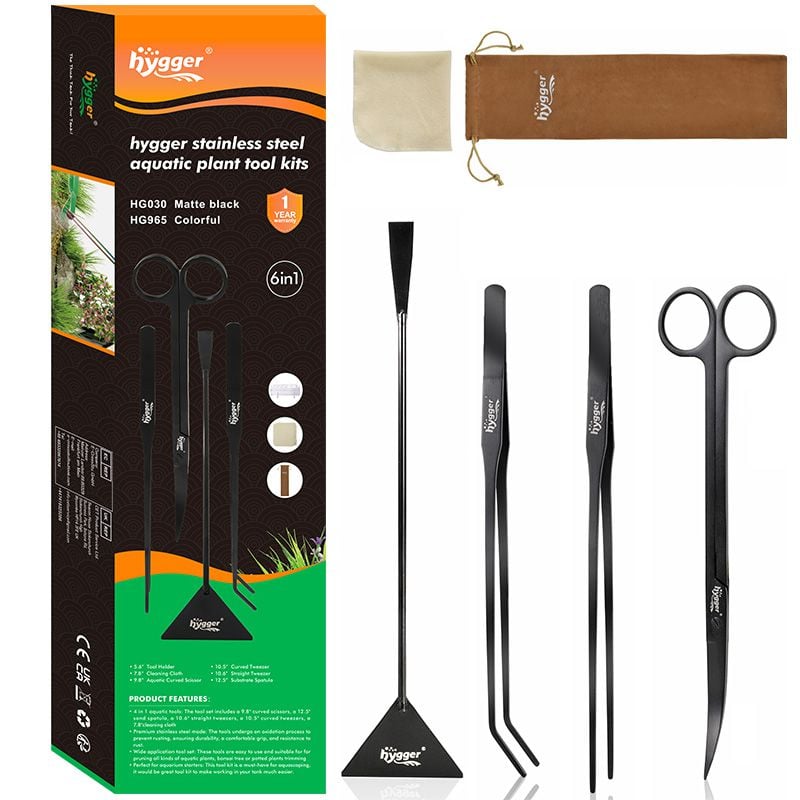
hygger 6-in-1 Long Aquarium Aquascaping Tools Kit
Check Price on Amazon ★4.6How to Enter the 2027 Contest
Convinced? Here is the realistic path from reading this article to the 2027 entry form.
- Start the tank this autumn. A competition scape needs 6–10 months to mature. Planting in October–November 2026 puts peak maturity right at the spring photo window.
- Choose a tank you can photograph well. Any size qualifies, and small tanks are cheaper to light and fill with CO₂ — a well-designed 10-gallon has beaten monster tanks before.
- Budget like a realist. Contest tanks are not cheap, but the money goes further if you plan it: substrate, hardscape, and lighting first, plants last. Our budget aquascaping guide shows where the compromises are safe.
- Photograph dry, clean, and dark. Wipe the glass inside and out, kill the room lights, shoot on a tripod, and take dozens of frames. Your entry is a photograph of a tank — treat it like a photo shoot, not a snapshot.
- Submit in the spring window via the official IAPLC website, following that year's published application terms.
Frequently Asked Questions
What does IAPLC stand for?
IAPLC stands for the International Aquatic Plants Layout Contest, the world's largest planted-aquarium design competition. Run by Aqua Design Amano of Japan, it is a photograph-based contest: entrants submit a single front-on photo of one freshwater planted tank, and judges rank every entry from those photos alone.
When are the IAPLC 2026 results announced?
The IAPLC 2026 World Ranking TOP 100 is revealed on Saturday, October 10, 2026, at 1:00 PM JST — that's 9:30 AM IST and 11:00 AM in Vietnam and Thailand — via a livestream on ADA's official channel. The complete ranking is published on the official IAPLC website after the stream, and the 300 nominee layouts stay hidden until then.
Is there an entry fee for the IAPLC?
Check the current application page on the official site before entering, since terms can change between editions. Historically the contest has been open to anyone worldwide with no entry fee, and the core requirements — one unpublished layout, one front-on photograph of the whole tank — have stayed consistent for years.
What tank size can I enter in the IAPLC?
There is no tank-size restriction. The rules state there is no regulation on aquarium size, so nano tanks compete on equal footing with large showpieces. What matters is the finished layout in the photograph, which is why many entrants favor mid-size tanks they can grow, maintain, and photograph to perfection.
Can I enter a photo taken with my phone?
Yes — the rules specify the subject and framing, not the camera. Your photo must show the whole tank from directly in front, well-exposed and clean. Many entrants do use DSLRs and tripods for maximum quality, but a carefully taken phone photo of a stunning, mature layout beats a sloppy DSLR shot of an algae-covered tank every time.
What do IAPLC winners receive?
Winners earn a published world ranking and, at the top tiers, cash and prizes — the Grand Prize has historically included JPY 1,000,000. Beyond the money, a top ranking is the highest credential in the hobby: it launches careers, wins sponsorships, and puts an aquarist's work in the annual contest booklet that shops and clubs reference for years.
The October 10 reveal is seven days away as of this writing. Whether you're watching to learn, entering next year, or just there for the most beautiful aquarium photos of 2026 — tune in, take notes, and then go rescape something. The next Grand Prize winner is growing their tank right now.