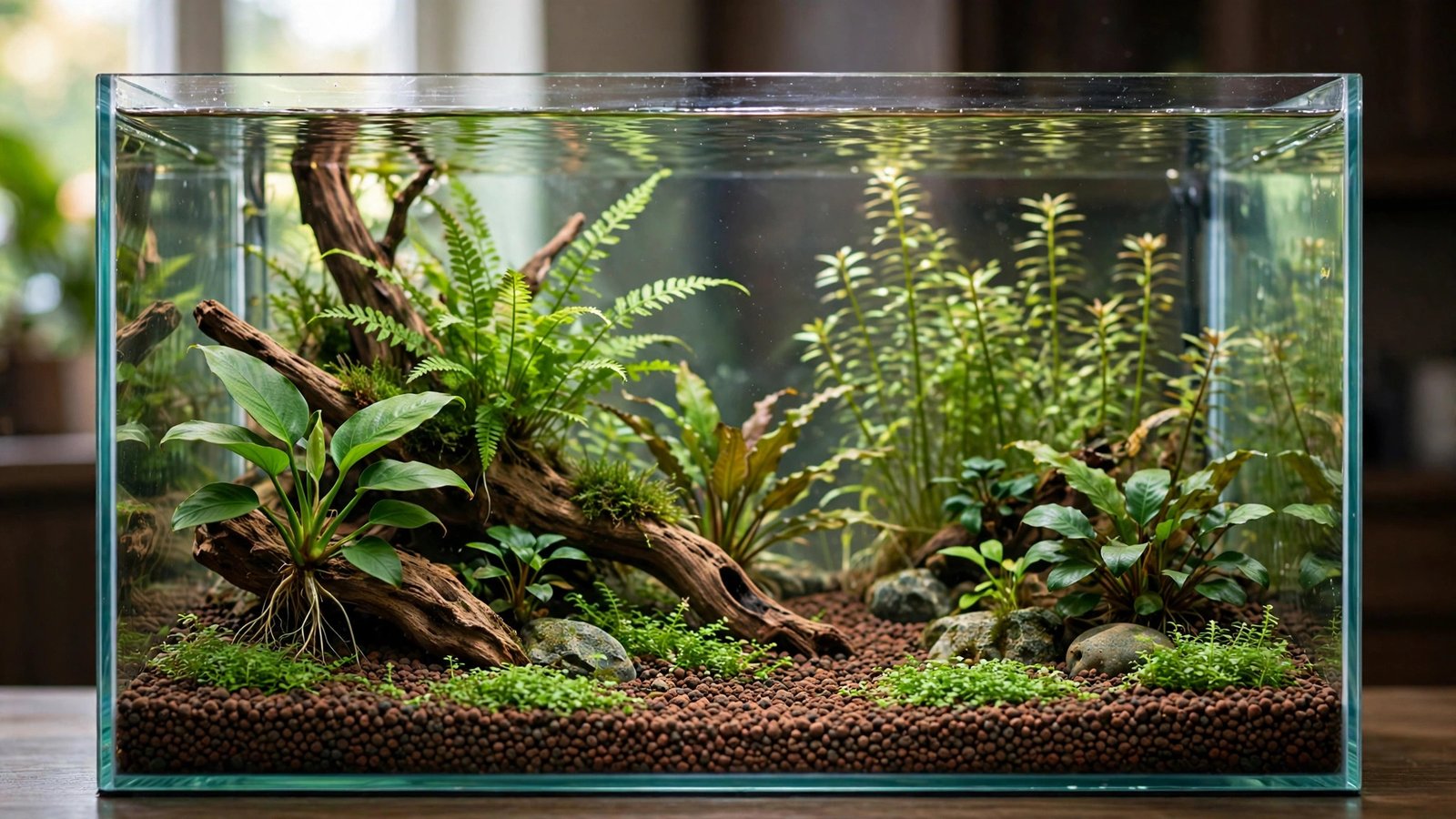
Pour a bag of Seachem Fluorite into a bucket and the water turns a thick, opaque red-brown that looks like it will never clear. Thousands of aquarists have panicked at this moment, convinced they got a defective bag. They didn't. This Seachem Fluorite review gives the honest picture: a lifetime substrate that never breaks down or needs replacing — but one that demands real rinsing, root tabs, and knowing exactly who it is (and isn't) for.
Seachem Fluorite is a stable porous clay gravel — iron-rich but nutrient-incomplete. It never decomposes, never needs replacing, and does not alter water chemistry (no pH shift, no ammonia leach), but it contains no nitrogen or phosphorus, so root-feeding plants need substrate additives like root tabs. The trade-offs: infamous rinse dust, sharp grains in the standard variant, and no aquasoil-style buffering. Verdict: a permanent, inert planting medium best paired with a solid fertilizing routine.
Seachem Fluorite Review: The Full Verdict
Fluorite is one of the oldest names in planted tanks: a specially fractured, stable porous clay gravel that works in any freshwater setup, though its look suits planted aquaria best. Its defining trait is unglamorous but powerful — it lasts forever. Unlike aquasoils that crumble into mud within 12–18 months, Fluorite grains hold their structure for the life of the tank, and because the clay is not chemically coated or treated, it will not alter your water's pH.
The secret is its high cation exchange capacity (CEC): the clay acts like a nutrient sponge. Dose liquid fertilizer or push in root tabs, and the compounds bind to the clay, then release slowly back to roots over time — like charging and discharging a battery. Essentially inert on its own, Fluorite becomes a working part of your fertilizing routine once you feed it. For a full walkthrough of installing it, see our setup walkthrough.
The nutrient question, honestly answered
Product listings oversell this. Seachem publishes an elemental analysis showing iron, magnesium, potassium, calcium and trace minerals in the clay — but those minerals are locked in the clay's structure in slow-release amounts, and there is no meaningful nitrogen or phosphorus.
Heavy root feeders — Amazon swords, cryptocorynes, vallisneria, tiger lotus — will stall in a new Fluorite bed without help. The fix is simple: push Seachem Flourish root tabs around each plant cluster and replace them every 3–4 months, while water-column feeders get a liquid routine. Treat Fluorite as a nutrient medium, not a nutrient source. If you want the substrate to feed plants by itself, compare nutrient-loaded options in our Best Substrate for Planted Tanks guide.
The Four Variants Compared
All four variants share the same clay chemistry — only grain size, texture, and color differ, and those differences matter.
| Variant | Grain | Color | Best for | Watch out for |
|---|---|---|---|---|
| Fluorite (regular) | Coarse fractured gravel | Reddish-brown | General planted tanks; natural riverbed look | Sharpest edges — hard on barbels |
| Fluorite Black | Medium, smoother gravel | Deep black | High-contrast aquascapes | Bottom-dwellers still prefer Sand |
| Fluorite Dark | Medium gravel | Dark brown-grey | Biotope and dark-theme scapes | Harder to find; price varies |
| Fluorite Black Sand | Fine sand | Deep black | Corydoras, loaches, carpets | Keep depth under ~5 cm |
Sizing: each 7 kg bag is about 1 kg per 200 cm² of tank bottom — order one bag more than your math says.
The Dust Is Real: Rinsing Done Right
Here is the part everyone searching this topic already suspects: Fluorite is pre-washed at the factory, but the fractured clay sheds fine dust in transport. Under-rinse it and your tank looks like a rust-colored storm for days. The consensus — and Seachem's own guidance — is unambiguous: rinse it before use.
Grain Sharpness: The Honest Caveat
Regular Fluorite is a fractured clay — angular by manufacturing, with genuinely sharp edges next to river gravel or sand. Plants don't care; their roots weave through the grains perfectly. Bottom-dwellers do: corydoras sift substrate through their gills, and loaches press soft bellies into the bed — repeated contact with sharp gravel is linked to barbel erosion in sensitive species.
It's a species-matching problem, not a deal-breaker. Keeping corys or kuhlis? Choose Fluorite Black Sand — same clay chemistry in fine, smooth grains. Mid-water and surface fish are fine on the standard or Black variants. Choosing between brands? Our flourite vs eco complete comparison stacks Fluorite's sharp, inert clay against Eco-Complete's softer black volcanic basalt.
Who Should Buy It — And Who Shouldn't
| Choose Fluorite if you… | Choose aquasoil or Eco-Complete if you… |
|---|---|
| Want a substrate set once and kept for a decade — never needs replacing | Want the substrate itself to feed plants (aquasoils contain N and P) |
| Keep fish needing stable water — no ammonia leach, no pH swings | Prefer not to juggle root tabs and dosing schedules |
| Dose liquid fertilizer regularly and understand CEC nutrient delivery | Run high-tech and want buffering to soft, acidic water |
| Keep cichlids or diggers that shred soft aquasoils into mud | Want the softest possible grain for delicate bottom-dwellers |
Expectation check: veteran keepers on UKAPS grow demanding carpet plants in Fluorite Black — but only with CO2, strong light, and root tabs. UKAPS's high-tech setup guide states the principle: nutrient-incomplete substrates offer no safety margin for irregular fertilizing. Fluorite is a superb stage for your fertilizing routine — it is not the routine itself.
Frequently Asked Questions
Is Seachem Fluorite a complete fertilizer substrate?
No. Fluorite is iron-rich porous clay with no meaningful nitrogen or phosphorus. Its high CEC makes it excellent at absorbing fertilizers and releasing them to roots over time, but you must supply the nutrients yourself — root tabs for heavy root feeders plus a liquid fertilizer routine. Seachem itself pairs the line with its Flourish fertilizer range.
Do I really need to rinse Fluorite before use?
Yes, thoroughly. Fluorite is pre-washed at the factory, but transport produces a great deal of fine dust. Bucket-rinse 8–12 times until runoff is nearly clear, then fill the tank slowly. Slight initial cloudiness is normal and clears within 2–12 hours; Seachem Clarity and fresh filter floss shorten that window.
Is Fluorite safe for corydoras and loaches?
Regular Fluorite's fractured grains are sharp and not ideal for barbel-sifting bottom dwellers. Choose Fluorite Black Sand instead — it keeps the same porous clay chemistry in a fine, smooth grain that is safe for corydoras, loaches, and other substrate-sifting fish. Keep the sand bed under about 5 cm deep to avoid compaction.
Does Fluorite alter pH or release ammonia?
No. Fluorite is not chemically coated or treated, will not alter water pH or KH, and leaches no ammonia into the water column. This makes it safe for sensitive fish and shrimp from day one, unlike aquasoils, which buffer water toward soft and acidic and release ammonia for several weeks during setup.
Which Fluorite variant should I buy?
Buy Fluorite Black Sand for bottom-dwelling fish and carpeting plants; Fluorite Black for a high-contrast aquascape look; regular Fluorite for a natural riverbed aesthetic; Fluorite Dark for dark biotope themes. All four share the same chemistry and rules (rinse well, use root tabs) — the choice is about grain and color.
The Bottom Line
Fluorite is a classic for honest reasons: it never breaks down, never alters your water, and — once you treat it as a permanent, high-CEC medium that delivers the fertilizer you supply — it grows spectacular plants for decades. Its real costs are ten minutes of bucket rinsing and a standing order of root tabs. Want the substrate to fertilize for you? Buy aquasoil. Want the last substrate bed you'll ever set up? Buy Fluorite.