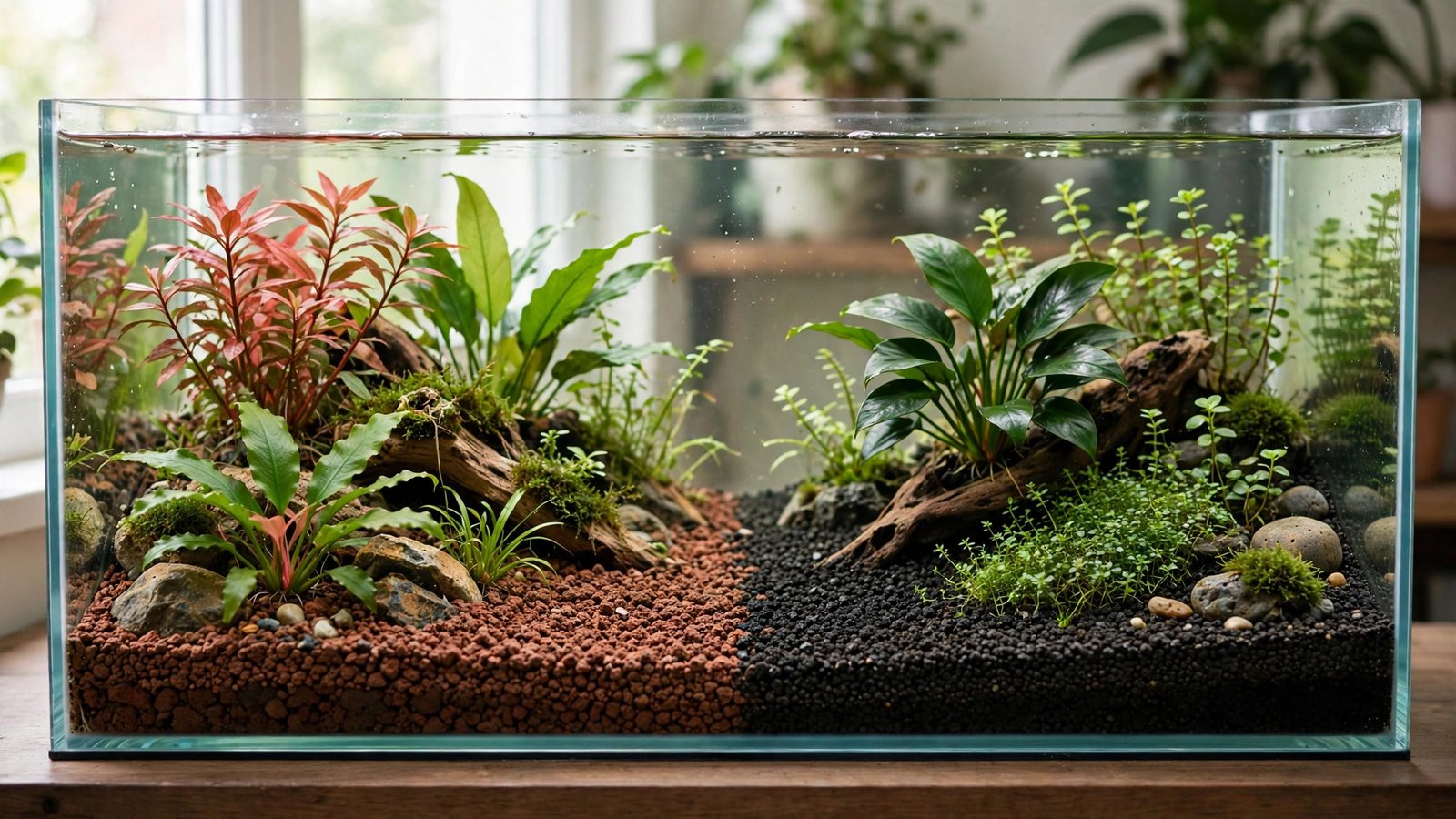
One wrong substrate choice can cost you weeks of cloudy water, melted plants, and a rescue re-scape you never planned. If you have typed "flourite vs eco complete" into a search bar, you are choosing between the two most debated bagged substrates in the hobby — and most comparison threads end in shouting, not answers. By the end of this guide you will know which one suits your tank, how many bags you need, and what the first month looks like. Still choosing a substrate category? Start with our best substrate for a planted tank roundup first.
flourite vs eco complete: the honest breakdown
Here is the truth the forum wars skip: these two are far more similar than different. Both are permanent, mineral-based beds that outlast any aquasoil, neither is coated or dyed, and both suit shrimp and soft-water species without the pH swings of buffering substrates. The real differences are what each puts in the water from day one — and what each asks of you at setup.
In short: Flourite is the disciplined minimalist — clean, permanent, nutrient-light — and it hands the feeding schedule to you. Eco-Complete is the generous starter — damp from the bag, bacteria-packed, mineral-loaded — but it asks you to respect a cycling window before adding livestock.
The head-to-head comparison table
| Feature | Seachem Flourite | CaribSea Eco-Complete |
|---|---|---|
| Composition | Fractured porous clay gravel | Black volcanic basalt |
| Color options | Natural tan, Black, Red (plus fine Sand versions) | Black (plus a laterite-based Red version) |
| Grain | Medium-fine, ~2–4 mm, angular | 0.25–7.0 mm mix, irregular, smooth-ish edges |
| Nutrients out of bag | Lean — minerals and iron only, no NPK | Rich — iron, calcium, magnesium, potassium, sulfur, 25+ trace elements |
| Water chemistry | Fully inert, never alters pH | Essentially neutral long-term; some users see temporary pH/hardness bumps |
| Setup | Must rinse (dusty); expect 24–48 h of initial cloudiness | No rinse; expect possible ammonia for 1–2 weeks |
| Lifespan | Never breaks down, good for the life of the tank | Never breaks down — basalt does not degrade |
| Bag sizes | 3.5 kg and 7 kg (15.4 lb) | 10 lb and 20 lb |
| Typical price | ~$22–30 per 7-kg bag | ~$25–35 per 20-lb bag |
| Best for | Color choice, permanent base, DIY fertilizing | High-contrast black look, mineral-rich start, no-rinse setup |
Where Flourite wins
Flourite's biggest strength is permanence paired with predictability. Seachem's clay gravel never degrades, never alters pH, and comes in three colorways — natural tan, black, and red — with no paint or dye. Its porous clay has high cation exchange capacity, meaning it absorbs nutrients from liquid fertilizers and slowly feeds them to roots — one reason Flourite tanks often look better in year two than month one.
That predictability has a price: Flourite is nutrient-light — minerals and iron, but no meaningful NPK — so swords, crypts, and other heavy root feeders need supplementation in the root tabs vs aquasoil tradition: one tab per plant every 2–3 months. See our Seachem Flourite setup guide for the full walkthrough, and Flourite's manufacturer specs for official bag-volume figures.
Where Eco-Complete wins
Eco-Complete wins the opening month. It arrives damp in a conditioning solution with live heterotrophic bacteria, and its basalt carries iron, calcium, magnesium, potassium, sulfur, and 25+ trace elements — the richest out-of-bag package of any permanent substrate. The mixed 0.25–7.0 mm grain holds stems without compacting, and there is no rinse step: pour, fill slowly, done. Read our full Eco-Complete review for long-term notes.
The tradeoff is the break-in. That organic packaging water is why many hobbyists report measurable ammonia in the first 1–2 weeks — CaribSea's bacteria help, but they are heterotrophs, not an instant nitrogen cycle. Treat it like a fishless cycle: test daily, change 30–50% water on spikes, and hold livestock until readings hold at zero. Some users also see a temporary pH or hardness bump in very soft water — an expert substrate comparison from the UK Aquatic Plant Society notes the same early shifts while rating it a proven performer.
Setup, dosing, and the first month
Both want the same bed geometry: 2–3 inches up front, sloping to 3–4 inches at the back for root room. Budget roughly 1.5–2 lbs per gallon — a standard 20-gallon needs about two 7-kg bags of Flourite or two 20-lb bags of Eco-Complete. For odd footprints, use our guide to how much substrate your planted tank needs.
Week one differs per side. With Flourite, your battle is dust: fill over a bowl or plate, run fine filter floss, and let mechanical filtration work — the cloudiness is harmless sediment, not ammonia. With Eco-Complete, your battle is chemistry: test daily and hold shrimp until week two or three at the earliest. Both accept root tabs from day one and reward lean liquid ferts once plants show new growth.
The verdict: pick Flourite if…
- You want a specific look — natural tan, black, or red — in a substrate that will never fade or break down.
- You keep soft-water species or shrimp and want a fully inert bed with zero chemistry surprises.
- You are comfortable with root tabs and liquid ferts and prefer to control the nutrient schedule yourself.
 ★4.6
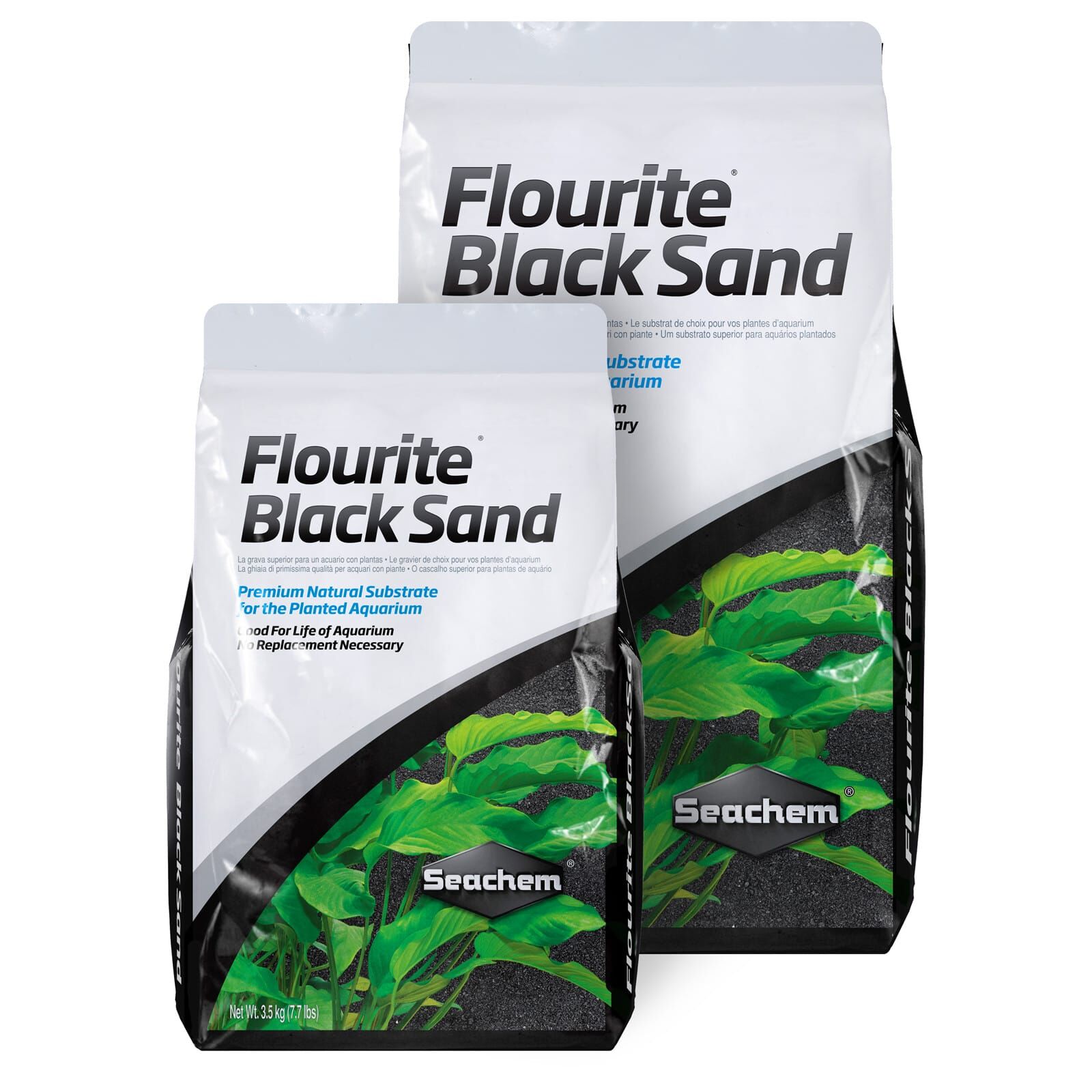
Seachem Fluorite Black Sand
Check Price on Amazon ★4.6The verdict: pick Eco-Complete if…
- You love the high-contrast black basalt look and want the richest out-of-bag mineral package.
- You want the fastest setup — no rinsing, just pour, fill, and start cycling.
- You keep heavy root feeders and would rather the substrate carried the mineral load while you handle macros in the water column.
Still torn? Buy the one whose color you like looking at — you will live with it for a decade. Among inert substrates, both sit in the premium tier for one reason: they never expire. Compare current prices before ordering; retailer sales regularly swing the per-tank cost 20–30%.
Frequently Asked Questions
Can I mix Flourite and Eco-Complete together?
Yes — many aquascapers layer Eco-Complete's basalt under Flourite for a blended look. Keep one dominant (at least two-thirds) so grain stays consistent and vacuuming is easy. Mixing is mostly aesthetic; the bed behaves like its majority component.
Does Eco-Complete really cause an ammonia spike?
Many hobbyists report ammonia in the first 1–2 weeks, traced to the organic conditioning solution in the bag. It is not universal, but common enough to plan for: test daily, change water on spikes, and add livestock only after ammonia and nitrite read zero for several days.
Do I need root tabs with either substrate?
With Flourite, yes for heavy root feeders — iron and minerals, but no NPK. With Eco-Complete, tabs are optional at first, but after 6–12 months the easy nutrients taper and tabs keep swords and crypts thriving. Either way, tabs are cheap insurance.
Which is better for shrimp tanks?
Both work, with a slight edge to Flourite for sensitive soft-water shrimp — fully inert from day one. Eco-Complete suits neocaridinas once break-in ammonia clears. Neither buffers pH like an aquasoil, so caridinas needing low pH still need a buffering substrate.
How long do Flourite and Eco-Complete last?
Effectively forever. Flourite is fired clay, Eco-Complete is volcanic basalt — neither breaks down or exhausts like aquasoils. Supplement with root tabs over the years and the bed stays productive indefinitely.
Bottom line
Flourite vs Eco-Complete has no loser — just two permanent, honest substrates with different opening moves. Pick Flourite for color choice, total inertness, and a base that rewards your fertilizing routine. Pick Eco-Complete for out-of-bag mineral richness and the fastest setup, provided you respect the cycling window. Either way, your bed will still be there in ten years — more than most aquasoils can promise.