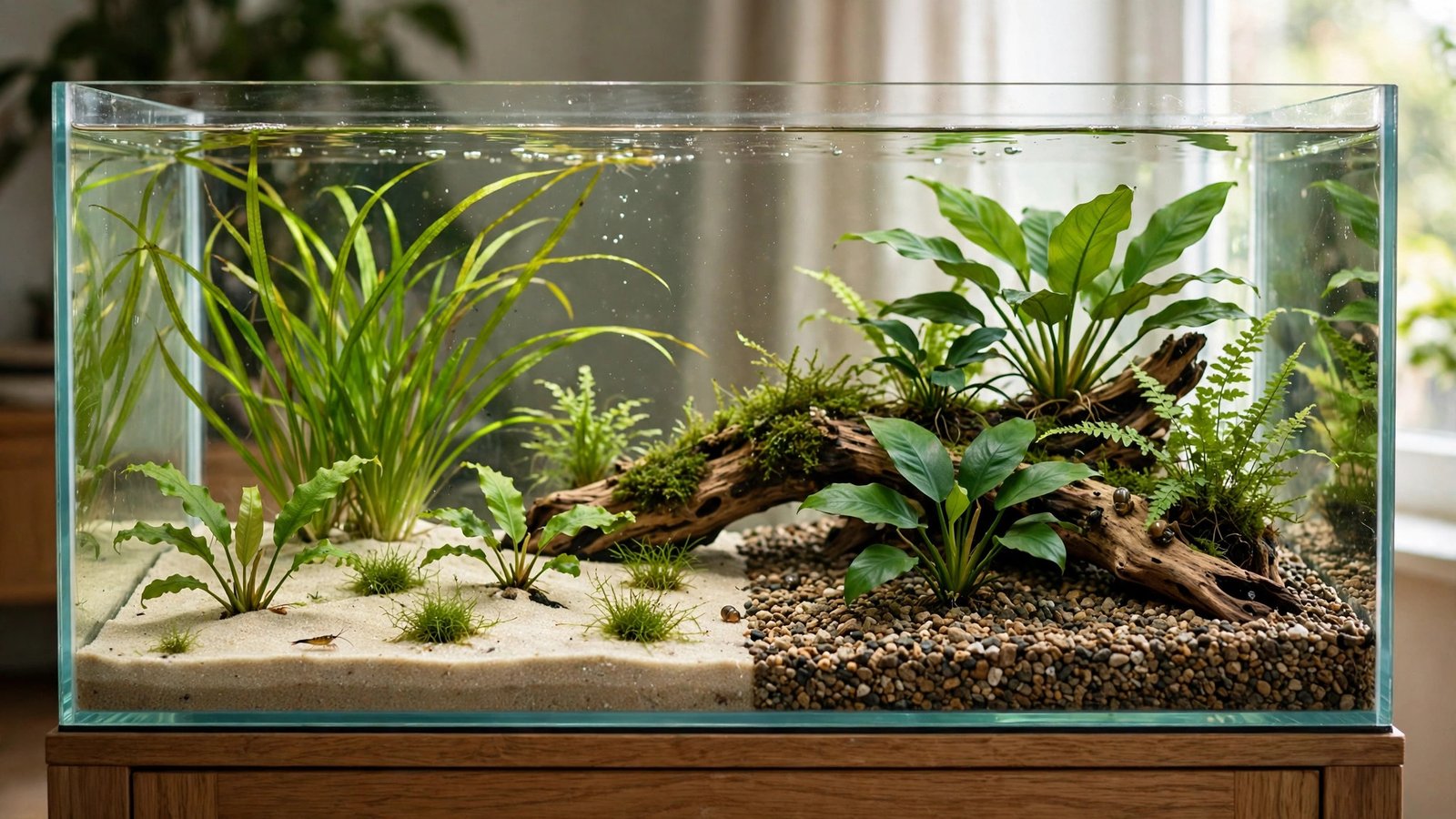
A thriving low-tech tank with 125 days of growth, no CO2, no root tabs — on plain inert sand. That viral tank has aquarists asking: can you really grow aquarium plants in sand or gravel, or is plain sand secretly the best substrate for planted tank beginners on a budget? The honest answer is yes — as long as you understand one thing: sand and gravel give your plants zero nutrition, so you have to make up for it.
Why Inert Sand Might Be the Best Substrate for Planted Tank Beginners
The "plants need expensive aqua soil" claim comes from the high-tech end of the hobby, where nutrient-rich substrates like ADA Amazonia earn their keep. But aqua soils cost $30–$50 per bag, leach ammonia for the first 2–4 weeks, and exhaust their nutrients within 12–18 months anyway. For a low-tech tank, inert substrate plus a deliberate fertilizer plan gets you 90% of the results at a tenth of the price — see our best substrate comparison for the full head-to-head.
"Inert" simply means the substrate contributes zero nutrition. Plants still get everything they need from two other sources: the water column (through leaves) and root tabs (through roots). The honest trade-off: inert substrates are cheaper, cleaner, and never expire, but they demand a consistent dosing habit. Skip the fertilizer and plants stall, melt, or get overrun by algae.
Sand and Gravel Compared: Grain Size Decides Everything
Not all sand is equal, and grain size is the single most important variable. Too fine and it compacts into an oxygen-starved slab; too coarse and debris vanishes between stones where your siphon can't reach. The sweet spot for planted tanks is 0.4–1.0 mm.
| Substrate | Grain size | Color | Typical cost (50 lb bag) | Verdict |
|---|---|---|---|---|
| Pool filter sand | 0.4–0.8 mm | Pale tan/white | $8–$15 | Best all-rounder; pool filter sand guide |
| Black blasting sand (coal slag) | 0.5–1.0 mm | Black | $10–$12 | Great contrast; rinse thoroughly first |
| Coarse aquarium gravel | 2–5 mm | Mixed | $20–$30 | Works; debris sinks deep — harder to clean |
| Fine white silica sand | 0.1–0.3 mm | White | $15–$25 | Pretty but compacts — keep under 1.5 inches |
| Play sand | Under 0.4 mm, dusty | Tan | $5–$7 | Avoid for plants — compacts and turns anaerobic |
Pool filter sand wins for most people: uniform grain, pre-washed, inert — a fraction of branded sand's price. Blasting sand is the favorite when you want a dark background that makes green plants pop. For more options, browse our best sands for planted aquariums.
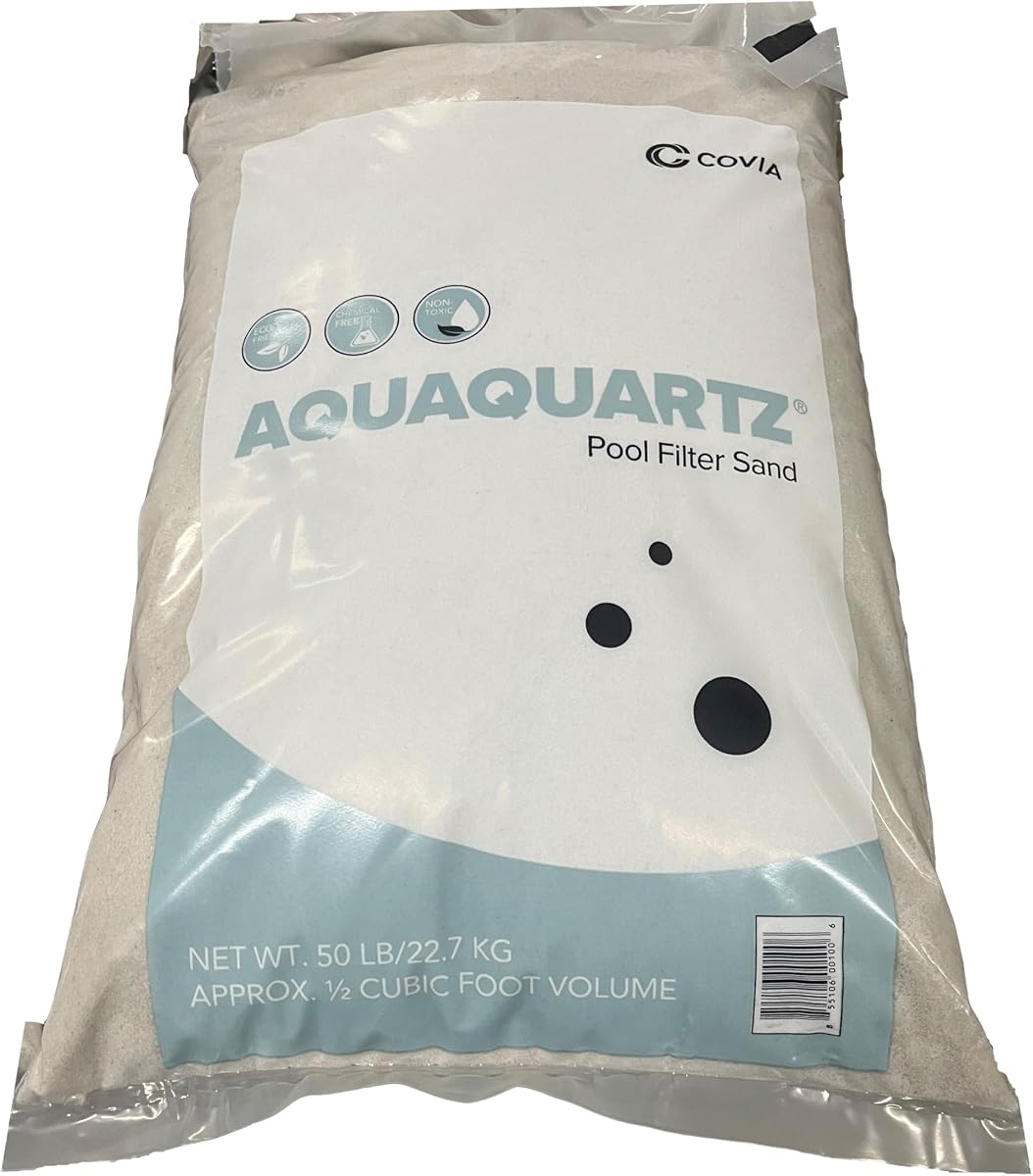
Covia AquaQuartz Pool Filter Sand
Check Price on AmazonRoot Feeders vs Water-Column Feeders: Plant Like a Nutritionist
Success on inert substrate comes down to matching each plant's feeding style to a delivery method. Roughly half of popular aquarium plants feed mainly through their leaves — those plants genuinely do not care what they're anchored to.
| Plant | Feeding style | Root tabs needed? |
|---|---|---|
| Amazon sword (Echinodorus) | Heavy root feeder | Yes — one tab every 4–6 weeks |
| Cryptocoryne | Root feeder | Yes — one tab every 6 weeks |
| Vallisneria | Root feeder | Yes — every 6 weeks |
| Dwarf sagittaria | Moderate root feeder | Occasional — every 6–8 weeks |
| Anubias | Water column (rhizome) | No — tie to hardscape |
| Java fern | Water column (rhizome) | No — tie to hardscape |
| Hornwort | Water column (floating) | No — floats or weighs down |
The pattern is simple: heavy root feeders like Amazon swords are the plants people mean when they say "sand doesn't work" — they've tried swords in bare sand with no fertilizer. Swords are iron and nitrogen hogs; in sand they need a root tab within 2–3 inches of the crown, replaced every 4–6 weeks. Rhizome plants like Anubias and Java fern are the easiest win of all — tied to wood or rock, pulling everything from dosed water, they perform identically in sand, gravel, or a bare-bottom tank. For the full theory, read our inert substrate basics guide.
The Fertilizer Plan: Root Tabs Plus Liquid Dosing
This is the part most sand-planted-tank failures skip. Without a fertilizer plan, inert substrate tanks look great for 3–4 weeks — plants live off stored energy — then stall. Here is the baseline routine that works:
- Root tabs: press one tab 2–3 inches deep, within 2–3 inches of each heavy root feeder's crown. Replace every 4–6 weeks for swords and Vallisneria, every 6 weeks for crypts.
- Liquid fertilizer: dose an all-in-one liquid once per week after your water change (typically 1 pump or 1 ml per 10 gallons).
- Light: keep it moderate — 6–8 hours of photoperiod. High light without CO2 on inert substrate grows algae instead of plants.
- Water changes: 30% weekly. This resets excess nutrients and keeps algae from exploiting the dosed water column.
If your swords develop yellowing older leaves with green veins, that's a nitrogen or iron deficiency — shorten the root tab interval to 4 weeks or move the tab closer to the crown. New growth looking healthy while old leaves melt is normal, not a substrate problem. The 2hr Aquarist planted tank guides are an excellent deep-dive into matching fertilizer dosing to light levels.
Sand or Gravel? Depth, Compaction, and Cleaning
Depth matters more than the sand-versus-gravel debate itself. The standard rule: 2–3 inches across most of the tank, sloping to 3–4 inches at the back where the big root feeders live. Our full substrate depth guidelines cover the exceptions, including deep-sand beds.
Cleaning is where sand beats gravel: debris sits on top, so hover the siphon half an inch above the surface. With gravel, waste sinks between the stones and rots — you're forced to plunge the siphon deep. Malaysian trumpet snails are the classic helper: they burrow through sand at night, turning the top inch and preventing compaction without uprooting plants.
For the week-to-week siphon routine, follow our guide to cleaning planted substrate.
Frequently Asked Questions
Can aquarium plants grow in sand without root tabs?
Water-column feeders like Anubias, Java fern, and hornwort can — they pull nutrients from dosed water and never touch the substrate. Heavy root feeders like Amazon swords and Cryptocoryne will stall and melt without root tabs, since inert sand contains zero nutrients.
Is sand or gravel better for a planted aquarium?
Sand is easier to maintain: debris rests on top where a siphon lifts it off, and fine grains anchor small plants well. Gravel works fine but traps waste between stones, demanding deeper vacuuming. Both are inert, so growth differences come down to your fertilizer plan, not the material.
How deep should sand be for aquarium plants?
Aim for 2–3 inches across most of the tank, sloping to 3–4 inches at the back for heavy root feeders. Under 1.5 inches, root tabs migrate and stems won't anchor. Over 4 inches of fine sand, anaerobic pockets can form — keep fine sand shallower or add trumpet snails to turn it.
How often should I replace root tabs in sand?
Every 4–6 weeks for root feeders like Amazon swords and Vallisneria, every 6 weeks for Cryptocoryne. Press each tab 2–3 inches deep within 2–3 inches of the plant's crown. If older leaves yellow between changes, shorten the interval rather than doubling the dose.
Do I need CO2 if I grow plants in sand?
No — CO2 and substrate are independent variables. Many thriving low-tech tanks on plain sand grow lush Anubias, Java fern, crypts, and Vallisneria with no CO2 at all. The winning recipe is moderate light (6–8 hours daily), weekly liquid fertilizer, and patience: plants in sand grow a little slower, but they grow steadily and stay algae-free when the tank stays balanced.
The Bottom Line
Aqua soil front-loads nutrients for 12–18 months, then goes inert anyway; plain sand starts inert, with fertilizer doing the work from day one. Pick a medium grain, feed root tabs to root feeders, dose the water column weekly, and you'll rival any aqua-soil setup — for the price of a bag of pool filter sand.