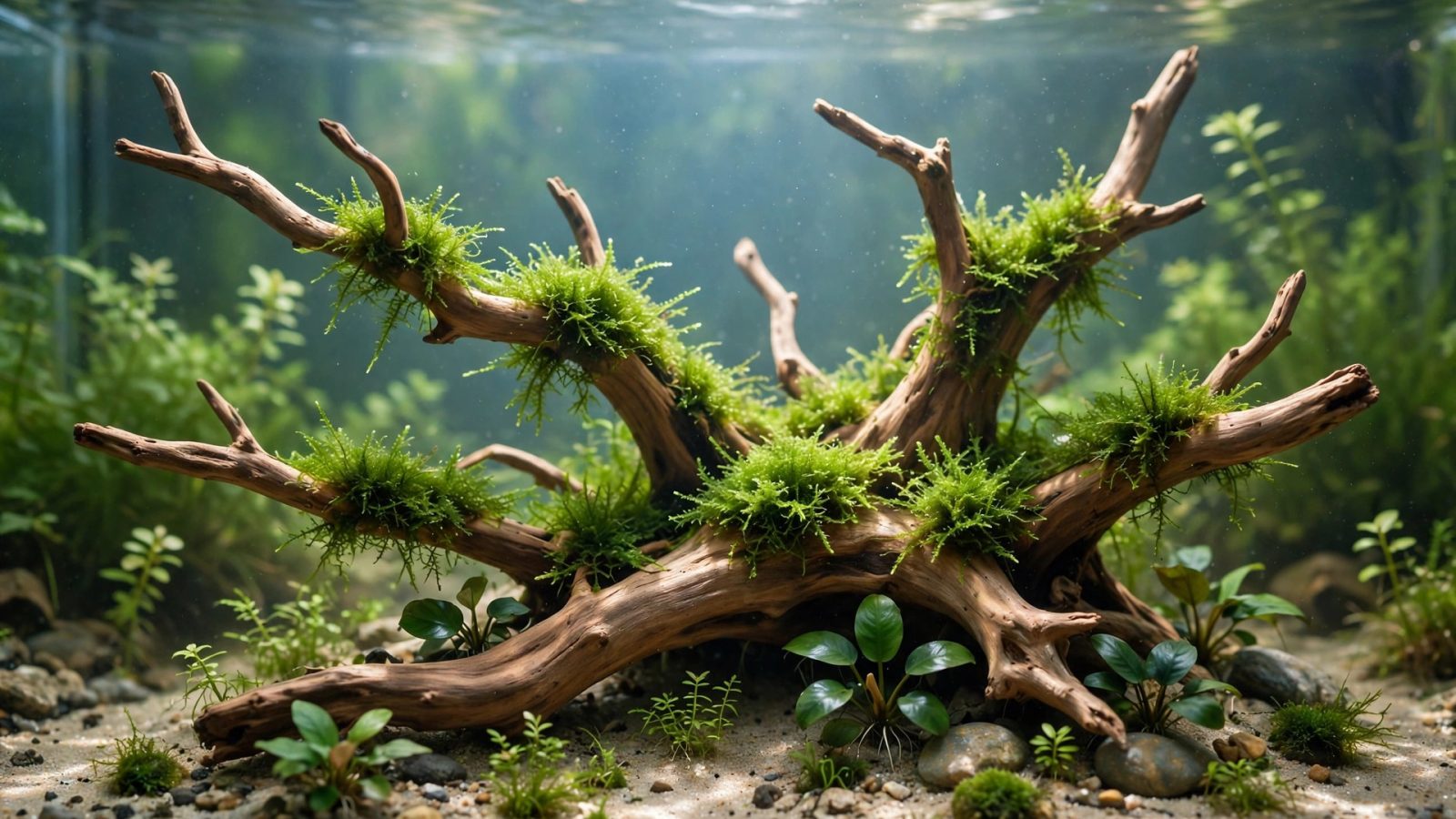
Raw driftwood straight into your tank is asking for trouble: floating centerpieces, tea-colored water for months, and hitchhiking pests or pollutants. Preparing driftwood for your aquarium properly — cleaning, tannin management, and waterlogging — takes days to weeks depending on the wood, but it’s the difference between a smooth setup and months of frustration.
Here’s the complete protocol, adjusted by wood type, plus what to do when things don’t go to plan.
Why Preparation Matters
Unprepared driftwood causes four problems:
- Buoyancy: Most wood floats until waterlogged. An unsecured floating centerpiece is a tank-lid-banging nuisance at best.
- Tannin flood: Untreated mopani or Malaysian wood can turn a tank into dark tea for months. Tannins are harmless but unsightly if unexpected.
- Contaminants: Wild-collected or craft-store wood can carry pesticides, preservatives, dirt, or insect eggs. Even aquarium-store wood benefits from cleaning.
- Biofilm bloom: Surface sugars on new wood feed dramatic white biofilm. Preparation reduces (doesn’t eliminate) this.
Step 1: Inspection and Initial Cleaning
Examine the piece: reject anything with chemical smells, paint, varnish, or metal (nails, wire — they rust). Scrub the entire surface with a stiff brush under hot water — no soap, ever. Soap residue is nearly impossible to fully rinse and is toxic to livestock. Remove loose bark, dirt, and any soft punky patches with the brush or a screwdriver. For pieces with deep crevices, a pressure washer on low (or a strong hose nozzle) blasts out hidden debris.
Step 2: Boiling (Highly Recommended)
Boiling is the single most effective preparation step. It kills pathogens and hitchhikers, accelerates tannin extraction enormously, and jump-starts waterlogging.
- Method: Submerge the piece (or as much as fits) in a large stock pot, boil 1–2 hours, dump the dark water, repeat. 2–4 boiling rounds is typical; heavy tannin woods like mopani may want 5–6.
- Large pieces: Boil one end, flip, boil the other. Or pour boiling water over the piece in a tub repeatedly. Even partial boiling helps.
- What you’ll see: The water turns dark brown — that’s tannins leaving the wood now instead of in your tank. Each round extracts less; you’re done when the water is only lightly tinted.
- Caution: Boiling softens wood slightly. Very delicate spider wood branches can become fragile — boil gently, not at a rolling fury, and support thin branches.
No pot big enough? A clean plastic storage tub + repeated kettles of boiling water works. It’s inelegant but effective.
Step 3: Soaking
After boiling, soak the wood in a bucket or tub of water (dechlorinated if you’ll get impatient — actually just use tap, you’ll change it constantly):
- Duration by wood: Spider wood: 1–2 weeks. Manzanita: 1–2 weeks. Malaysian: 2–4 weeks. Mopani: 3–6 weeks (it’s the marathon tannin-leacher). Cholla: a few days.
- Water changes: Change the soak water every 1–2 days. Stagnant soak water goes anaerobic and smelly; fresh water keeps extracting efficiently.
- The sink test: The wood is waterlogged enough when it stays submerged on its own in the soak bucket. Don’t rush this — wood that sinks in the bucket but floats in the tank (deeper water = more buoyancy) is a classic disappointment.
- Speeding it up: Hot water changes extract tannins faster than cold. Some aquarists add a small powerhead to the soak bucket for circulation.
Step 4: Tannin Management Expectations
Even well-prepared wood releases some tannins for weeks after submersion. Set expectations by type:
- Mopani: Expect visible tinting for 2–4 months even after thorough prep. Purigen or activated carbon in the filter manages it.
- Malaysian: 1–2 months of mild tinting.
- Spider wood: 2–4 weeks, usually mild.
- Manzanita: Minimal — often no visible tinting after basic prep.
Remember: tannins are not harmful. They mildly lower pH, have mild antibacterial properties, and many fish (tetras, bettas, dwarf cichlids, shrimp) show better color and behavior in tannin-tinted water. The “problem” is purely aesthetic — and for Amazon or Southeast Asian biotopes, the tint is authentic. Our driftwood type guide covers which woods suit blackwater setups.
Securing Wood in the Tank
For pieces that still float or feel unstable:
- Slate base: Drill and stainless-steel-screw the wood to a slate tile, then bury the tile in substrate. Permanent and invisible.
- Rock wedge: Position heavy stones on/around the base. Natural-looking and adjustable.
- Fishing line anchor: Tie to a buried rock or suction cup for the first month; remove once waterlogged.
- Substrate burial: Bury the base 5–8cm deep in substrate. Works for smaller pieces; large buoyant pieces will still shift.
Never wedge floating wood against the glass lid — a waterlogged-then-shifting piece can crack a lid or scratch glass. And verify stability monthly for the first quarter; wood settles as it fully saturates.
Attaching Plants: When and How
Attach epiphytes after preparation but before final placement — it’s far easier to glue Anubias to wood on a table than underwater. Use cyanoacrylate gel (apply to rhizome, press 30 seconds), cotton thread, or the wedge-into-crevices method. Moss attaches best with thread or by sandwiching between the wood and a second small piece. Full methods are in our driftwood planting guide.
Troubleshooting
Wood still floats after weeks of soaking
Some pieces are stubbornly buoyant (grapevine is notorious). Boil again — heat is the great accelerator. Or accept it and slate-mount permanently; there’s no shame in mechanical solutions.
White biofilm explosion
Normal, harmless, temporary (2–6 weeks). Shrimp, snails, and otocinclus eat it. Don’t scrub aggressively or medicate. If it’s truly unsightly, siphon during water changes and wait.
Water still tea-colored after 2 months
Normal for mopani. Run Purigen (rechargeable, extremely effective at tannin removal) or activated carbon, changed regularly. It will exhaust eventually — mopani’s tannin reserve is deep but finite.
Foul smell from the wood
A healthy piece smells earthy/woody. Rotten or sulfurous smells indicate internal rot — remove the piece, saw/snap it open, and check. Rotted interior means the piece is compost, not hardscape. This is rare with aquarium-store hardwood but possible with wild-collected soft wood.
Wood developed black spots
Usually just biofilm or algae colonization — harmless. If spots are soft and the wood is degrading underneath, that section is rotting; remove the affected part with a saw.
Quick-Reference Preparation Timelines
- Spider wood: Scrub → boil 2× → soak 1–2 weeks → tank.
- Manzanita: Scrub → boil 1–2× → soak 1 week → tank.
- Malaysian: Scrub → boil 3× → soak 2–4 weeks → tank.
- Mopani: Scrub → boil 4–6× → soak 4–6 weeks → tank (with Purigen on standby).
- Cholla: Rinse → boil 1× → soak 2–3 days → tank.
Preparation is patience, not skill. Do it once, do it thoroughly, and your wood becomes the permanent, trouble-free foundation of the scape — which is exactly what hardscape should be.
Preparing Wild-Collected Wood: Extra Steps
Found wood needs the full protocol plus precautions:
- Identification first: Use only hardwoods — oak, maple, beech, alder, birch. Never conifers (pine, cedar, spruce, fir): their resins and sap are toxic to aquarium life. If you can’t identify it, don’t use it.
- Source matters: Avoid wood from orchards, farmland edges, roadsides (exhaust/chemical runoff), or anywhere pesticides are used. Remote lakeshore and river driftwood is ideal — nature has already weathered it.
- Bark removal: Strip all bark — it rots fastest and harbors the most organisms. A drawknife or stiff wire brush works.
- Extended boiling: Double the normal boiling rounds. Wild wood has unknown history; heat is your sterilizer.
- Quarantine soak: Soak separately for a full month, watching for anything alarming — oily films, chemical smells, insect emergence. Better in a bucket than in your display tank.
- The sniff test, final: Before tank introduction, smell the wet wood closely. Woody/earthy = good. Chemical, petroleum, or sharply unpleasant = reject.
Preparing Wood for Specific Livestock
Shrimp tanks
Shrimp are sensitive to sudden pH swings — introduce prepared wood gradually (one piece per week for large additions) and monitor parameters. The biofilm that colonizes new wood is premium shrimp food; adding wood a week before shrimp gives the buffet time to establish. Cholla pieces can go in with minimal prep since they’re small and low-tannin.
Blackwater biotopes
Here you want tannins — preparation is lighter. A quick scrub and brief boil (for hitchhikers) then straight in; skip the extended tannin extraction. Mopani is the star. Supplement with catappa leaves for the full effect. The pH-lowering is the point, but monitor that it doesn’t crash in very soft water — water changes are your control lever.
Goldfish and large cichlids
These fish rearrange furniture. Only fully waterlogged, heavy pieces — slate-mounted or wedged with substantial rock. A 30cm goldfish can shift a piece you’d swear was stable. Test by pushing the wood firmly from multiple angles before adding fish.
What NOT to Do
- Never use soap, bleach, or detergents on aquarium wood. Residues kill. If you need disinfection beyond boiling, a hydrogen peroxide soak (rinsed thoroughly) is the safe option.
- Don’t microwave wood to dry it — fire risk and uneven heating.
- Don’t seal wood with polyurethane or epoxy to “preserve” it — sealants fail underwater, trap rot underneath, and many aren’t aquarium-safe long-term.
- Don’t skip the sink test. “It’ll waterlog in the tank” is how centerpieces end up banging against the lid at 2 AM.
- Don’t boil rocks (if preparing hardscape together) — trapped water in rocks can steam-expand and explode. This warning is about rocks, but it comes up whenever wood and rock prep are discussed together: boil wood, never rocks.
Storing Prepared Wood
Prepared more than you need? Let it dry completely and store dry — it keeps indefinitely. Re-soak briefly before use (dried prepared wood waterlogs much faster the second time, usually within days). Label pieces if you prepare in batches; six months later, all brown wood looks the same.
The Patient Payoff
Every week of preparation is a month of trouble-free tank life you buy upfront. The aquarists with pristine, stable scapes aren’t lucky — they’re the ones who boiled the mopani six times and waited out the soak. Your future self, watching a calm, clear tank with wood that sits exactly where you placed it, will be grateful.
Preparation Checklist (Print-Friendly Summary)
- ☐ Inspect: no chemicals, paint, metal, rot; smells woody
- ☐ Scrub thoroughly with stiff brush, hot water, no soap
- ☐ Remove loose bark and soft punky areas
- ☐ Boil 1–2 hours per round; repeat until water runs mostly clear (2–6 rounds by wood type)
- ☐ Soak with water changes every 1–2 days (1–6 weeks by wood type)
- ☐ Sink test: stays submerged unassisted in the bucket
- ☐ Attach epiphyte plants now (easier on the table than underwater)
- ☐ Plan securing method for any residual buoyancy
- ☐ Place in tank, fill slowly, monitor water parameters weekly for the first month
- ☐ Keep Purigen/carbon on hand for tannin management
Work through the list methodically and driftwood becomes what it should be: the permanent, beautiful, trouble-free skeleton of your aquascape.