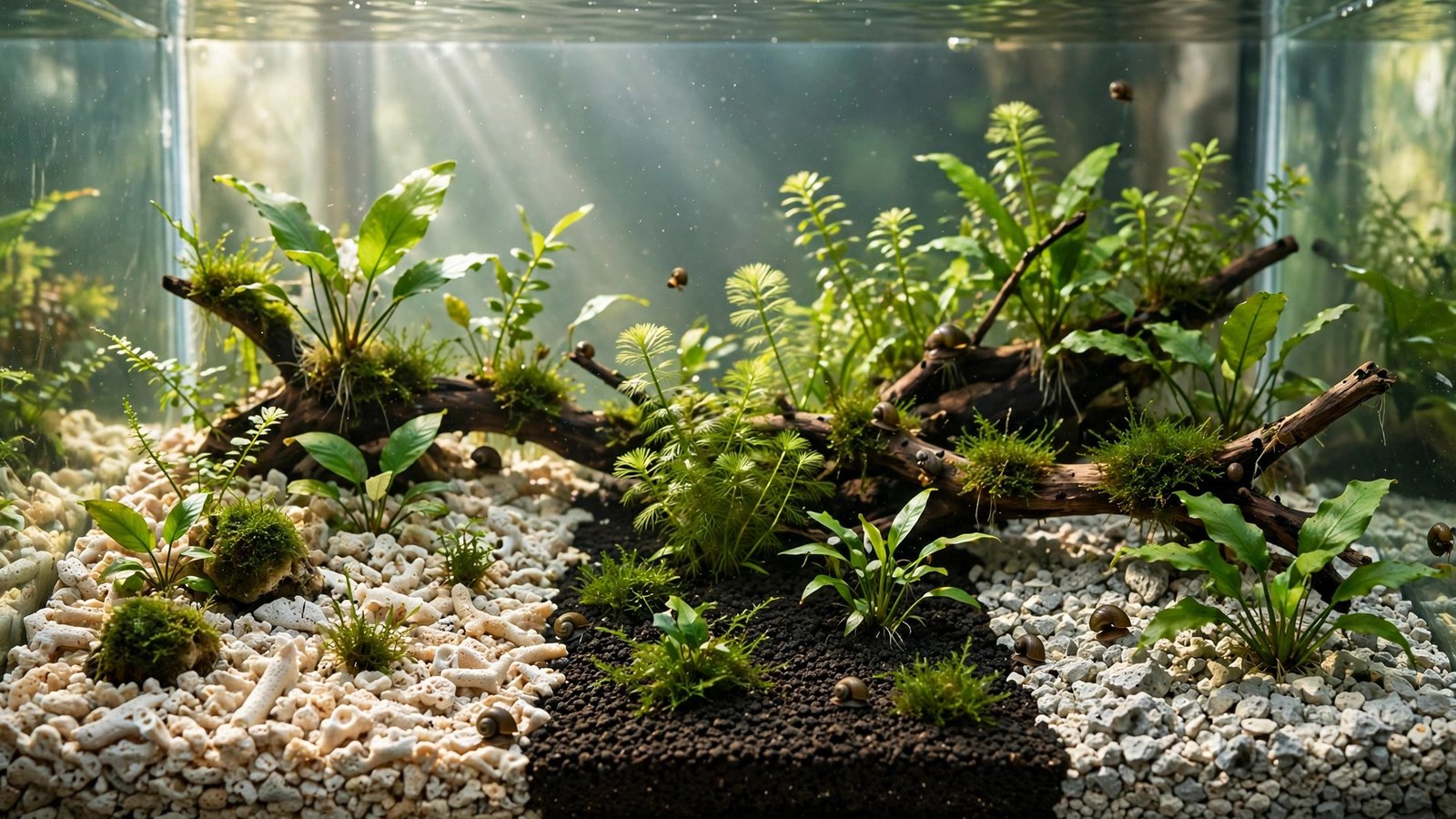
Put aquasoil in a tank and the water goes soft and acidic. Put limestone in and it goes hard and alkaline. What's actually happening beneath the surface is buffering — the substrate actively fighting your tap water's chemistry — and understanding it is the difference between stable, predictable water parameters and a slow-motion pH crash you never saw coming. This guide explains buffering substrates: how they lower pH and KH, how long the effect lasts, and how to manage the transition when it runs out.
What Buffering Actually Means
In aquarium chemistry, buffering refers to a material's ability to resist changes in pH — but in the hobby, "buffering substrate" has come to mean something more specific: a substrate that actively pulls carbonate hardness (KH) out of the water, which drives pH down and holds it in the soft, acidic range.
The mechanism: aquasoils are rich in humic and fulvic acids (from their decomposed organic content) and have high cation exchange capacity. The acids neutralize carbonate buffers directly, while the exchange sites grab calcium and magnesium ions. With KH stripped toward zero, there's nothing holding pH up — so it settles where the soil's acids put it, typically pH 6.0–6.8.
This is why aquasoil tanks and caridina shrimp are inseparable: crystal red shrimp and Taiwan bees need pH below ~6.8 and near-zero KH to thrive and breed, and a buffering soil manufactures exactly that water from almost any tap supply.
Buffering vs Non-Buffering Substrates
| Substrate type | Effect on KH/pH | Examples |
|---|---|---|
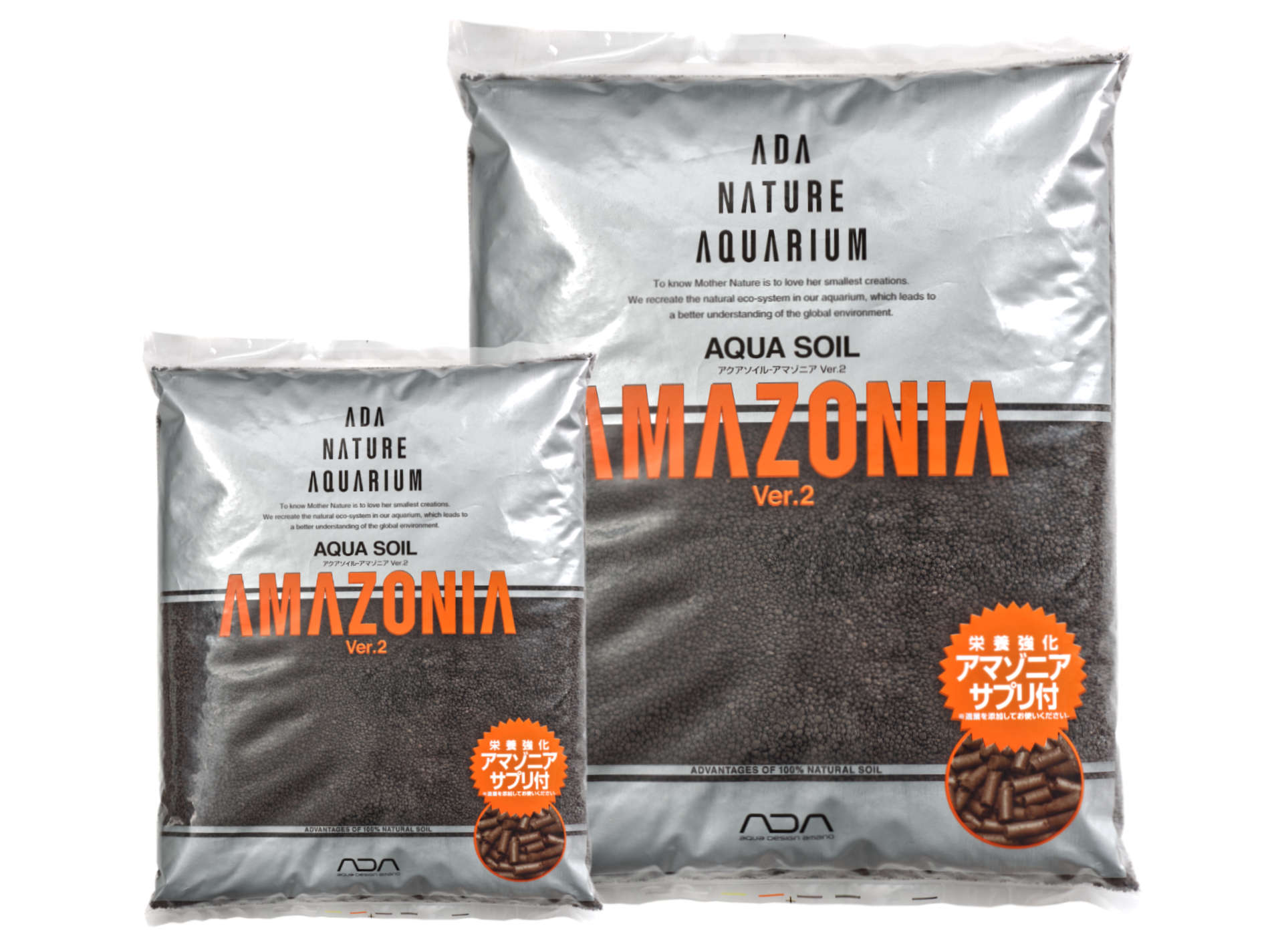
| Buffering (active) soils | Strips KH, lowers pH to ~6.0–6.8 | ADA Amazonia, Fluval Stratum, UNS Controsoil, Tropica Soil |
| Inert substrates | No effect — water stays as your tap makes it | Pool filter sand, gravel, Eco-Complete, Flourite |
| Hardening substrates/rocks | Raise KH/GH and pH | Crushed coral, aragonite, limestone, Seiryu stone |
 ★4.7
The critical insight: buffering and hardening substrates fight each other. Putting Seiryu stone (which leaches carbonates) in an Amazonia tank (which strips carbonates) means both materials exhaust themselves faster while the water lands somewhere in the middle. It's not catastrophic — plenty of beautiful tanks do it — but know that you're burning buffering lifespan. Our guide to rocks and pH covers the hardening side in detail.
How Long Does Buffering Last?
The honest answer: it depends on your tap water, and it varies enormously. Buffering is a finite chemical resource — every water change with KH-bearing tap water consumes a little of the soil's acid reserve neutralizing the incoming carbonates.
- Soft tap water (KH 0–3): a rich aquasoil can buffer for 2–3+ years. There's little incoming KH to neutralize, so the reserve lasts.
- Moderate tap water (KH 4–6): expect 12–18 months of effective buffering from a rich soil.
- Hard tap water (KH 7+): buffering may exhaust in 6–12 months — the soil is fighting a flood of carbonates every water change. Many keepers in hard-water areas use RO water to protect their soil's buffering lifespan.
Soil richness matters too: ADA Amazonia buffers harder and longer than Fluval Stratum, which is gentler from the start. See our head-to-head comparison for specifics. And note that buffering exhaustion is separate from nutrient exhaustion — a soil can still feed plants fine while no longer controlling pH. Our aquasoil exhaustion guide covers the nutrient side.
Signs Your Buffering Is Exhausted
Unlike nutrient exhaustion (slow plant decline), buffering exhaustion shows up in your test kit:
- KH starts reading above zero and climbing toward your tap water's KH. In a healthy buffering tank, KH reads 0–1. When it creeps to 3–4 and keeps rising, the soil is losing the fight.
- pH drifts upward between water changes instead of holding steady in the 6s.
- pH swings after water changes — the tank sits at 6.4, you do a water change with pH-7.8 tap water, and it takes days to come back down instead of hours. Eventually it doesn't come back down at all.
- Caridina shrimp stop breeding, then start dying. They're the canary — they feel buffering loss before your test kit makes it obvious.
Track KH monthly in any buffering-soil tank. It's the earliest, clearest signal, and it costs one test.
A reliable pick here is API Freshwater Master Test Kit.
Managing the Transition
So the buffering is fading. What now? You have options, depending on your livestock:
Option 1: Switch to RO water
If your livestock needs soft, acidic water, reverse-osmosis water remineralized to near-zero KH removes the thing that's exhausting your soil. With no incoming carbonates to fight, even tired soil holds pH down much longer. This is the standard caridina-shrimp solution and the reason serious shrimp keepers run RO.
Option 2: Accept the new parameters
If your livestock is adaptable (most community fish, neocaridina shrimp, most plants), just let the tank settle to your tap water's parameters. Plants genuinely don't care about pH anywhere in the 6.0–7.8 range — the "plants need acidic water" myth is mostly about nutrient availability at extremes, not a requirement. Your aquasoil becomes, functionally, a nutrient-rich inert substrate. Keep using root tabs as nutrients deplete and carry on.
Option 3: Replace the substrate
For breeding-grade caridina tanks or anyone who wants the full buffering effect back, replacement is the answer — there's no way to "recharge" buffering the way you can recharge nutrients. Our exhaustion guide covers replacement techniques that don't require tearing down the tank.
What NOT to do
Don't chase pH with chemicals. pH-down products in a tank with exhausted buffering create exactly the instability you're trying to avoid — the pH crashes, rebounds, and swings with every dose. Stable "wrong" pH is infinitely better than swinging "right" pH. If the parameters don't suit your livestock, change the water source (RO) or change the livestock — don't fight chemistry with bottles.
Buffering and the Nitrogen Cycle
One underappreciated interaction: nitrifying bacteria slow down significantly below pH 6.5, and nearly stall below 6.0. In a strongly buffered tank running pH 6.0–6.2, your bacterial filtration is operating at reduced efficiency. This is normally fine — plants uptake ammonia directly, and stocking is usually light in such tanks — but it means:
- Cycle new buffering-soil tanks carefully (see our ammonia leach protocol) — the bacteria need more time at low pH.
- Don't overstock a low-pH tank and assume the filter handles it like a pH-7.5 tank would.
- If pH crashes below 6.0 in an established tank (possible with very soft water + heavy organics), bacteria can stall enough to cause an ammonia spike — the dreaded "pH crash cycle stall." Regular KH testing catches this before it happens.
Choosing a Buffering Strategy for Your Setup
- Caridina shrimp / soft-water breeding: rich buffering soil (Amazonia or equivalent) + RO water. Test KH monthly; replace soil when KH won't stay down.
- Planted community tank, soft tap water: any aquasoil; enjoy 2+ years of gentle buffering as a bonus. Our aquasoil roundup compares options.
- Planted community tank, hard tap water: decide upfront — either commit to RO (protects buffering, best for plants long-term) or use an inert substrate and skip the buffering battle entirely. Fighting hard tap water with soil is expensive and temporary.
- African cichlids / hard-water species: you want the opposite — hardening substrates like crushed coral or limestone. Buffering soils actively work against these fish.
Frequently Asked Questions
Will a buffering substrate lower my GH too?
Somewhat. The cation exchange sites in aquasoil absorb calcium and magnesium (which is what GH measures), so GH usually drops a degree or two in a new aquasoil tank, then stabilizes. The effect on GH is much smaller and shorter-lived than the effect on KH — if you need low GH specifically (for caridina), RO water is still the reliable tool.
Can I mix buffering soil with inert gravel?
Yes — many keepers use aquasoil in the planted zones and gravel or sand in the foreground. The soil still buffers the whole water column (water circulates), just with less total reserve than a full-soil bed. It's a reasonable compromise that also saves money. See our soil vs gravel comparison for layout ideas.
Does CO2 injection affect buffering?
CO2 lowers pH independently (carbonic acid), which stacks with the soil's buffering — a CO2-injected aquasoil tank often sits at pH 6.0–6.4 during the photoperiod. This is normal and harmless. Just be aware that pH-based CO2 measurement (pH/KH charts, drop checkers calibrated to KH) gets unreliable when the soil is stripping KH — use a drop checker with known-reference solution instead.
How do I test whether my soil is still buffering?
Test KH. If it reads 0–1 dKH a day or more after a water change, the soil is still buffering. If KH matches your tap water, buffering is exhausted. For a more sensitive check, test pH right before a water change and 24 hours after — a buffering soil pulls it back down; an exhausted one doesn't.
Is zero KH dangerous?
Zero KH means zero pH buffering from carbonates — but in an aquasoil tank, the soil itself is the buffer, holding pH stable through its own chemistry. It's stable as long as the soil's reserve lasts. The danger is only the transition period when the reserve runs out: that's when pH can swing. Which is exactly why you test KH monthly and have a plan.
Work With the Chemistry, Not Against It
Buffering substrates are powerful tools: they manufacture soft, acidic, stable water out of mediocre tap water, and they do it silently for a year or more. The keepers who get burned are the ones who never knew the buffering was there — then act surprised when it runs out. Test your KH, know your tap water, match your strategy to your livestock, and a buffering soil will do exactly what you bought it for.