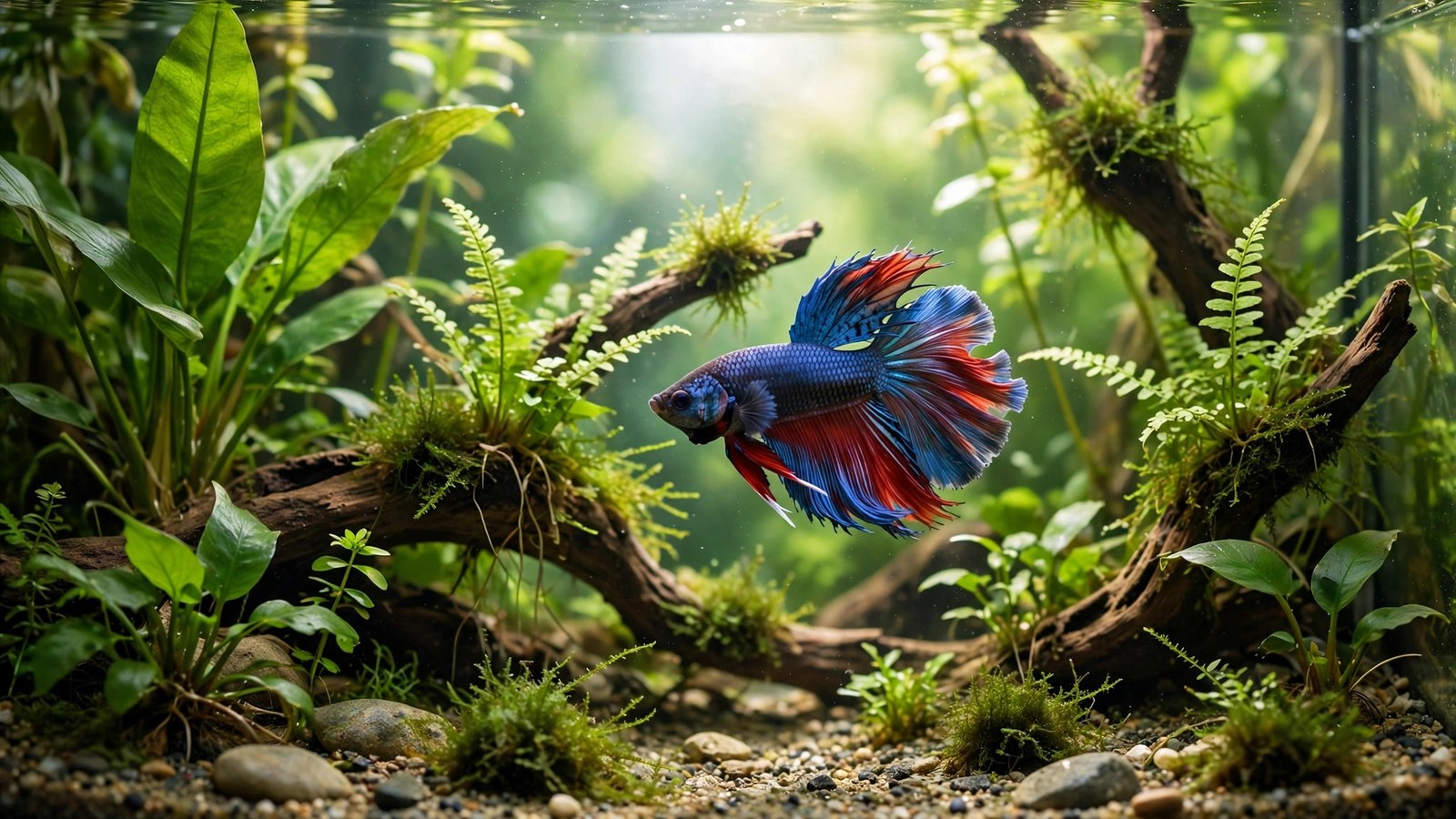
Your betta didn't evolve in a glass box — it evolved in the shallow, plant-choked rice paddies and slow ditches of Thailand, where every move happened under a ceiling of vegetation. Drop that same fish into a bare tank with a plastic castle and you get glass-surfing, faded color, and chewed fins — symptoms of a betta with nowhere to hide. The search query thousands of owners type every month, "aquarium plants betta," exists because the fix is that visible: the right live plants don't just decorate the tank, they change how the fish behaves.
Why Bettas Behave Differently Around Live Plants
Watch a male betta in a planted tank and you'll see the difference within days. He tucks his bubble nest under a raft of floating leaves instead of a bare corner — frogbits and red root floaters hold nests together far better than open water, which is why breeders float them on purpose — see our breeding tank plants setup. Between patrols he parks himself on a broad leaf near the surface — Anubias barteri, an Amazon sword leaf — to breathe atmospheric air through his labyrinth organ without leaving cover. It's not decoration; it's a resting station.
In a bare tank, that same fish glass-surfs and flares at its own reflection because it has zero sightline breaks — every direction is exposed. Plants give it edges, territories, and escape routes — which a betta's brain reads as safety. Give one a week in a planted tank and the pacing fades. If you're starting from scratch, our planted betta tank setup guide walks you through the full build — substrate, planting order, and light — so the habitat is ready before the fish arrives.
Aquarium Plants Betta Fish Actually Use (Not Just Decor)
Bettas ignore some plants and live inside others — they choose by form, matching traits to behaviors:
| What bettas want | Why it matters | Plants that deliver |
|---|---|---|
| Broad, sturdy leaves | Resting platforms near the surface for labyrinth breathing | Anubias barteri, Amazon sword (Echinodorus bleheri) |
| Floating cover | Diffuses harsh light, anchors bubble nests, blocks jumpers' sightlines | Amazon frogbit, red root floaters, dwarf water lettuce |
| Fine, bushy growth | Exploration cover and fry refuge | Hornwort, guppy grass (Najas guadalupensis) |
| Tall background stems | Sightline breaks and territory boundaries | Vallisneria, water wisteria (Hygrophila difformis) |
| Soft mosses | Cushioned resting spots and grazing for tankmates | Java moss, Christmas moss |
Notice what's missing: nothing here needs CO2 or high light. Every plant in that table thrives in the low-to-medium light of a standard betta setup — 20–40 PAR, no injection — which is why a betta tank is one of the easiest planted tanks you can run. Check exact light and growth data in Tropica's free plant database before you buy.
 ★4.5
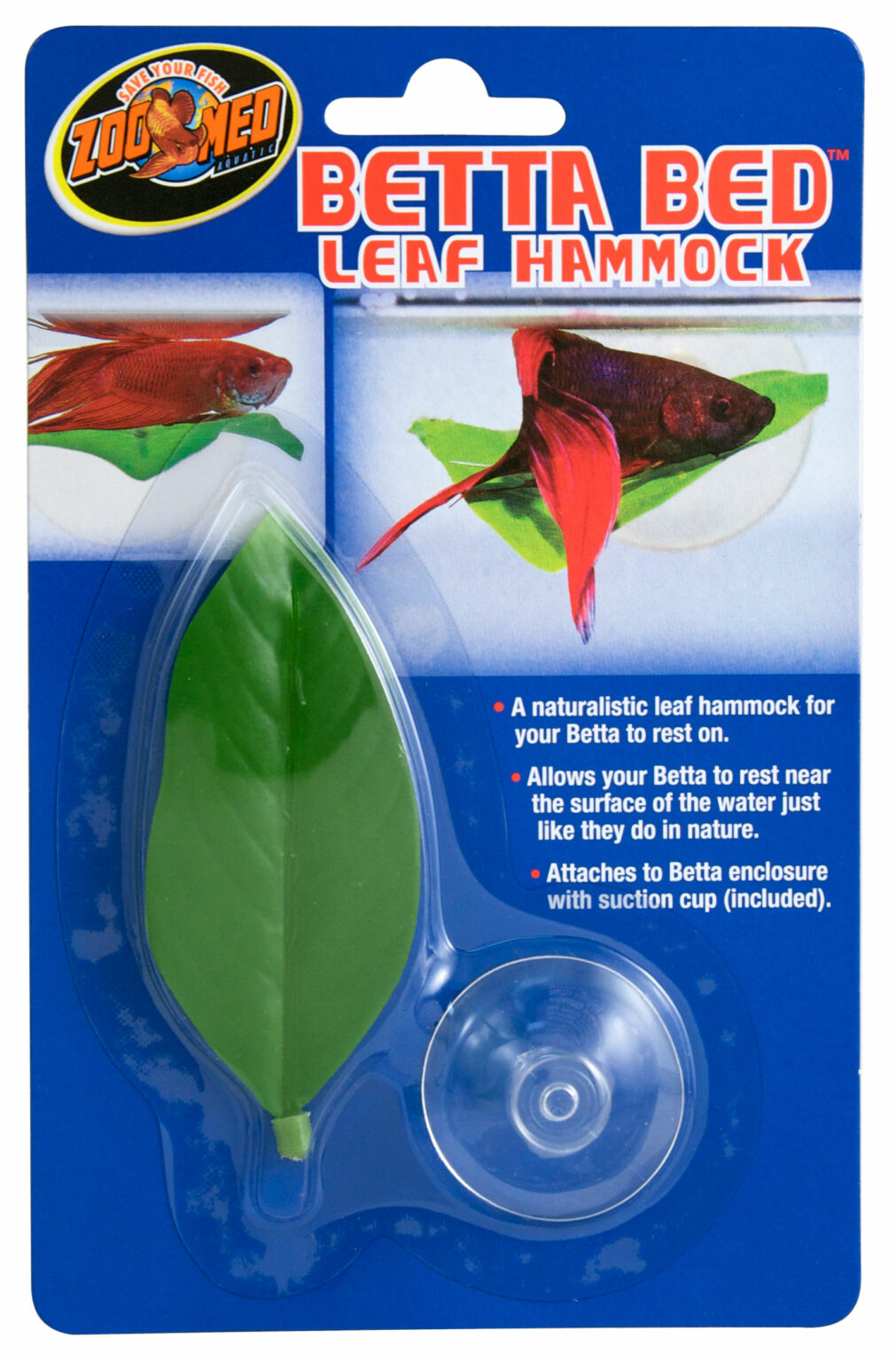
Zoo Med Betta Bed Leaf Hammock
Check Price on Amazon ★4.5How Much Plant Cover Is Right?
The number most experienced keepers land on: 50–70% of the tank's footprint visually planted, with at least 30% of the water surface shaded by floaters. Below 30% total cover, bettas stay skittish; above ~80%, you're trapping detritus and blocking swimming lanes. In a 5-gallon — the practical minimum for a betta — that means three to four plant groupings plus one floating species: a background cluster of vallisneria, a midground Anubias tied to driftwood, a foreground patch of moss, and frogbit overhead. A 10-gallon lets you add a full background wall and distinct territories, which is the density that makes a sorority work — our planted betta sorority tank setup shows the planting density that keeps four to six females from constant confrontation.
Plant the floaters first. Frogbit and red root floaters can double their coverage in a week, shading the tank and calming a new betta within days, while rooted plants take three to four weeks to fill in. Floaters are nutrient sponges — they pull ammonia and nitrate straight from the water column, which is why they help you cycle a planted tank faster and keep a fresh setup safer while bacteria establish. Quarantine or alum-dip new plants (1 tablespoon of alum per gallon, three hours) so you don't import pest snails.
Live Plants vs Fake: The Fin-Risk Difference
Here's where fake plants fail hardest. A betta's flowing fins snag and tear on rough plastic edges — one torn fin invites fin rot, and a ragged tail is the most common preventable injury in the hobby. Silk plants are gentler, but they're still inert: zero water-quality benefit, and they collect algae you then have to scrub. Live plants actively work for the tank — a moderately planted 5-gallon typically keeps nitrates noticeably lower between water changes, according to many keepers' test logs. They also oxygenate the water during the photoperiod, which matters in the warm 78–80°F water bettas prefer, since warm water holds less dissolved oxygen.
Five Beginner-Proof Plants for a Betta Tank
If you buy nothing else, start with these — all thrive in low light without CO2 or aquasoil:
- Anubias barteri — tie to driftwood or rock with thread; broad resting leaves; nearly unkillable.
- Java fern (Microsorum pterotoides) — same tie-on care as Anubias; tolerates weeks of neglect.
- Amazon frogbit — floating; shades the surface, anchors bubble nests, doubles fast.
- Water sprite (Ceratopteris thalictroides) — plant it or float it; the fastest nutrient uptake of the bunch.
- Hornwort (Ceratophyllum demersum) — float or weigh down; fine bushy cover bettas weave through.
For the floating corner of that list, our roundup of the best floating aquarium plants for betta tanks compares seven species side by side, and 2hr Aquarist's plant-growing guides cover the low-tech methods that keep them thriving without CO2.
Frequently Asked Questions
Do bettas need live plants to be happy?
Not strictly — a betta survives in a bare tank. But "surviving" and "thriving" look very different: planted-tank bettas show richer color, bolder behavior, and less glass-surfing because cover lowers their baseline stress. If you want a flared, curious, nest-building fish, plants are the closest thing to a shortcut.
Will my betta eat my live plants?
No. Bettas are carnivores and don't graze on plants the way goldfish do. They may pick at algae or infusoria on moss, but healthy plant tissue is safe. One exception: a bored betta in a bare tank may chew soft new growth — a signal to add more cover, not fewer plants.
Can I keep live plants in a 5-gallon betta tank?
Absolutely — 5 gallons is the sweet spot for a first planted betta tank. Keep three or four plant groupings plus one floating species so swimming lanes stay open. Anubias, Java fern, frogbit, and a small vallisneria cluster fill a 5-gallon beautifully without crowding the fish.
Do live plants help bettas build bubble nests?
Yes, significantly. Males anchor nests under floating plants like frogbit, whose root tangles hold the bubbles together in still water. Nests built in open corners fall apart within hours; nests under floaters can last for days. If breeding is the goal, cover at least half the surface with floaters before introducing the pair.
Do live plants replace water changes or my filter?
No. Plants reduce nitrates and polish water quality, but they don't remove everything — hormones, dissolved organics, and minerals still accumulate. Keep your filter running and change 25–30% of the water weekly in a planted 5-gallon. Think of plants as your filter's best coworker, not its replacement.
The Short Answer
Yes — betta fish genuinely like live plants, and they prove it with their behavior: they rest on them, hide behind them, and build their nests under them. No CO2, aquasoil, or aquascaping talent needed — a handful of beginner plants and floating cover turn a glass box into something your betta recognizes as home. Start with floaters today; your fish will tell you the rest.