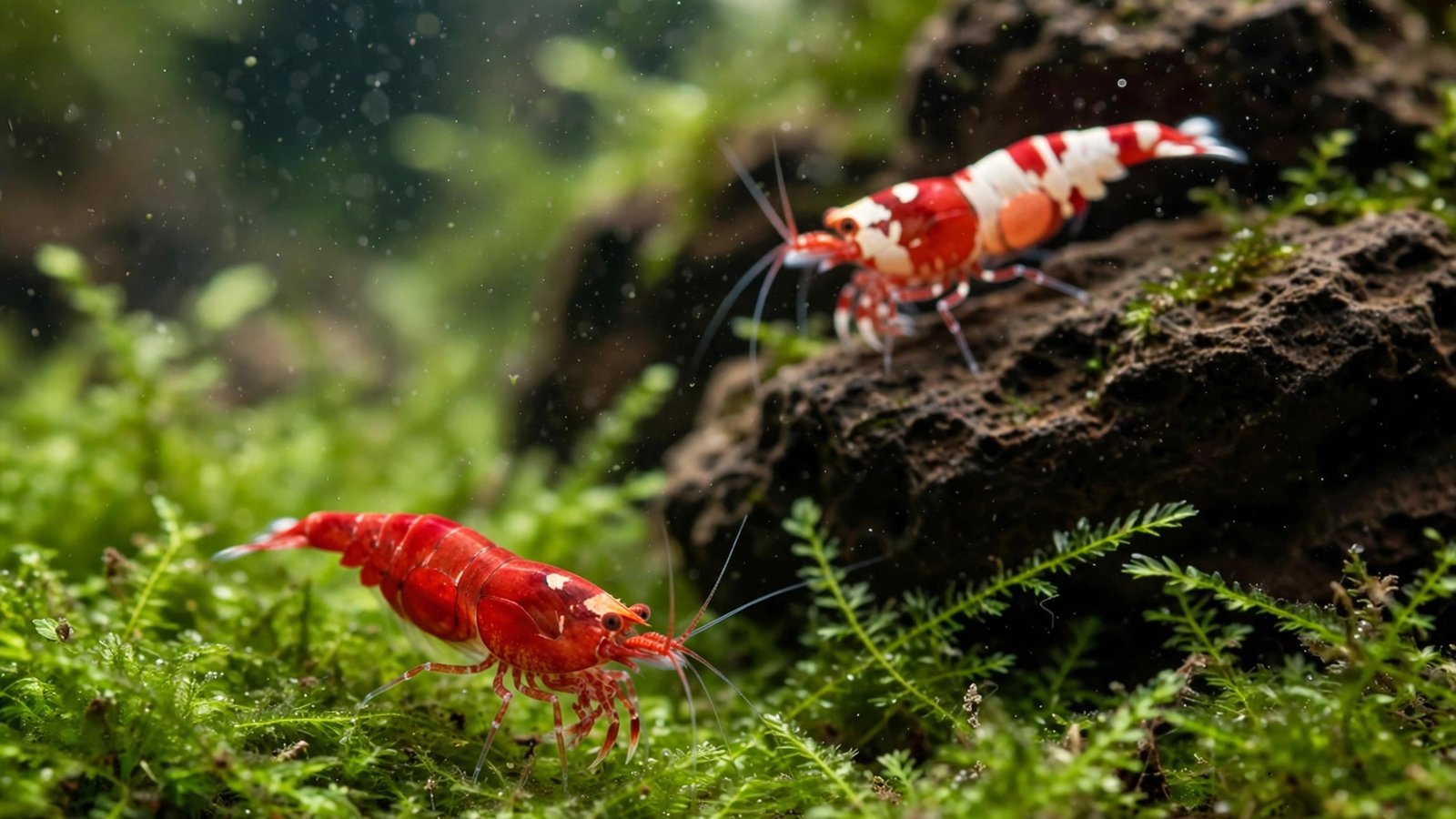
Most crystal red shrimp die from the tap water in their new owner's bucket, not from anything the owner did wrong that week. Caridina shrimp — the family behind crystal reds, crystal blacks, and Taiwan bees — descend from soft, mineral-poor mountain streams, and the hard, alkaline tap water common in many homes is a chemistry they cannot survive long-term.
Neocaridina shrimp — cherry shrimp, blue dreams, yellow goldens — tolerate the range of water most homes already pour. If you are choosing your first shrimp, this single decision matters more than tank size, filter, or food combined. Here is the honest head-to-head.
The One Decision That Matters: Your Water Source
Everything downstream — survival, color, breeding — flows from the water you start with. Neocaridina tolerate pH 6.5–8.0 and a wide hardness band, so dechlorinated tap water is usually enough. That single fact is why they are the default beginner pick.
Caridina are specialists. Crystal reds and blacks (Caridina cantonensis) and Taiwan bees want soft, acidic water with almost no carbonate hardness, which tap water rarely provides. Recreating it means RO water remineralized to a precise GH with a shrimp-specific mineral salt, plus a buffering substrate that pins pH down in the 6s — a commitment that renews every 12–24 months as the substrate's buffering capacity exhausts. (Amano shrimp are the honest exception: technically Caridina, yet hardy enough for tap water.)
Water Parameters Side by Side
Working ranges below, cross-checked against The Shrimp Guide's species chart and Aquarium Setup's cherry shrimp guide:
| Parameter | Neocaridina | Caridina (dwarf) |
|---|---|---|
| pH | 6.5–8.0 (ideal 6.8–7.5) | 6.0–6.8 |
| GH (general hardness) | 4–14 dGH (ideal 6–8) | 3–6 dGH |
| KH (carbonate hardness) | 2–8 dKH | 0–1 dKH |
| TDS | 150–250 ppm | 80–150 ppm |
| Temperature | 65–80°F (18–26°C) | 68–74°F (20–23°C) |
| Water source | Dechlorinated tap water | RO/DI + remineralizer |
| Forgiveness | High — survives swings | Low — swings are fatal |
Why Beginners Lose Caridina
The failure mode is almost always the same: a molt gone wrong. Shrimp build each new shell from minerals dissolved in the water, and Caridina in water that is too hard — or swung suddenly by a big water change — get stuck halfway out of the old shell.
Because the hobby runs on testing, not guessing, keep a liquid master kit on hand from day one. The API Freshwater Master Test Kit ★4.8 covers the ammonia, nitrite, nitrate, and pH readings you need while a tank cycles and after every rescape — the invisible problems that wipe out shrimp before you see a symptom.
The second classic Caridina killer is exhausted buffering substrate: after a year or two the aquasoil stops buffering, pH drifts up, and a thriving colony starts dying. Re-test KH every few months — rising KH means the substrate is spent.
Feeding Both Genera
Neither genus is picky. In a planted tank they graze biofilm and algae all day; supplement with a sinking shrimp food two or three times a week plus blanched spinach or zucchini. Feed tiny amounts — uneaten food rots into ammonia spikes that shrimp feel first.
Because molting is the riskiest moment in a shrimp's life, many keepers add a dedicated calcium food. KatsAquatics Calcium + Nutrition ★4.7 is a well-regarded option: water-insoluble tablets that deliver calcium and vitamins without dissolving into the water and disturbing your parameters.
Affiliate disclosure: AquaVerdia is reader-supported. When you buy through links on this page, we may earn a commission at no extra cost to you. We only recommend products we would use in our own tanks.
Breeding: What to Expect
Neocaridina breed with no intervention in a cycled, planted 5-gallon tank: females carry eggs for a month and shrimplets hatch fully formed.
Caridina breed too, but only once everything is right: soft acidic water held steady for months, zero ammonia and nitrite, low nitrates, and a mature biofilm-covered tank. For either genus, cover filter intakes with a pre-filter sponge — shrimplets get pulled into uncovered intakes, and the sponge doubles as a grazing surface.
The Honest Upgrade Path
Start with Neocaridina for three to six months. If you can hold parameters steady and raise a breeding colony without unexplained deaths, you have the skill set Caridina require. Then set up a dedicated Caridina tank: RO water with a shrimp-specific mineral salt, buffering substrate, and temperatures under 74°F — one genus and one color line per tank, since mixed cherry colors revert to wild brown within a generation.
Frequently Asked Questions
Can Caridina and Neocaridina live together?
They can coexist in a middle-ground tank, but neither thrives the way it would in its own water. They do not interbreed, so the issue is chemistry: what is comfortable for one is a compromise for the other. For best results, give each genus its own tank.
Do cherry shrimp need a heater?
Usually not. Neocaridina tolerate 65–80°F, so a room that stays in that band needs no heater. Add a small heater if your home drops below 65°F in winter, set near 72°F.
How do I acclimate new shrimp?
Float the bag 15 minutes for temperature, then drip-acclimate at a few drops per second for 1–2 hours. Shrimp are far more sensitive to parameter differences than to temperature, so the slow water exchange matters most.
Why did my shrimp die after a water change?
Usually a large change with water that differs in temperature, GH, or TDS — the sudden swing triggers failed molts and osmotic shock. Keep changes at 10–20%, match temperature within a degree or two, and dechlorinate first. If deaths follow every change, compare your tap's GH and TDS against the tank's.