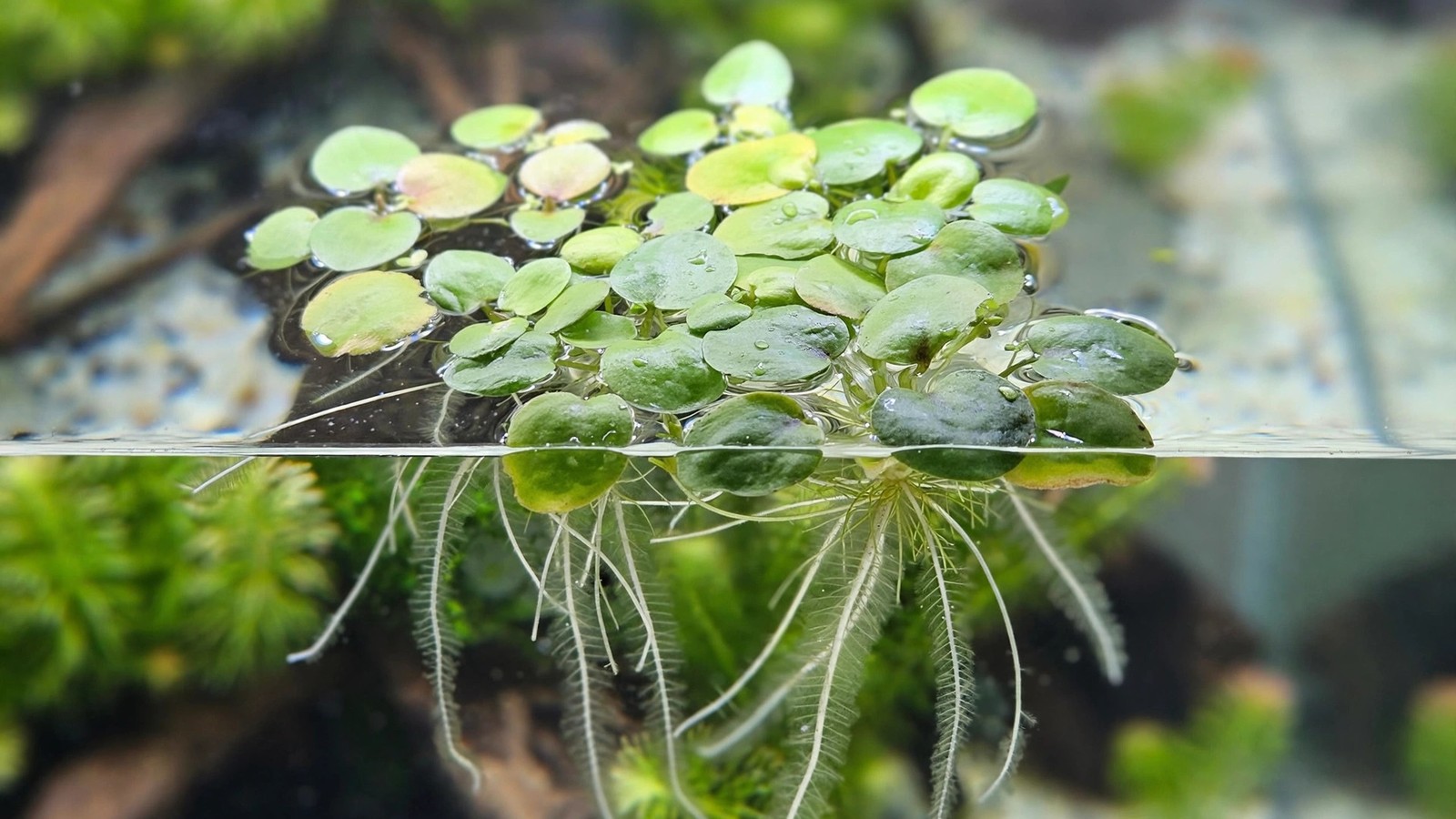
Your duckweed is multiplying so fast you're scooping it out weekly. Your red root floaters are thriving, your salvinia is doubling. But your Amazon frogbit — sitting on the exact same water, under the exact same light — is yellowing, rotting at the edges, and falling apart. What gives?
Here is the good news hidden inside that mystery: the fact that your other floaters are thriving is the single most useful clue in your tank. It means your water parameters, light duration, and general water quality are not the problem. The problem is something frogbit-specific — and there is a short list of suspects. Work through it once, and frogbit stops being a problem plant for you.
Short answer: If your Amazon frogbit is dying while other floating plants thrive, the cause is almost always physical, not chemical. Frogbit leaves rot when their tops stay wet — from lid condensation drips, splashing filters, or strong surface flow — while other floaters tolerate it. Other frogbit-specific killers include roots being grazed by shrimp or snails, new-tank melt after shipping, and being scorched by lights placed too close. Fix the surface conditions and the same water that grows your duckweed will grow frogbit.
The key insight: your water is probably fine
Most floating-plant troubleshooting guides start with "check your nitrates" — and that is reasonable advice when every floater in the tank is struggling. But your situation is different. Duckweed is thriving. Red root floaters are fine. Frogbit is dying. They all share the same water, so the variable is not the water. It is the plant.
Amazon frogbit (Limnobium laevigatum) is more sensitive than other common floaters in a few specific ways. Its leaves are larger, spongier, and sit higher on the water surface, which makes them more vulnerable to getting their tops wet — the one thing floaters famously dislike. Its long, fine roots are a buffet for shrimp and snails. And its big surface area catches more light than duckweed ever will, which means it burns sooner under a too-close lamp.
So run this article as a differential diagnosis: look at the pattern of damage, match it to a cause below, and fix that one thing. Most frogbit rescues take one change and about two weeks of patience. (For the general care baseline — lighting, nutrients, thinning — see our Amazon frogbit care guide.)
Wet leaf tops: the #1 frogbit killer
This is the cause behind the majority of "mystery" frogbit deaths, and it is the one most other floaters forgive. Frogbit leaves have a slightly hydrophobic upper surface, but they are not designed to be rained on. When the tops of the leaves stay repeatedly wet — from condensation dripping off the aquarium lid, splash from a filter outflow or air stone, or a spray bar aimed upward — the leaves develop brown and black spots, then turn soft, translucent, and mushy. The plant rots from the top down.
Duckweed tolerates this far better because its tiny leaves are mostly below or barely at the surface film. Frogbit's bigger leaves, riding higher, catch every drip.
How to spot it
Wet-leaf rot shows as brown or black spotting and edges that turn transparent and slimy while the rest of the plant may still look green. If the damaged leaves are the ones directly under the lid's center — where condensation collects — or clustered around the filter outlet, you have your answer.
The fix
First, stop the drips. If you have a glass or acrylic lid, condensation will always form; the question is whether it lands on the frogbit. Shift your frogbit cluster away from the drip zone (see the corralling trick below), or leave a gap between the lid and the water line by lowering the water level slightly. Second, aim filter outlets downward or to the side instead of across the surface, and move air stones so their bubbles don't break the surface directly under the frogbit. Aquarium Store Depot's frogbit care guide flags exactly this: leaf-top wetness is the top color-killer in lidded tanks.
Too much surface movement
Even without direct drips, frogbit hates being shoved around. Strong surface flow flips the leaves upside down, drags them under momentarily, and — you guessed it — wets the tops. Over days, flipped and dunked leaves bruise and rot. Your duckweed survives because each individual plant is tiny and rights itself instantly; frogbit's wider leaves catch the current like a sail.
Signs: the frogbit migrates constantly to one corner, leaves tumble over each other, and the damage is worst nearest the filter. The fix is mechanical: angle the filter outlet downward toward the substrate or install a spray bar along the back wall to spread flow gently. A cheap floating ring — a loop of airline tubing joined with a connector — corrals the frogbit in a calm zone away from the outflow and keeps it there. This one fix also reduces the odds of leaves being dunked during water changes.
Roots being grazed by shrimp, snails, or fish
Here is a classic frogbit-only symptom: the leaves look perfectly healthy, green and firm, but the long decorative roots keep getting shorter, thinner, or disappearing entirely. New plantlets grow leaves but never develop real roots.
That is almost certainly grazing, not a deficiency. Cherry shrimp, snails, and even bettas pick at frogbit roots — the fine, tender root tips are easy food. Duckweed and salvinia have short, sparse roots that don't attract the same attention, which is exactly why frogbit alone can suffer in a tank where everything else is fine. Frogbit usually recovers from root loss as long as the leaves stay healthy; roots regrow quickly once the grazing pressure drops. If the roots matter to you (they're half the reason people grow frogbit), you have two options: accept that shrimp tanks mean short frogbit roots, or fence off a small group of plants in a breeder box or a mesh corral until they re-root.
New-tank melt: it just arrived
If your frogbit started dying within the first week of arriving — leaves turning translucent and mushy almost overnight — you are looking at transplant melt, not a tank problem. Frogbit that adapted to the grower's or shop's water shocks when it meets your temperature, light, and chemistry, and it sheds its old leaves to regrow ones built for your tank. This is normal and temporary.
The move that helps: don't try to save the melting leaves. Pull off any that turn transparent or slimy (they foul the water as they rot), leave the green ones alone, and give it one to two weeks. Healthy frogbit reproduces fast enough that a melt week is invisible in a month. What does not help is changing everything at once — new fertilizer, new light schedule, and a water chemistry overhaul during melt week just adds more variables.
Too much light, not too little
Frogbit sits at the water surface, inches from your light fixture — the brightest spot in the tank. Paradoxically, the plant closest to the light is often the one being burned by it. Symptoms of too much light: pale, yellowed, or bleached patches on the leaf tops, brown scorch spots, and stunted new growth. Too little light looks different: small pale leaves and slow spread, but rarely outright death.
If your light sits right on the lid and the frogbit is directly under it, try raising the fixture a few inches or dimming it if it has that option. An 8–10 hour photoperiod is plenty for floaters; many tanks run 12+ hours and the surface plants pay for it. Also check whether the frogbit has shaded itself out: a thick mat of floaters blocks light to its own lower leaves and traps humidity, which rots them. Thinning the mat to about two-thirds surface coverage improves light, gas exchange, and airflow for the plants below too.
Nutrient drain hits frogbit first
There is one scenario where the "other floaters thrive" rule bends: frogbit is the hungriest of the common floaters, and it is an excellent living nutrient gauge — growers have long noted that it slows visibly when water-column nutrients drop. Duckweed and salvinia can coast on scraps for a while; frogbit shows the shortfall first. If your frogbit's decline is slow — weeks of gradually paler leaves and shrinking new growth rather than sudden rot — suspect a gentle nutrient drain, especially in a lightly stocked tank or one packed with fast growers.
The fix is a modest liquid-fertilizer routine, not a heavy hand. Floaters drink from the water column, so root tabs don't reach them. Start with a comprehensive liquid fertilizer dosed lightly — about half the bottle's recommended amount, once a week — and watch for two weeks. You want steady green new growth, not an algae bloom, so resist the urge to double-dose.
As an Amazon Associate I earn from qualifying purchases. For frogbit, a gentle comprehensive liquid like Seachem Flourish ★4.7 fits the job: it's a broad-spectrum micro-nutrient mix made for exactly this kind of light, regular water-column dosing. Dose conservatively — frogbit needs consistency, not intensity.
The 5-minute frogbit diagnostic
Do this once, in order, and you'll almost always find the culprit:
Symptom → cause → fix reference
| Symptom | Likely cause | Fix |
|---|---|---|
| Brown/black spots, mushy transparent leaves | Wet leaf tops from lid drips or splash | Move cluster from drip zone, aim outlets down |
| Leaves flipped, tumbled, dunked near filter | Strong surface flow | Baffle outflow, use a floating corral ring |
| Healthy leaves, roots nibbled or missing | Shrimp, snails, or fish grazing | Accept short roots or isolate plants to re-root |
| Rapid melt within a week of purchase | Transplant shock | Remove melted leaves, wait 1–2 weeks |
| Bleached or scorched leaf tops | Too much light | Raise/dim fixture, 8–10 hour photoperiod |
| Slow paling, shrinking new growth over weeks | Nutrient drain (frogbit first) | Light weekly liquid fertilizer |
Reviving the batch you have
Once you've fixed the cause, recovery is usually quick — frogbit multiplies fast enough to rebuild a colony from a handful of healthy rosettes. Pick out every leaf that is fully mushy or black (leave partially green ones; the plant is still feeding from them), re-seat the healthiest plants in your calm corral zone, and then resist fiddling for two weeks. New leaves emerging green and firm are your all-clear signal.
If nothing recovers after three weeks of corrected conditions, the batch may simply be spent — frogbit that has melted to the runners rarely comes back. Starting fresh with new plants in the fixed setup almost always works, and it will cost you far less time than nursing skeletons. Healthy frogbit should send out runners and new plantlets within a couple of weeks of settling in.
Frequently asked questions
Will frogbit recover on its own after melt?
Usually, yes. Transplant melt is temporary — remove the mushy leaves so they don't rot and foul the water, keep conditions stable, and expect green new growth within one to two weeks. If the plant melts all the way down to nothing, replace it; skeletons don't bounce back.
Can I keep frogbit in a tank with a lid?
Absolutely — lids are fine and even beneficial. The issue is only where the condensation drips. Keep the frogbit out of the main drip zone (usually the lid's center or the hinge line), or leave a small air gap between the water line and the lid.
Why do the roots fall off while the leaves look fine?
Nine times out of ten, that's grazing by shrimp, snails, or fish — not a deficiency. Frogbit's long fine roots are edible; duckweed's stubs aren't, which is why only the frogbit looks "sick." The plant regrows roots readily once the pressure eases.
Should I trim frogbit roots?
There's no need, and trimming can set the plant back — damaged roots can die back further up. If the roots annoy you or tangle in equipment, trimming is survivable, but expect some die-back and keep the leaf rosettes undisturbed.
Is dying frogbit a sign I should start fertilizing?
Only if the decline is slow and gradual across several weeks, with paler leaves and shrinking new growth — and especially in a lightly stocked tank. Sudden rot, spots, or melt are physical problems (water on the leaves, flow, shock), and fertilizer won't fix those.
Can duckweed really thrive while frogbit dies in the same water?
Yes — this is the whole point. Duckweed tolerates wet leaf tops, strong flow, and low nutrients far better than frogbit's larger leaves and longer roots do. Thriving duckweed is a water-quality all-clear; look for frogbit-specific causes instead.