Duckweed will drink your tank's nitrates dry — then make you regret it forever. Every stray speck escapes the net, doubles overnight, and seals your surface under a green lid no skimmer can fully remove. That is why nymphoides taiwan keeps turning up in shrimp tanks and nano scapes: it does the same hungry nitrate-sponge work, except it stays rooted where you planted it, looks genuinely beautiful, and trims like a civilized plant.
But avoid one costly mix-up before you buy. Shops constantly confuse it with its cousin the banana plant (Nymphoides aquatica) — the one with unmistakable banana-shaped tubers at its base. Nymphoides hydrophylla 'Taiwan' has no tubers at all: fine fibrous roots, a neat rosette, and a cloud of small translucent underwater leaves. One tissue-culture cup becomes a lush lily cluster your shrimp will colonize within days.
Why nymphoides taiwan stands out among lily-like plants
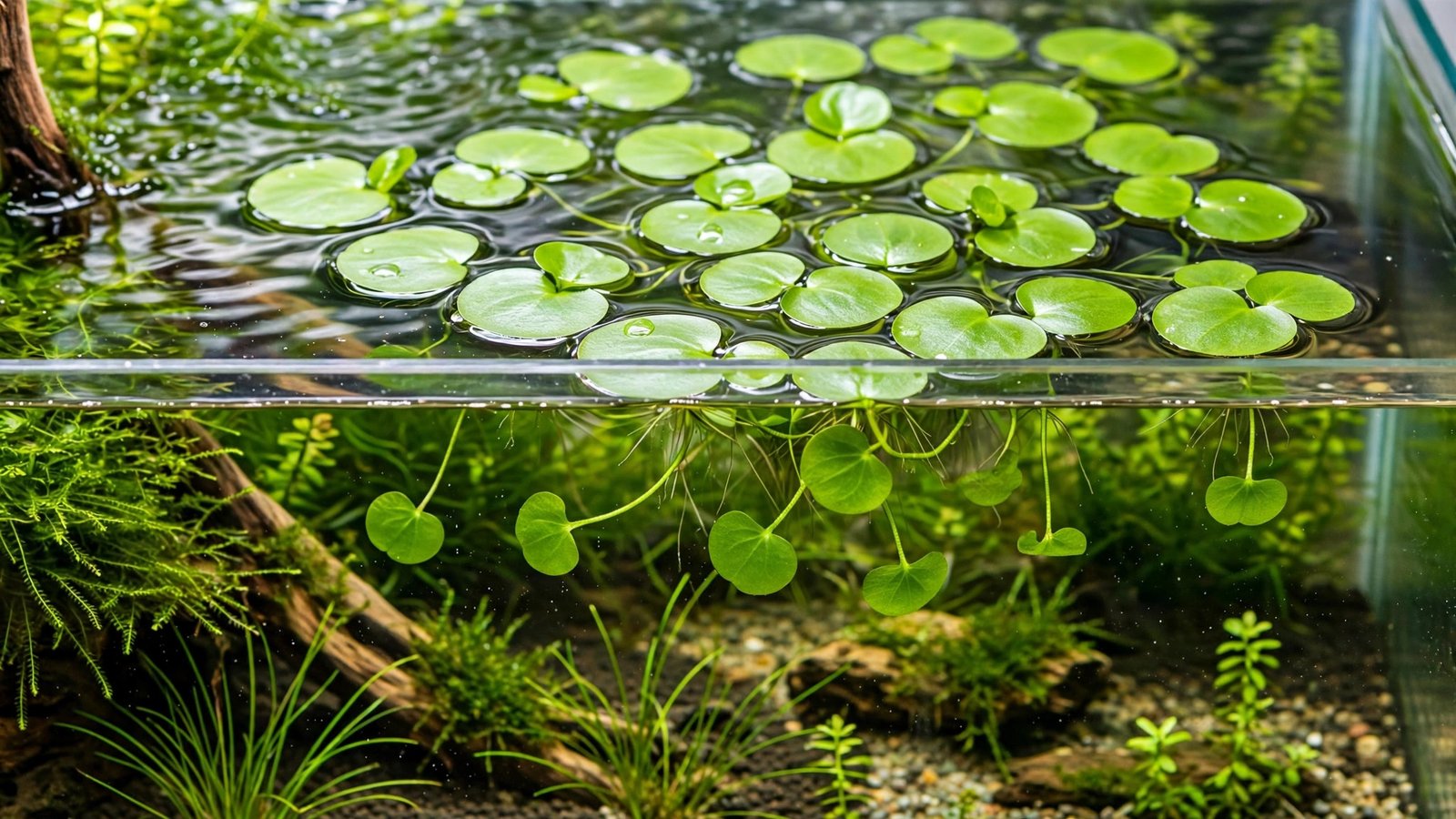
Most lily-family plants treat underwater leaves as an afterthought — everything interesting races to the surface. Nymphoides hydrophylla 'Taiwan', the Tropica 041B cultivar from southern Taiwan, flips that script: a dense crown of small, translucent, light-green leaves below the waterline, then floating pads above. That underwater fullness is its signature — a glowing lotus garden, not a few lonely pads.
It arrives almost exclusively as a Tropica 041B tissue-culture cup: a sealed, sterile culture you rinse and divide before planting. No snails, algae, or pesticides — a genuine advantage in shrimp tanks — and the only form reliably true to type.
Before going further, settle the identity question — retailers mix these two up constantly. For the cousin's full profile, see our Banana Plant Aquarium Care Guide (Nymphoides Aquatica):
| Feature | N. hydrophylla 'Taiwan' | N. aquatica (banana plant) |
|---|---|---|
| Base / roots | Fine fibrous roots; no tubers | Banana-shaped tubers |
| Underwater leaves | Abundant, small, translucent | Fewer; focuses on floating pads |
| Floating pads | Small, round, steady supply | Larger, classic lily pads |
| Size | 15–25 cm tall, 10–15 cm wide | Similar, 30 cm+ with pads |
| Planting rule | Roots buried, crown at substrate level | Tubers above substrate or they rot |
| Difficulty | Easy, fast | Easy, moderate pace |
The planting rule is what costs people plants: bury a banana plant's tubers and they rot; bury Taiwan's roots and it thrives. If your "banana plant" arrived with no bananas, congratulations — you bought the faster, prettier cousin.
Planting and placement
Taiwan Nymphoides is a midground plant by temperament: it anchors a nano-tank corner or shines as a bright cluster in a large tank. Give it room — one cup spreads into a 10–15 cm mound within weeks. A slow, low carpet such as Cryptocoryne parva stays politely put in front of it; for dramatically larger pads, the dwarf aquarium lily is the better pick — Taiwan's charm is its small leaves.
How to plant a tissue-culture cup
Rinse the gel off under the tap and tease the cup into 4–6 portions. Plant each 3–5 cm apart with tweezers: roots 2–3 cm into the substrate, the little crown of leaves just above it. A root tab under each portion makes a visible difference within two weeks — this plant eats heavily through its roots. Expect some melting of the tiniest leaves; the rosette rebounds fast, and within a month you will be thinning it. Once pads reach the surface, it earns its place among the best floating aquarium plants for beginners — with the bonus that everything below is beautiful too.
Light, CO2, and feeding a heavy eater
Here is the central bargain: undemanding about light — Tropica rates it low, and ordinary LEDs grow it fine — but greedy about food. Give it a rich substrate or root tabs plus a regular all-in-one liquid fertilizer, and translucent new leaves keep coming. Starve it and older leaves yellow and dissolve from the edges inward.
CO2 is optional: it thrives low-tech, and injected CO2 (a medium demand of roughly 6–14 mg/L) simply speeds an already fast plant and deepens color. Match it with equally fast company — background stems like Rotala rotundifolia grow at a similar pace, so neither shades the other out.
Trimming runners and thinning the crown
Maintenance is weekly and doubles as nutrient export. Snip runners at the base before they wander; pluck yellowing outer leaves at the rosette; remove excess floating pads so the lower leaves — the whole point of this plant — keep their light. Every removed leaf permanently exports its nitrate. If the rosette congests, lift it, split it into crowns, and replant: free plants for another tank.
Why it beats duckweed as a nutrient sponge
Duckweed is absurdly efficient at stripping nutrients — and uncontrollable: it clings to arms, nets, and filter intakes, shades everything beneath, and hitchhikes to every tank you own. Nymphoides hydrophylla 'Taiwan' gives the same service with manners: rooted where you planted it, high nutrient uptake from fast growth, and removing the excess means snipping a runner, not skimming a thousand specks.
For a new tank cycling through its ugly algae phase, a few cups absorb the excess nitrate and phosphate that feed algae blooms — while looking like part of the scape from day one. One plant, two jobs: algae prevention and centerpiece.
 ★4.6
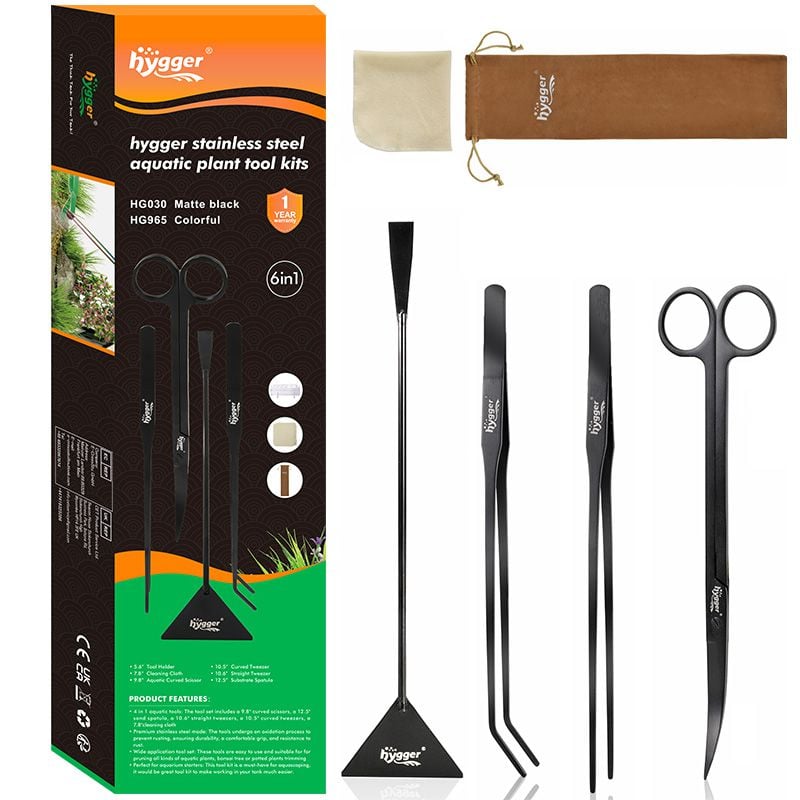
hygger 6-in-1 Aquascaping Tools Kit
Check Price on Amazon ★4.6Shrimp, snails, and tank mates
This is a genuinely shrimp-proof plant: dense underwater leaves grow biofilm that shrimp graze constantly, and the tight crown shelters newborn shrimplets where fish cannot follow. Sterile tissue culture means no planaria, hydra, or pesticide residues — a real consideration in sensitive Caridina tanks. Most fish ignore it; dedicated plant-eaters like goldfish will shred it. It belongs on any shortlist of the easiest aquarium plants for a beginner community tank.
Frequently Asked Questions
Is Nymphoides Taiwan the same plant as the banana plant?
No. The banana plant (Nymphoides aquatica) grows banana-shaped tubers at its base and must be planted with tubers above the substrate. Nymphoides hydrophylla 'Taiwan' has no tubers — just fine fibrous roots — and is planted with roots buried. Taiwan also grows far more small translucent underwater leaves.
Does Nymphoides Taiwan need CO2?
No, injected CO2 is optional. It grows well in low-tech tanks on ordinary LED lighting, since Tropica rates its light demand low. CO2 at a medium level simply accelerates an already fast plant and deepens leaf color. What it genuinely needs is food: a nutrient-rich substrate or root tabs plus regular liquid fertilizer.
How do I propagate Nymphoides Taiwan?
Two easy ways. First, runners: snip the plantlets that form on creeping runners and replant them. Second, leaf plantlets: new plants sprout directly from the blades of old leaves — separate them gently once they have a few roots and plant them 3–5 cm apart. A congested rosette can also be lifted, split into crowns, and replanted.
Why does mine keep sending all its leaves to the surface?
It is reaching for light — lower light pushes more floating-pad production. Increase light intensity modestly and thin surface leaves weekly so the underwater crown keeps its light. A few pads are normal; a full lid means the plant is compensating and the lower leaves suffer.
Is Nymphoides Taiwan safe for shrimp and snails?
Yes — it is one of the most shrimp-friendly plants you can buy. The dense underwater foliage grows biofilm for grazing and shelters shrimplets from fish. Buying it as tissue culture means it arrives sterile: no snails, algae, hydra, or pesticide residues, which matters most in sensitive shrimp tanks.
Give Nymphoides hydrophylla 'Taiwan' food, light, and a weekly haircut, and it returns the favor: a glowing, translucent-green cluster that drinks excess nutrients, shelters your shrimp, and stays put. Duckweed's work ethic, with a lily's manners.