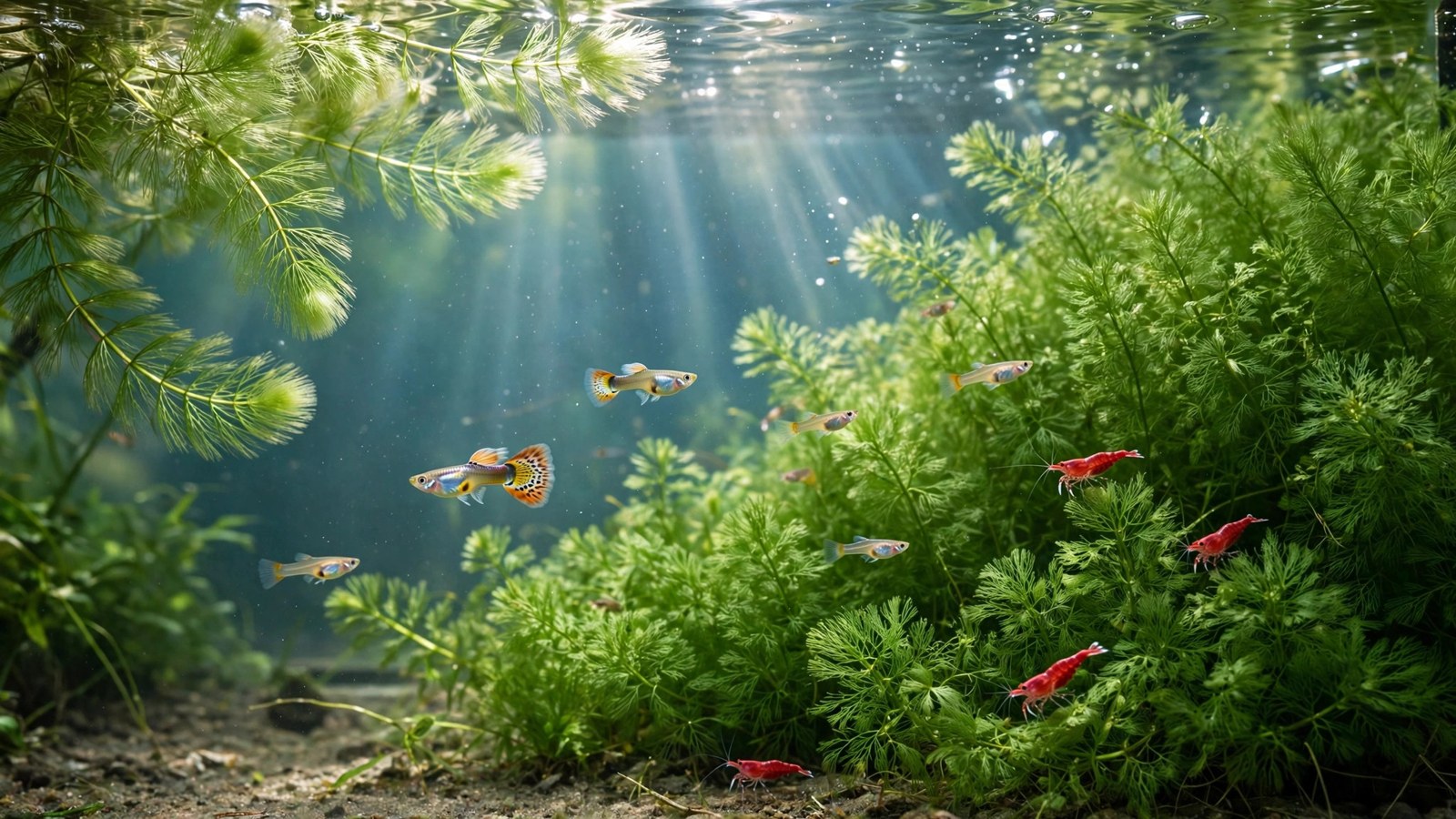
Drop hornwort into a new tank and within a week it looks like a green explosion. Drop in guppy grass and within a month you have a soft thicket that baby fish vanish into. Both grow without CO2 and both forgive beginner mistakes — which is why choosing between them feels harder than it should.
They are tools for different jobs, and the wrong one means vacuuming needles every weekend, or watching fry disappear.
Direct answer: Guppy grass is better first if you keep guppies, shrimp, or breeding fish, because its dense thickets shelter fry as hornwort's feathery stems cannot. Hornwort is better if you are fighting algae, cycling a new tank, or need the fastest nutrient uptake available.
Hornwort: The Fast, Messy Workhorse
Hornwort (Ceratophyllum demersum) has no true roots. It floats, drifts, and grows from every cut stem, so there is nothing to plant wrong. Float a bunch at the surface, in the brightest, most CO2-rich layer of the tank, and it grows fast enough to need trimming within a fortnight. That speed is its point: fast growth means fast nutrient uptake, starving algae — a classic first plant for a cycling tank or algae outbreak. See our hornwort care guide and why hornwort sheds needles.
The catch is the mess. Hornwort sheds needles whenever conditions change — a new tank, a temperature swing, a move between tanks, even rough handling. Stems usually recover within a week or two if left alone, but shed needles sink, rot, and need vacuuming, or they feed the very algae you bought the plant to fight. Every fragment is a potential new plant, so pieces end up in filter intakes and other plants. If you want hornwort, buy a bunch — float it, do not plant it, and accept the housekeeping.
Guppy Grass: The Fry-Saving Thicket
Guppy grass (Najas guadalupensis) looks delicate but grows like a weed. Its thin, opposite leaves branch into a dense, soft mass that small creatures can hide inside, larger fish cannot easily hunt through. That is why breeders love it: newborn guppies, Endlers, and shrimplets survive at far higher rates in a guppy-grass thicket, grazing biofilm on its leaves while staying out of sight. Unlike hornwort it can be rooted — push stems about 5 cm into the substrate and they anchor — or floated, so one bunch can build a rooted thicket or a floating nursery. See our guppy grass care guide.
Guppy grass is less dramatic but easier to live with: it rarely sheds in clouds, its trimmings are easy to net out, and broken stems simply become new plants. Its weaknesses are gentler: stems snap easily if handled roughly, and in low light it grows thin and leggy rather than dense, defeating the fry-cover purpose. If fry survival is your goal, start with one bunch and plant half rooted, half floating.
Side by Side: What Actually Differs
| Trait | Hornwort | Guppy grass |
|---|---|---|
| Roots | None — floats or loosely anchored | Weak roots — can root or float |
| Growth speed | Very fast, fastest of the two | Fast, a step behind hornwort |
| Fry and shrimp cover | Good, but open | Excellent — dense thickets |
| Mess | High — sheds after any change | Low — easy trimmings |
| Temperature range | 10–30 °C, coldwater-safe | 20–26 °C, tropical only |
Two cautions apply to both. Neither replaces water changes — they only slow nitrate build-up — so trim regularly and remove what you cut. Never release either plant into local waterways, where both can turn invasive: dry or compost excess trimmings.
Which One Should You Buy First?
Buy guppy grass first if your tank holds guppies, Endlers, platies, or shrimp, and you want fry to survive without a breeding box. Buy it first, too, if you want a plant you can shape: a trimmed thicket looks deliberate in a way hornwort rarely does. Buy hornwort first if your tank is new and cycling, if you are fighting green water or hair algae, or if you keep coldwater fish: its 10 °C lower limit makes it one of the few fast growers that works unheated, where guppy grass would stall.
If your budget stretches to two bunches, buy both: float hornwort for the first month while the tank matures, then thin it back as guppy grass establishes. The hornwort does the early nutrient work; the guppy grass becomes the permanent cover.
Keeping Either Plant Alive: The Short Version
Both plants feed mainly from the water column, so in a lightly stocked tank they can run short of nutrients and grow pale and thin — the common beginner mistake. A gentle, regular dose of a comprehensive liquid fertiliser keeps new growth green: Seachem Flourish ★4.7 is the standard choice for water-column feeders, dosed at the label rate and no more, since overdosing feeds algae faster than plants.
Trim before either plant forms a solid surface mat, because a mat shades everything below it and cuts gas exchange at the surface. Cut hornwort anywhere and let the cuttings float — every piece grows. Cut guppy grass above a node and replant the top. Trim weekly in small tanks, fortnightly in large ones.
Affiliate disclosure: product links are affiliate links; AquaVerdia may earn a small commission at no extra cost to you.
Frequently Asked Questions
Can I keep hornwort and guppy grass together?
Yes: float hornwort for nutrient uptake, root guppy grass for fry cover, then thin the hornwort back once the thicket establishes.
Do hornwort and guppy grass need CO2 or fertiliser?
Neither needs injected CO2. Both grow in low-tech tanks, but in lightly stocked tanks a gentle liquid fertiliser prevents pale growth.
Why is my hornwort shedding all its needles?
Almost always stress from a change: a new tank, a temperature swing, rough handling, or a copper-based medication. Leave green-tipped stems in place, keep conditions steady, net out fallen needles, and expect new growth within two weeks.
Which plant is better for a shrimp tank?
Guppy grass: its dense thickets shelter shrimplets and hold the biofilm they graze on. Hornwort works too, but sheds more in a small tank.