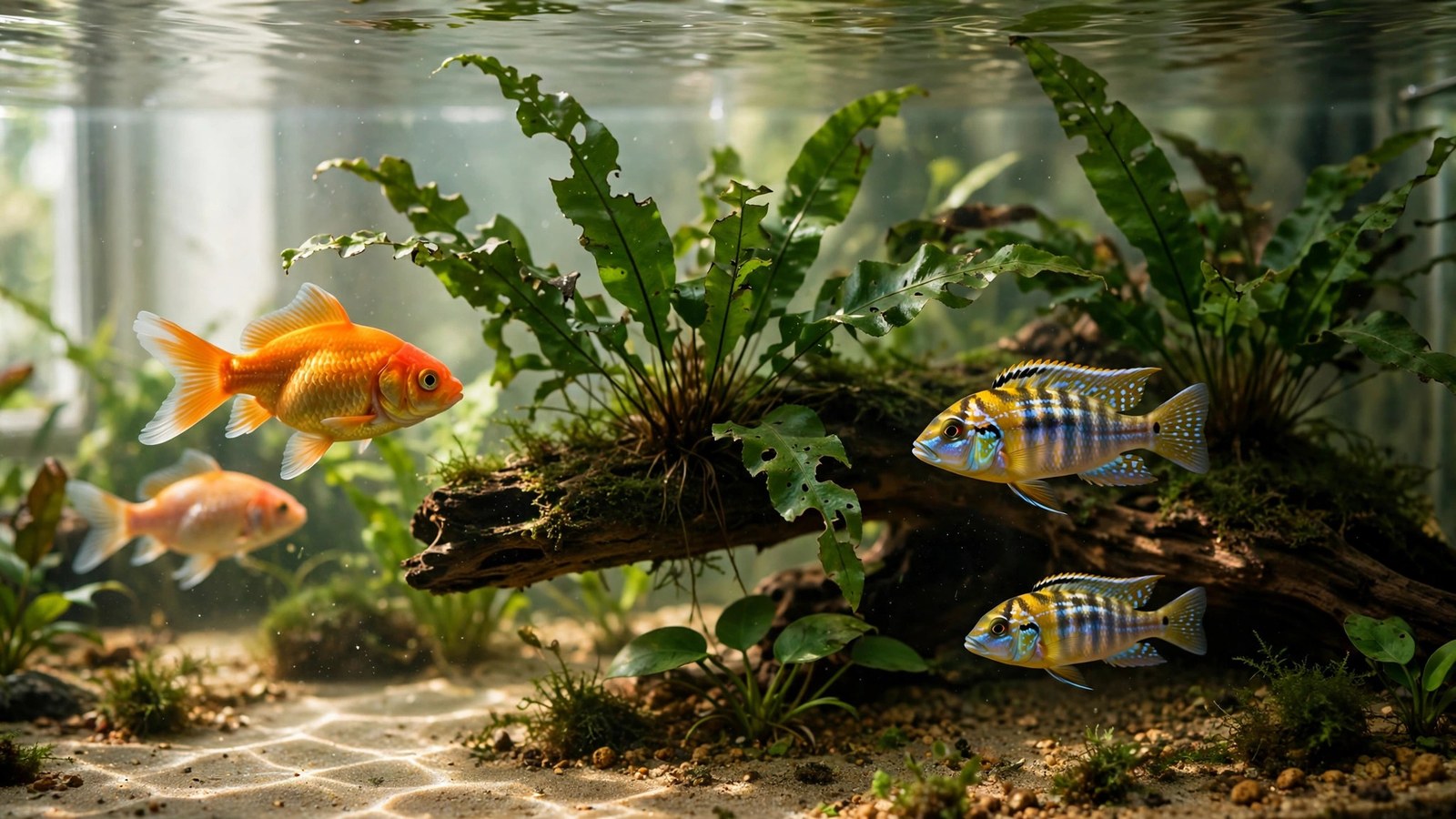
You just bought a gorgeous Java fern, dropped it into a tank with an Oscar, and by morning it's floating at the surface like a salad bar. Sound familiar? Here's the good news: among aquarium plants java fern has the toughest leaves around, so it survives most grazers — but some fish don't eat it, they redecorate. By the end of this guide you'll know exactly which cichlids and goldfish leave Java fern alone, which ones to worry about, and the attachment tricks that keep it safe.
Why Aquarium Plants Java Fern Survives Most Plant-Eaters
Most "plant-eating" fish destroy plants because the leaves are soft and sugary. Java fern (Microsorum pterotoides) breaks all three rules: thick leathery fronds, bitter-tasting compounds, and a dense rhizome that's hard to bite through. Even silver dollars avoid established Java fern when softer plants are present.
So with Java fern the real question isn't "will my fish eat this?" but "will they leave it physically alone?" New to the plant? Start with our full java fern care guide covering light, CO2, fertilizer, and growth rates — then come back here for the fish-compatibility half of the story.
Goldfish: nibblers, not destroyers
Goldfish are infamous plant shredders — a single fantail can strip anacharis to bare stems in a weekend. Java fern usually escapes this fate: the leaf texture puts them off, and goldfish lose interest once a leaf is too big to swallow whole.
The vulnerable window is the first month: new leaves emerge soft and light green, and curious goldfish test-bite the edges. Don't panic — by week 4–6 growth emerges thicker, and each growing point pushes a new leaf every 2–3 weeks, so nibbling falls behind. Start with a large mother plant (15+ leaves) rather than a tissue-culture cup.
Cichlid compatibility: species by species
Cichlids are wildly different fish wearing the same family name, so generalizations fail. Here's what actually happens with the common ones:
| Fish | Eats Java fern? | Uproots it? | Verdict |
|---|---|---|---|
| Angelfish | No | No | Safe — plant freely |
| German blue ram | No | Rare | Safe |
| Discus | No | No | Safe |
| Apistogramma | No | Rare | Safe |
| Convict cichlid | Rare | Yes | Risky — anchor on heavy rock |
| Oscar | Rare | Yes | Risky — glue to an unmovable rock |
| Mbuna (e.g. yellow lab) | No | Yes | Risky — wedge deep in rock piles |
| Jack Dempsey | No | Yes | Risky — heavy anchoring needed |
| Firemouth | No | Occasional | Usually fine on solid hardscape |
| Severum | Rare | Occasional | Usually fine — watch new leaves |
Notice the pattern: the "eat" column is nearly all No. The problem is always uprooting. An Oscar doesn't want to eat your Java fern — it wants to pick up the rock it's glued to and drop it across the tank. The plant floats free, the rhizome gets shredded in the chaos, and it looks like the fish ate it.
Attachment tricks that keep Java fern safe
In fish-ruled tanks, how you attach matters more than which variety you buy. Attaching Java fern to driftwood or rock is the baseline skill — aggressive fish demand upgrades:
- Super glue gel on rock, not thread: cyanoacrylate gel bonds the rhizome to rock in 30 seconds and holds through years of bumping. Cotton thread loosens as the rhizome thickens; glue doesn't.
- Go heavy: glue to one rock the fish physically cannot lift. For a 25 cm Oscar, that's a fist-sized piece of lava rock or slate, roughly 1–2 kg. Small pebbles are toys to a big cichlid.
- Keep it off the substrate: pit-digging convicts and firemouths excavate under decor. A Java fern glued halfway up a rock face is untouchable; one on the sand gets dug out.
- Wedge, don't dangle: in mbuna tanks, jam the rhizome deep between stacked rocks so the leaves thread out through cracks. The fish will bump it constantly and it won't move.
Never bury the rhizome — Java fern planted in substrate rots, and rotting rhizomes in a cichlid tank foul fast. If you need the mechanics, see our guide to planting Java fern (short version: don't bury it; rest it on top if you must).
When Java fern still loses: damage control
Sometimes it goes wrong anyway. An Oscar drops your rock, a goldfish shreds the new leaves, and you're left with a mangled rhizome. Here's the triage order:
- Leave the rhizome. Java fern regenerates from the rhizome, not the leaves. A brown, leafless rhizome is still alive if it's firm and green inside. Trim dead leaves at the base, keep it anchored, and wait — new leaves sprout in 3–6 weeks.
- Reduce the attack surface. Move surviving plantlets into the rock-work high in the tank, away from patrol routes. Oscars guard territories; goldfish cruise the bottom.
- Feed more greens. Goldfish given blanched spinach or nori twice a week nibble live plants measurably less. A well-fed goldfish mostly cruises; a bored, hungry one grazes.
- Consider tougher cousins. If Java fern keeps losing, Bolbitis heudelotii (African water fern) has even tougher, darker fronds and a stronger holdfast — the last plant standing in many Oscar tanks. The Windelov Java fern variety, with its forked frond tips, is equally tough and looks wilder in cichlid rockscapes.
Tropica's plant database entry for Microsorum pterotoides documents its parameters and origin, and the 2hr Aquarist Java fern guide covers the growth mechanics behind its grazer resistance.
Frequently Asked Questions
Do goldfish eat Java fern?
Rarely eat, occasionally nibble. Goldfish test-bite the soft new leaves in the first month, but mature leaves are too leathery to interest them. An established tuft outgrows the nibbling — most keepers report Java fern as the one plant goldfish leave alone, unlike anacharis or water sprite.
Can I keep Java fern with African cichlids (mbuna)?
Yes, with heavy anchoring. Mbuna don't eat Java fern — they uproot it while moving rocks. Glue the rhizome to a rock the fish can't shift and wedge it deep into the rock pile. Note: mbuna tanks run hard, alkaline water (pH 7.8–8.6), which Java fern tolerates but grows slower in.
Will an Oscar destroy Java fern?
Probably, unless it's glued to heavy rock. Oscars redecorate constantly and will knock loose any unsecured plant. Glue the rhizome to a 1–2 kg rock, position it high in the rockwork, and the Oscar will bump it for a week and lose interest. Expect occasional floating leaves — just reattach them.
Why is my Java fern floating at the top of the tank?
It's been dislodged, not eaten. Fish like Oscars, convicts, and large goldfish knock attached plants loose. Reattach the rhizome with super glue gel to a heavier rock and keep it off the substrate. Check the rhizome is still firm and green — if so, it will regrow leaves in a few weeks.
Do Java fern leaves regrow after being chewed?
Damaged leaves don't repair, but the rhizome keeps producing new ones. Trim ragged leaves at the base and wait 3–6 weeks for fresh growth. A firm, greenish rhizome is alive even with zero leaves — don't throw it away. Keep feeding the fish their greens in the meantime so new leaves get left alone.
The bottom line: Java fern is built for rough tanks
Few plants combine tough leaves, bitter taste, and rock-based anchoring like Java fern. Goldfish mostly ignore it, most community cichlids don't notice it, and Oscar-proofing is just glue plus rock weight. Anchor a generous mother plant like you mean it, and you'll have greenery where everything else dies.