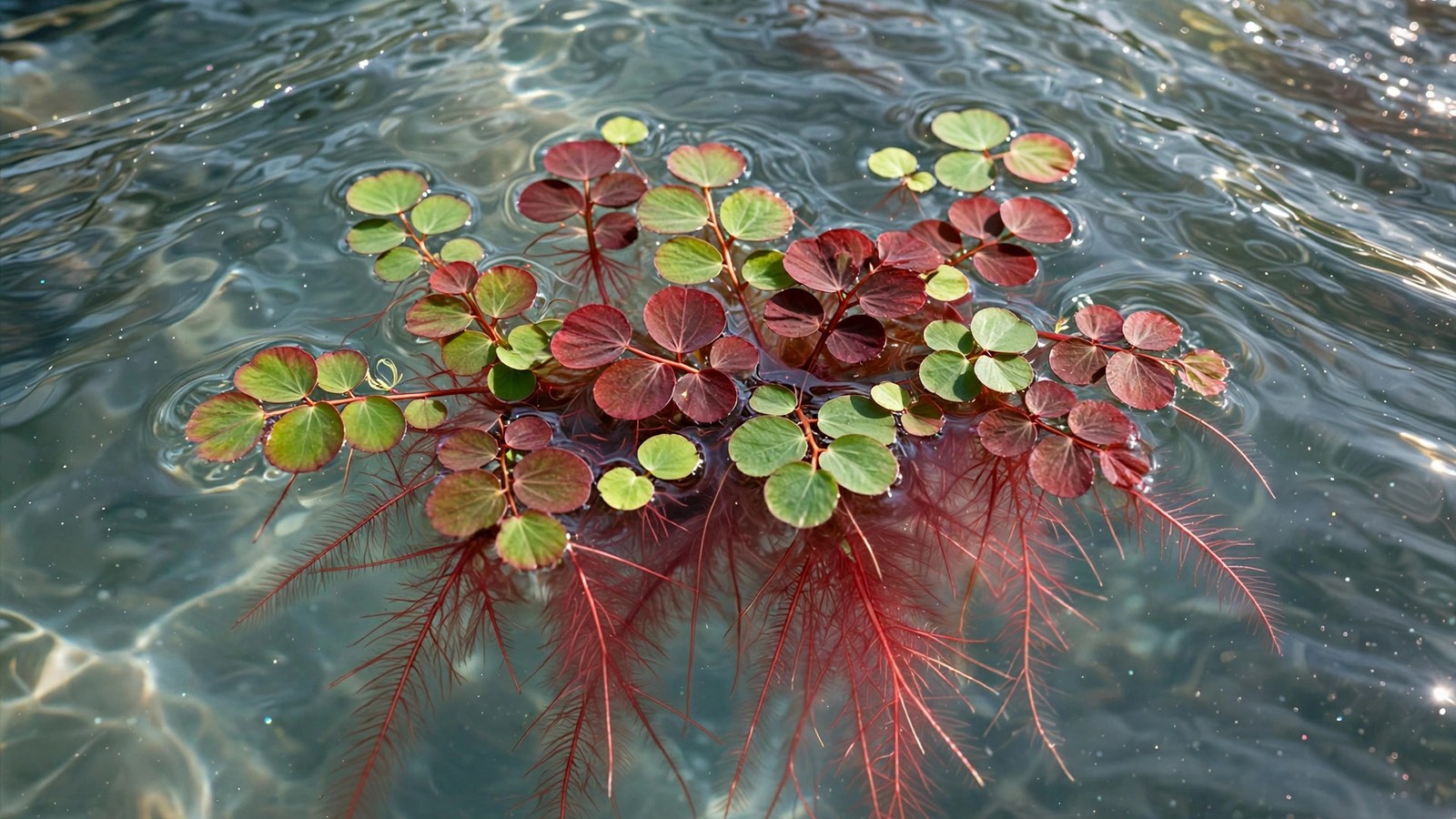
You bought red root floater for the red. The listing photo showed burgundy leaves and scarlet roots, but your plants are plain green — healthy, spreading fast, and refusing to blush. It feels like you got the wrong plant, or your light is too weak.
Neither is usually true. A green floater is almost always a well-fed one. Its colour is a nitrogen gauge, not a health report, and the fix is small, patient changes — not a new light or plant.
Nitrogen first: why green means well-fed
Red root floater makes its red pigments when nitrogen runs short. With plenty of nitrogen, it invests in fast green growth instead — more leaves, longer runners, a mat that doubles quickly. That is why a thriving, fast-spreading floater is so often green: your tank feeds it exactly what growth wants, and growth and redness pull in opposite directions.
The proof comes from the 2Hr Aquarist's side-by-side growing: floaters in low-nitrogen water turned deep red at modest light, while floaters in nitrogen-rich water stayed green under more than twice the light. Light is the second dial. Raise light while nitrate sits at 30–40 ppm and you get faster green growth, not red leaves — and possibly algae on top.
Start by measuring, not guessing. Test nitrate before a water change, when levels peak for the week; a reading right after one flatters you. If readings sit above 20 ppm most of the week, nitrogen is your answer, whatever your light is doing. Bring it down gradually: halve the nitrogen-containing fertilizer dose, or switch to a nitrogen-free comprehensive fertilizer for a few weeks. Do not chase zero — sustained zero nitrate stalls growth and leaves the plant fragile, red briefly, then failing.
The light check: strong, but secondary
Once nitrogen is lean, light decides how deep the red goes. The floater sits at the surface, centimetres from the lamp, so it usually gets more light than anything else in the tank. What it needs is unshaded, consistent surface light for 8–10 hours a day, not a brief blast at noon.
Check for shade you have stopped noticing. A thick mat shades itself: the top layer reddens while everything underneath stays green. Scoop out a third of the mat each week and keep a patch of open water, so every remaining leaf gets light. If you change light, raise it gradually — a sudden jump from dim to intense can bleach leaves or trigger algae. Give each change two weeks before judging it.
Covered tanks, wet leaves, and surface film
A tight-fitting lid is the quiet saboteur of red root floater. Condensation drips onto the leaves, and wet leaves melt, stall, or stay pale. Strong surface agitation does the same: floaters pushed under by filter outflow never settle long enough to colour well. If your floaters cluster in one corner, get dunked daily, or show wet, translucent patches, fix the surface before touching fertilizer.
Leave a gap for air, or run the tank open-topped if your fish allow it. Aim filter outflow at the glass or below the surface so the top stays calm, and corral floaters with a floating ring so they are not herded into the outflow. Skim off oily surface film too: it dims light at exactly the layer floaters live in. None of this reddens a plant alone, but each step removes a reason your light never reaches the leaves.
The iron myth: what iron can and cannot do
Iron gets more credit than it deserves here. Red pigments do use iron, and a genuinely iron-starved plant colours poorly — but most tanks dosing any comprehensive fertilizer are not iron-starved, and extra iron while nitrate is high just grows greener floaters faster. Iron helps once nitrogen is lean; before that, it is powerless.
If you already dose a comprehensive liquid fertilizer, you almost certainly have enough iron for colour. Keep dosing traces at the label rate while you cut nitrogen, and only consider a dedicated iron supplement if new growth is pale yellow-white rather than green — a deficiency sign, not a colour problem. Overdosing iron will not force red, and excess iron feeds algae. Order matters: lean nitrogen first, steady light second, traces throughout.
The three-week reset protocol
Change one thing at a time and give the plant time to answer. Three weeks is roughly how long new floater leaves take to show a colour change.
| Week | Change | What to watch |
|---|---|---|
| 1 | Test nitrate; halve nitrogen fertilizer or switch to nitrogen-free | Nitrate trending toward 5–15 ppm; growth may slow slightly |
| 2 | Thin the mat; clear surface film; calm the surface | Leaves dry on top; no new melt; light reaching all leaves |
| 3 | Hold steady; photograph new growth only | New leaves pink at the edges, then deeper red |
If week three brings no blush, retest before changing anything else: nitrate may have crept back up from fish food, a rich substrate, or a fertilizer you forgot contains nitrogen. If new leaves are red but the plant is shrinking, you went too lean — restore a small nitrogen dose and accept a lighter red. Colour bought with starvation is not worth a dying mat.
When green is fine, and when to worry
Green is not a cry for help. A fast-growing green mat still soaks up nitrate, shades shy fish, and feeds the microorganisms shrimp graze on — it does every job you bought it for except looking red. In a high-tech tank dosed for demanding stems, green floaters are simply the honest reading of a rich tank.
Worry only when green comes with decline: leaves melting, roots rotting, or growth stopping. That points elsewhere — heat, wet leaves, or a crashed nutrient balance — not to the colour dial. Note too that roots often stay red even when leaves stay green. Judge the plant by growth and roots, and colour only by its newest leaves.
Companion article: the same stay-green problem on a stem plant instead of a floater is covered in How to Keep Ludwigia Repens Red Instead of Green — different plant, different fixes.
Frequently asked questions
Will my existing green leaves ever turn red?
No. A leaf's colour is set as it grows; an old green leaf will not recolour. Ignore old leaves and watch the new ones — they need two to three weeks to show it.
How low should nitrate go to get red leaves?
Aim for a lean 5–15 ppm through the week. Below that, growth stalls and the plant weakens; above 20 ppm, expect green. Lean, not empty — the plant still needs nitrogen, just less than a richly dosed tank provides.
Does a stronger light alone turn red root floater red?
Not reliably. Strong light deepens red once nitrogen is lean, but with high nitrogen the plant stays green even under very bright light. Fix nitrogen first, then check surface light; reversing that order just grows green faster.
Why are my floaters green and melting at the same time?
Melting is a different problem from colour. Wet leaves from a tight lid or splashing outflow, heat above 28 °C, or a sudden parameter swing all melt floaters regardless of nitrate. Fix surface and temperature first, then revisit colour once new growth is healthy.
Sources: 2Hr Aquarist — reddening red root floaters and reading floaters as a nitrate indicator.