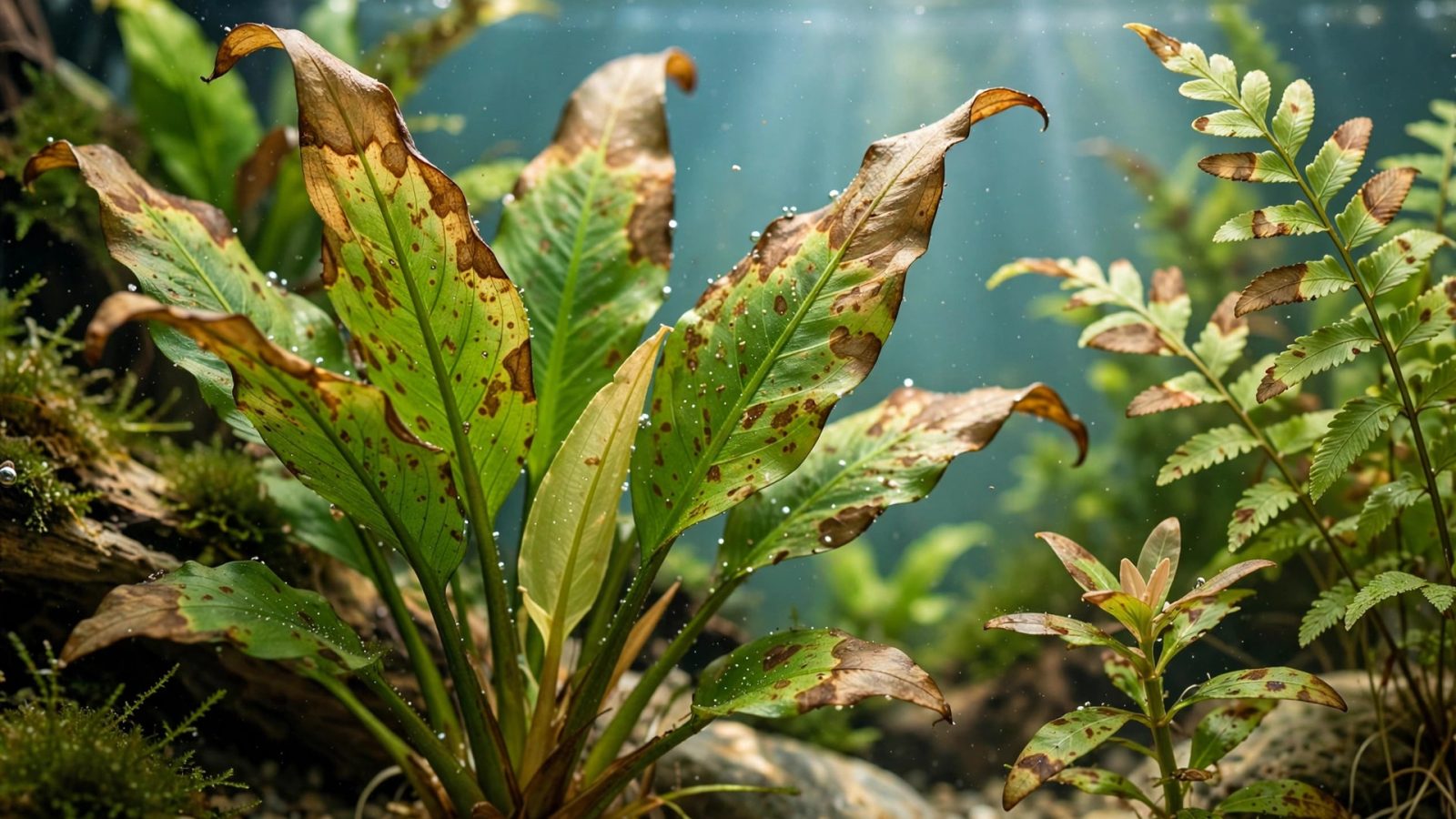
When aquarium plants turn brown, beginners usually assume the plant is dying — and sometimes it is. But brown is the most ambiguous color in the hobby: it can mean diatoms dusting the leaves, old tissue decaying, light burn, or a genuine deficiency. Treating the wrong cause wastes weeks, so this guide walks through the seven most common reasons plants go brown, how to tell them apart, and the fix for each.
1. Diatoms (Brown Algae): The New-Tank Classic
By far the most common cause of brown plants in tanks under three months old is not the plant at all — it is diatoms, a brown dusty coating that covers leaves, glass, and hardscape. Diatoms feed on silicates present in new substrate, new tap water conditions, and fresh silicone. They wipe off easily with a finger, leaving green leaf underneath.
Diagnosis: brown dust that rubs off; tank is new; leaves underneath are intact and green.
Fix: patience, mostly. Diatoms exhaust the available silicates and fade on their own within weeks. Wipe leaves gently during water changes, keep up weekly maintenance, and avoid the temptation to black out the tank or add chemicals. Otocinclus catfish and nerite snails graze diatoms enthusiastically if your tank suits them — but do not buy livestock to fix a temporary problem. If brown dust persists past three months, test your tap water for silicates.
2. Old Leaves Dying Naturally
Individual old leaves brown and die as part of normal growth — the plant retires its oldest foliage and puts energy into new leaves. This is senescence, not disease.
Diagnosis: only the lowest/oldest one or two leaves brown; the rest of the plant, especially new growth, looks healthy.
Fix: trim the dying leaves at the base so the plant redirects energy. No other action needed. Worry only if the browning climbs upward faster than new growth replaces it.
3. Transition Melt Browning
Newly planted specimens — especially emersed-grown stock — often brown as their air-grown leaves die back. This overlaps with melting but presents as browning and crisping rather than jelly-like mush.
Diagnosis: plant is new (planted within the last month); browning affects old leaves while new submerged growth emerges clean.
Fix: trim brown leaves, keep conditions stable, and wait. See our full guide on why aquarium plants melt for the complete transition protocol.
4. Light Burn: Too Much Light, Too Close
Leaves closest to a strong light can bleach and then brown at the tips and edges — essentially sunburn. This happens most with new high-intensity LEDs hung close to the water, or when floating plants are removed and the full light suddenly hits the plants below.
Diagnosis: browning on the uppermost leaves nearest the light; lower leaves fine; often appears after a lighting upgrade.
Fix: raise the light, dim it, or shorten the photoperiod. Browned tissue will not recover — trim it and judge by new growth. When upgrading lights, ramp intensity up over two to three weeks rather than switching overnight.
5. Potassium or General Nutrient Shortage
Chronic browning of leaf edges and tips on older leaves, sometimes with pinholes, points to potassium deficiency — the plant cannibalizes mobile potassium from old leaves to feed new growth, and the abandoned tissue browns and dies. Broader nutrient neglect produces a general brown, tattered look on old foliage.
Diagnosis: browning starts on old-leaf margins; may include pinholes with yellow halos; new growth looks okay but small.
Fix: work through the nutrient deficiency chart to confirm, then dose the missing nutrient — usually potassium via a complete fertilizer or potassium sulfate. Trim badly browned leaves; they will not heal.
6. Rhizome or Root Rot Browning From the Base
When browning starts at the base of the plant and climbs upward — especially in anubias, Java fern, or crypts — suspect rot. Buried rhizomes rot from the bottom up, and the leaves brown as their supply lines die. Anaerobic substrate (compacted, never vacuumed, very deep fine sand) rots roots the same way.
Diagnosis: browning progresses upward from the base; rhizome or crown feels soft; may smell bad when disturbed.
Fix: unplant, trim all mushy tissue back to firm white/green material with sterile scissors, and replant correctly — rhizomes above the substrate, crowns at the surface. Our root rot rescue guide has the full protocol.
7. Algae Smothering (Beyond Diatoms)
Established tanks can see leaves brown under a coating of other algae types — fine hair algae, or the brownish film of an early black beard algae colonization. The leaf underneath is starved of light and slowly dies.
Diagnosis: brown/black coating that does not wipe off as easily as diatom dust; often on slow-growing plants in high-light, low-CO2 tanks.
Fix: treat the algae, not the plant — identify the type and correct the imbalance (usually too much light for the available CO2 and nutrients). Badly smothered leaves should be trimmed; the plant cannot photosynthesize through the coating. For the worst offender, see black beard algae removal.
The Quick Diagnostic Sequence
When you spot browning, work through these questions in order:
- Does it wipe off? Yes → diatoms. No → continue.
- Is the tank under 3 months old? Yes → probably diatoms or transition. No → continue.
- Is the plant new? Yes → transition melt. No → continue.
- Where did it start? Top leaves near light → light burn. Old bottom leaves → natural aging or potassium. Base climbing upward → rot.
- Is new growth healthy? Yes → the plant is coping; trim and monitor. No → systemic issue; check nutrients, CO2, and light together via our plants-not-growing diagnostic.
What Not to Do
- Do not tear out the plant at the first brown leaf. Most browning is cosmetic or transitional. Plants recover from foliage damage constantly in nature.
- Do not dose random “plant fix” chemicals. Algaecides and mystery tonics stress plants further and rarely address the cause.
- Do not crank the light “to help.” More light on a struggling plant usually accelerates algae, not recovery. Stable, moderate light is what healing plants need.
Frequently Asked Questions
Will brown leaves turn green again?
Brown tissue is dead tissue — it will not recover. Trim it and judge the plant’s health by new growth. A plant pushing clean new leaves is a plant that has solved its problem.
My new tank’s plants are all brown — is this normal?
Very. New tanks commonly combine diatoms, transition melt, and unsettled chemistry all at once. If the growing points are alive, stay the course: weekly water changes, moderate light, and patience resolve most new-tank browning within a month or two.
Brown spots vs brown leaves — different problems?
Usually, yes. Discrete brown/black spots on otherwise green leaves suggest phosphorus deficiency or the early stages of algae colonization; whole leaves browning suggests the causes above. Match the pattern before treating.
New Tank vs Established Tank: Different Brown, Different Meaning
The new-tank brown phase (weeks 2–10)
Nearly every new planted tank goes through an ugly brown phase. Diatoms coat everything, emersed leaves brown as they transition, and the biological system has not stabilized. This is normal succession, not failure. The correct response is boring: weekly water changes, moderate light (6 hours), no fertilizer heroics, and patience. The tank that looks terrible at week 4 often looks great at week 12 with no intervention beyond routine maintenance.
What not to do during the brown phase: tear everything out and replant (resets the clock), black out the tank (stresses plants), add every chemical the shop sells (compounds instability), or post panicked photos expecting a magic product. Every experienced keeper recognizes this phase because they lived through it.
Browning in an established tank (6+ months)
Brown in a mature tank means something changed or something ran out. The diagnostic questions differ: What changed in the last month — new light, new fertilizer routine, CO2 cylinder swap, new fish load, skipped maintenance? Or what ran out — substrate nutrients (aquasoil exhausts around 12–18 months), root tabs (3–4 month lifespan), light tubes aging? Established-tank browning is a detective case with a recent cause; find the change and you find the fix.
Brown Algae vs Brown Leaves: A Closer Look
Because “brown” covers both algae coatings and dead tissue, here is how to separate them definitively:
- The wipe test: diatoms and soft brown films wipe off with a finger, revealing green underneath. Dead brown tissue does not wipe off — it is the leaf.
- The texture test: algae coatings feel slimy or dusty on top of a firm leaf. Decaying leaves feel soft and structurally weak throughout.
- The pattern test: diatoms coat everything roughly equally — glass, hardscape, all plants. Tissue browning follows plant physiology: old leaves first, or base-upward, or top-down near the light.
- The timeline test: diatoms appear in weeks 2–8 of a new tank and fade. Tissue browning tied to deficiencies or rot progresses steadily until the cause is fixed.
When Brown Means Emergency
Most browning is slow and cosmetic. Act urgently when you see:
- Rapid whole-tank browning within 48 hours — chemical contamination or major parameter crash. Big water change with conditioned, temperature-matched water immediately.
- Browning with a rotten-egg smell — anaerobic substrate releasing hydrogen sulfide. Do not stir the whole bed at once; water change, surface vacuum, and address depth/compaction in sections.
- Browning with fish distress — the problem is water quality affecting everything, not a plant issue. Test ammonia/nitrite first, treat the water, then worry about the plants.
Browning and Fertilizer: Getting Dosing Right After Diagnosis
Once you have identified a nutrient cause behind browning, the fix needs the right dose — not a random capful. Start with a reputable all-in-one liquid fertilizer at the label dose for your tank volume, dosed weekly after the water change. For potassium-specific browning with pinholes, a dedicated potassium supplement works faster than waiting for an all-in-one to catch up, but do not stack both at full dose — pick one approach.
Root-feeding plants (swords, crypts) with browning old leaves often need root tabs rather than more liquid fertilizer — the water column can test fine while the substrate is exhausted. Push tabs into the substrate near the crown every 2–3 months. And remember the golden rule: change one thing, wait three weeks, observe new growth. Browning caused by deficiency stops appearing on new leaves within 2–3 weeks of correct dosing; if it does not, the diagnosis was wrong and it is time to re-examine light, CO2, or root health instead of increasing the dose.
Photographing Brown Plants for Diagnosis Help
If you ask for help online, good photos get good answers. Take close-ups of the affected leaves (macro mode), a wider shot showing which leaves are affected (old vs new, top vs bottom), and one full-tank shot for context. Note the tank’s age, light, fertilizer routine, and when the browning started. “My plants are turning brown, help” with a blurry full-tank photo gets guesses; sharp leaf close-ups with context get diagnoses. Include whether the brown wipes off — that single fact eliminates half the possibilities.