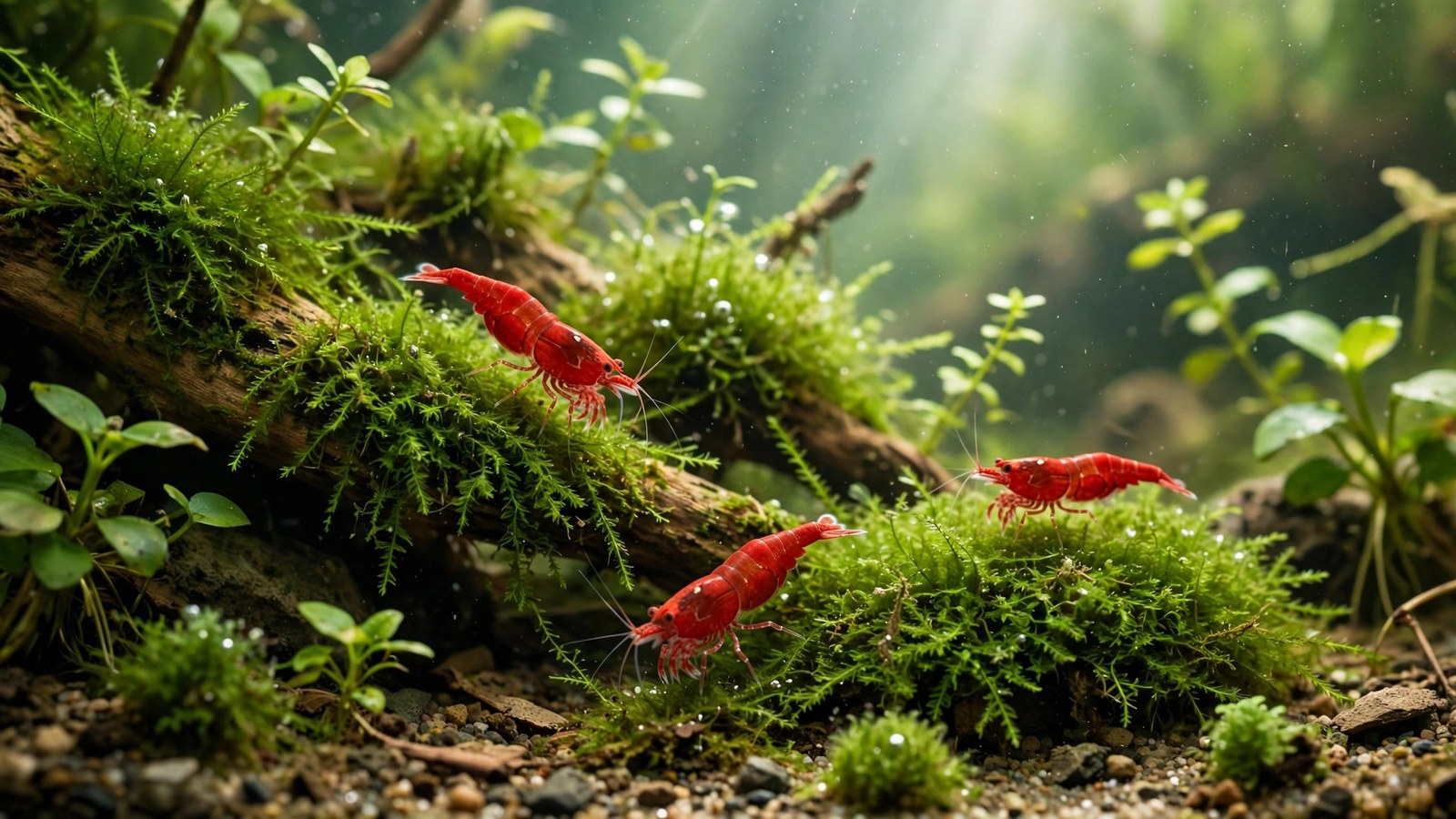
One careless capful can clear a nano tank of shrimplets overnight — yet thousands of colonies live for years in tanks dosed daily with this same product. If you are asking is flourish excel safe for shrimp, the answer sits entirely in the dose and how you apply it: dose ceilings, the species that cope and the ones that struggle, and what to do when too much goes in. For the full dosing method, start with our liquid carbon dosing guide.
Yes — at the label dose. Seachem states Flourish Excel is safe for invertebrates such as shrimp when used as directed, and its maintenance dose is just 5 mL per 200 L (50 US gallons) daily or every other day. Problems in shrimp tanks trace back to overdosing, concentrated spot treatments, or dosing unstable, newly cycling tanks — not to label-dose use in a mature colony tank.
Is Flourish Excel Safe for Shrimp?
Yes, with one condition that decides everything: the dose. Flourish Excel is not a fertilizer. It is a glutaraldehyde-based liquid carbon supplement — the chemistry that makes it useful against algae also makes it a biocide at high concentrations. That is why the answer changes completely between a measured label dose and a heavy-handed one.
Do not confuse it with Seachem Flourish, the bottled fertilizer — a different product, a different risk profile. Excel supplies carbon only; plants still need actual nutrients, the subject of whether aquarium plants really need fertilizer. Seachem addresses invertebrates in its product guidance, rating Excel as safe for shrimp when used as directed — and breeding cherry shrimp colonies in dosed tanks back that up.
The Label Dose Is Your Ceiling
In a shrimp tank, treat the label as a maximum, not a suggestion. The maintenance dose in the published Flourish Excel label directions is 5 mL per 200 L. The initial dose — five times stronger, meant for first use or after a water change over 40% — has no place in a stocked shrimp tank. Skip it and begin at maintenance strength or below.
| Tank size | Maintenance dose | Initial dose — skip with shrimp |
|---|---|---|
| 40 L (10 gal) | 1 mL | 5 mL |
| 80 L (20 gal) | 2 mL | 10 mL |
| 200 L (50 gal) | 5 mL (1 capful) | 25 mL |
Measure with a syringe, not the cap, under 100 L — each cap thread is roughly 1 mL, too coarse when your whole dose is 1–2 mL. Never add "a little extra" for algae: above label dose there is no benefit, only risk.
Which Shrimp Cope — and Which Struggle
Sensitivity varies by species and life stage. Hardy shrimp shrug off label doses for years; delicate Caridina and newborn shrimplets are where losses concentrate.
| Shrimp | Sensitivity | Guidance |
|---|---|---|
| Amano shrimp | Low | Tolerates full label dose; the safest test case |
| Neocaridina (cherry, blue dream) | Low–moderate | Fine at label dose in a mature tank; start at half |
| Ghost shrimp | Moderate | Usually fine; watch closely after first doses |
| Caridina (crystal, Taiwan bee) | High | Half dose maximum, or skip liquid carbon |
| Berried females and shrimplets | Highest | Most vulnerable; never start Excel with a newly berried colony |
| Fan / filter-feeding shrimp | High | Seachem cautions filter feeders may be sensitive; avoid |
The more delicate the colony, the stronger the case for starting low and accepting slower growth as the price of safety.
A Safe-Use Protocol for Shrimp Tanks
How you dose matters almost as much as how much:
- Wait for a mature tank. Dose only in a cycled tank stable for at least four weeks — never during cycling, after a rescape, or alongside medication.
- Start at half dose. Run 50% of maintenance strength for a week, stepping up only if shrimp behave normally.
- Dilute and disperse. Mix the dose into a cup of tank water and pour it into the filter outflow, so no shrimp meets a concentrated plume.
- Dose as the lights come on. Plants use carbon during the photoperiod, and morning dosing lets you observe shrimp afterwards.
- Keep water changes steady. A 20–30% weekly change prevents build-up between doses.
Overdose Symptoms and the Emergency Response
Glutaraldehyde problems show fast — usually within hours. Warning signs: shrimp gathering at the surface, frantic swimming followed by unusual stillness, failed moults, and deaths beginning with the smallest shrimplets. Hobbyist toxicity reports agree on the pattern: concentration, not the product itself, drives the losses.
If you suspect an overdose, act immediately: stop dosing, run a 50% water change with matched, conditioned water, add fresh activated carbon to strip residual chemical, and boost surface agitation. Do not re-dose until the colony behaves normally for a full week — then restart at half dose, if at all.
Safer Alternatives for Shrimp Tanks
If your colony is high-value Caridina or you want zero chemical risk, skip liquid carbon. Switching brands does not help — nearly every liquid carbon uses the same glutaraldehyde chemistry. The safer routes are pressurised CO₂, which adds no biocide, or low-demand plants that thrive on carbon already in the water.
Carbon is only one piece of feeding plants. A shrimp-safe aquarium fertilizer covers nutrients without the glutaraldehyde question, and pairing an option from our best liquid fertilizer for aquarium plants roundup with a steady aquarium plant fertilizer schedule keeps growth consistent, shrimp excluded.
Frequently Asked Questions
Can I use Flourish Excel in a cherry shrimp tank?
Yes. Cherry shrimp are among the hardiest shrimp kept with Excel, and colonies breed for years in label-dosed tanks. Start at half the maintenance dose for a week, diluted into tank water and dosed into the filter outflow. If grazing, moulting and berried females look normal after seven days, step up to full label dose — never beyond it.
Will Flourish Excel kill baby shrimp?
At label dose, healthy shrimplets in a mature tank are generally fine. Risk concentrates in the first days of life and rises sharply with overdosing or spot treatments near grazing babies. With valuable shrimplets, pause dosing for two weeks after a hatch, or run half dose until the young graze confidently.
How much Flourish Excel counts as an overdose for shrimp?
Anything above the maintenance dose of 5 mL per 200 L deserves caution, and the five-times-stronger initial dose is effectively an overdose in a stocked shrimp tank. Small-tank trouble usually comes from coarse measuring — one capful in a 40 L nano equals five days of dose at once. Measure with a 1 mL syringe, and water-change after any double dose.
Can I spot-treat black beard algae in a shrimp tank?
Not safely with shrimp present. Spot-treating holds undiluted Excel against the algae, creating a concentrated pocket exactly where shrimp graze — the most common cause of Excel-related shrimp deaths. Instead, remove the affected leaf or hardscape and treat it in a bucket outside the tank, rinsing well before it goes back. Whole-tank label dosing plus manual removal handles most algae safely.
Is Seachem Flourish — not Excel — also safe for shrimp?
They are different products. Flourish is a fertilizer supplying trace nutrients; Excel is the glutaraldehyde-based carbon supplement covered here. Flourish is widely used in shrimp tanks at label dose, without the overdose reports that follow Excel. The similar names cause real mistakes, so check the bottle twice — these rules apply to Excel specifically.
The Bottom Line for Shrimp Keepers
Start low, observe your livestock, and let the label be a ceiling you never test. Used that way, Excel and a thriving colony coexist in thousands of tanks — the bad reputation comes only from careless dose, application or timing. When in doubt, shrimp outrank faster growth: halve the dose, skip the spot treatment, give the colony the final vote.