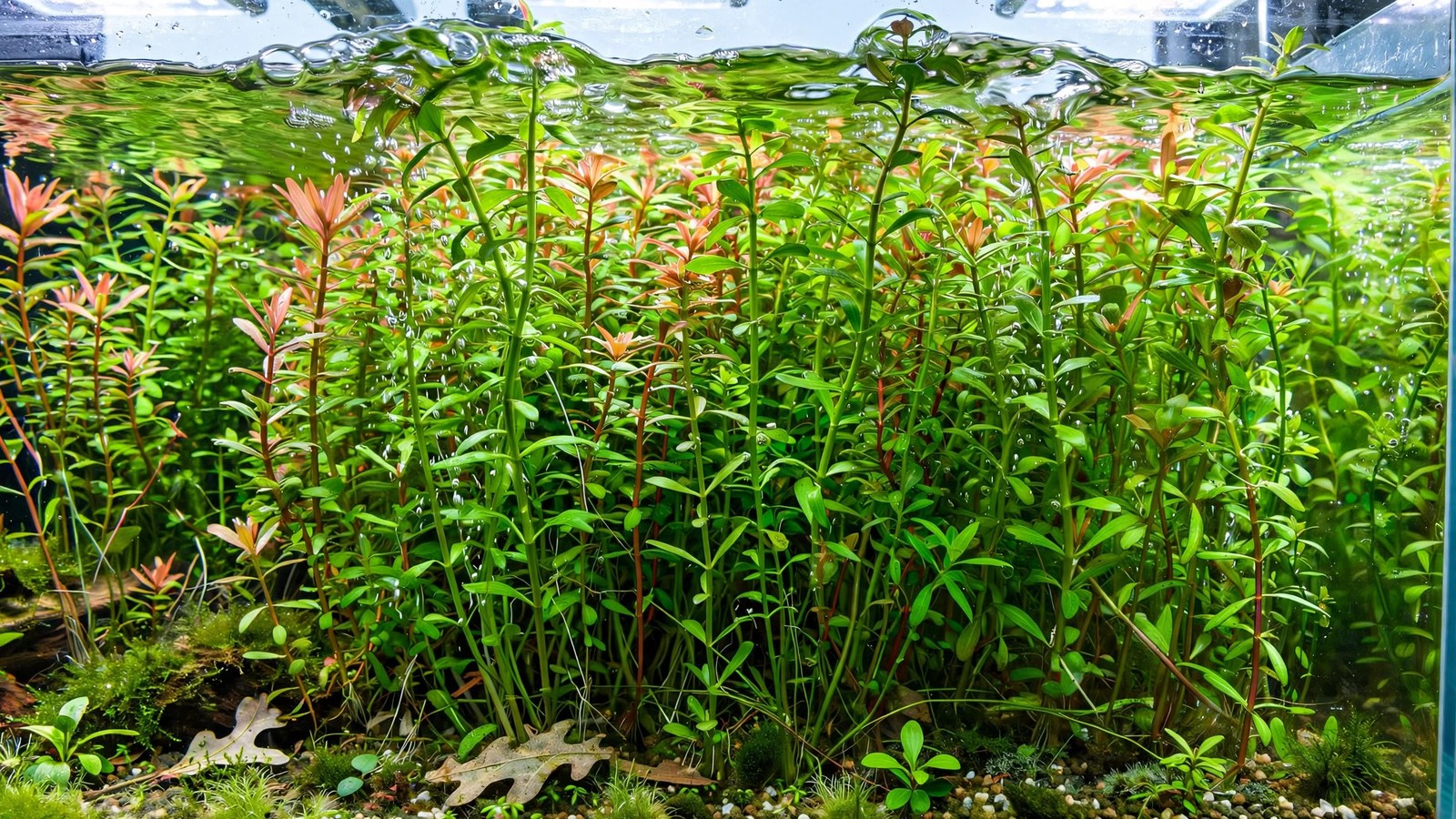
If your aquarium plants have been sitting there for a month looking exactly the same size they were the day you planted them, here's the uncomfortable truth: they're not slow plants, they're starved plants. Knowing how to make aquarium plants grow faster isn't about one secret product — it's about giving them the nine things they're waiting for, in the right balance, so every leaf can finally do what it's built to do. By the end of this guide, you'll know exactly which levers to pull first for your setup, how fast each change realistically works, and the one mistake that turns every growth boost into an algae farm.
Why Aquarium Plants Stall Instead of Grow
Underwater plants run on the same engine as everything green: photosynthesis. They combine light energy with carbon dioxide and pull dissolved minerals from the water and substrate, turning all of it into new tissue. When growth stalls, it's almost never "bad luck" — one of the inputs is missing or unbalanced, and the plant quietly idles while it waits.
Beginners usually blame the weakest link first, often guessing fertilizers are the problem and dumping more in. Experienced growers think in terms of limiting factors instead: growth can only go as fast as the scarcest resource allows. Give a tank unlimited fertilizer but dim light, and nothing happens. Flood it with light but add no CO2, and the algae — which tolerate CO2-poor conditions far better than your plants — take over the new energy. That balance rule is the foundation of every lever below.
One more reality check before we start: species set the speed ceiling. Ludwigia and Hygrophila stems can add an inch a week in good conditions; an Anubias rhizome will never do that no matter what you dose. If you've already acclimated your new aquarium plants and they're settled in, the nine levers below are everything left on the table.
9 Levers That Make Aquarium Plants Grow Faster, Ranked
Not all levers are equal. They're ordered here by impact — start at the top and work down.
1. Inject CO2 (the big one)
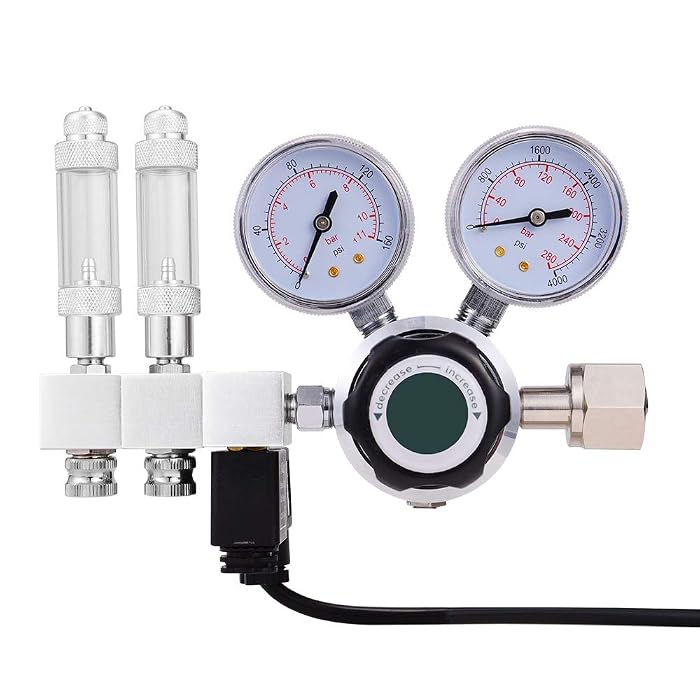
Pressurized CO2 is the closest thing to a magic growth button the hobby has. In water, plants are chronically carbon-limited: submerged leaves pull dissolved CO2 from water that naturally holds far less of it than air does. A pressurized system with a diffuser and a drop checker kept at a steady lime-green typically makes the same plants grow two to three times faster than they do on atmospheric CO2 alone — with denser, more compact, better-colored growth as a bonus.
 ★4.1
Clscea CO2 Regulator with Dual Gauge, Bubble Counter and Solenoid
Check Price on Amazon ★4.1Aim for roughly 1 bubble per second per 20 gallons as a starting point, then fine-tune with the drop checker and watch livestock for gasping at the surface. Run CO2 only during the light period (start it 1–2 hours before lights-on so levels peak when photosynthesis begins). It's the priciest lever — a basic regulator + cylinder setup runs $100–200 — but nothing else moves the needle like it. If you're curious what's achievable without it, read how to grow aquarium plants without CO2 so you can compare the two paths honestly.
2. Give them the right amount of light
Light is fuel, but the right dose matters. Most fast-growing aquarium plants do best at medium to high light — roughly 30–50 µmol of PAR at the substrate for stems and carpeting plants, with 50–80 for the demanding red species. Below ~20 PAR, even "easy" plants like Java fern just maintain; they don't grow.
Judge your fixture by PAR or honest community reviews, not wattage — the old watts-per-gallon rule died with LEDs. Place light-hungry plants directly under the fixture's center where intensity peaks, and give slow growers the dimmer edges. Run a consistent 7–9 hour photoperiod: a stable timer beats random long days, which mostly feed algae.
3. Dose a complete fertilizer, on schedule
With light and CO2 in place, the next limit is nutrition. Plants need macros (nitrogen, phosphorus, potassium) and a long list of micros (iron, magnesium, manganese, and more) in specific ratios. An all-in-one liquid fertilizer — dosed on the bottle's schedule, not "when you remember" — covers the water column. Root feeders like Amazon swords and crypts pull from the substrate instead, so push root tabs under heavy root feeders every 2–3 months.
If you're unsure which route your plants need, our comparison of liquid fertilizer vs root tabs breaks down exactly which plants want what. More fertilizer does not mean faster growth beyond the sufficiency point — it just feeds algae — so consistency beats quantity.
4. Fix water flow and nutrient distribution
A perfectly dosed tank can still stall if nutrients and CO2 never reach the leaves. Dead spots behind dense stems or hardscape create pockets where CO2 drops and waste accumulates — and those pockets grow algae first. Aim for gentle circulation that visibly sways every plant group without blasting substrate around, roughly 5–10× tank volume per hour through your filter plus a small powerhead if needed. Position the outflow so it sweeps the CO2 mist across the plant mass. Flow is the free lever almost everyone overlooks.
5. Trim and replant the tops (fastest free boost)
Here's the lever that works this weekend: cut healthy stem tips and replant them. Most stem plants (Rotala, Ludwigia, Bacopa, Hygrophila) grow one dominant shoot upward; when you trim aquarium plants correctly and push the cut tops back into the substrate, the original stump responds by pushing out two or more side shoots. You get bushier plants, a thicker planting mass, and measurably more growth points — all in the same week. Discard the leggy bottoms, keep the fresh tops. For rosette and carpeting plants, thin aggressively instead: removing a portion of runners redirects energy into the remaining spreaders.
6. Stabilize everything — plants hate change
This lever sounds boring and it's half the battle. Plants adjust their metabolism to current conditions over 1–3 weeks; every time you overhaul dosing, move the light, or chase a deficiency you see on one leaf, you reset that adjustment clock. Pick a light schedule, a CO2 rate, and a dosing routine, then hold them steady for a full month before judging results. The number one growth killer in well-equipped tanks isn't a deficiency — it's the owner's impatience.
7. Feed the substrate for root feeders
Water-column dosing does little for heavy root feeders. Amazon swords, Cryptocoryne, vallisneria, and most carpeting plants pull the bulk of their nutrition through their roots. A nutrient-rich substrate (aquasoil, or inert sand/gravel charged with quality root tabs) is what unlocks their speed. If your swords are stalled while your water-column stems are thriving, the substrate — not the fertilizer bottle — is the bottleneck. Push a fresh tab under each heavy root feeder every 2–3 months, and replace aquasoil every 1–2 years as it depletes.
8. Choose species that grow fast
The honest lever: some plants are simply built for speed. If you want visible progress this month, fast stems are the answer. The table below ranks common beginner-friendly plants by realistic growth speed in a CO2-injected, well-lit tank.
| Plant | Type | Realistic speed | Notes |
|---|---|---|---|
| Hygrophila polysperma | Stem | Very fast | The classic weed — nearly unstoppable. Regulatory note: H. polysperma is on the US Federal Noxious Weed List and is restricted or banned in several states — check local regulations before buying, never release trimmings into waterways or drains, and bag and trash prunings. |
| Ludwigia repens | Stem | Fast | Reds up under strong light |
| Rotala rotundifolia | Stem | Fast | Loves CO2, bushes well with trimming |
| Water sprite (Ceratopteris) | Stem/floater | Fast | Doubles as a nutrient sponge |
| Amazon sword | Rosette | Moderate | Fast once established + fed at roots |
| Java fern | Rhizome | Slow | Never fast — plan around it |
| Anubias | Rhizome | Very slow | 1 leaf every few weeks is normal |
Build your fast-growth vision around the top of the table and let the slow growers be accents, not the main event. That expectation-setting alone prevents most "my plants aren't growing" frustration.
9. Let micro-conditions help: temperature and livestock
Most tropical aquarium plants photosynthesize fastest between 72–78°F (22–26°C). A tank sitting at 68°F grows noticeably slower; one at 84°F drives up respiration and algae. Keep it in the sweet spot with a reliable heater. Meanwhile, a healthy fish population is a gentle fertilizer factory — fish waste delivers steady nitrogen and phosphorus. The classic planted-tank sweet spot is moderate stocking with regular feeding and weekly 30% water changes to keep waste nutrients from crossing into algae territory.
What Faster Growth Actually Looks Like (Timelines)
With all levers pulled, calibrate your expectations to the plant:
- Fast stems (Ludwigia, Rotala, Hygrophila): visibly accelerate within 7–14 days of adding CO2 or raising light; expect weekly trimming within a month.
- Rosette plants (swords, crypts): 3–4 weeks before new leaves emerge larger and greener after root-tab feeding or substrate upgrades.
- Carpeting plants (Monte Carlo, hairgrass, dwarf sag): 4–8 weeks to visibly fill in with high light + CO2; trimming the carpet down once encourages horizontal spread.
- Slow growers (Anubias, Java fern, Buce): measure in months. One new leaf every 2–4 weeks is healthy growth for these species.
If a plant shows zero new tissue after 6–8 weeks of stable, well-fed conditions, the issue usually isn't speed — it's a mismatch. Learn how to propagate aquarium plants and take a fresh cutting to find the actual blocker rather than pushing levers harder.
The "What NOT to Do" List
- Don't dump extra fertilizer to force growth. Past sufficiency, plants don't grow faster — algae does. Follow dosing schedules.
- Don't chase every yellowing leaf with a new bottle. Old-leaf yellowing is normal nutrient recycling. Constant re-dosing destabilizes the tank (lever 6).
- Don't run lights 12+ hours hoping for more growth. Plants photosynthesize on their own clock; beyond ~9 hours you're just extending the algae buffet.
- Don't believe "growth booster" additives that promise miracles. Iron helps red plants color up, glutaraldehyde-based carbon supplements give a mild boost — but neither replaces pressurized CO2, light, and a complete fertilizer.
Your 4-Week Speed-Up Plan
- Week 1: Set CO2 to a steady lime-green drop checker, lock a 7–8 hour photoperiod on a timer, and start (or fix) a consistent all-in-one fertilizer schedule. Check temperature is 72–78°F.
- Week 2: Trim every stem plant and replant the tops; push root tabs under heavy root feeders; adjust flow so every plant group sways gently.
- Weeks 3–4: Touch nothing. Resist every urge to tweak. Let the plants acclimate to the new conditions and watch for the first wave of new growth.
- Week 4 review: Fast stems should be exploding. If they aren't, you've found a deeper mismatch — time to diagnose, not dose.
Frequently Asked Questions
How long does it take for aquarium plants to start growing faster after adding CO2?
Most stem plants show visibly faster growth within 7–14 days of steady CO2 injection, with denser, more compact new leaves as the first sign. Slower plants like swords and crypts may take 3–4 weeks to respond. If nothing changes after a month, your CO2 rate is likely too low or too inconsistent — verify with a drop checker and make sure it runs the full light period.
Can I make aquarium plants grow faster without CO2 injection?
Yes, but within limits. Raising light to 30–40 PAR, dosing a complete fertilizer consistently, improving flow, and trimming/replanting stems can noticeably accelerate growth without any CO2 system. You'll get roughly half to two-thirds of the growth rate of a CO2-injected tank. Choose inherently fast species like Hygrophila and Rotala, since no technique makes a slow grower fast.
Does more fertilizer make aquarium plants grow faster?
Only up to the point of sufficiency. Once plants have all the nutrients they need, adding more doesn't speed growth — it feeds algae and can cause toxicity symptoms like burned leaf tips. The key is a complete fertilizer dosed on a consistent schedule, not higher doses. If growth is stalled despite adequate dosing, the real limiter is usually light, CO2, or flow.
How much light do aquarium plants need to grow fast?
Most fast-growing stem and carpeting plants need medium to high light — roughly 30–50 µmol of PAR at the substrate, 50–80 for demanding red species. Below about 20 PAR, plants mostly just survive. Run 7–9 hours daily on a timer, and always pair stronger light with CO2 and fertilizer to avoid trading plant growth for algae.
Why are my aquarium plants not growing even with fertilizer and CO2?
The usual suspects are unstable CO2 (fluctuating levels stress plants more than steady low levels), poor flow leaving dead spots, a nutrient-poor substrate for root feeders, or simply a slow species like Anubias. Give new conditions a full month before judging, then diagnose systematically with a stunted-growth checklist rather than adding more of everything.
Faster Growth Is a System, Not a Product
No bottle or gadget replaces the fundamentals: steady CO2, matched light, complete nutrition, good flow, and the patience to hold it all stable. Pull the levers in order, give your plants a month at each new setting, and trim aggressively — by week four, the tank you were impatient about will be the tank you're trimming. For the finer points of keeping each species happy while it grows, our high-tech to low-tech transition guide and dry vs liquid fertilizer comparison pair well with everything here, and Tropica's plant database remains the most reliable reference for species-specific light and CO2 requirements.