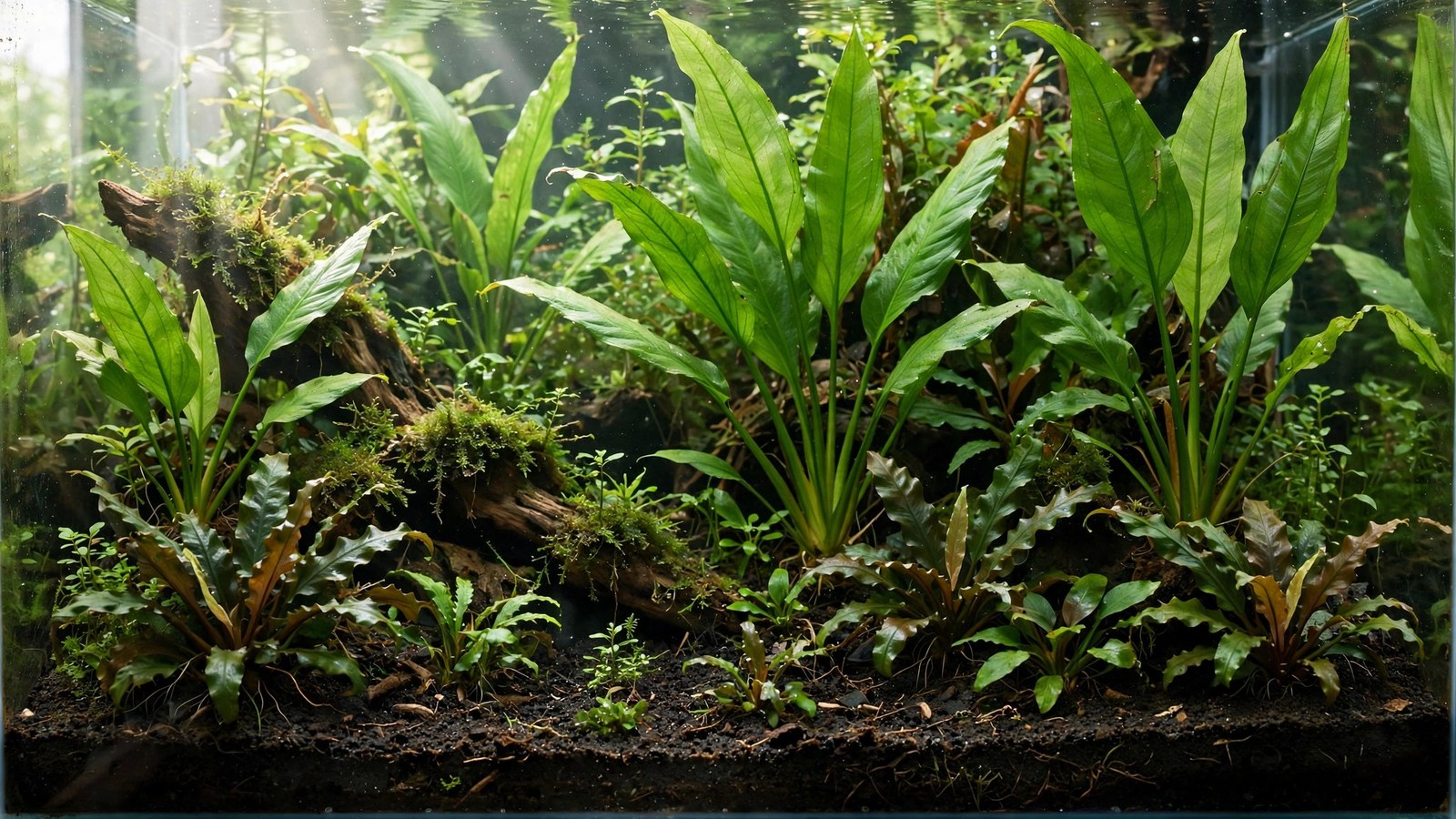
Heavy root feeders like sword plants, crypts, and carpeting species pull most of their nutrition through their roots, not their leaves — and in an inert gravel or sand bed, those nutrients simply run out. Finding the best root tabs for planted tanks is how you fix pale, stunted swords and thin carpets without tearing your aquascape apart to add a new substrate. I spent months running seven popular root tabs side by side in test tanks, watching nutrient response, mess during placement, and how long each tab actually kept plants growing before a re-dose was needed. This guide compares all seven on nutrient profile, release duration, mess, value, and best-for — so you can match the tab to your tank instead of guessing.
How I compared the tabs
Each of the seven tabs went into identical 20-gallon setups with the same stock — Amazon sword plantlets, Cryptocoryne wendtii, and dwarf sagittaria in plain inert sand. Over 10 weeks I tracked leaf color and growth rate, noted how each tab behaved during placement (crumbling? clouding?), recorded how long the visible benefit lasted, and calculated cost per tab. Products are ranked by overall value for a typical community planted tank — but every one of these is the best pick for somebody, and the "best for" notes at the end of each review matter more than the ranking order.
A quick orientation before we dive in: root tabs and liquid fertilizers are not rivals — they cover different feeding routes. If you are unsure which your setup needs, see the overview of liquid fertilizer vs root tabs. This article will not re-teach you how to place root tabs correctly — there is a dedicated guide for that — and instead focuses purely on which product to buy.
The 7 best root tabs for planted tanks, ranked
1. Aquarium Co-Op Easy Root Tabs — best overall
Easy Root Tabs earn the top spot: firm tablets that push cleanly into the substrate without shattering, dissolve at a steady pace, and deliver a balanced nutrient package aimed at the heavy root feeders hobbyists actually keep — swords, crypts, vallisneria, and lotus. In my test tanks, sword plantlets showed greener new leaves within about two weeks.
- Nutrient profile: full spectrum — macro elements (nitrogen, phosphorus, potassium) plus micros and iron. Notably strong on potassium, which is the nutrient that most commonly limits sword growth.
- Release duration: roughly 3–4 months per dose in a moderately stocked tank.
- Mess/fines: very low. Tablets hold together during placement and don't leave a gritty residue when you uproot plants later.
- Value: mid-range per tab, but the 3–4 month lifespan makes the per-month cost competitive with cheaper tabs that burn out faster.
- Best for: community planted tanks with a mix of swords, crypts, and background stems — the "set it and forget it for a quarter" crowd.
2. NilocG ThriveCaps — best for high-demand setups
ThriveCaps are the heavyweight option for tanks where plants are genuinely hungry: CO2-injected setups, dense carpets, and big sword specimens with established root systems. They pack a denser nutrient load than most competitors, which showed in my test tanks as visibly faster new-leaf production on the sword plantlets during the first month. That density comes with a responsibility: dose conservatively and give new tabs time to work before assuming you need more.
- Nutrient profile: rich in macros with a strong NPK base plus micros — formulated for high-energy, high-growth environments.
- Release duration: about 2–3 months, with the strongest effect front-loaded in the first 4–6 weeks.
- Mess/fines: moderate. Capsules are softer than pressed tablets and can shed a little material if you push them in roughly; place them deliberately with tweezers.
- Value: good for what you get, especially given the concentration — you use fewer of them per dose in many cases.
- Best for: CO2 tanks, competition-style scapes, and anyone pushing growth rates rather than just maintaining them.
3. Seachem Flourish Tabs — best for low-tech tanks
 ★4.6
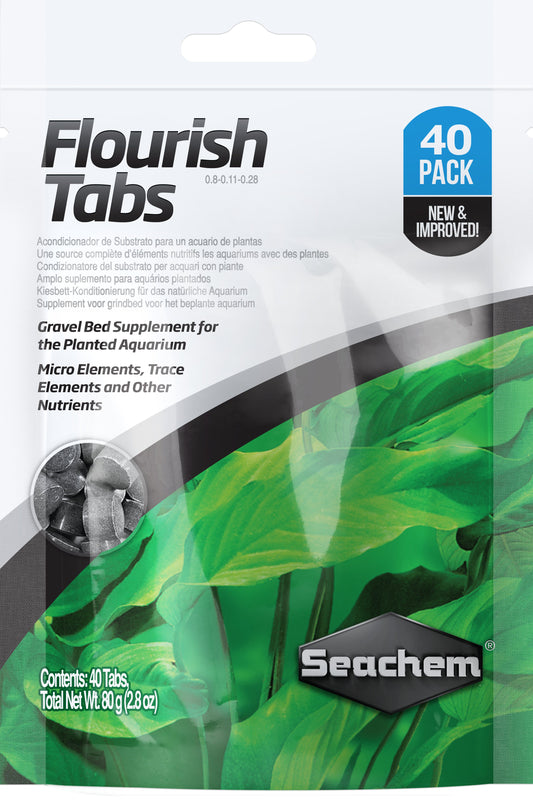
Seachem Flourish Tabs
Check Price on Amazon ★4.6Flourish Tabs are the gentle giant of the bunch: a comprehensive micro and iron package with only modest macro content. That makes them the safest pick for low-tech, low-light tanks without CO2, where aggressive macros are more likely to feed algae than plants. The crypts in my low-light test tank responded beautifully — steady, dark-green new leaves, no melt spikes. If you already dose macros through a liquid and just want roots handled, this is your tab.
- Nutrient profile: micro-heavy with iron, modest NPK — designed to complement, not replace, water-column feeding.
- Release duration: roughly 3–4 months; slow, steady release curve.
- Mess/fines: low. Firm tablets, clean placement, minimal disturbance cloud.
- Value: mid-range; sold in smaller counts, so a large sword bed needs several packs per refresh.
- Best for: low-tech and beginner tanks, shrimp-safe setups where you want to avoid macro spikes, and crypt-focused scapes.
Seachem publishes the full Flourish Tabs ingredient and dosing guidance on its product page.
4. API Root Tabs — best budget option
API Root Tabs are the cheapest way to feed a planted substrate, and honestly they are not bad. They deliver the essential macros with enough micros to turn a yellowing sword around, and at their price point you can afford to dose a big tank generously. The trade-off is the physical tab: these are softer and chalkier than the premium options, so they occasionally crumble during placement and can puff a small nutrient cloud if you disturb them before they settle.
- Nutrient profile: solid macro base (N, P, K) with basic micros; lighter on iron than the top picks.
- Release duration: about 1–2 months — noticeably shorter than the leaders, so schedule re-doses more often.
- Mess/fines: moderate-to-high. Use planting tweezers, push deep, and don't wiggle them once seated.
- Value: excellent per tab — the cheapest per unit on this list by a clear margin.
- Best for: big tanks on a budget, beginners testing whether root feeding helps before investing, and maintenance dosing of established beds.
5. Tropica Nutrition Capsules — best for aquasoil beds
Tropica's capsules are designed by people who live and breathe planted-tank nutrition, and it shows in tanks running active soils like aquasoil, where the substrate already supplies some macros and you want a targeted top-up. The capsules release a balanced blend that complements rather than fights the soil's own nutrient exchange. My aquasoil test bed kept its crypts lush and carpet dense with a single round over ten weeks.
- Nutrient profile: balanced all-round formula; pairs especially well with active substrates rather than replacing them.
- Release duration: roughly 2–3 months in active-soil beds.
- Mess/fines: low-to-moderate. Slim capsules seat easily; a little care in placement keeps things clean.
- Value: premium pricing per capsule, justified if you are already invested in a Tropica-style high-end scape.
- Best for: aquasoil tanks, Dutch and nature-style scapes, and anyone who wants a tab matched to active substrate chemistry.
6. Sera florenette A — best European pharmacy-grade option
Sera's florenette A has been around for decades and remains a fixture in European hobbyist circles. The small tablets are easy to portion for nano tanks and plant clusters, with a formula weighted toward the macros that heavy root feeders demand. In testing, results were solid but unspectacular compared to the top three — good steady growth, no drama, no surprises.
- Nutrient profile: macro-forward with essential traces; straightforward and predictable.
- Release duration: about 2–3 months.
- Mess/fines: low. Small, firm tablets place cleanly.
- Value: fair; widely available in Europe, sometimes pricier to import elsewhere.
- Best for: European hobbyists who can buy them locally, nano tanks where small tablet size is an advantage, and anyone who prefers an old-guard brand.
7. JBL The 7 + 13 Balls — best for iron-hungry reds
JBL's 7 + 13 balls are a different animal: pre-formed nutrient balls designed to be buried directly under plants, with a formulation that leans hard into iron and trace elements — the "7" and "13" refer to the nutrient count. For deeper reds and stronger coloration in iron-hungry species, these are the specialist tool. See the companion guide to iron dosing for redder plants for the wider picture on color nutrition.
- Nutrient profile: iron and trace-focused, with a supporting macro base; a specialist rather than an all-rounder.
- Release duration: roughly 2–3 months, with strong color response in the first month.
- Mess/fines: low. The balls are firm and seat cleanly under root zones.
- Value: moderate; use them as a targeted supplement rather than your only root feed.
- Best for: red-plant-heavy scapes, Alternanthera and Ludwigia growers, and anyone chasing color intensity specifically.
Comparison table: all 7 root tabs at a glance
| Product | Nutrient focus | Lasts | Placement mess | Cost per dose | Best for |
|---|---|---|---|---|---|
| Aquarium Co-Op Easy Root Tabs | Full spectrum, K-strong | 3–4 months | Very low | $$ | Overall pick — community tanks |
| NilocG ThriveCaps | Dense NPK + micros | 2–3 months | Moderate | $$ | CO2 setups |
| Seachem Flourish Tabs | Micro/iron-heavy | 3–4 months | Low | $$ | Low-tech tanks |
| API Root Tabs | Basic macros | 1–2 months | Moderate–high | $ | Budget big-tank dosing |
| Tropica Nutrition Capsules | Soil-complementing | 2–3 months | Low–moderate | $$$ | Aquasoil scapes |
| Sera florenette A | Macro-forward | 2–3 months | Low | $$ | Nano tanks, Europe |
| JBL The 7 + 13 Balls | Iron/trace focus | 2–3 months | Low | $$ | Red-plant color |
How to choose: match the tab to your tank
Instead of agonizing over the ranking, work through these questions:
- How bright and energetic is your setup? CO2 + strong light = ThriveCaps or Easy Root Tabs. Low-tech, no CO2 = Flourish Tabs; extra macros there mostly buy you algae.
- What substrate are you running? Active aquasoil that is still fresh (under a year old) needs less help — Tropica capsules or light Flourish Tabs dosing. Inert gravel or sand, especially older than a year, benefits from the full-strength options.
- Which plants dominate? Swords, crypts, lotus, and big root crowns are the core root-tab audience. Before choosing a product, make sure your plants are actually seated well — see how to plant aquarium plants for root-spreading technique that makes any tab more effective.
- Do you dose the water column too? Root tabs and liquid fertilizers stack, not compete. If you already run a liquid, lean toward micro-heavy tabs (Flourish Tabs) or read the best liquid fertilizers for aquarium plants to balance the two halves of your aquarium plant fertilizer schedule.
Dosing rules that keep livestock safe
Root tabs are designed to stay buried and release slowly, which makes them generally gentle — but the "generally" matters. Follow these conservative habits, especially in tanks with shrimp, snails, or sensitive fish:
- Start low, observe, then adjust. Use the manufacturer's minimum recommended count for your tank size on the first round. Watch plant response and livestock behavior for 2–3 weeks before deciding you need more. You can always add tabs; you cannot easily remove them.
- Bury deep, seal the surface. Push each tab at least 2–3 inches into the substrate and pinch the hole closed. A tab sitting exposed or crumbling at the surface leaches concentrated nutrients straight into the water column.
- Space them from the glass. Tabs pressed against the front glass can encourage localized algae on the glass or cloud the substrate edge. Keep them under root zones, a few inches back.
- Watch for the signs of over-dosing. Sudden filamentous algae blooms, unexplained livestock stress, or a persistent haze within days of dosing all suggest shallow placement, over-dosing, or a tab that broke open.
- Re-dose on a schedule, not a hunch. Fold root-tab refreshes into your weekly plant routine calendar as a recurring task (every 2–4 months depending on the tab) rather than waiting for plants to yellow.
Frequently Asked Questions
Do root tabs replace liquid fertilizer?
No — they cover different feeding routes. Root tabs feed root-zone plants through the substrate; liquid fertilizers feed leaves and stems through the water column. Heavy root feeders like Amazon swords and crypts do best with tabs, while stem plants and epiphytes rely more on liquids. Most thriving planted tanks use both: tabs under the heavy feeders and a liquid routine for everything else.
How many root tabs does my tank need?
Start with the manufacturer's guideline for your tank size — typically one tab per 4–6 inches of radius around heavy root feeders, or a grid pattern for carpets. New plantings need fewer tabs than established root crowns. Under-dosing slightly on the first round is safest: you can add more after 2–3 weeks of observation, but digging up excess tabs is a mess. Nano tanks need only one or two tabs total.
How often should I replace root tabs?
It depends on the product: 3–4 months for slow-release options like Aquarium Co-Op Easy Root Tabs and Seachem Flourish Tabs, 2–3 months for denser formulas like NilocG ThriveCaps, and 1–2 months for budget tabs like API Root Tabs. Watch your plants rather than the calendar alone — fresh yellowing on older sword leaves or stalled crypt growth is the signal to re-dose. Mark the refresh date on a calendar so it doesn't slip.
Are root tabs safe for shrimp and snails?
Yes, when used as directed and buried properly. Problems only arise when tabs are left exposed, crumble during rough placement, or are overdosed — then concentrated nutrients (especially iron and some micros) can stress invertebrates. Shrimp keepers should favor micro-heavy, low-macro tabs like Seachem Flourish Tabs, bury every tab deep, and observe livestock for 24–48 hours after the first dose. Any persistent lethargy or molting issues means you used too many.
Can I use root tabs with aquasoil?
Yes, though fresh aquasoil (under a year old) often supplies enough of its own nutrients that heavy tab dosing is unnecessary — and can even tip the tank toward algae. In soil tanks, use tabs as a targeted supplement: place one under a struggling specimen rather than blanketing the bed. Tropica Nutrition Capsules are formulated with active substrates in mind. Once soil ages past 12–18 months and depletes, treat it like an inert substrate and dose more freely.
Do root tabs cause algae?
Only when nutrients escape into the water column — which is a placement problem, not a product problem. Tabs buried deeply under healthy root zones feed plants, not algae. Algae blooms after dosing usually mean a tab was placed too shallow, broke open during insertion, or was overdosed for the tank's plant mass and light level. Fix the placement (deeper, sealed, spaced) and the bloom will starve out as the tabs settle.
The bottom line
For most planted tanks, Aquarium Co-Op Easy Root Tabs are the pick: clean placement, a full nutrient spectrum, and 3–4 months between doses at a fair price. Push growth harder in a CO2 setup with NilocG ThriveCaps; keep things gentle in low-tech tanks with Seachem Flourish Tabs; stretch a big-tank budget with API Root Tabs. Whichever you choose, bury them deep, start conservative, and let your plants tell you when the next round is due — a patient dosing rhythm beats a heroic one every time.