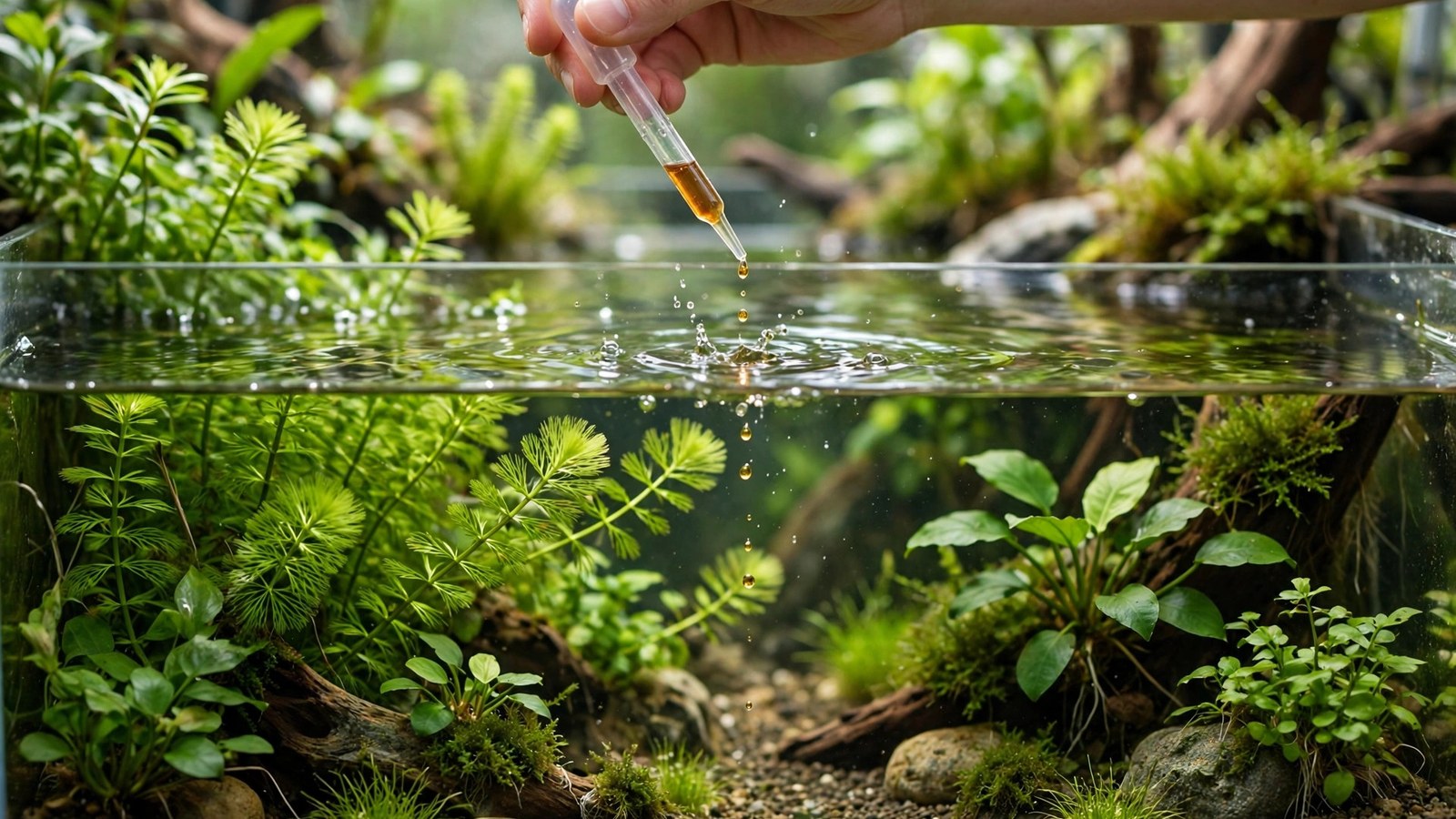
Your tank can have perfect macros, blazing lights, and a roaring CO2 diffuser — and your plants can still stall, pale, and crumble. When macros, light, and CO2 are all dialed in yet growth has plateaued and new leaves come in pale or misshapen, trace elements are the usual missing piece: iron, manganese, or another micronutrient the plants need only in parts per million. This guide teaches you how to dose aquarium plant micronutrients deliberately — what each trace element does, how much to add, how to spot deficiencies, and how to do it safely when shrimp live in the tank too.
What Aquarium Plant Micronutrients Actually Do (and Why Macros Alone Fail)
You already know the macro story: nitrogen, phosphorus, and potassium are the protein, fuel, and backbone of plant growth, consumed in large quantities every day. Micronutrients are the spark plugs. Iron drives chlorophyll production. Manganese helps split water during photosynthesis. Zinc, boron, copper, molybdenum, and cobalt each activate specific enzymes — without them, the whole metabolic assembly line jams, and plants sit there stunted while algae colonize every surface.
Here's the part that trips up intermediate hobbyists: a tank can show zero macro-deficiency symptoms and still look terrible, because the limiting factor is a trace element no hobby test kit measures. If you're already following an aquarium plant fertilizer schedule with macros dialed in but growth has plateaued, traces are your prime suspect — and a single batch of DIY trace mix lasts most hobbyists six months or more.
The Seven Trace Elements Your Plants Can't Live Without
Most commercial and DIY trace mixes — including the famous CSM+B — supply seven core micronutrients, each with a distinct job. Think of them as a team where the weakest member sets the ceiling for everything else:
| Element | Symbol | What it does for your plants | First sign it's missing |
|---|---|---|---|
| Iron | Fe | Builds chlorophyll; drives electron transport in photosynthesis | New leaves turn yellow while veins stay green (interveinal chlorosis) |
| Manganese | Mn | Activates enzymes that split water in photosynthesis; works alongside iron | Yellow mottling between veins on young leaves; growth stalls |
| Zinc | Zn | Required for growth-hormone (auxin) production and enzyme function | Stunted, undersized new leaves; shortened stem internodes |
| Boron | B | Builds cell walls and moves sugars within the plant | Growing tips die back; new leaves twist, curl, or come out deformed |
| Copper | Cu | Powers respiration enzymes and lignin formation | Leaf tips curl and wither; blue-green tint fades in some species |
| Molybdenum | Mo | Essential for processing nitrate into usable nitrogen | Pale, stunted growth that mimics nitrogen deficiency despite adequate nitrate |
| Cobalt | Co | Supports vitamin B12 pathways in beneficial bacteria and some plants | Rarely seen alone; generally covered by any complete trace mix |
Iron deserves a callout because it's the trace element plants consume fastest — it's also the one most likely to be missing. That's why nearly every deficiency conversation in the hobby eventually circles back to iron, and why it's worth reading the dedicated guide on potassium for aquarium plants and the iron-specific deficiency content alongside this overview, so you don't chase an iron fix for what is really a manganese or boron problem.
Deficiency Symptoms: Reading Your Plants Like a Lab Report
Trace-element deficiencies have a tell: they show up on new growth first, because these elements are immobile inside the plant — it can't shuffle them from old leaves to feed new ones. That's your diagnostic rule. Old leaves yellowing first points to a mobile macro (nitrogen, potassium, magnesium); new leaves coming in pale, twisted, or tiny means trace-element territory.
Use this symptom table as your field guide — match what you see, then cross-check against the element table above before changing anything:
| What you see on new growth | Most likely culprit | What to do |
|---|---|---|
| Yellow between green veins | Iron | Increase trace dose; consider adding a dedicated iron supplement |
| Yellow speckles or mottling between veins | Manganese | Ensure complete trace mix (CSM+B covers this); check for overdosed iron blocking uptake |
| Leaves emerge tiny and stunted | Zinc | Verify traces are complete; check pH isn't locking out uptake |
| Tips die; new leaves twist or deform | Boron (or calcium) | Increase trace dose; confirm calcium is adequate via GH |
| Growth stalls despite good nitrate levels | Molybdenum | Steady trace dosing solves this; verify your mix isn't expired |
| Pale all-over with good macros on test | General trace gap | Start a regular trace dosing routine before changing anything else |
One caution: pH above 7.5 makes iron and manganese dramatically harder for plants to absorb, so hard, alkaline tanks sometimes show "deficiencies" that are really availability problems. More dosing won't fix what's chemically locked out — a chelated trace mix matters more than dose size there.
The CSM+B Recipe: Pennies Per Dose
CSM+B is the hobby's open-standard trace mix — a dry powder blend adopted by aquarists decades ago because it works and costs almost nothing. A half-pound bag costs roughly one bottle of commercial trace fertilizer and lasts a typical 40-gallon tank well over a year. If you're choosing between DIY and bottled, the dry vs liquid aquarium fertilizer comparison covers the economics — spoiler: dry wins by a mile.
Mixing it is a five-minute job:
- Measure 1 level tablespoon of CSM+B powder into a clean 500 mL bottle (a rinsed sports-drink bottle works fine).
- Fill with distilled or RO water — not tap water, which can react with the chelates and shorten shelf life. Shake until fully dissolved.
- Optional but recommended: add 1 mL of a glutaraldehyde-based liquid carbon product or a few drops of vinegar as a preservative to discourage mold growth in the bottle.
- Store in a cool, dark place. The solution stays good for 2–3 months; if it grows fuzz or smells off, mix a fresh batch.
Dosing is equally simple: add 1 mL of solution per 10 gallons of tank water, 3–4 times per week (alternating with your macro doses). A 20-gallon tank gets 2 mL per dose; a 75-gallon gets about 7–8 mL. That's the full routine. If you're running the Estimative Index method, this trace dose slots right into your alternate-day schedule — the EI dosing beginners guide shows exactly where it fits.
| Tank size | mL per dose | Weekly total (3 doses) |
|---|---|---|
| 10 gallons | 1 mL | 3 mL |
| 20 gallons | 2 mL | 6 mL |
| 40 gallons | 4 mL | 12 mL |
| 75 gallons | 7.5 mL | 22.5 mL |
| 125 gallons | 12.5 mL | 37.5 mL |
Start at the low end — 2–3 doses per week rather than 4 — and watch your plants for two to three weeks. New leaves should come in greener, larger, and faster. If nothing changes, the problem is probably light, CO2, or a macro gap, not traces — resist the urge to keep increasing the dose.
Commercial Trace Products: When Bottles Beat Powder
DIY CSM+B is the value king, but bottled trace fertilizers have their place: travel-friendly, pre-mixed with stabilizers, and some are formulated copper-free for nervous shrimp keepers. Many all-in-one fertilizers also include a full trace package — check the label, because adding a separate mix on top would double-dose. The all-in-one fertilizer dosing guide explains how to check whether your product's trace content is complete.
The selection logic is the same either way: look for iron, manganese, zinc, boron, copper, and molybdenum on the label, preferably with chelated iron (EDTA, DTPA, or EDDHA). Skip any "trace" product that is mostly iron with token amounts of the rest. For help picking a bottle, the best liquid fertilizer for aquarium plants roundup compares trace content across popular brands.
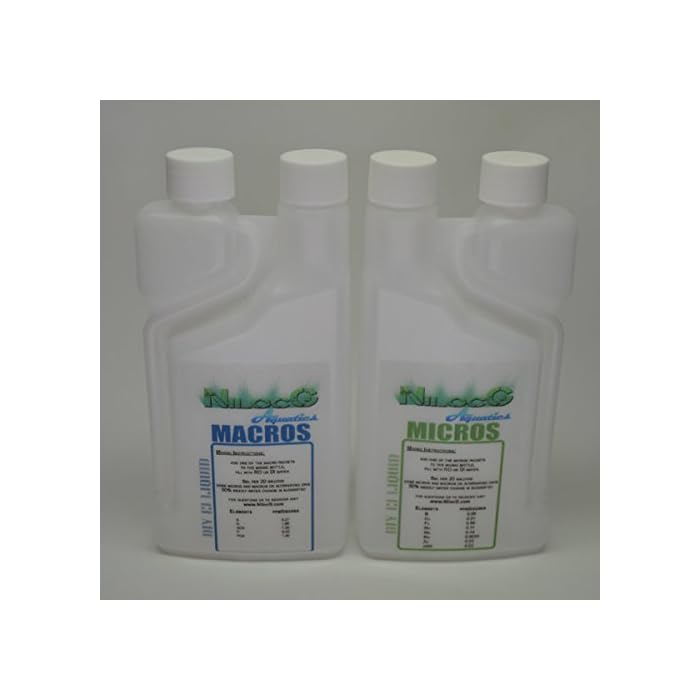
NilocG Liquid Refill Set
Check Price on AmazonShrimp and Copper: The Safety Question, Answered Honestly
This is the most feared question in trace dosing, so let's be precise. Yes, CSM+B contains copper — roughly 0.1% by weight. At the standard dose, that puts about 0.002 ppm of copper into your water, an order of magnitude below published acute-toxicity thresholds for freshwater shrimp. Thousands of breeders have dosed CSM+B for decades without colony losses. At normal doses, it's a non-issue for neocaridina, caridina, and other common aquarium shrimp.
The honest caveats: don't eyeball dry powder straight into the tank, don't double-dose "to be safe," and if you're running high-value caridina breeding stock, copper-free trace formulas exist for exactly that market. When in doubt, start at half dose for two weeks and observe your livestock before, during, and after each dose. Shrimp grazing and behaving normally means your routine is safe. The shrimp-safe aquarium fertilizers guide goes deeper into which products earn that label.
Root Tabs vs Water Column: Do Traces Need Both?
If you're dosing traces into the water, do heavy root feeders like swords and crypts still need root tabs? Yes — keep doing both, because they feed plants through different doors. Water-column dosing feeds everything with leaves: stem plants, floaters, mosses, and epiphytes like Anubias. Root tabs deliver a slow, steady supply right at the root zone, where heavy feeders absorb most efficiently.
The two don't conflict; they're complementary. If your tank is mostly stems and epiphytes, water-column traces alone may suffice. If it's sword-and-crypt dominated, tabs do the heavy lifting and liquid traces are backup. The liquid fertilizer vs root tabs comparison breaks down which plant types favor which method.
Troubleshooting Your Trace Routine
Six weeks in, take stock. Healthy trace dosing shows up as visibly greener new growth and tighter internodes on stem plants — usually within two to four weeks. If you're not seeing it, run this checklist before changing your dose:
- Are you alternating with phosphate? Same-day iron + phosphate dosing is the number-one silent killer of trace effectiveness. Separate them by at least a day.
- Is your mix fresh? CSM+B solution older than three months, or mixed with tap water, can lose potency or grow mold that clouds the tank.
- Is pH locking things out? Above pH 7.5, switch to a DTPA- or EDDHA-chelated iron source, which stays available in alkaline water.
- Are macros actually covered? A trace fix can't compensate for zero nitrate or potassium. Traces are the finishing touch, not the foundation.
- Is it really a nutrient problem? Twisted new growth can also come from certain plant diseases or pests. If only one species is affected while everything else thrives, suspect a plant-specific issue, not your dosing.
And if algae increases after starting traces, that's almost never the traces themselves — it's a sign your new growth unlocked higher demand and something else (usually CO2 or light balance) is now the limiting factor.
Frequently Asked Questions
How often should I dose micronutrients in a planted tank?
Three to four times per week at 1 mL of CSM+B solution per 10 gallons, alternating with macro doses on opposite days. Low-tech tanks with slow growers can drop to twice weekly. Consistency beats quantity — regular small doses keep trace levels stable, while occasional big doses spike and crash.
Can I overdose trace elements and harm my fish or shrimp?
At recommended doses, no — a wide safety margin is built into standard dosing. Problems start at many times the normal dose, usually from measuring errors like dumping dry powder directly into the tank. Always mix a solution, dose with a syringe, and start at the low end of the range.
Do I need trace elements if I already use an all-in-one fertilizer?
Usually not as a separate dose. Most quality all-in-ones include a complete trace package, and adding CSM+B on top risks double-dosing iron and copper. Check the guaranteed analysis for iron, manganese, zinc, boron, copper, and molybdenum. A separate trace mix makes sense only alongside macro-only fertilizers or custom dry-dosing routines.
Why do my plants still show iron deficiency when I'm dosing traces?
Three usual suspects: you're dosing traces and phosphate on the same day (they bind and become unavailable), your pH is above 7.5 and the iron chelate isn't holding, or your mix is old and degraded. Fix the timing first — alternate trace and macro days — then check pH and freshness before raising the dose.
Is CSM+B safe for shrimp tanks?
Yes, at normal doses. The copper in CSM+B adds roughly 0.002 ppm per standard dose — far below toxicity thresholds for neocaridina and caridina shrimp, and decades of breeder experience back that up. Start at half dose for two weeks and watch your shrimp after each dose; consider a copper-free formula only for high-value breeding stock.
Should beginners bother with separate trace dosing?
Not on day one. Start with a complete all-in-one and learn light, CO2, and water changes first. Move to separate macro and trace dosing when you want finer control, lower cost, or when a persistent new-growth deficiency survives your all-in-one. Separate traces are an intermediate step, not a beginner requirement.
Start Low, Observe, and Let the Plants Talk
Micronutrient dosing is the quietest part of planted-tank fertilization and, pound for pound, the most satisfying to get right. A five-minute mixing session and a syringe of solution a few times a week can be the difference between plants that merely survive and plants that thrive. Mix your CSM+B, dose it on the days you skip macros, and let new growth be your report card. For authoritative background, the Tropica fertilisation guide and 2HR Aquarist's fertilizer dosing wiki are both excellent next reads.