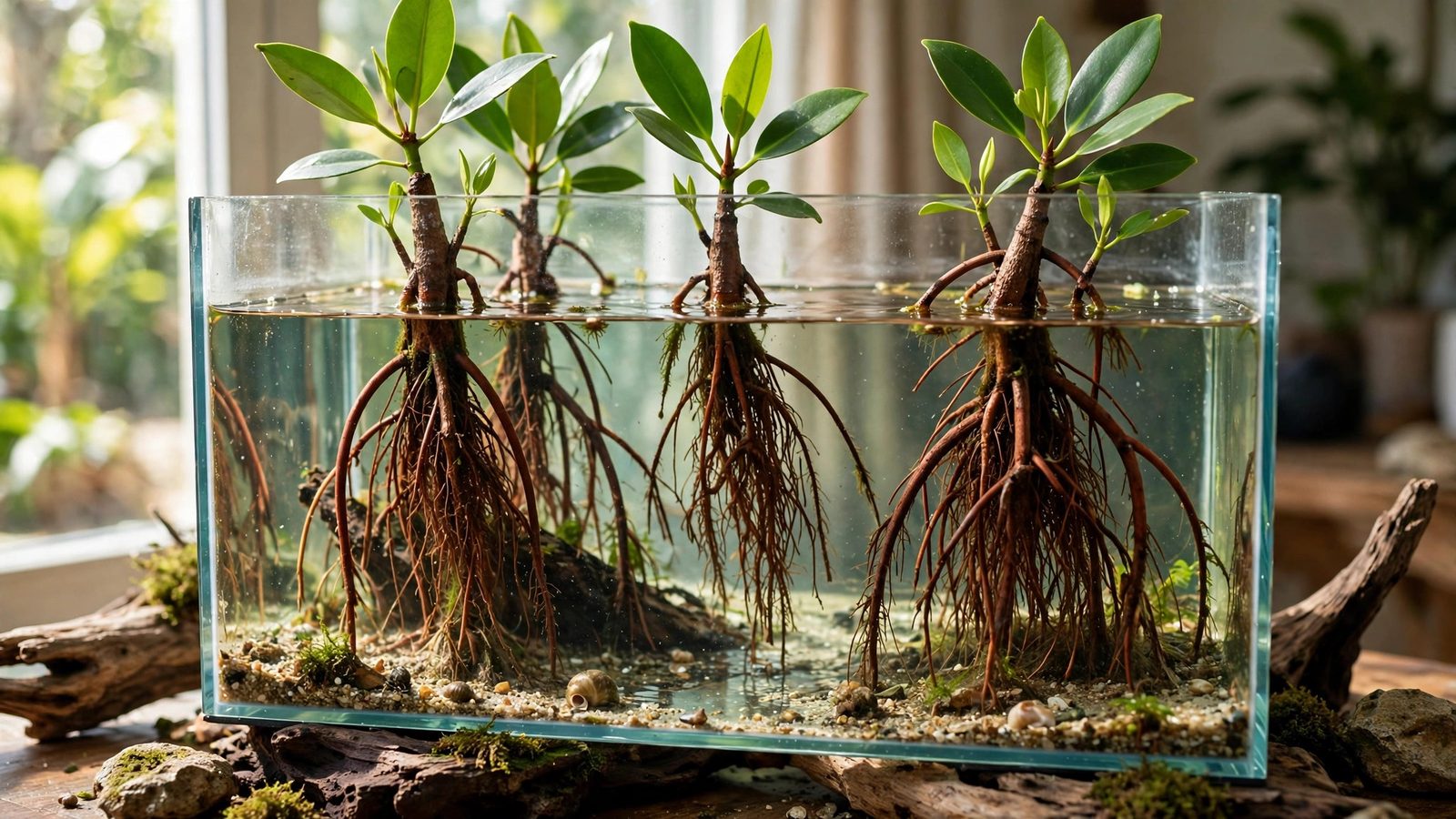
Every year, hobbyists buy red mangrove propagules — those long green pods that arrive looking like bean sprouts — only to bury them in aquarium substrate and watch them rot within a month. The mistake is treating a mangrove like an aquarium plant. It isn't one. A red mangrove (Rhizophora mangle) is a salt-tolerant shoreline tree that works in your aquarium when its crown stays in the air, its roots reach into brackish water, and you rinse the salt off its leaves before crystals scorch the tissue. This red mangrove aquarium guide walks you through float-planting the propagule, choosing a setup, and keeping the tree alive for years.
What a Red Mangrove Actually Is
A red mangrove is not a water plant that tolerates air — it is a shoreline tree that tolerates water. In the wild, Rhizophora mangle colonizes tropical coastlines by dropping pencil-sized propagules that float for months, strand on mudflats, and root where the tide meets land (the UF/IFAS red mangrove fact sheet has the full botanical background).
That biology dictates everything indoors. A fully submerged propagule is a dying propagule — it rots because the plant never evolved to photosynthesize underwater. Successful aquarists treat it as a terrestrial plant with its feet in the tank: leaves in room air, roots in tank water, salt kept out of the crown by you.
Why Grow One in an Aquarium?
Hobbyists grow red mangroves for two reasons: function and spectacle. Functionally, a mangrove is a slow but steady nutrient export engine — its roots pull nitrates and phosphates from the water the way macroalgae do, and you export the nutrients by trimming leaves instead of harvesting chaeto. A handful of growing mangroves in a sump can meaningfully lower nitrate in a moderately stocked reef or brackish system. And spectacle: once prop roots arc into the water and a leafy canopy develops above the rim, the tank reads as a slice of shoreline. Few plants in the hobby deliver that effect — most aquarium plants that grow without substrate are small and delicate, while a mangrove has architectural presence.
Where to Place It: Three Proven Setups
The limiting factor is almost never water chemistry — it is airspace. You need room above the waterline for a canopy that will eventually want a foot or more of height.
| Setup | Best for | How it works | Watch out for |
|---|---|---|---|
| Sump / refugium, open top | Reef and brackish systems; nutrient export | Propagules in a shallow sand bed or net pots under a grow light; canopy grows into open air | Light spill and heat; keep leaves clear of any lid |
| Display tank, rim basket | Aquascape accent in brackish tanks | Propagule in a net pot, foam disc, or hang-on-back basket at the surface; roots trail down | Salt creep on the rim; livestock nibbling roots |
| Brackish paludarium | Most natural look; showcase setups | Propagule rooted in a raised land section with roots descending into the basin | Air circulation — stagnant damp air lets salt accumulate on leaves |
The sump refugium is the default for good reason: it is out of the way, has vertical clearance under most stands, and a grow light can run opposite the display schedule. If your system is freshwater, a brackish refugium chamber won't fit — in that case a small dedicated brackish nano or paludarium is the better host, perhaps alongside hardy aquarium plants for hard water while the mangrove matures.
Red Mangrove Aquarium: Float-Planting Your First Propagule
A propagule arrives as a smooth green-brown pod, six to twelve inches long, with a pointed root end and a blunt tip where leaves emerge. Inspect before anything else: the body should be firm, the growing tip intact, and any emerging roots pale rather than black. Reject pods with mushy spots or a cracked tip.
The professional method is float-planting, and it works because it lets the plant tell you when it is ready:
- Float it. Place the propagule in brackish water (1.005–1.010 SG) under good light, root-end down, using a foam disc with a hole or a net pot to hold it upright. Keep the leaf tip well above water — emersed from day one.
- Wait 2–4 weeks. Roots emerge from the pointed end. Planting a rootless propagule in substrate is how rot starts, so don't rush this.
- Anchor at 2–3 inches of root. Settle the root tips into fine sand or fine gravel, barely covering them. The pod body stays above the substrate and the leaf tip above the waterline. Never bury more than the bottom inch or two.
- Light it. Give emerging leaves 10–12 hours of full-spectrum light. A grow light 6–8 inches above the canopy beats a typical tank light — mangroves want near-window brightness, not shaded understory light.
Some growers skip the float stage and plant fresh propagules directly in a refugium sand bed, and that can work with gentle flow. But float-planting is more forgiving, and for your first mangrove the extra patience pays off.
Water Parameters and Salinity
Red mangroves are chemically forgiving: they tolerate freshwater (1.000 SG) through full marine (1.025 SG). For aquarium use, a brackish 1.005–1.015 SG gives the best mix of growth rate and livestock compatibility. A few rules:
- Stability over precision. Raise or lower salinity gradually — no more than about 0.002–0.003 SG per day when acclimating nursery stock.
- pH and hardness are flexible. Anything from 7.5 to 8.5 works; mixed brackish water lands there naturally.
- Temperature matters most. Keep water and air at 70–82°F. Mangroves have zero frost tolerance — keep refugium sumps away from cold exterior walls in winter.
- Freshwater works, slower. Growth in pure freshwater is lankier; a small dose of marine salt mix in a freshwater refugium often visibly greens up sluggish mangroves.
The Salt on the Leaves: Misting Is Mandatory
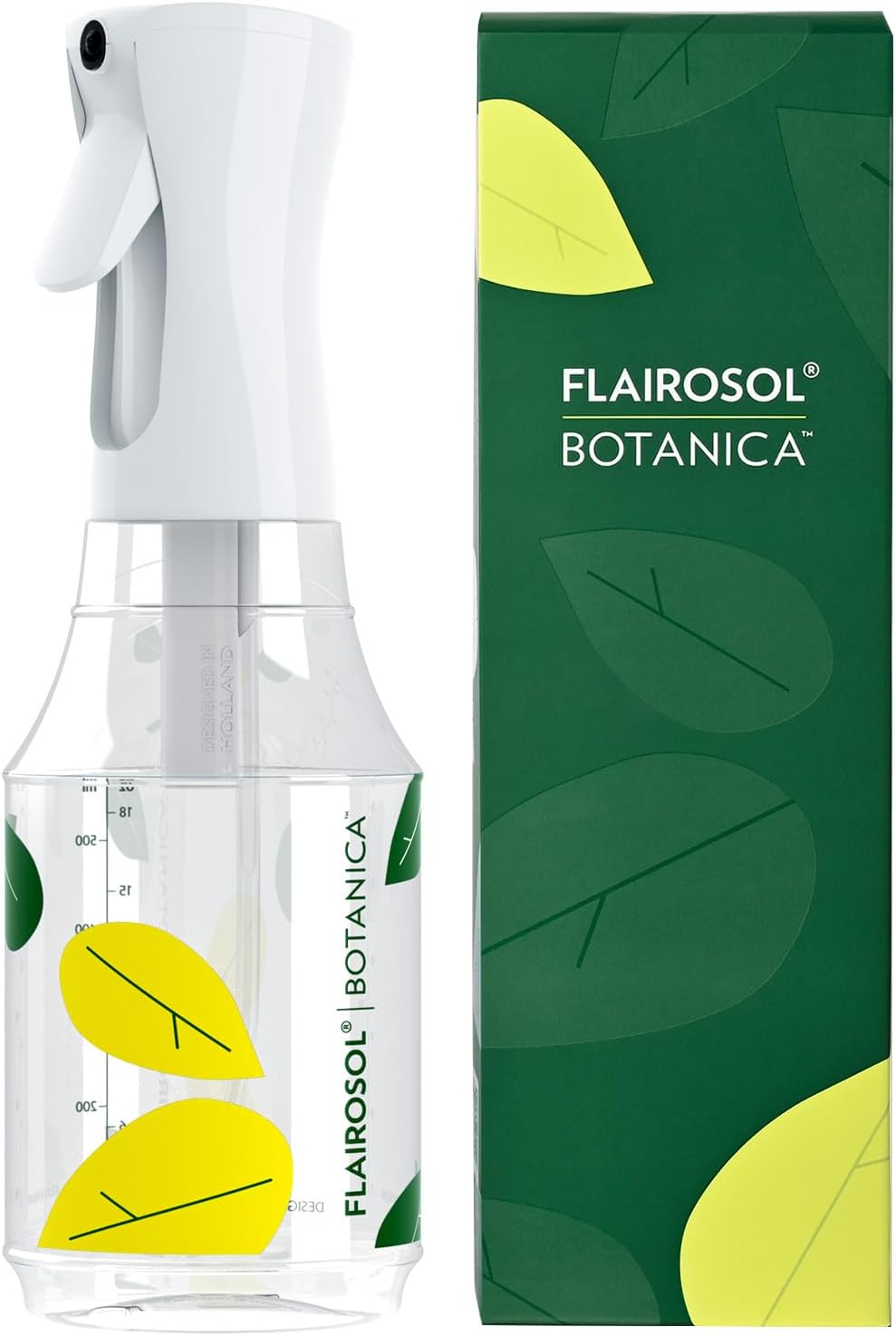
Here is the care step that separates living mangroves from dying ones. The tree excretes salt through glands in its leaves. Left alone, salt crystals form on the leaf surface, draw moisture out of the tissue, and scorch it. In the wild, rain washes the leaves. Indoors, that job is yours: mist or rinse leaves with fresh (not salt) water every day. A spray bottle works; a weekly wipe of both leaf surfaces with a damp cloth catches the deposits misting misses. Glossy clean leaves mean you're on track; whitish crusts or edge browning mean you've fallen behind.
Misting doubles as a health check. Yellowing older leaves with new growth pushing is normal; yellowing new growth or a stalled canopy suggests the roots need more nutrients — a mangrove starved of nitrate barely grows. What feeds your shrimp tank plants also feeds your mangrove's roots.
 ★4.4
FLAIROSOL Botanica Plant Mister 24oz
Check Price on Amazon ★4.4Light, Growth Rate, and Pruning
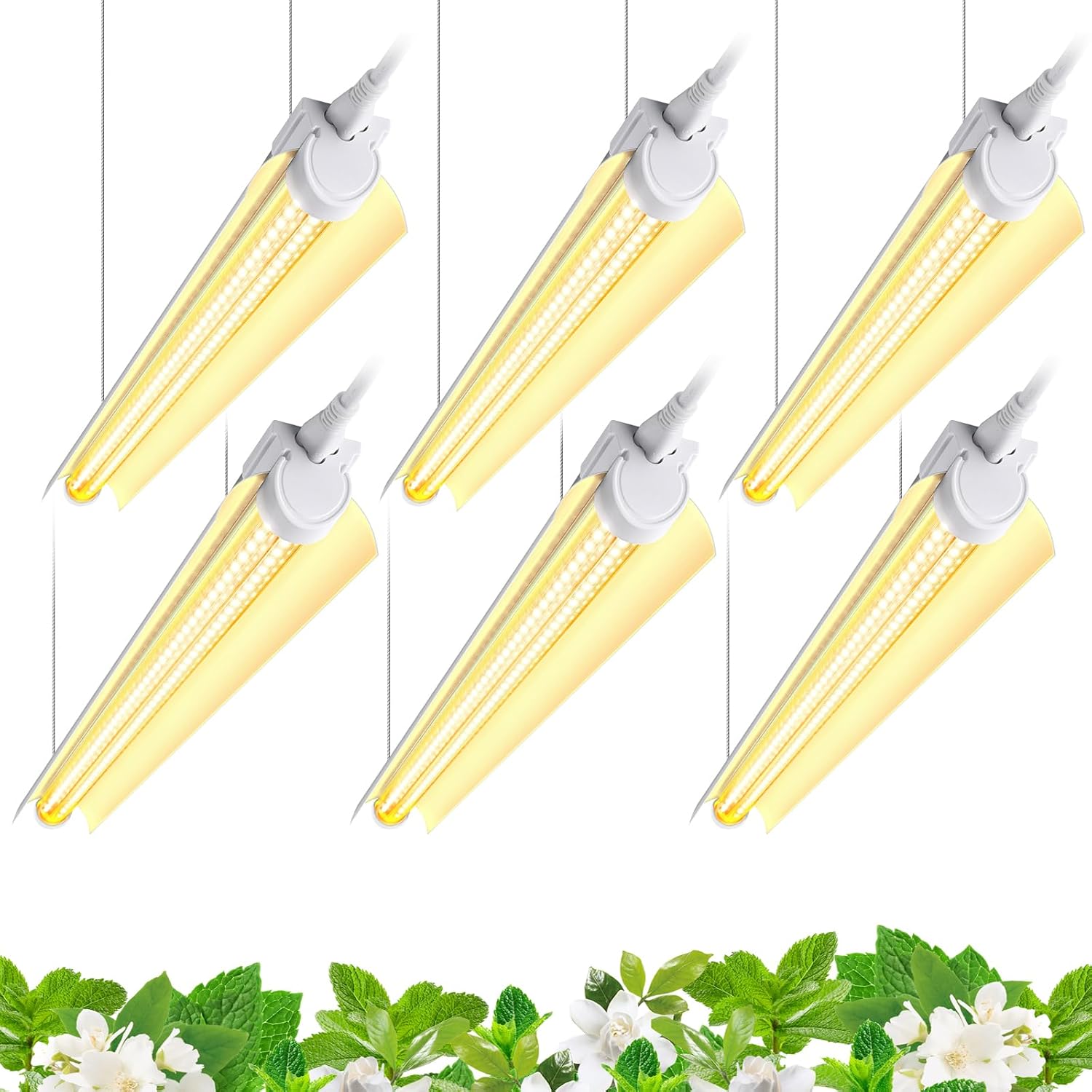
Expect slow. Year one is roots and a handful of leaves; first true leaves appear 2–4 months after rooting, and the signature arching prop roots often take 6–12 months. Light is the throttle: mangroves evolved under tropical sun, so give a full-spectrum LED grow light 10–12 hours daily, close enough for compact growth. Under weak light the plant etiolates — long internodes, pale leaves, prop roots that never develop. If the canopy looks stretched and washed-out, move the light closer before blaming water chemistry.
Because it is a tree, pruning is part of the plan from year two or three. Pinch the growing tip to encourage branching, remove naturally yellowed lower leaves, and never take more than a third of the foliage at once. Keep tools clean between cuts — ragged wounds invite rot.
 ★4.6
Barrina T8 LED Grow Light
Check Price on Amazon ★4.6Nutrient Export: What It Really Does
Be honest about expectations: one small mangrove does not replace a skimmer, a water change, or macroalgae. What mangroves offer is continuous, passive uptake that scales with biomass — five established mangroves in a 20-gallon refugium pull a meaningful share of nitrate and phosphate from a moderately stocked system, while one propagule in a display basket is mostly decorative.
The filtering works through root uptake, and pruning is the export: when you trim leaves or root mass, you physically remove the nutrients the tree absorbed, so don't let trimmings rot in the refugium. Pair mangroves with macroalgae rather than pitting them against each other — algae grows fast and exports quickly, mangroves grow slow and export steadily. For heavily stocked setups like goldfish tanks or messy brackish species tanks, a mangrove refugium is an export pathway that doubles as the system's most unusual feature.
Common Problems and Fixes
- Propagule rots at the waterline. The leaf tip is sitting in water. Raise it so the tip clears the surface by at least an inch and splash can't soak it.
- Salt-crusted, browning leaf edges. Misting has lapsed. Resume daily fresh-water rinsing and wipe crystals off by hand; browned edges won't heal, but new growth comes in clean.
- No roots after six weeks. Usually cold water or dim light. Verify above 70°F and brighter light before writing the pod off.
- Sudden leaf drop. Typically a sharp salinity or temperature swing. Restabilize conditions and wait — mangroves regrow dropped leaves.
- Roots invading pumps. A year-two problem: grow propagules in net pots or dedicated chambers and trim exploratory roots before they reach intakes.
- Algae on submerged roots. If coating is heavy, increase flow around the roots and aim the grow light at the canopy, not the sump water.
Compatibility With Livestock
Mangroves are broadly safe with aquarium livestock, but some animals interact with roots — herbivorous snails and crabs rasp young root tips, and fiddler crabs in brackish systems treat new roots as landscaping material. In turtle tanks and with large cichlids, prop roots get battered; the plant survives but never develops clean architecture. Dedicated refugium chambers sidestep all of this.
One genuine caution: never release aquarium mangroves — or their propagules — into local waterways, even where the species is native. Aquarium stock can carry pests or pathogens wild populations don't need, and in non-native regions a released mangrove is an invasive-species risk. Dispose of unwanted plants responsibly.
Frequently Asked Questions
Can red mangrove propagules grow fully submerged?
No. The propagule must be grown emersed, with the leaf tip and all foliage above the waterline. Fully submerged propagules suffocate and rot within weeks because mangroves evolved to photosynthesize in air, not water. Keep only the roots and the bottom inch or two of the pod in water — a shoreline tree with wet feet, never an underwater plant.
How long until a propagule looks like a tree?
Roots develop in 2–6 weeks, first true leaves appear in 2–4 months, and recognizable prop roots typically take 6–12 months. A tree-like canopy is a 1–3 year project under good indoor light — mangroves keep tree time, and no seller claim can outpace that biology.
Do I need brackish water, or will freshwater work?
Both work. Red mangroves tolerate freshwater (1.000 SG) through full marine (1.025 SG). Brackish water at 1.005–1.015 SG is the sweet spot for growth and pairs naturally with brackish livestock. In pure freshwater expect slower, lankier growth — adding a small dose of marine salt mix to a freshwater refugium often visibly improves vigor.
Why must I mist the leaves every day?
Mangroves excrete excess salt through glands in their leaves, and without rain to wash it off, crystals accumulate, draw moisture from the tissue, and scorch the margins. A daily mist or rinse with fresh water replicates rain and is the single most important daily care task. Skipping it is the second most common cause of failure after submerging the propagule.
Can I keep a mangrove in my display tank?
Yes, with a rim-mounted net pot, foam disc, or hang-on-back basket holding the propagule at the surface while roots trail into the water. It suits open-top brackish tanks with vertical clearance for the canopy. Watch for salt creep on the rim, and expect slower progress than in a sump refugium with a dedicated grow light over the canopy.
Where should I buy propagules?
Buy from reputable aquatic-plant or mangrove nurseries rather than collecting from the wild. Red mangroves are protected in several coastal regions, so check local regulations before gathering propagules. Nursery stock also tends to arrive healthier, with intact growing tips.
A red mangrove will never be your fastest-growing resident or your heaviest-hitting filter, but it may become the most interesting one — a genuine tree rising out of your sump or brackish display, quietly pulling nutrients from the water year after year. Start with nursery propagules, float before you plant, keep the leaves rinsed and the crown in the air. If you're building out the brackish side of your setup, the batch's sibling guides cover aquarium plants that grow in gravel for low-tech refugium planting and aquarium plants for soft water for matching species to your water chemistry.