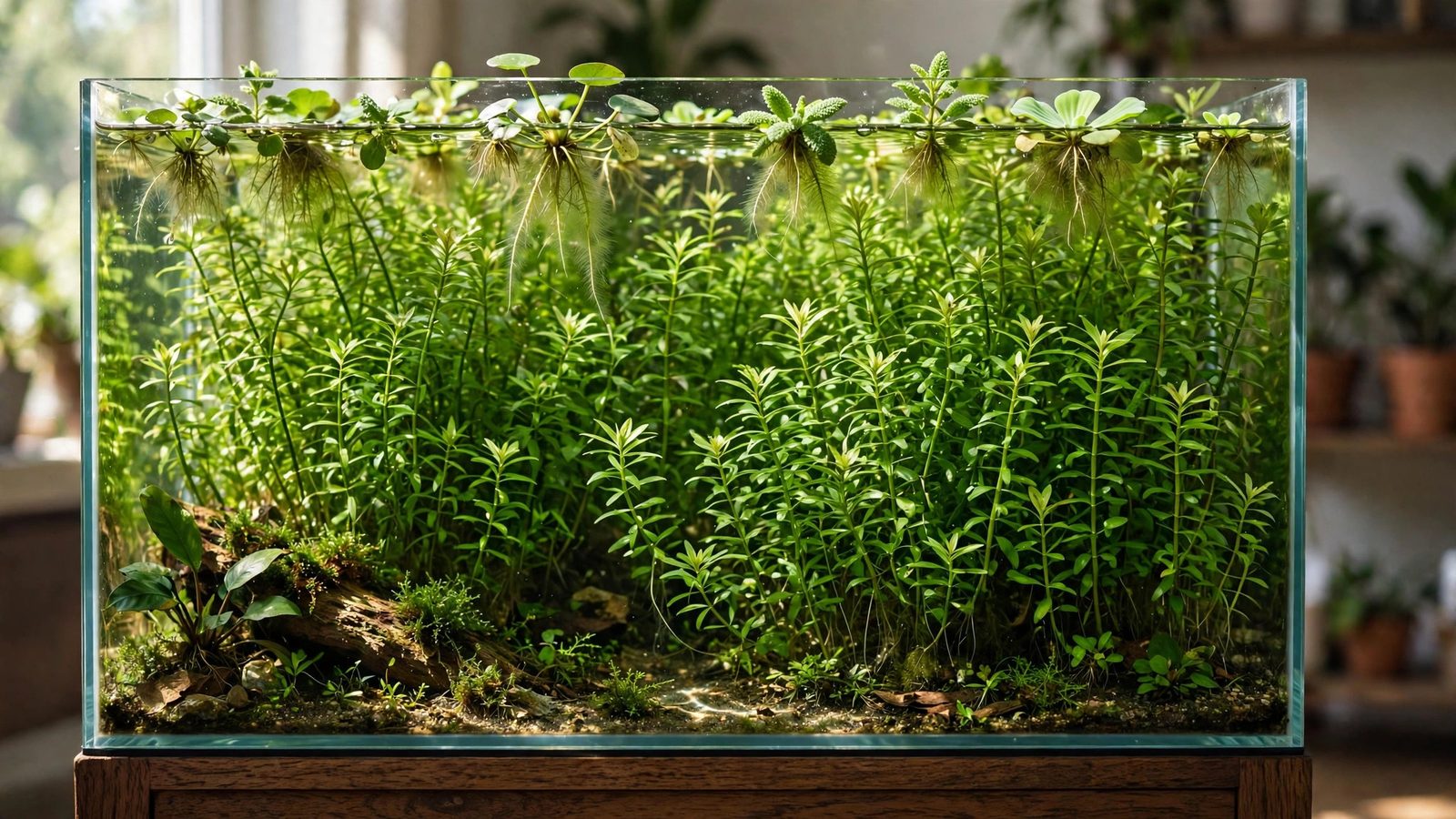
You might be growing a plant in your tank right now that would be illegal to own just one state over. Banned aquarium plants are more common than most hobbyists realize — several species sold freely online or even at big-box pet stores are federally restricted or prohibited in specific states. This guide covers which aquarium plants face bans in the United States, why the rules exist, how to check your state's list, and what to do if you already own a restricted species. This is general information only, not legal advice: always confirm the current rules with your state's environmental or agriculture agency before buying, shipping, or disposing of aquatic plants.
Why Some Aquarium Plants Are Regulated
The Federal Noxious Weed List
The United States regulates its most dangerous invasive plants through the Federal Noxious Weed List, administered by the USDA's Animal and Plant Health Inspection Service (APHIS). Plants on this list cannot legally move across state lines or be imported without a permit. The list targets species whose spread would cause serious economic or environmental harm — and aquatic weeds are a major focus, clogging irrigation channels, smothering native vegetation, and costing millions in control efforts. An APHIS fact sheet has long noted that some federal noxious weeds first entered the country through aquarium and water-garden sales.
Among the aquatic plants on the federal list that matter to aquarium keepers are hydrilla (Hydrilla verticillata), giant salvinia (Salvinia molesta and close relatives), ambulia (Limnophila sessiliflora), Miramar weed (Hygrophila polysperma), African elodea (Lagarosiphon major), anchored water hyacinth (Eichhornia azurea), water spinach (Ipomoea aquatica), and the Mediterranean strain of the marine algae Caulerpa taxifolia. California adds its own layer: the state's Fish and Game Code prohibits nine Caulerpa species outright, including taxifolia, a restriction that caught the saltwater hobby by surprise when it was enacted.
The key point is simple: a federal ban is absolute within the United States — no state exception exists for owning or transporting a federally listed noxious weed without a permit. But the federal list is only half the story.
Why States Add Their Own Bans
Most plant bans that affect aquarium keepers come from state law, not federal law. A plant that grows fine in Florida can be a genuine ecological disaster there and merely a houseplant in Minnesota, so states maintain individual noxious weed and invasive species lists that reflect their own climates and waterways. Texas and Florida prohibit water hyacinth, water lettuce, and giant salvinia because these plants already choke their lakes. Minnesota bans hydrilla and water soldier because the cold-water lakes of the north have their own vulnerabilities.
This patchwork system is what trips up hobbyists most: a species can be perfectly legal where you live and illegal one state away. South Carolina, for example, prohibits the possession, import, and sale of Brazilian elodea, Eurasian watermilfoil, water chestnut, and many others — a list that differs substantially from Oregon's or Wisconsin's. Lists also change over time: Michigan began prohibiting the retail sale of water hyacinth and water lettuce in June 2026, and states periodically add species after new invasions. Treat any list you read — including this one — as a starting point, not a final answer.
Banned Aquarium Plants on the Federal Noxious Weed List
These species are restricted nationwide. If you see one offered for sale, treat it as a serious red flag.
| Plant | Scientific name | Why it is listed |
|---|---|---|
| Hydrilla | Hydrilla verticillata | Aggressive submerged grower; forms dense mats that displace native vegetation and block waterways. Also on many state invasive lists. |
| Giant salvinia | Salvinia molesta, S. biloba, S. herzogii, S. auriculata | Floating fern that doubles its coverage in days, smothering lakes and destroying native habitat. |
| Ambulia | Limnophila sessiliflora | Popular fine-leaved stem plant that escaped cultivation and outcompetes native submerged plants. |
| Miramar weed | Hygrophila polysperma | Hardy stem plant (sold as Indian hygrophila or dwarf hygrophila) that spreads aggressively in warm waterways. |
| African elodea | Lagarosiphon major | Oxygen weed that forms thick underwater beds, displacing natives and fouling equipment. |
| Anchored water hyacinth | Eichhornia azurea | Rooted form distinct from the common floating water hyacinth; regulated federally. |
| Caulerpa (Mediterranean strain) | Caulerpa taxifolia | Marine algae that devastated Mediterranean seafloors; strictly restricted, with extra species bans in California. |
If any of these names sound familiar from your tank, don't panic — the species still commonly sold in the trade are mostly not on this list, but close look-alikes and mislabeled shipments are a real problem.
Popular Plants Banned in Many States (But Not Federally)
The state-level bans cover a longer list of hobby favorites. A plant need not be federally listed to be illegal where you live.
Water Hyacinth (Common Floating Type)
The common water hyacinth (Eichhornia crassipes) is perhaps the most widely banned aquarium and pond plant in the country — and notably, it is not the same species as the federally listed Eichhornia azurea. It is prohibited in Texas, Florida, South Carolina, Alabama, Arizona, Louisiana, Mississippi, Nebraska, Wisconsin, and Puerto Rico, among others — in warm climates it can cover entire lakes, doubling its mass in under two weeks. For legal floating plants with the same shade-and-cover effect, see the best floating aquarium plants for beginners.
Brazilian Elodea
Egeria densa is a staple of beginner tanks — cheap, hardy, and sold as "anacharis" in many shops. It is also illegal to possess or sell in more than a dozen states, including California, Connecticut, Massachusetts, Michigan, Minnesota, New York, Oregon, South Carolina, Vermont, Washington, and Wisconsin. If you want the same lush background look legally, see our roundup of fast-growing aquarium plants for new tanks.
Fanwort
Cabomba caroliniana is a beautiful fine-leaved stem plant that appears in countless aquascapes. It is regulated or prohibited in states including California, Connecticut, Idaho, Massachusetts, Maine, Michigan, Minnesota, New Hampshire, New York, Vermont, Washington, and Wisconsin. Where it is legal it remains a favorite, but hobbyists in restricted states should not assume they can import it — retailers are often required to verify the buyer's state before shipping.
Parrot's Feather
Myriophyllum aquaticum, with its feathery emergent foliage, is a pond and paludarium favorite. It is prohibited in several states, including Michigan, where it was discovered growing in residential ponds and added to the state's watch list because of its invasion potential.
Water Lettuce
Pistia stratiotes floats like a miniature cabbage and is banned alongside water hyacinth in Texas, Florida, South Carolina, Michigan, and Wisconsin. It is also listed as invasive in additional states. Like water hyacinth, it survives winters only in warm regions, but states with warmer waterways treat it as a serious threat.
Water Soldier
Stratiotes aloides, sold in the trade as water soldier or water aloe, is illegal to possess or sell in states including Minnesota because of the damage it can do to northern lakes. Hobbyists sometimes confuse it with legal rosette plants, so check the scientific name carefully before ordering.
How to Check If a Plant Is Legal in Your State
Because bans differ from state to state and change over time, checking is a habit worth building. Follow these steps before buying or accepting any unfamiliar aquatic plant:
- Find the scientific name. Common names are unreliable — "anacharis" alone can mean three different species. Confirm the Latin name on the seller's listing or on a university extension page.
- Check the Federal Noxious Weed List. The USDA APHIS page maintains the current federal list; anything on it is restricted nationwide. An official APHIS fact sheet describes the aquatic weeds on the Federal Noxious Weed List and how several arrived through the aquarium trade.
- Check your state's noxious weed or invasive species list. Search for your state's department of natural resources or agriculture plus "aquatic plant ban" or "noxious weeds." For example, South Carolina's Department of Environmental Services publishes an official list of illegal aquatic plants that shows exactly how a state list looks.
- Ask the retailer. Reputable aquatic plant sellers routinely verify shipping restrictions by state. If a seller seems unaware that a species they ship is restricted, shop elsewhere.
- Recheck before traveling or shipping. A plant that is legal to own where you live may be illegal to bring into another state — interstate movement rules differ from simple possession rules in some jurisdictions.
What to Do If You Already Own a Restricted Species
Discovering that a plant in your tank is banned in your state is unsettling, but it happens often — mislabeled shipments and old store stock are common sources. Here's how to handle it responsibly:
- Do not release it, compost it, or dump it in any waterway. This is the single most important rule. One handful of a prohibited plant tossed into a pond or flushed down a drain can start an infestation.
- Remove and kill the plant. The standard recommended disposal method is to bag the plants, dry them completely, and put them in the regular trash. Some agencies recommend freezing them first. Never compost them, since compost piles rarely get hot enough to destroy seeds and fragments.
- Do not sell or give away trimmings. Passing a restricted plant to another hobbyist just moves the problem — and in most states with bans, distributing it is itself a violation.
- Contact your retailer or state agency. If a store sold you a restricted species, tell them — reputable sellers will want to know about mislabeled stock. Your state's department of natural resources or agriculture can also advise on proper disposal; they would rather hear from you than discover an infestation later.
- Quarantine new arrivals. Plants from swaps or online sellers can carry hitchhiking pests and algae along with identification surprises. Starting with tissue culture plants versus potted plants helps you understand which formats arrive pest-free — though no format changes a plant's legal status, so identification still comes first.
Safe Legal Alternatives for Popular Banned Looks
You don't have to give up the look you want. For almost every banned species, a legal plant delivers the same visual role in your aquascape:
| If you wanted... | Try instead (where legal) | Role in the tank |
|---|---|---|
| Brazilian elodea (banned in many states) | Elodea canadensis or hornwort | Bushy background oxygenator |
| Ambulia / Limnophila (federal) | Limnophila indica or Cabomba aquatica | Feathery midground stem plant |
| Water hyacinth / water lettuce (state bans) | Red root floater or frogbit | Floating shade and nitrate absorption |
| Fanwort (state bans) | Myriophyllum mattogrossense or Hottonia palustris | Fine-leaved feathery stem |
| Hydrilla (federal) | Vallisneria or Egeria najas where legal | Fast-spreading background runner |
Always verify the suggested alternative is legal in your state before ordering — some are restricted in specific jurisdictions too. Broader guidance on legal, beginner-friendly choices is in our guides to the easiest aquarium plants without CO2, low-light aquarium plants for beginners, and the best stem plants for beginners, plus our companion piece on invasive aquarium plants you must never release.
A Hobbyist's Responsibility
The legal framework exists for one reason: aquarium plants escape. Storms flood ponds, trimmings wash into drains, and well-meaning hobbyists "return" plants to nature. Never release aquarium plants or animals into the wild. Dry and trash unwanted plants, clean your gear before moving between waterways, and check your state's current regulations whenever you're unsure.
Frequently Asked Questions
Is it illegal to own banned aquarium plants I bought before the ban?
In most states, existing bans apply regardless of when you bought the plant — "grandfathering" is rare in noxious weed law. If a species becomes restricted in your state, you generally must not sell, give away, or transport it, and you should dispose of it through your state's recommended method (usually bag, dry completely, and trash it). Contact your state's department of natural resources or agriculture for specific guidance, since rules and amnesty policies differ by state.
Can I buy banned plants online from another state?
Usually not. Reputable sellers check shipping restrictions before dispatching orders, and many states prohibit both the import and the possession of listed species. Shipping a banned plant across state lines can violate both federal law (if it is on the Federal Noxious Weed List) and the destination state's law. If a seller offers to ship a species you know is restricted where you live, do not order it and consider shopping with a more careful vendor.
What is the difference between the Federal Noxious Weed List and state bans?
The Federal Noxious Weed List, maintained by USDA APHIS, restricts a plant nationwide — no state exception exists. State lists are independent: a state can ban species the federal list doesn't cover, based on its own climate and ecology. That is why common water hyacinth is illegal in Texas and Florida but not federally listed. Always check both levels before buying an unfamiliar species.
How do I dispose of a banned aquarium plant safely?
The widely recommended method is to remove the plants, seal them in a bag, let them dry completely, and place them in the regular household trash. Freezing first is sometimes advised. Never compost them, flush them, or dump them in ponds, storm drains, or natural waterways — even a fragment of some species can start a new infestation. If you are unsure, call your state's natural resources agency for disposal instructions.
Can I keep a banned plant in a sealed indoor tank if I never release it?
In most states, no. Bans typically cover possession, not just release — owning the plant at all is the violation, regardless of how carefully you keep it. The reasoning is that accidents, floods, equipment failures, and informal trades move plants beyond even careful owners' control. Treat possession bans as absolute and find a legal alternative.
Why are some popular pet-store plants banned?
Because popularity is exactly how invasions start. Plants that grow fast, tolerate neglect, and reproduce from fragments — precisely the traits hobbyists love — are the same traits that let them overrun lakes. Several banned species, including ambulia and Miramar weed, were sold as ordinary beginner plants before their federal restrictions were widely understood in the trade. Regulations usually follow after a species has already caused documented ecological damage.
Bottom Line: Stay Informed, Stay Legal, Keep Plants Contained
Banned aquarium plants are a fact of life in this hobby, not a reason to fear it. Know the Federal Noxious Weed List, learn your state's list, and make checking a plant's status part of your buying routine. Choose legal alternatives, dispose of restricted plants properly, and never release anything into the wild.