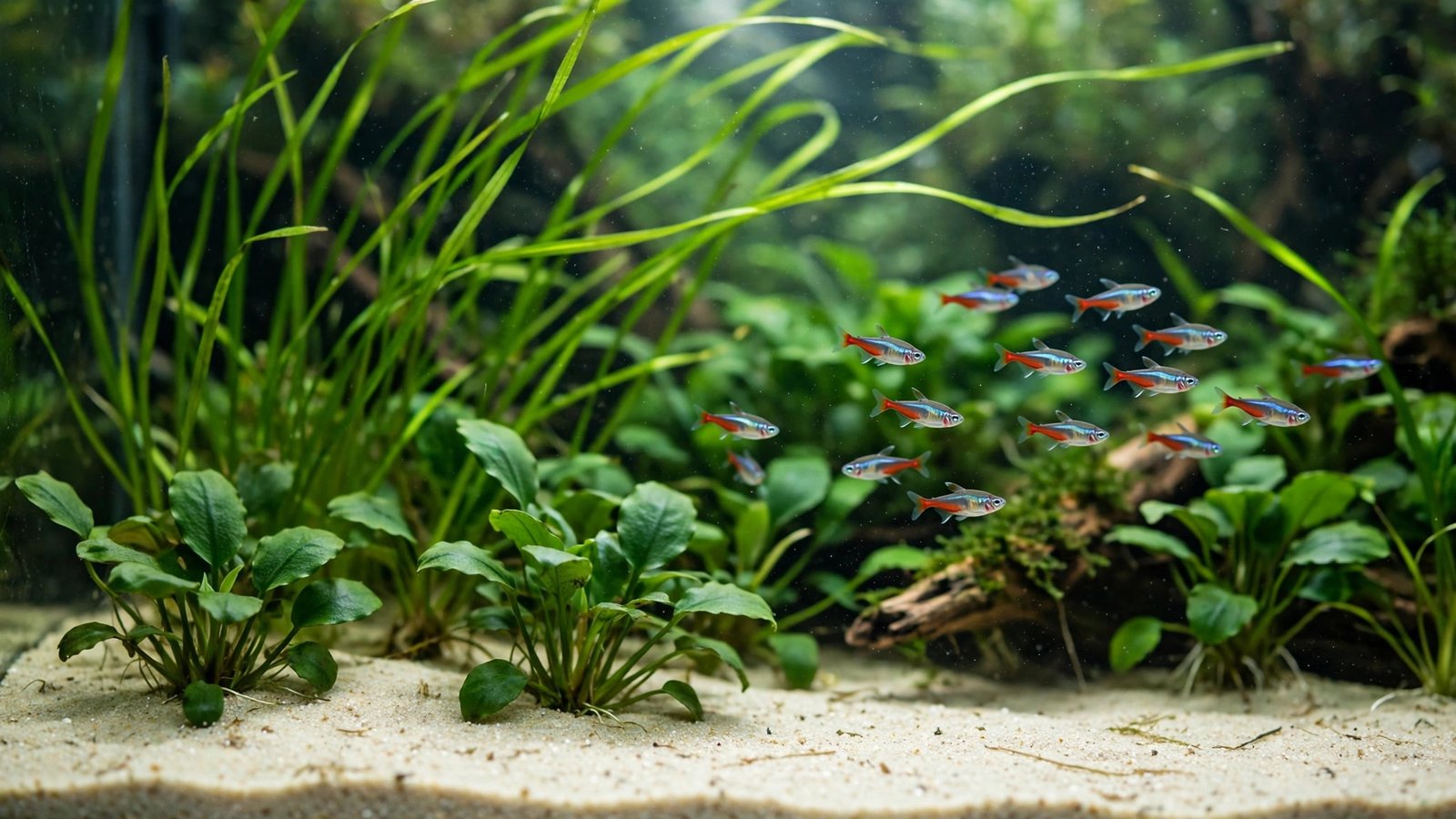
A bag of play sand costs less than a cup of specialty aquarium substrate, and it looks like a sunlit riverbed. So the hardware-store aisle question writes itself: can this work in a planted tank? Yes — but play sand is an inert building material, not plant food. Treat it like one and your plants thrive; treat it like aquasoil and they starve. Here's what it does and doesn't do, and the two things you must get right.
The Short Answer: Yes — With Two Conditions
Play sand is quartz-based silica, chemically neutral and fish-safe once rinsed. Quikrete's own response to aquarists confirms commercial-grade play sand is screened, washed, and kiln-dried with no added ingredients. But the yes comes with two conditions: you become the fertilizer system (root tabs below, liquid dosing above), and you must fight compaction — the fine, mixed grain settles into a dense mat that blocks oxygen from roots and lets trapped debris rot into gas pockets. Manage both and play sand works beautifully; skip them and plants yellow and melt within a month.
Pros: Why Play Sand Tempts Every Budget Aquarist
The appeal is real. A single hardware-store bag covers a 20-gallon tank for a fraction of branded substrate, and the pale texture looks like a natural riverbed — light sand makes green plants and colorful fish pop. Debris sits on the surface instead of sinking in, so siphoning is quick. Corydoras can sift it without the barbel damage coarse gravel causes, and their digging doubles as aeration against compaction.
Cons: The Two Real Problems You Must Manage
Problem one: zero nutrition. Unlike aquasoil, which feeds plants for 12–18 months, play sand is a blank slate. Heavy root feeders like Amazon swords, Cryptocoryne, and Vallisneria stunt without supplemental feeding — their roots spread through sand easily but find nothing to eat. This is the biggest reason play-sand planted tanks fail.
Problem two: compaction. Play sand's grain size is inconsistent, and the smallest particles fill the gaps between larger ones until the bed seals. Roots suffocate, and undisturbed organic matter rots anaerobically, producing sulfur-smelling gas pockets. A substrate deeper than 3 inches, or one never disturbed, is where trouble starts.
How to Set Up Play Sand for Healthy Root Growth
Do the prep once and the tank mostly runs itself. Rinse the sand in small bucket batches — a third of a bucket at a time — swirling and draining until the water runs nearly clear. Expect 6–8 rinse cycles per batch, roughly an hour for a 20-gallon tank's worth. Unrinsed sand clouds water for days and clogs filter impellers.
Spread it 2–3 inches deep, sloping toward the back. Before flooding, press Seachem Flourish Tabs ★4.6 into the sand on a grid — one tab every 4–6 inches in planted zones, about an inch deep near each root feeder's crown. Replace tabs every 3–4 months, and dose a comprehensive liquid fertilizer weekly for column feeders like Java fern and Anubias, which drink from the water, not the substrate.
For compaction, use two tools. Weekly: poke a bamboo skewer into the sand every few inches during your water change — ten minutes total. Always: a colony of Malaysian trumpet snails burrows through the bed nightly, aerating it for free.
Affiliate disclosure: AquaVerdia participates in the Amazon Associates program. Product links are affiliate links; purchases may earn us a commission at no extra cost to you. Ratings shown were verified at writing.
Play Sand vs Pool Filter Sand vs Aquarium Sand
Play sand isn't your only cheap option — here's how the common choices compare:
| Substrate | Grain | Dust / rinsing | Compaction | Best for |
|---|---|---|---|---|
| Play sand | Mixed, very fine | Heavy rinsing | High | Budget builds, bottom-dwellers |
| Pool filter sand | Uniform, medium | Light rinsing | Moderate | Planted tanks on a budget |
| Branded aquarium sand | Uniform, graded | Minimal | Low–moderate | Hassle-free setup |
| Aquasoil | Granules, porous | Do not rinse | Very low | Demanding plants, CO₂ tanks |
Pool filter sand is the aquarist favorite for a reason: uniform grain resists compaction far better and arrives nearly dust-free. Prefer to skip the rinsing marathon entirely? A pre-washed aquarium sand like Aqua Natural Sugar White Sand ★4.7 behaves nearly identically in the tank.
The Best Plants for Play Sand Substrate
Match your plant list to what sand offers. Epiphytes — Java fern, Anubias, Bucephalandra, mosses — never touch the substrate; tie them to wood or rock and they'll thrive regardless. Vallisneria and Cryptocoryne are forgiving root feeders that do well once root tabs are in place.
Amazon swords grow in sand only with aggressive root-tab feeding. And skip delicate carpeting plants like dwarf hairgrass: its shallow runners need loose, oxygenated substrate, and it commonly fades in compacted fine sand. For a carpet, try Marsilea hirsuta or pearl weed with a shallow foreground layer.
Frequently Asked Questions
Will play sand make my aquarium water cloudy?
Only if you skip rinsing. Rinse in small batches until runoff is clear, fill slowly over a plate or bag, and let the filter run — residual haze clears within 24–48 hours.
Is play sand safe for corydoras and loaches?
Yes — one of the safest substrates for them. Smooth sand lets corydoras sift without the barbel erosion coarse gravel can cause. Use undyed sand with no additives.
Can I mix play sand with aquasoil?
Layer rather than mix: aquasoil below, play sand as the cap. Mixing defeats the cap's purpose. Keep total depth under 4 inches to avoid compaction.
How long should I wait to plant after adding play sand?
Plant as soon as the water clears and parameters are stable — inert sand has no nutrient leaching or ammonia cycle. Still cycle the tank fully before adding livestock.