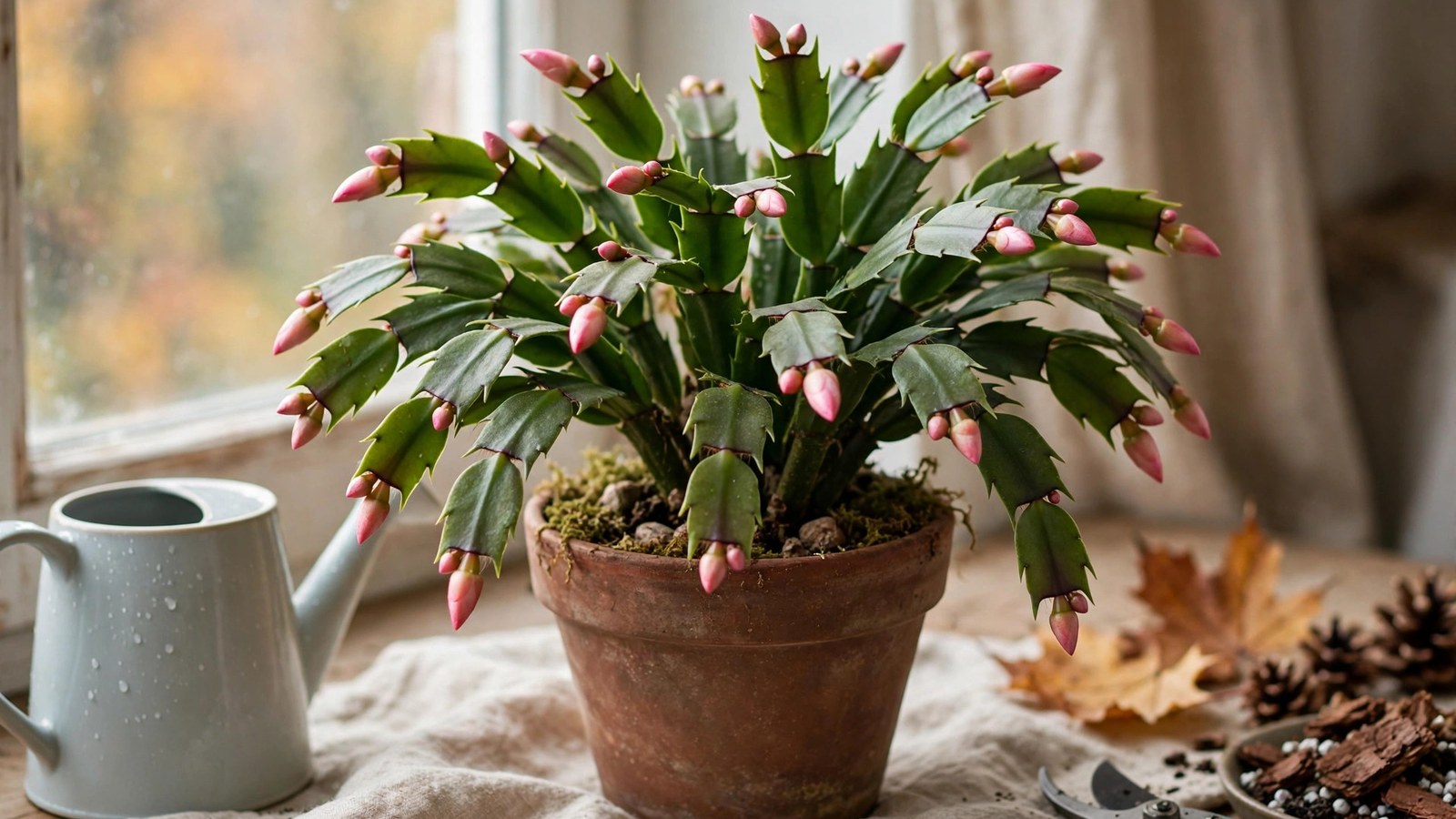
If your Christmas cactus is sitting there in October looking green, healthy, and completely flowerless, relax — that is exactly where it should be right now. But what you do over the next four to six weeks will decide whether it bursts into bloom by Christmas or sits bud-free through December. Christmas cactus care in October is all about triggering: giving this tropical plant the long, cool nights it needs to switch from growing leaves to setting flower buds. Get the timing right now, and December takes care of itself.
Why October Is the Make-or-Break Month
To understand why October matters, it helps to know what a Christmas cactus actually is. Despite the name, Schlumbergera is no desert cactus. It is a tropical epiphyte from the mountain rainforests of southeastern Brazil, where it grows wedged into tree forks, rooting into pockets of decaying leaf litter. Like African water fern (Bolbitis), a popular aquarium epiphyte, it evolved to grow attached to surfaces rather than in deep soil.
In its native forest, the plant reads two seasonal signals as autumn approaches: nights grow longer and temperatures fall. A Christmas cactus is a short-day plant — it only forms flower buds when nights reach 12–14 hours of uninterrupted darkness — and it needs those nights to be cool. October is when both conditions become achievable indoors, which is why October is the trigger month. Buds take six to eight weeks to develop, so an October induction puts full bloom in late November through December. True Christmas cacti set buds from late October into November; the closely related Thanksgiving cactus starts a few weeks earlier, which is why many "Christmas cacti" bloom in November.
The Two Bloom Triggers
Flowering is governed by two environmental signals working together. Provide both for three to six weeks and buds will form. Miss either one, and the plant keeps growing leaf segments instead of flowers.
Trigger 1: 12–14 Hours of Uninterrupted Darkness
Starting in early October, your plant needs 12–14 hours of complete darkness every night. The word "uninterrupted" does the heavy lifting: even brief light exposure during the dark period — a lamp on for ten minutes, a streetlight through the window, a television flickering across the room — can reset the plant's internal clock and stall bud formation. This is why so many living-room Christmas cacti never bloom; the room goes dark at 9 p.m., but evening lamps and screens mean the plant never gets the long night it is waiting for. University of Georgia extension specialists put it plainly: control the light and the Christmas cactus will bloom.
Trigger 2: Cool Night Temperatures
The second trigger is temperature. Buds form best when nights are cool — 55–65°F (13–18°C) — with days in the 60s to low 70s. Warm nights above 70°F (21°C) suppress bud formation even with perfect darkness, which is why a plant parked next to a heating vent or in a constantly warm apartment can fail to bloom for years. Of the two triggers, darkness is the dominant signal, but cool nights make the process faster and far more reliable.
Your October Bloom-Induction Schedule
Here is a practical week-by-week plan. It assumes no buds are visible yet; if tiny pink nubs are already forming at the segment tips, skip to the bud-care section below.
| Week | Darkness | Temperature | Watering & Feeding |
|---|---|---|---|
| Oct 1–7 | Begin 13–14 hours of uninterrupted darkness nightly | Move to a cooler room if nights exceed 68°F; 55–65°F ideal | Water sparingly — top inch dry between waterings; stop all fertilizer |
| Oct 8–14 | Maintain strictly; check for stray light sources | Keep night temperatures steady; avoid moving the plant | Continue reduced watering; no feeding |
| Oct 15–21 | Continue; earliest buds may begin swelling at segment tips | Maintain cool nights; watch for heating systems kicking on | If buds appear, increase watering so soil stays evenly moist |
| Oct 22–31 | Keep the routine until buds are set; once buds reach ¼ inch, darkness matters less | Hold steady; protect from frost if the plant is outdoors | Evenly moist soil from bud set onward to prevent bud drop |
The schedule is simply the discipline of delivering both triggers without interruption. Mark the dark hours near the plant — for example, darkness from 6 p.m. to 7 a.m. in a spare bedroom. Consistency is everything: 14-hour nights six days a week plus one lit evening is not the same as seven proper nights.
Managing the Darkness: Practical Setups
- The spare room: Move the plant to a room you don't use at night — guest bedroom, home office, laundry room — and keep the lights off from early evening. Lowest effort, and most growers' preferred method.
- The closet or cover: No spare room? Place the plant in a dark closet each evening, or cover it with a large box or black fabric bag. Uncover it each morning so it gets 10–11 hours of daylight. Set a phone alarm — forgetting even once can cost you weeks.
- The cool porch: In frost-free climates, a covered porch delivers both triggers at once: natural long nights plus cool air. Bring it inside before any frost threat.
Audit your spot for light leaks. If you can read a newspaper by the ambient light at the plant's location at night, it is not dark enough. And resist "just peeking" with the lights on — check the plant in the morning instead.
A timer enforces the long nights buds demand: a programmable outlet timer.
Temperature Strategy for October
October weather does half this work for you. An unheated room, enclosed porch, or draft-free spot near a window naturally drops into the 50s and 60s at night. Watch for three traps:
- Heating systems waking up: Central heat can suddenly push a 58°F bedroom to 72°F at night. Move the plant to the coolest room in the house.
- Sunny windowsills: South- or west-facing glass radiates heat on warm October afternoons and turns cold at night. East-facing windows are the classic choice: gentle morning light, cooler afternoons.
- Drafts and radiators: Cold blasts from frequently opened doors and hot dry air from radiators both stress the plant. Keep it draft-free and away from heat sources.
In warm climates where October nights stay above 70°F, lean harder on the darkness trigger — it can work alone — and use the coolest available spot, such as a tiled bathroom or air-conditioned spare room.
Watering and Feeding in October
October watering is about restraint. Let the top inch of potting mix dry between waterings, and water less often than you did in August. This mild drying-out, combined with long nights and cool temperatures, nudges the plant out of its vegetative rhythm. Stop all fertilizer by late September or early October — LSU AgCenter's holiday cactus guide notes that cutting back water and fertilizer in late summer hardens new growth and improves fall bud development, since nitrogen in fall pushes leaves instead of flowers.
When buds first appear — miniature pink or red nubs at the segment tips — shift watering back up. From bud set through flowering, the soil must stay evenly moist (never soggy), because buds are the most fragile stage. A plant kept slightly dry during induction and then left too dry after budding will drop its buds before they open. Water thoroughly when the top inch feels dry, and always empty the saucer so the pot never sits in standing water.
Use room-temperature water in the morning so foliage dries during the day. These are rainforest plants, not desert cacti, but their fleshy segments still rot in waterlogged soil. A fast-draining, humus-rich mix — potting soil amended with perlite or orchid bark — is ideal, echoing how other epiphytes need air around their roots: anubias, a popular aquarium epiphyte, similarly demands that its rhizome never sit buried in stagnant, airless conditions.
Where to Put Your Plant This Month
The ideal October location delivers bright indirect light by day, total darkness by night, and cool stable temperatures. In practice, that is usually a cool east- or north-facing window in an unused room, or a frost-free covered porch or sunroom. Avoid the living-room windowsill next to the television, any room lit past 8 p.m., the top of a radiator, and spots beside frequently opened exterior doors.
Once buds appear, stop moving the plant. Schlumbergera is famously touchy about relocation during budding — a sudden change in light direction or temperature can trigger bud drop. It is the same lesson found in bucephalandra care, where abrupt environmental shifts stall or melt new growth: stability is the whole game. If you are dialing in the daytime light too, Java fern care offers a useful parallel on what "bright indirect light" actually means for epiphytes.
Common October Mistakes That Kill Buds
- Breaking the dark period. One late-night light exposure can undo days of induction. Treat dark hours as non-negotiable.
- Keeping nights too warm. Perfect darkness plus 72°F nights still means poor bud set. Cool it down or relocate the plant.
- Overwatering during induction. Soggy October soil rots roots and signals "keep growing" instead of "set buds."
- Feeding in fall. Nitrogen now pushes leaf growth at the expense of flowers. Stop fertilizing by late September.
- Repotting in October. Disturbed roots can't focus on buds. Wait until after flowering finishes in late winter.
- Rotating or relocating a budding plant. Even turning the pot can drop buds on the newly shaded side. Leave it exactly where it is.
- Misting the buds directly. Raise humidity with a pebble tray under the pot rather than spraying developing buds, which invites rot.
After Buds Appear: November Into December
Once buds are clearly forming — usually late October into mid-November — the hard part is over. Extension research notes that after bud set, day length no longer controls flowering, so you can move the plant to its holiday display spot. Do it while buds are still small, and keep days at 60–68°F for the longest-lasting blooms.
Keep the soil evenly moist through the end of flowering, maintain humidity, and keep the plant away from heat vents, fireplaces, and drafty doors — all three dry out or shock buds into dropping. Flowers open in succession over several weeks, so a well-managed plant can bloom from late November into January. After the last flower fades, give it a rest with cooler conditions and reduced watering for four to six weeks, then resume normal spring care. For a fuller plant next year, twist off a few segment tips in late winter; each pruned tip typically branches into two, and more branches mean more bloom sites next October.
Frequently Asked Questions
My Christmas cactus has no buds in late October. Is it too late?
Not at all. True Christmas cacti naturally set buds from late October into November, peaking around Christmas and into January. Start the long-night routine immediately — 13–14 hours of uninterrupted darkness with nights at 55–65°F — and allow three to six weeks. Blooming may land closer to the new year, but you can still get a full show. The real deadline is mid-November, since buds need roughly six weeks to develop and open.
Can I leave my Christmas cactus outside in October?
In frost-free climates, yes — a covered porch is one of the best October setups because it delivers long natural nights and cool air together. Bring the plant indoors once nights approach 50°F, and well before any frost. Guard against heavy rain waterlogging the pot, and transition it inside gradually rather than into a heated room, since abrupt temperature swings can make forming buds drop.
How dark does "dark" need to be during the night period?
Truly dark — no lamps, no television glow, no streetlight through the window. Research on short-day plants shows even brief light interruptions can prevent or delay flowering. A spare room with the door closed, a closet, or a light-proof box or bag each evening all work. If you use a cover, remove it every morning so the plant receives 10–11 hours of daylight.
Why do the buds fall off before opening?
Bud drop is almost always environmental: soil dried out too much after budding, a sudden temperature swing, a cold draft, hot dry heater air, or moving the plant after buds set. Once buds appear, keep conditions boringly stable — evenly moist soil, 60–68°F days, no relocation, no drafts. It mirrors Cryptocoryne melt when conditions shift suddenly: the plant abandons new growth rather than adapt to a shock.
Should I fertilize my Christmas cactus in October?
No. Stop fertilizing by late September. Fall feeding — especially nitrogen-heavy formulas — encourages new leaf segments instead of flower buds. Resume light feeding only after the bloom cycle ends in late winter, when spring growth begins. In October the plant needs the hormonal nudge of long nights and cool temperatures, not nutrients. Overfed plants often stay lush and green all winter while refusing to flower.
My plant blooms every November, not December. Do I have the wrong plant?
You likely have a Thanksgiving cactus (Schlumbergera truncata) — nurseries sell its hybrids under the "Christmas cactus" label almost universally. Thanksgiving types set buds from mid-September and peak in November. The October trigger schedule still works; just start it two to three weeks earlier. Care is identical apart from timing.
Christmas Cactus Care for Blooms by Christmas: October Checklist
October is the month your Christmas cactus decides what December will look like. Give it 13–14 hours of truly uninterrupted darkness every night, keep those nights cool at 55–65°F, ease off the water, stop the fertilizer, and leave the plant alone once buds form. That is the entire formula — no special products, no complicated rituals. Stay consistent for the next few weeks, and you will be rewarded with the cascading blooms that make this plant a holiday legend.