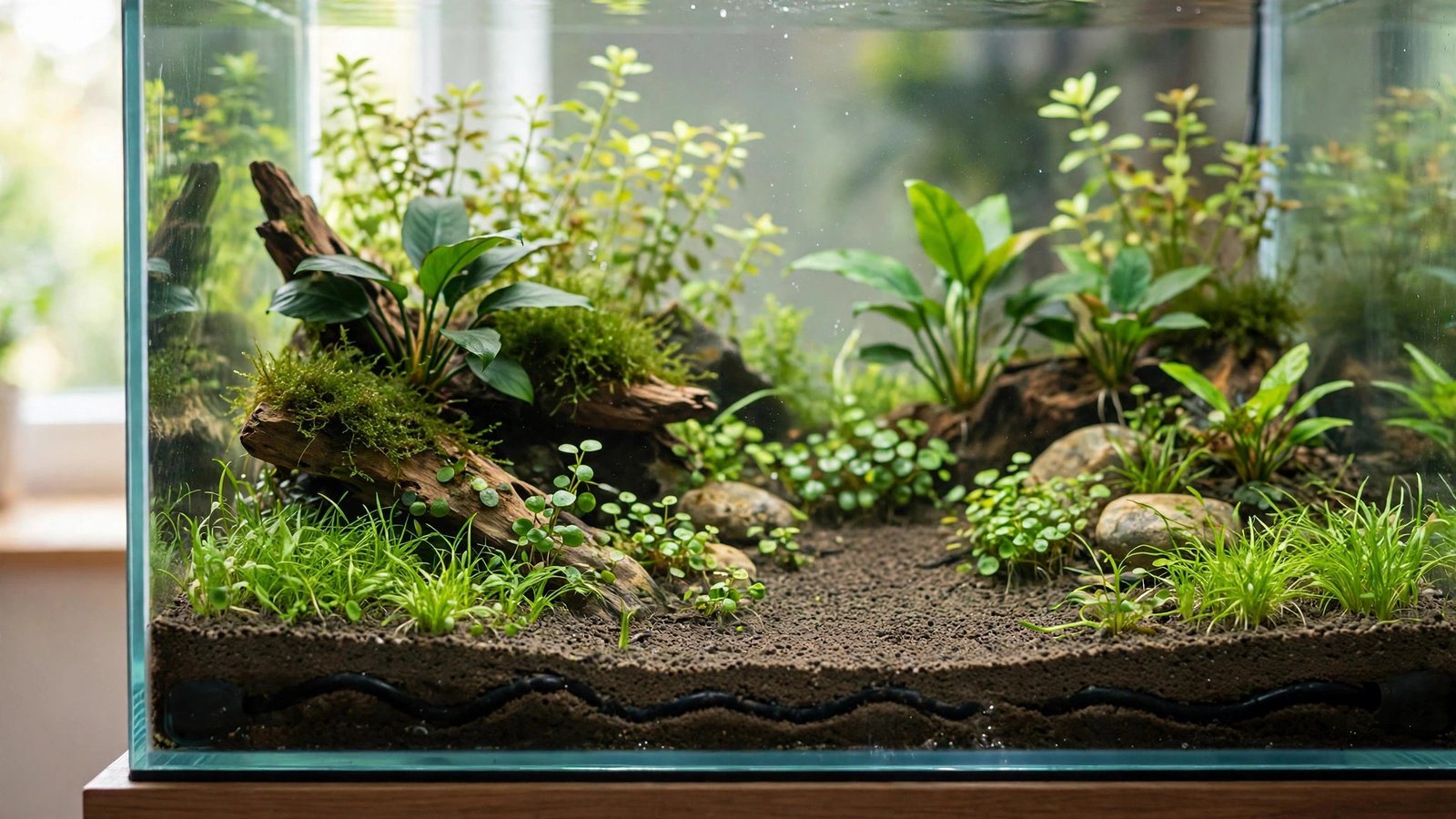
If your root-feeding plants look sluggish despite rich substrate and strong light, the missing variable might be temperature — not in the water, but under it. A substrate heating cable for your aquarium is a thin, waterproof heating element snaked across the bare tank floor before substrate goes in, gently warming the root zone the way rivers naturally keep beds warmer than the water above. This guide covers what these cables claim to do, whether the science supports the claims, which models are worth your money, and how to install one safely — or decide, with confidence, that you don't need one.
What a substrate heating cable actually is
A substrate heating cable is a long, flexible, fully submersible heating element laid on the bare glass floor before substrate goes in. The best-known example is the Hydor Hydrokable, sold in 15W to 100W models with cable lengths from 3.3 to 10 metres, each rated for a tank volume range. Once buried, it is virtually invisible — only the power lead exits the tank.
The concept comes from 1980s German aquascaping philosophy: in natural rivers, the bed is usually a degree or two warmer than the water above, and that tiny gradient drives slow convection — warm interstitial water rises through the substrate, cools, and sinks back down. Manufacturers claim this keeps the substrate "sweet" longer, feeds roots continuously, and prevents anaerobic dead spots. Whether the effect is large enough to matter in your tank is the real question.
The honest debate: do they actually help planted tanks?
The physical mechanism is sound — a 1–2°C gradient will slowly circulate water through a porous bed. What experienced aquarists argue about is whether that circulation matters once everything else is dialed in.
The skeptical case runs like this: in a modern high-tech tank with quality aquasoil, pressurized CO2, strong light, and water-column fertilization, growth is limited by light and carbon, not by nutrient delivery inside the substrate. The cable's convection becomes a rounding error — and veteran aquarists who ran Dennerle Bodenfluter cables for years report noticing little to no difference when they removed them.
The supportive case is narrower but credible: the cable does modestly warm the root zone and stir interstitial water in tight, compacted, or nutrient-poor substrates. WetWebMedia's FAQ on heating planted tanks notes the slow water exchange keeps the gravel "sweet" for longer, particularly in deeper beds. The takeaway: a heating cable is a fine-tuning tool, not a growth engine. If your tank's basics are solid and you want the last few percent — or you run a deep inert substrate in a chilly room — a cable is a reasonable experiment. If your tank has algae, weak light, or no CO2, a cable will not save it.
Heating cable vs a regular aquarium heater
Confusing these two is the most common beginner mistake. Here is the breakdown:
| Factor | Substrate heating cable | Standard immersion heater |
|---|---|---|
| Primary job | Warm the root zone 1–2°C; drive substrate convection | Hold the whole water column at target temperature |
| Heats the whole tank alone? | No — far too little wattage in cool rooms | Yes, when correctly sized (~1W per litre) |
| Effect on plants | Warmer roots, slow nutrient circulation | Correct overall temperature; no substrate effect |
| Visibility | Invisible once buried | Visible tube, usually hidden behind hardscape |
| Thermostat | Optional; low wattage is self-limiting | Built-in, standard |
| Typical cost (mid-size tank) | ~$35–$60 + optional controller | ~$25–$40 |
The practical rule: a substrate cable is an addition to your heating setup, not a replacement. Your immersion heater does the heavy lifting; the cable just keeps the substrate a whisper warmer.
Popular substrate heating cables compared
| Model | Wattage / length | Tank size range | Controller | Notes |
|---|---|---|---|---|
| Hydor Hydrokable | 15W/3.3m, 25W/4.3m, 50W/6m, 75W/7.5m, 100W/10m | 25–250 L | Optional (Hydroset) | The benchmark; double silicone insulation, suction cups included |
| Dennerle Bodenfluter | Typically 25W for tanks up to ~250 L | Mid to large planted tanks | Pairs with Duomat (day/night temps) | European classic; premium priced |
| JBL ProTemp Basis | Various; matched to tank length | Per sizing chart | Optional | Sold as a system with JBL AquaBasis Plus substrate |
| Generic cables / heat mats | 10–25W | Nano tanks mostly | Rarely included | Cheap but inconsistent; under-tank mats heat through glass (a poor conductor) |
Which one to buy
If you decide to buy, the Hydrokable is the safest default: five honest models covering 25 to 250 litres and robust double silicone insulation. Match the model to your actual water volume after hardscape and substrate displacement — when between two sizes, pick the smaller to avoid hot spots. The Dennerle system suits you only if you want the Duomat's day/night temperature profiles; under-tank heat mats heat through the glass and do not create the same convection pattern.
Cost vs benefit: the numbers
Take a 100-litre planted tank: a 50W cable (rated 60–125 L) costs roughly $35–$60, plus ~$30–$50 for an optional thermostat. Running 50W for 12 hours a day at ~$0.17/kWh costs about $3 per month, and a quality silicone cable lasts 5+ years — under $1 per month in amortized hardware.
Now weigh that against alternatives. If your tank has no CO2, that $50 buys a serious chunk of a pressurized CO2 setup, which will transform growth far more than any cable. The cable earns its place only after light, carbon, and substrate nutrition are handled — that is the honest cost-benefit frame every buyer should use.
How to install a substrate heating cable in your aquarium
Install on day zero, before water and substrate. Retrofitting an established tank means draining and rescaping — the cable must lie flat on bare glass.
- Size it. Pick the model whose rated range includes your actual water volume. Between two sizes, choose the smaller.
- Clean the glass. Wipe the tank floor with a damp cloth — no detergents. Suction cups will not grip a dusty surface.
- Lay the serpentine grid. Start at the back corner nearest the outlet. Run the cable forward to the front glass, loop back, and repeat — parallel runs spaced 5–8 cm apart, kept 3–4 cm from the walls. Never cross the cable over itself; keep bends gentle (no tighter than a coffee mug's diameter).
- Fix it down. Press a suction cup over the cable every 20–30 cm, plus one at each loop turn. Every section must lie flat — floating cable ends up exposed above the substrate.
- Route the lead. Bring the lead up the back corner and out over the rim, with a drip loop that dips below the outlet before rising to it.
- Add substrate. Pour gently over the cable to 5–8 cm depth. Verify nothing is exposed, then fill the tank — the substrate surface should feel gently warm after a few hours.
Why 5–8 cm of substrate matters
The convection effect needs substrate over the cable to insulate it and pores for water to move through. Under 4 cm, heat escapes straight into the water column and the effect is wasted. See our guide to substrate depth for aquarium plants for bed-depth targets by plant type.
Compatibility with sand, gravel, and aquasoil
Convection needs pores — water must drift up and down through the bed:
- Coarse gravel (2–4 mm): the ideal partner. Open structure, even heat spread. Pair with laterite underneath or root tabs for the classic setup where a cable earns its keep.
- Coarse sand: works well — pool filter sand convects adequately. Fine play sand packs too tightly and stalls convection. See best sand for planted aquariums for grain-size guidance.
- Aquasoil: safe but the benefit is smallest. Aquasoil is already porous and nutrient-loaded; most aquasoil users report negligible gains. If you run aquasoil, read best aquasoil for planted tanks and spend the cable budget on CO2 instead.
- Inert fired-clay substrates: a good middle ground — porous, long-lived, and they convect decently in deep beds.
Avoid a cable under an ultra-fine, deep sand cap: the heat cannot circulate and you can end up with a warm, stagnant layer — the opposite of the intended effect. Keep fine caps to 2–3 cm over a coarser base.
Controllers and thermostat notes
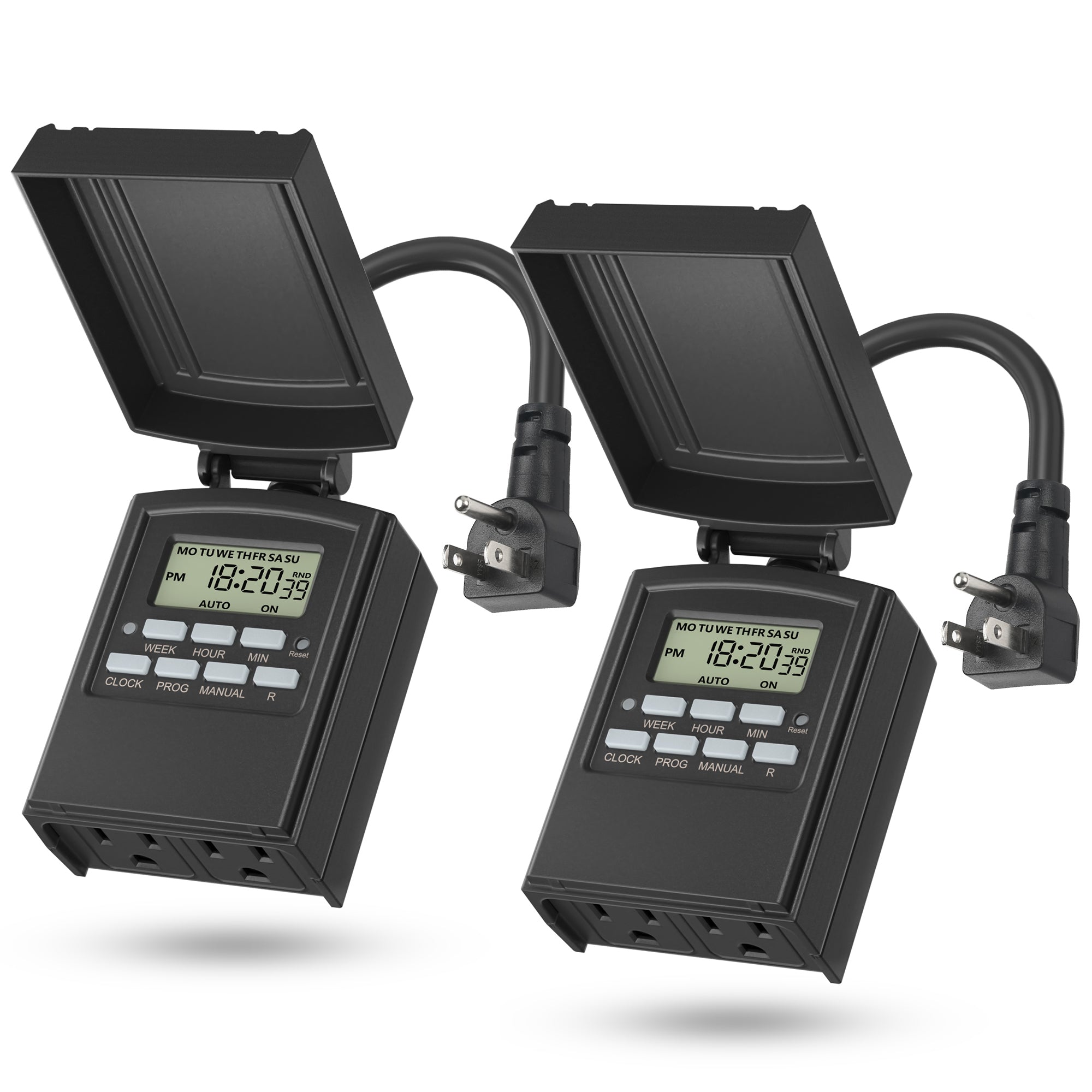
Three ways to run a cable: direct to outlet (15W and 25W models only — they cannot overheat a tank of their rated size); on a timer with your lights so the substrate warms during the photoperiod (a $10 mechanical timer is the cheapest meaningful upgrade); or on a thermostat controller with a probe in the substrate holding the root zone ~1–2°C above the water setpoint — recommended for 50W+ cables.
A pattern borrowed from European aquascapers: run the cable during the day and idle it at night, mirroring the natural day/night soil rhythm. It matches the design intent and saves electricity.
 ★4.4
BN-LINK Digital Outlet Timer
Check Price on Amazon ★4.4Safety warnings
You are burying a mains-powered device under wet substrate in a glass box of water:
- Unplug everything during water changes. A cable exposed to air while powered overheats rapidly — silicone tolerates heat, but a dry cable surface runs far hotter than it ever does underwater.
- Use a GFCI/RCD-protected outlet. It cuts power in milliseconds if current leaks into the water — the single most important safety device in fishkeeping.
- Never splice, extend, or repair a cable. A buried repair joint is a failure you will never see coming — replace a damaged unit outright.
- Never run the cable above the substrate. It is designed to shed heat into substrate and water; exposed in air, even 25W can damage insulation over time.
- No sharp bends or kinks — a kink creates a hot spot and can crack insulation.
- Drip loops on every lead. Cords should dip below the outlet before rising to it so water drips off instead of tracking into the socket.
- Inspect annually. During a rescape or deep substrate cleaning, check for stiffness, cracking, or discoloration.
When it makes sense — and when it doesn't
Makes sense when: you run a deep (6–10 cm) inert or laterite-based substrate and want to keep it biologically active longer; your room runs cool and you want warm feet for root feeders like swords and cryptocorynes; or you already own a cable and the install costs you nothing but an hour. New to inert substrates? Start with our complete guide to inert substrates before adding hardware. Skip it when: you run aquasoil in a high-tech CO2 tank; your tank has temperature or algae problems a cable cannot fix; you rescape frequently; or your budget still has gaps in the fundamentals — light, CO2, fertilization.
Frequently Asked Questions
Do substrate heating cables actually make aquarium plants grow faster?
There is no solid evidence of dramatic gains. The mechanism — gentle convection circulating nutrients through the substrate — is real physics, and most hobbyists agree it helps marginally in deep, compacted, or nutrient-poor substrates. But in a well-run tank with aquasoil, CO2, and good fertilization, the effect is too small to notice. Treat a cable as fine-tuning for an already-healthy tank, not a fix for poor growth.
Can a substrate heating cable replace my aquarium heater?
No. Heating cables are typically 15–100W and designed to warm only the substrate layer a degree or two, not to hold the entire water column at tropical temperatures. In a cool room you still need a properly sized immersion heater (roughly 1W per litre) — the cable is a supplement, and many hobbyists run both on separate controls.
What wattage heating cable do I need for my tank?
Follow the manufacturer's tank-range rating, not raw wattage. As a reference, Hydor's Hydrokable runs 15W for 25–40 litres, 25W for 40–65 litres, 50W for 60–125 litres, 75W for 120–200 litres, and 100W for 160–250 litres. Between two sizes, choose the smaller — an oversized cable creates hot spots and works against the gentle, even warming the design depends on.
Is it safe to bury an electrical cable under aquarium substrate?
Yes, with a purpose-built, fully submersible cable from a reputable brand and basic precautions. Quality cables use double silicone insulation rated for continuous underwater use. The non-negotiables: a GFCI/RCD-protected outlet, drip loops on all cords, no splicing or kinking — and always unplug before water changes that expose the substrate.
Can I add a heating cable to an established planted tank?
Not without draining and rescaping. The cable must lie flat on bare glass before substrate goes in, and threading it under an existing bed destroys the scape and releases trapped detritus. If your tank is established and thriving, skip the cable — plan it for your next full setup or rescape instead.
Do heating cables work with aquasoil or only with gravel?
They work safely with any substrate, but the benefit varies. Coarse gravel and coarse sand convect best and show the most effect. Aquasoil is already porous and nutrient-rich, so most aquasoil users report negligible gains. Fine, deep sand caps convect poorly — keep fine caps thin over a coarser base if you use a cable.
The bottom line
A substrate heating cable is one of the hobby's most honestly debatable gadgets: sound theory, real but subtle effects, and a price low enough to experiment with but high enough to demand the money go to fundamentals first. If your light, CO2, and substrate nutrition are already dialed in and you run a deep inert bed in a cool room, a cable under your next scape is a reasonable, safe upgrade. If any of the basics are still missing, spend the $50 there instead.