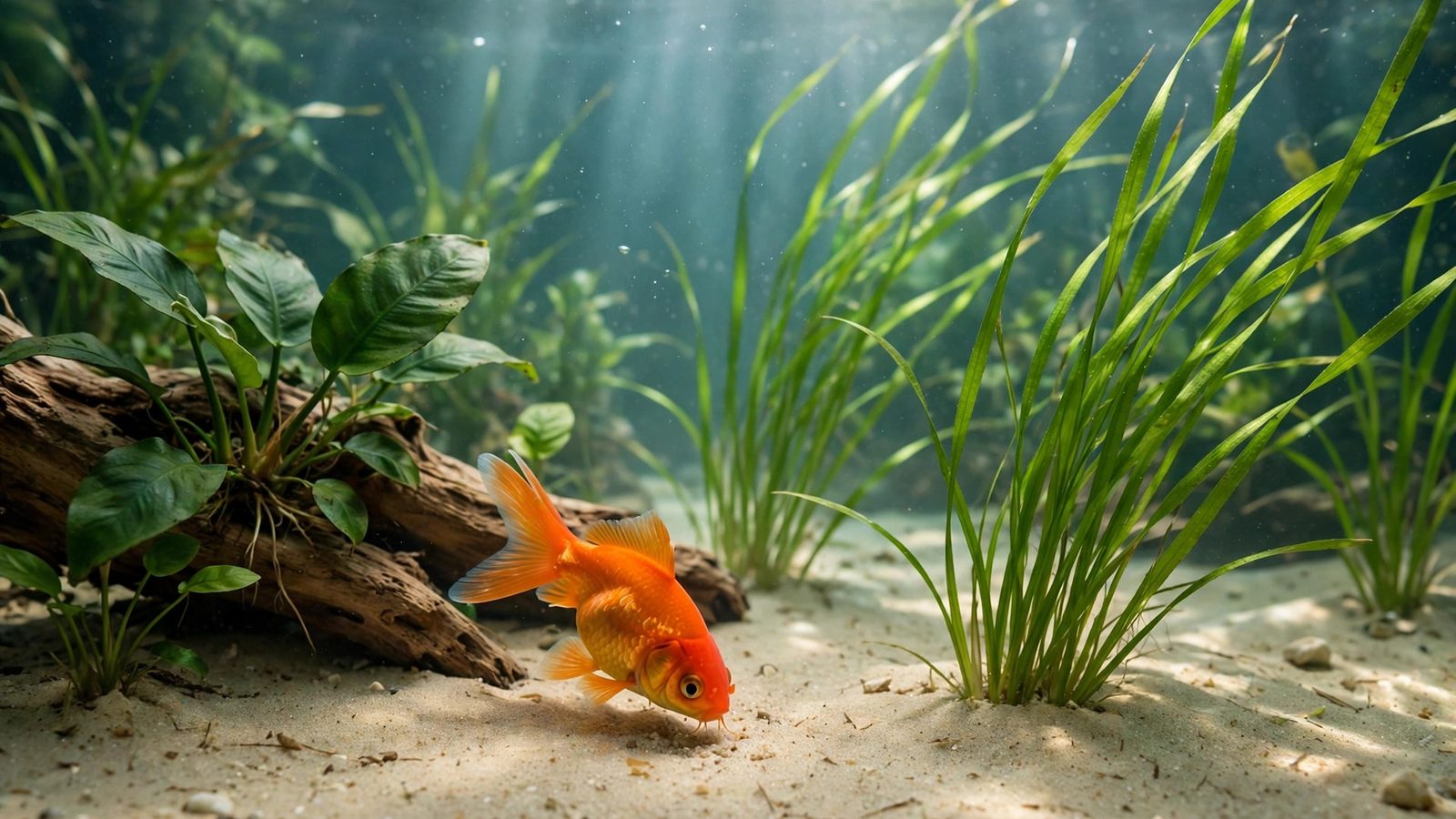
Picture a goldfish's mouth as a shop vacuum: it inhales anything smaller than a pea, then either spits it out or swallows it. That single habit is what makes choosing the best substrate for a goldfish tank with live plants different from every other planted tank.
In a tropical tank, you pick substrate for the plants and the fish adapt. With goldfish, you pick for the fish first — no choking hazards, nothing sharp, nothing they can dig up — and then feed the plants with root tabs.
Why Goldfish Break Normal Substrate Rules
Most planted-tank advice assumes polite, small-mouthed fish. Goldfish are neither: a common goldfish's mouth opens wide enough to take in a pea-sized stone, and its foraging instinct keeps it sifting, mouthing, and spitting the bottom for hours every day. Two consequences follow:
- Choking and impaction are real. Stones that fit in the mouth but can't pass through it lodge there — pea gravel is the most common culprit (enviroliteracy.org).
- Digging is constant. Goldfish root through the bed looking for food, so loose aquasoils get excavated within days and freshly planted stems get launched to the surface.
The substrate has to be either too fine to matter or too heavy to move. Everything between those extremes is where the problems live.
Sand: The Best Substrate for Most Goldfish Planted Tanks
Sand is the safest default because it wins on both fronts: grains are so small they pass straight through the digestive tract if swallowed, and a foraging goldfish can sift sand all day without injury. It also holds rooted plants firmly once established, and waste sits on top where it's easy to siphon.
Pick a natural river sand or pool filter sand and avoid dyed craft sands, which can leach colorants. For a ready-made option graded for aquariums, CaribSea Super Naturals Moonlight Sand ★4.5 is a clean, chemical-free sand that rinses quickly and looks natural under tank lights.
Sand has two quirks: it compacts (stir the top inch gently during water changes to prevent anaerobic pockets) and it holds zero nutrients — which is fine, because root tabs fix that without dosing the goldfish-polluted water column.
Large, Smooth Gravel: The Second-Best Option
If you want the classic gravel look, go big: smooth, rounded pebbles ½ inch across or larger. At that size a goldfish can't fit one in its mouth, so the choking risk drops to zero while the bed still supports beneficial bacteria and anchors rooted plants.
The key word is smooth: crushed rock with sharp edges abrades the mouth of a fish that sifts all day, so pick tumbled river pebbles. Big gravel traps more waste between stones than sand, so siphon a little deeper into the gaps each week.
Substrates to Avoid With Goldfish
| Substrate | Verdict for goldfish | Why |
|---|---|---|
| Pea gravel | Avoid | Fits the mouth but not the throat — the classic choking hazard |
| Sharp crushed rock | Avoid | Abrades mouth and fins during constant sifting |
| Loose aquasoil | Avoid | Goldfish dig it up and keep water cloudy |
| Dyed craft sand | Avoid | Can leach colorants; coating chips under digging |
| Fine smooth sand | Best | Safe if swallowed; roots hold firmly; easy to clean |
| Large smooth pebbles | Good | Too big to swallow; needs deeper siphoning |
How to Feed Plants in an Inert Bed: Root Tabs
Sand and pebbles hold no fertilizer, but goldfish are such heavy waste producers that goldfish-safe plants like anubias, java fern, and vallisneria do fine on water-column nutrients alone. The gap is rooted heavy feeders like swords and crypts: push a root tab into the substrate 2–3 inches from the crown every 3–4 months and leave the water column alone.
That also dodges the classic goldfish algae trap — liquid dosing a water column already rich from fish waste. Root tabs feed only the plant you place them under. Seachem Flourish Tabs ★4.6 are the hobby standard for this job — slow-release micro-nutrients in a tablet you bury and forget for a quarter.
Affiliate note: the product links above are Amazon affiliate links — I earn a small commission on qualifying purchases, at no extra cost to you.
Setting It Up: Depth, Rinsing, and Maintenance
- Depth: 1–2 inches of sand. Deeper beds compact and invite anaerobic pockets; shallower beds won't hold roots.
- Rinse first. Bagged sand carries dust that clouds water for days — rinse in a bucket until the water runs mostly clear, usually 4–6 rinses.
- Plant before filling. Spread the substrate, set plants and root tabs in place, then fill slowly over a plate.
- Weekly siphon. Hover the vacuum just above sand; press a little deeper into pebble gaps.
- Monthly stir. Run a chopstick through the sand bed to release trapped gas pockets.
Frequently Asked Questions
Is sand or gravel better for a goldfish tank with live plants?
Sand, generally. Grains pass through the gut instead of choking, roots hold firmly, and waste sits on top for easy siphoning. Gravel only works if pebbles are smooth and at least ½ inch across.
Can goldfish choke on substrate?
Yes. Pea-sized gravel is the classic hazard: stones that fit the mouth but can't pass through can lodge and block the throat or gut. Use sand or pebbles too large to mouth.
Do I need a special planted-tank substrate for goldfish?
No. Loose aquasoils get dug up and cloud the water, so inert sand plus root tabs under heavy root feeders works better. Epiphytes like anubias and java fern feed from the water column and need no substrate at all.
How often should I clean substrate in a goldfish tank?
Siphon weekly during water changes — goldfish waste accumulates fast. Stir sand gently once a month and replace root tabs every 3–4 months.