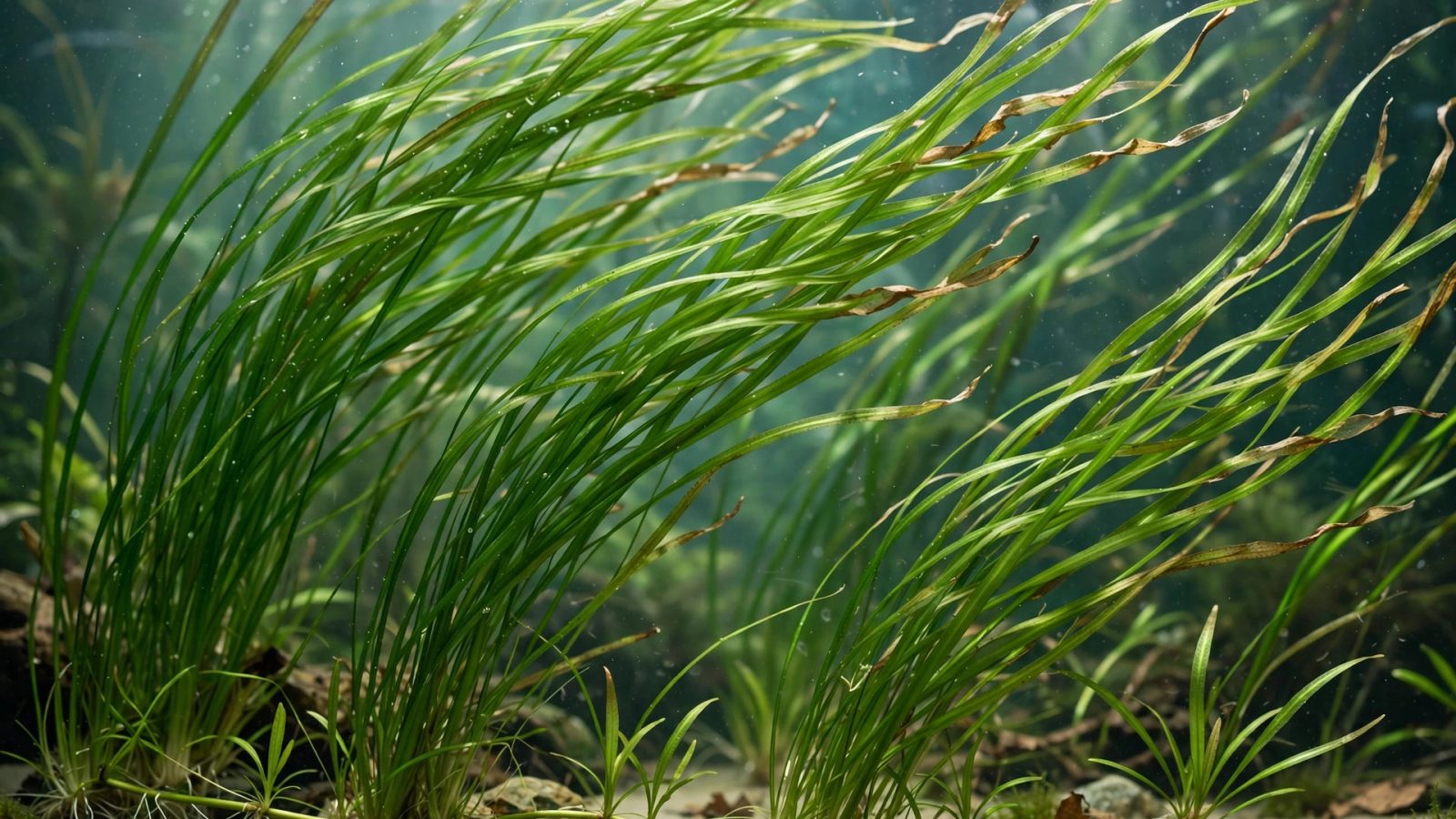
Vallisneria care is easy — almost suspiciously easy. These ribbon-like background plants grow in anything from low-tech gravel tanks to high-energy CO2 setups, spreading by runners until your background is a flowing green curtain. Vallisneria is the plant you buy when you want a tall background now, not six months from now.
But vallisneria has quirks that trip up beginners: a strict no-trimming rule for its leaves, a dramatic melt when conditions change, and a habit of taking over the tank if you ignore its runners. This guide covers planting, the runner system, the right way to control height, and how to handle the infamous vallisneria melt.
Vallisneria Care at a Glance
| Parameter | Recommendation |
|---|---|
| Scientific name | Vallisneria spiralis / V. americana / V. nana |
| Light | Low to medium (20–40 PAR) |
| Temperature | 68–82°F (20–28°C) |
| pH | 6.5–8.0; prefers slightly hard, alkaline water |
| Water hardness | Moderately hard water is ideal |
| CO2 | Not required |
| Fertilizer | Root tabs help; light liquid dosing |
| Growth rate | Fast — one of the fastest background plants |
| Placement | Background only; needs vertical room |
| Max size | 12–36 inches depending on species |
| Difficulty | Beginner |
Why Vallisneria Grows So Well
Vallisneria is a true aquatic — it evolved to live permanently submerged, so there is no emersed-to-submersed transition to survive. What you buy is what grows. It tolerates a wide range of conditions, feeds from both roots and leaves, and propagates aggressively by runners. In a low-tech tank with basic light and occasional fertilizer, vallisneria is one of the few plants that genuinely thrives rather than merely surviving, making it a staple of no-CO2 setups.
One notable preference: vallisneria likes harder, more alkaline water than many aquarium plants. In very soft, acidic water it can struggle, developing translucent tips and slow growth. If your tap water is soft, a vallisneria-dominant tank may not be the best fit — consider water wisteria instead, which is far more adaptable.
Choosing a Vallisneria Species
- Vallisneria spiralis (Italian val) — the classic. Straight, bright-green ribbons to 20+ inches. The default background val.
- Vallisneria americana (Jungle val) — wider, thicker leaves reaching 24–36 inches. For tall tanks; will drape across the surface in standard tanks.
- Vallisneria nana — narrow leaves, 8–12 inches. The best val for smaller tanks or midground use.
- Vallisneria spiralis ‘Tiger’ — striped/variegated leaves. Same care, striking pattern.
- Vallisneria asiatica — twisted, corkscrew leaves. Decorative but slightly more demanding.
Match the species to your tank height: jungle val in a 12-inch-tall tank spends its life folded across the surface, while val nana disappears in a 24-inch-tall show tank.
Planting Vallisneria
Plant vallisneria the same way you plant any rosette: spread the roots, bury them in the substrate, and keep the crown — the pale base where leaves emerge — just above the substrate surface. Space individual plantlets 2–3 inches apart along the back glass. They look sparse at first; within two months the runners will fill every gap.
Substrate depth of 2+ inches gives the runner system room to travel. Vallisneria appreciates root tabs in inert substrate, though it is less demanding than Amazon swords. A light all-in-one liquid fertilizer rounds out its diet since vallisneria also feeds through its leaves.
The Never-Trim-the-Leaf Rule
Here is vallisneria’s most important quirk: do not cut vallisneria leaves shorter. Unlike stem plants, a cut vallisneria leaf does not heal — the cut end browns, rots, and looks terrible. Beginners who “mow” their vallisneria like grass end up with a tank full of brown-tipped ribbons.
Control height the right way:
- Remove whole leaves at the base. Pull the tallest, oldest leaves out from the crown — new leaves constantly replace them.
- Choose the right species for your tank height so trimming is rarely needed.
- Let it drape. In nature vallisneria flows along the surface. A few leaves trailing across the top looks natural and provides shade for fish below — pair with floating plants for a layered surface.
Runners: Propagation and Control
Vallisneria spreads by sending horizontal runners through the substrate, each producing daughter plantlets at intervals. This is how a dozen plantlets becomes a dense background wall. It is also how vallisneria invades your foreground if you let it.
To propagate: let the runners do the work. When a daughter plantlet has 4–5 leaves and visible roots, you can snip the runner on both sides and replant it elsewhere — or just leave the colony to expand.
To control: check monthly for runners heading where you do not want them. Trace the runner back and snip it, then pull the unwanted plantlet. A thin plastic barrier buried vertically in the substrate can fence vallisneria into the background zone, though determined runners sometimes dive under it.
Light and CO2 Needs
Low to medium light (20–40 PAR) is plenty. Vallisneria grows toward the light quickly, and in high light it simply grows faster — which usually means more runner maintenance, not a better-looking plant. There is rarely a reason to blast vallisneria with light.
CO2 is unnecessary and vallisneria has a famous sensitivity worth knowing: liquid carbon supplements (glutaraldehyde-based products) can melt vallisneria. Some keepers dose them without issues, but vallisneria is the most commonly reported casualty. If you use liquid carbon, start at half dose and watch new growth closely — or skip it entirely, since vallisneria does not need the help.
The Vallisneria Melt
Vallisneria is notorious for melting dramatically when introduced to a new tank or when water parameters change suddenly — leaves turn translucent and dissolve within days. This terrifies beginners, but the recovery rate is excellent: as long as the roots and crown survive, vallisneria almost always comes back.
If your new vallisneria melts:
- Do not uproot it. Leave the crowns in place.
- Trim away fully dissolved leaves to prevent ammonia spikes.
- Keep conditions stable — no more big water changes or parameter swings.
- Wait 2–4 weeks. New leaves emerging from the crown mean recovery is underway.
Our guide to aquarium plant melting explains the biology behind transition melt across all species.
Common Vallisneria Problems
Brown or transparent leaf tips
Usually too-soft water or a sudden parameter change. Vallisneria prefers moderately hard, alkaline water. In very soft water, consider a different background plant.
Leaves not growing tall / staying short
Normal for val nana (it is a short species). In tall species, short growth means insufficient light or exhausted substrate — refresh root tabs and check that taller plants are not shading it out.
Algae on leaves
Long leaves near the light collect algae, especially in new tanks. Remove the worst leaves at the base; the plant replaces them quickly. Nerite snails help keep new growth clean.
Taking over the tank
Not a defect — it is the plant’s nature. Monthly runner patrol keeps it in the background. In small tanks under 20 gallons, val nana is the only sensible choice.
Vallisneria in Aquascaping
Vallisneria’s flowing vertical lines make it a natural background for nature-style layouts, where it softens hardscape edges and adds movement. Plant in drifts rather than straight rows — a natural-looking colony has denser and sparser patches. Combining straight-leaf Italian val with a few twisted corkscrew vals adds texture contrast without clashing.
Vallisneria in Ponds and Outdoor Tubs
Vallisneria is one of the few aquarium plants that transitions beautifully to outdoor life. In ponds and patio tubs during warm months, it grows with a vigor that indoor tanks rarely match — full sun, unlimited CO2 from the air, and natural nutrient cycling produce specimen plants in a single season.
- Hardiness: most species tolerate temperatures down to 60°F; bring them indoors before first frost.
- Planting: pot in aquatic soil topped with gravel, and submerge the pot. The contained roots prevent the pond-wide takeover that unpotted vallisneria attempts.
- Wildlife value: the dense underwater foliage shelters tadpoles, dragonfly nymphs, and small fish — making vallisneria as ecologically useful outdoors as it is decorative indoors.
Bring outdoor plants inside for winter by trimming leaves to 4 inches and potting in a bucket under moderate light. They regrow enthusiastically each spring.
Companion Plants for Vallisneria Backgrounds
A vallisneria background wall looks best with thoughtful foreground and midground partners:
- Foreground: dwarf sagittaria echoes the grass-like texture at a smaller scale, creating a natural depth gradient.
- Midground: cryptocoryne wendtii provides broad-leaf contrast against the vertical ribbons.
- Hardscape accents: vallisneria softens the base of tall driftwood beautifully — plant it behind the wood so ribbons emerge around the edges.
- Avoid: other aggressive runners (like dwarf sagittaria planted too close) that compete underground, and fine-leaf stem plants that tangle with the ribbons.
Species Deep Dive: Which Val for Which Tank?
| Species | Height | Leaf width | Best for |
|---|---|---|---|
| V. nana | 8–12 in | Narrow | Tanks under 20 gal; midground |
| V. spiralis | 16–24 in | Medium | Standard 20–55 gal backgrounds |
| V. americana | 24–36 in | Wide | Tall 55+ gal tanks; ponds |
| V. asiatica (corkscrew) | 12–20 in | Medium, twisted | Accent plantings; visual interest |
Seasonal Care Calendar for Vallisneria
Vallisneria follows a yearly rhythm even in heated indoor tanks, responding to subtle day-length cues:
- Spring: peak runner production begins. This is the ideal time to propagate — daughter plantlets establish fastest now. Increase root-tab feeding as growth accelerates.
- Summer: maximum growth and maximum maintenance. Runner patrol becomes biweekly; surface-draping leaves may need thinning to prevent excessive shading.
- Autumn: growth slows naturally. Reduce feeding slightly and do your major thinning now — removing excess before the slow season keeps the colony healthy.
- Winter: minimal growth, minimal intervention. Leave the plant alone except for removing dead leaves. This rest period is normal and healthy.
Aligning major interventions (replanting, dividing colonies, moving to new tanks) with spring growth gives vallisneria the fastest recovery and the least melt.
Vallisneria FAQs
Can I trim vallisneria leaves shorter?
Cutting a leaf mid-blade leaves a blunt tip that browns and never heals — the leaf slowly rots from the cut. The correct “trim” is removing the entire leaf at the base, pulling gently from the crown. To control height, remove the tallest outer leaves regularly; new leaves emerge from the center. If the whole stand is too tall for the tank, you chose the wrong species — swap jungle val for Italian val rather than fighting genetics with scissors.
Why is my vallisneria melting after I brought it home?
Vallisneria reacts to environmental change by shedding old leaves and regrowing new ones tuned to your water. This looks like total failure — transparent, mushy leaves — but the crown and roots are usually fine. Do not uproot it. Remove the mush, keep conditions stable, and new leaves typically appear within two to three weeks.
Does vallisneria like hard water?
It tolerates a wide range but genuinely prefers moderately hard, alkaline water — it is one of the few common plants that sulks in very soft, acidic setups. If your vals stay short and pale in soft water while everything else thrives, slightly harder water often unlocks the growth you expected.
The Bottom Line
Vallisneria care is about managing abundance, not coaxing growth. Plant it, feed it modestly, respect the no-trimming rule, patrol the runners, and leave melting crowns alone to recover. Do that and you will have the lush background curtain every beginner dreams of — possibly more of it than you bargained for. In the world of aquarium plants, that is a very good problem to have.