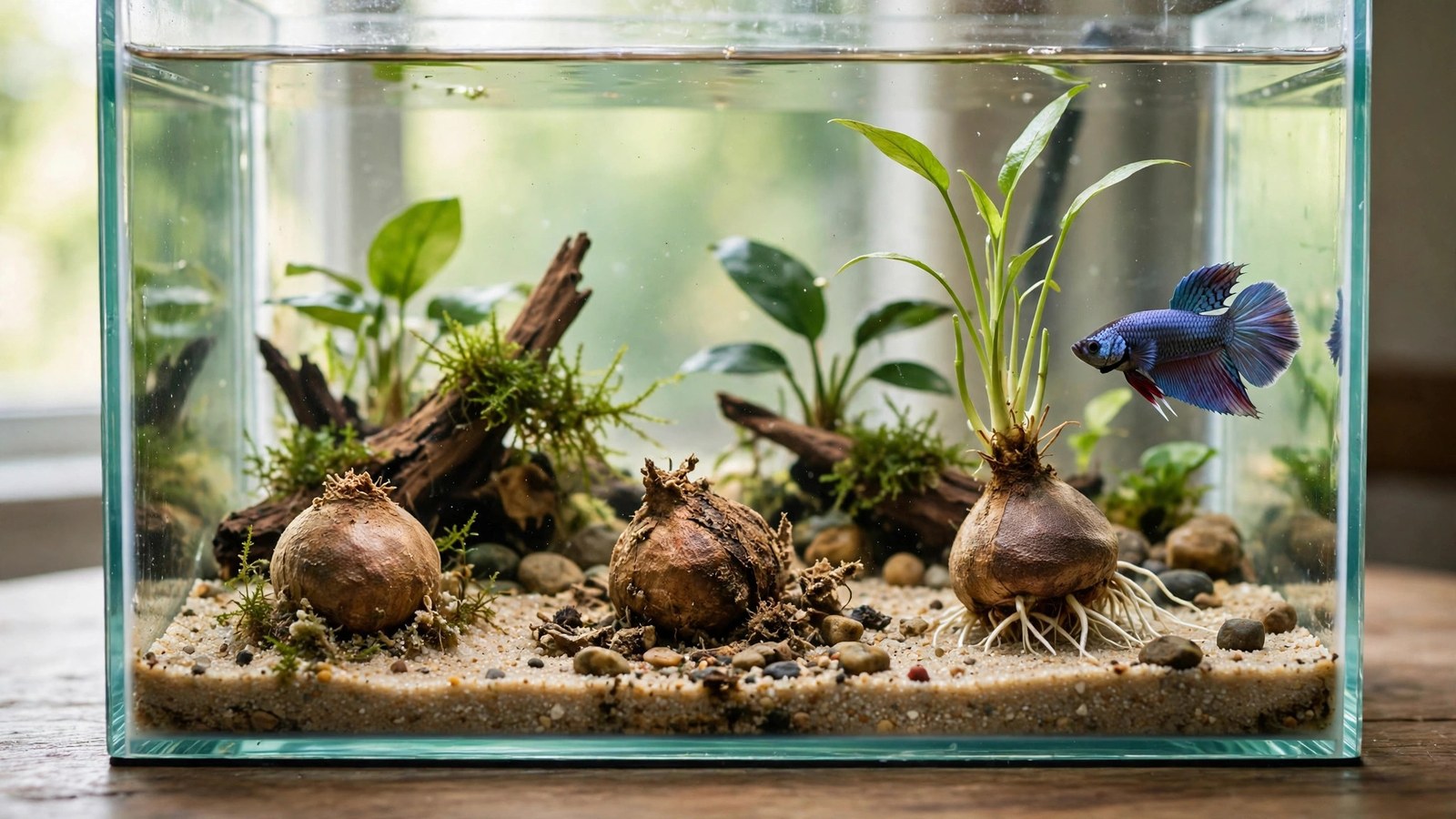
That little mesh bag of "betta bulbs" by the fish-food aisle promises live aquarium plants for pocket change. Before you buy: some bulbs never sprout, survivors can hit 60 cm, and the ones that go "dead" halfway through may just be napping. Here is the honest breakdown.
What You Are Actually Buying: The Aponogeton Mix
Peel back the marketing: most betta bulb packs hold dried Aponogeton tubers — African and Asian bulb plants sold as a lucky dip. Rarely a species label: usually ulvaceus-type hybrids, sometimes Aponogeton crispus or dwarf lily (Nymphaea). Like the red tiger lotus — see our Red Tiger Lotus Care: Bulb Planting & Pruning guide — these are true bulb plants: the bulb is a food reserve fueling explosive early growth.
The appeal is shelf life — bulbs survive months without water or light. That is also exactly why duds exist: a bulb that dried too far or sat too long was dead before you floated it.
Do Betta Bulbs Actually Grow? The Dud-Rate Reality
Yes — the live ones grow frighteningly fast. But "live ones" is doing heavy lifting. FishLore keepers report about 5 of 15 Top Fin bulbs growing for one buyer, "over half" rotting; others report a single dud in three. Fresh stock germinates near 90% per a longtime seller — duds are the price of buying dormant bulbs of unknown age. See FishLore's Aponogeton ulvaceus plant profile and the Aquarium Wiki's Aponogeton crispus entry.
Set expectations by the week:
| Timeline | What you see | Verdict |
|---|---|---|
| Days 1–7 | Nothing, maybe a green nub | Normal — still waking |
| Days 7–14 | Pale spike from the crown | Sprouting — plant it up |
| Weeks 3–4 | Leaves unfurling | On track — add a root tab |
| Week 3+, silent | Soft, mushy, sour smell | Dud — remove it |
A firm bulb silent by week three gets one last chance: flip it over — it may be upside down — and wait another week. A bulb that smells rotten or collapses under gentle pressure is finished. Pull it: one rotting bulb can spike ammonia fast in a small tank.
The Dormancy Cycle: Why "Dead" Bulbs Wake Up
Here is what panics every first-time bulb keeper: after months of glorious growth, the Aponogeton yellows, melts, and looks stone dead. It is not dead. These plants evolved through wet and dry seasons — the bulb is a survival bunker, and when growth stalls, energy retreats underground to wait.
When die-back starts, trim melting leaves at the base, lift the bulb, and rest it in damp sand somewhere cool and dark (about 10–18 °C) for one to two months, then replant. Most relaunch like nothing happened. To delay dormancy, snip any flower stalk as soon as it appears.
How to Sprout Pack Bulbs in a Betta Tank
You need no special gear: betta-warm water (24–27 °C) is ideal sprouting temperature.
- Float first. Drop bulbs in for 3–5 days. Sprouters get planted; mushy ones get binned before touching substrate.
- Plant shallow, crown up. Push the bottom two-thirds in, leaving the sprout crown exposed. Buried crowns rot — the commonest beginner mistake.
- Light it. Twelve hours on a timer is plenty; they sprout in modest light, just slower.
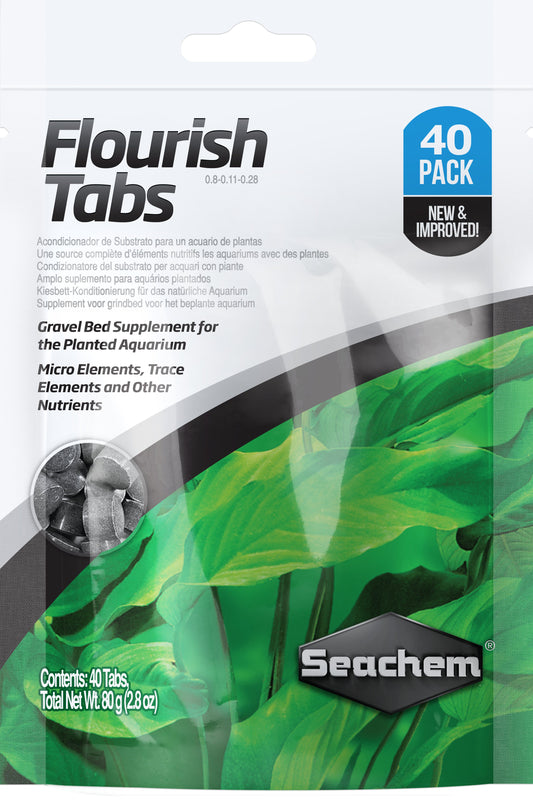
- Feed the roots. Once leaves reach 5–8 cm, press one root tab 3–5 cm from the bulb.
- Hands off. Do not dig it up to "check" — every disturbance resets root growth.
 ★4.6
Seachem Flourish Tabs
Check Price on Amazon ★4.6Rot Prevention: What Kills Bulbs Fastest
Three things kill pack bulbs: planted upside down, buried too deep, and filthy water. A weekly 25–30% water change plus light vacuuming around — never under — the bulb keeps the crown clean. Surface biofilm is harmless; wipe it off.
Will They Take Over a 5-Gallon Betta Tank?
Almost certainly, if you plant the whole pack. A single ulvaceus-type bulb pushes 30–60 cm leaves — inches of new growth per day under good light — and can dominate a 10-gallon. The dwarf lily sometimes included stays 10–15 cm submerged: the better 5-gallon citizen.
| What sprouts | Mature size | 5-gallon verdict |
|---|---|---|
| Ulvaceus-type hybrid | 50–60 cm leaves | One bulb max; trim weekly |
| A. crispus (see our Aponogeton crispus care guide) | 30–50 cm | Background plant for 10+ gallons |
| Dwarf lily | 10–15 cm submerged | Genuinely 5-gallon friendly |
Prune leaves at the base — never mid-leaf; cut stems rot back — outer leaves first. Treat a bulb in a 5-gallon as a centerpiece you sculpt. If the scale worries you, Bucephalandra or a Christmas moss corner gives resting cover without the weekly haircut.
Smart Bulb Shopping: What to Check Before You Buy
Buying bulb packs? Shop like a skeptic — the pack cannot tell you what is alive inside.
- Squeeze before you pay. Press each bulb through the mesh. Firm is alive; soft, cracked, or crumbly is dead. One bad bulb in five is normal; four bad means put it back.
- Read the species list. Packs naming their mix beat packs saying only "assorted" — you cannot plan a 5-gallon around a mystery.
- Do per-firm-bulb math. Divide the price by bulbs that pass the squeeze test, not the number on the packet. That is your real price.
- Buy where turnover is high. Bulbs degrade on the shelf — a fresh shipment beats a year-old pack.
- Price in the dud rate. If every bulb must survive, buy a labeled live plant instead.
No ratings here — stock varies by shipment, not brand. The squeeze test beats any review.
Bulb Packs vs Real Betta Plants: The Honest Verdict
Bulbs are the cheapest way to get a lot of green fast — not the cheapest way to get a specific plant:
| Factor | Bulb packs | Potted or tissue-culture plants |
|---|---|---|
| Species certainty | Mystery mix | Exact labeled species |
| Upfront cost | Low per pack | Higher per plant |
| Failure rate | Common duds | Rare |
| Speed once growing | Explosive | Steady |
| 5-gallon suitability | Often too big | You choose the size |
For a betta tank, the sweet spot is often one bulb for drama plus guaranteed small plants for structure: an Amazon sword stays manageable with pruning, Alternanthera reineckii adds red contrast, and African water fern (Bolbitis) tied to driftwood never needs substrate. Bulbs are the gamble; these are the sure things around them.
Frequently Asked Questions
How long do betta bulb packs take to sprout?
First green spikes in 7–14 days at 24–27 °C. A firm bulb silent by week three gets one last chance — flip it over in case it is upside down, then wait a final week.
Why did my bulb sprout and then melt away?
The natural dormancy cycle, not a failure. Aponogetons grow hard for months, die back to the bulb, and rest 1–2 months before regrowing. Trim dead leaves, rest the bulb cool and dark in damp sand, then replant.
How do I tell a dead bulb from a dormant one?
Squeeze it. Dormant bulbs stay firm, dense, and heavy; dead ones go soft, mushy, or smell sour with a slimy coating. Remove dead bulbs at once — one can foul a 5-gallon fast.
Can I just leave the bulbs floating?
For the first few days, yes — floating keeps rotting duds off your substrate. Long-term, no: Aponogetons are rooted plants and grow weak and leggy unplanted. Plant sprouters shallow, crown exposed.
Are bulb packs safe for bettas?
Yes. Aponogetons, dwarf lilies, and water onions are non-toxic, and broad leaves make excellent near-surface resting spots. The only real risk is water quality — pull rotting duds promptly, since ammonia spikes stress bettas quickly.
The Bottom Line: Cheap Thrills, Managed Expectations
Bulb packs are the scratch tickets of the planted-tank world: most lose, a few win big, and the wins can fill a tank alone. Buy for the gamble, squeeze every bulb, plant one or two per 5-gallon — and learn the dormancy rhythm instead of mourning it.